
Loading, please wait...
LOT 0117
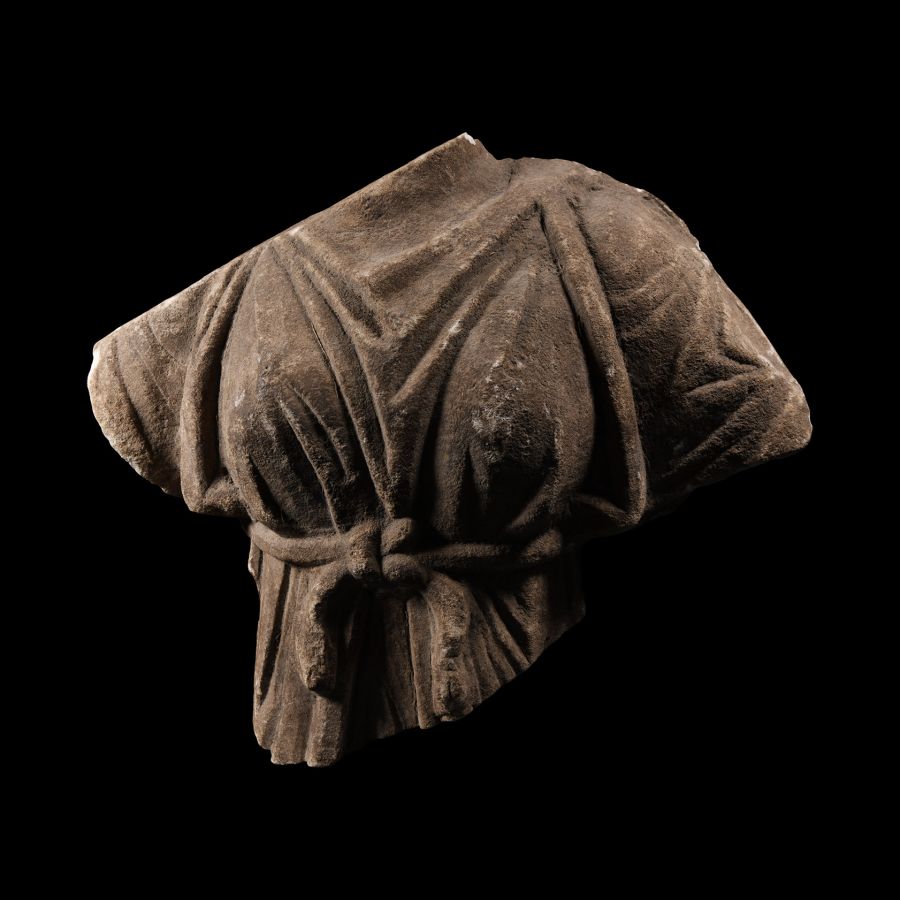
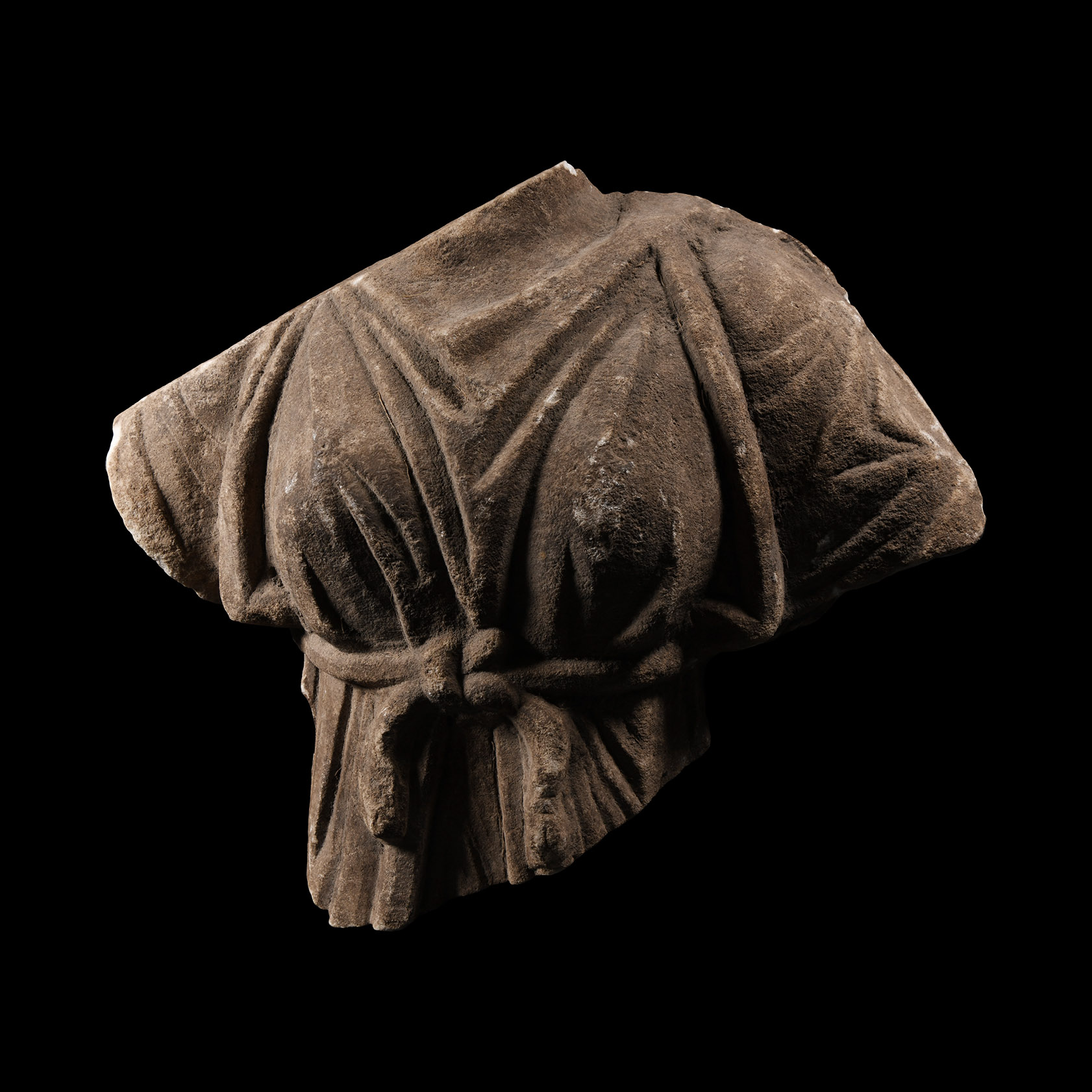
Roman Marble Draped Female Torso
1ST-3RD CENTURY A.D.
11 3/8 in. (5.3 kg, 29 cm wide).
The upper part of a female torso, carved in marble, wearing a draped robe tied at the waist; flat reverse.
ProvenanceAcquired early 1990s.
Ex private American collection; thence by descent.
Private Swiss collection since 1998.
Cf. The Metropolitan Museum, accession number 74.51.2490, for a similar example classified as Roman, Cypriot, 1st century A.D.
FootnotesThe figure is wearing a Greek peplos tied at the waist in such a way as to accentuate the breasts.
CONDITIONTimeLine Auctions follows a vetting process to ensure the authenticity and legality of all items, reinforcing our commitment to integrity and responsible trading. Each antiquity, antique, and coin lot undergoes thorough examination by a vetting committee of at least ten external specialists, professional trade association members, scientists, and archaeologists: Our Vetting Process
AUCTIONS:
TimeLine is a leading auction house specialising in antiquities, ancient art, collectables, natural history, coins, medals, and books. Our auctions offer museums, collectors, historians, and enthusiasts the opportunity to acquire unique and historically significant pieces.
-
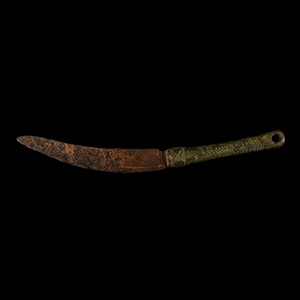
Roman Bronze Handled Knife
Circa 3rd century A.D.Sold for (Inc. bp): £182
An iron knife with curved blade and one cutting edge, with bronze handle decorated with incised X-motifs and dashes to both faces; pierced finial. 49 grams, 17 cm long
Acquired before 2000. From the collection of a European gentleman living in the UK. -
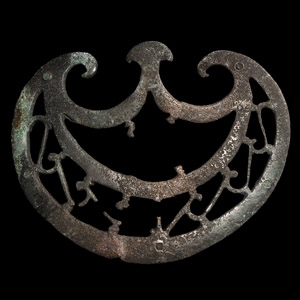
Roman Military Baldric Fitting
3rd century A.D.Sold for (Inc. bp): £72
A copper-alloy military baldric phalera of crescentic form, with scrolled terminals and openwork centre; remains of mounting lugs to reverse. 25.2 grams, 75 mm
Acquired before 2000. From the collection of a European gentleman living in the UK. -
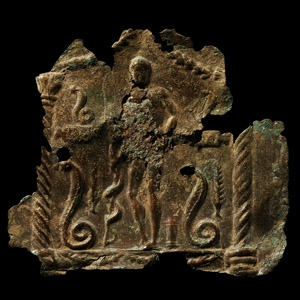
Roman Votive Plaque with Asclepius
2nd-3rd century A.D.Sold for (Inc. bp): £286
A sheet-bronze votive plaque fragment displaying repoussé ornament, likely the god Asclepius holding his snake-entwined staff beneath a columned arch, additional snakes raising their heads and necks beside and above him, other enigmatic symbols in the field. 2.67 grams, 52 mm
Acquired before 2000. From the collection of a European gentleman living in the UK.
Aesculapius, god of medicine, the Greek Asclepius, son of Apollo and a mortal, Coronis, is often accompanied by a snake, a symbol of wisdom and healing power. Aesculapius-Asclepius is also often represented with the staff having a snake wrapped around it.
