
Loading, please wait...
LOT 0148
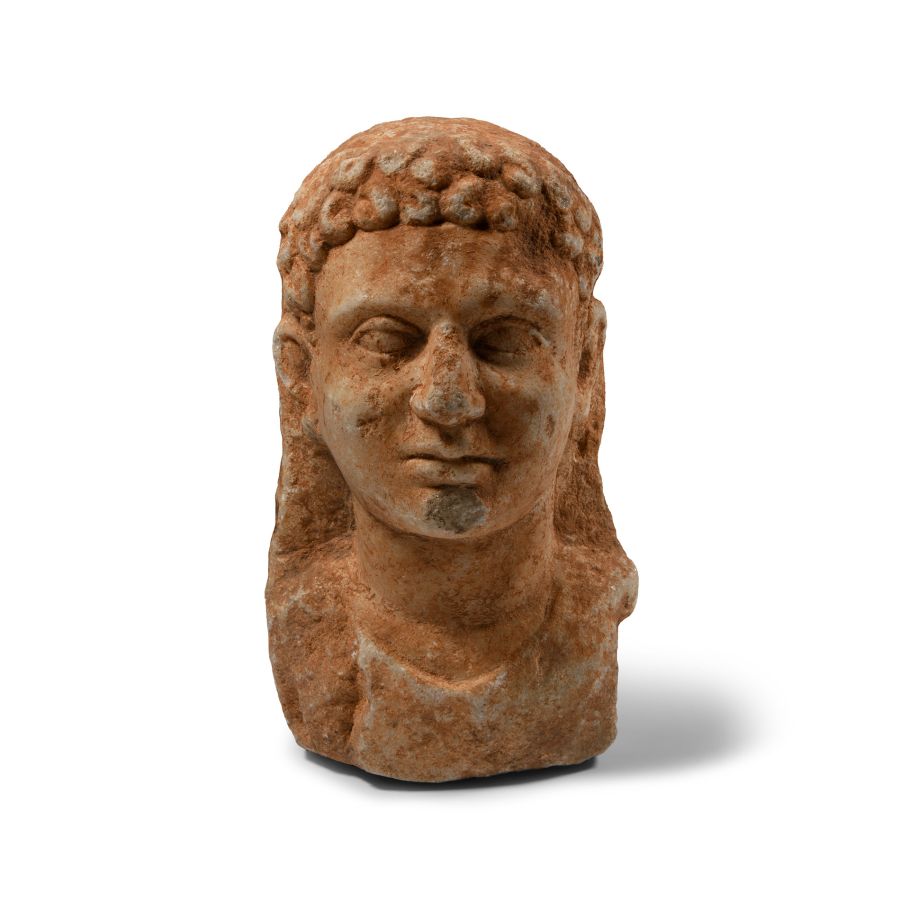
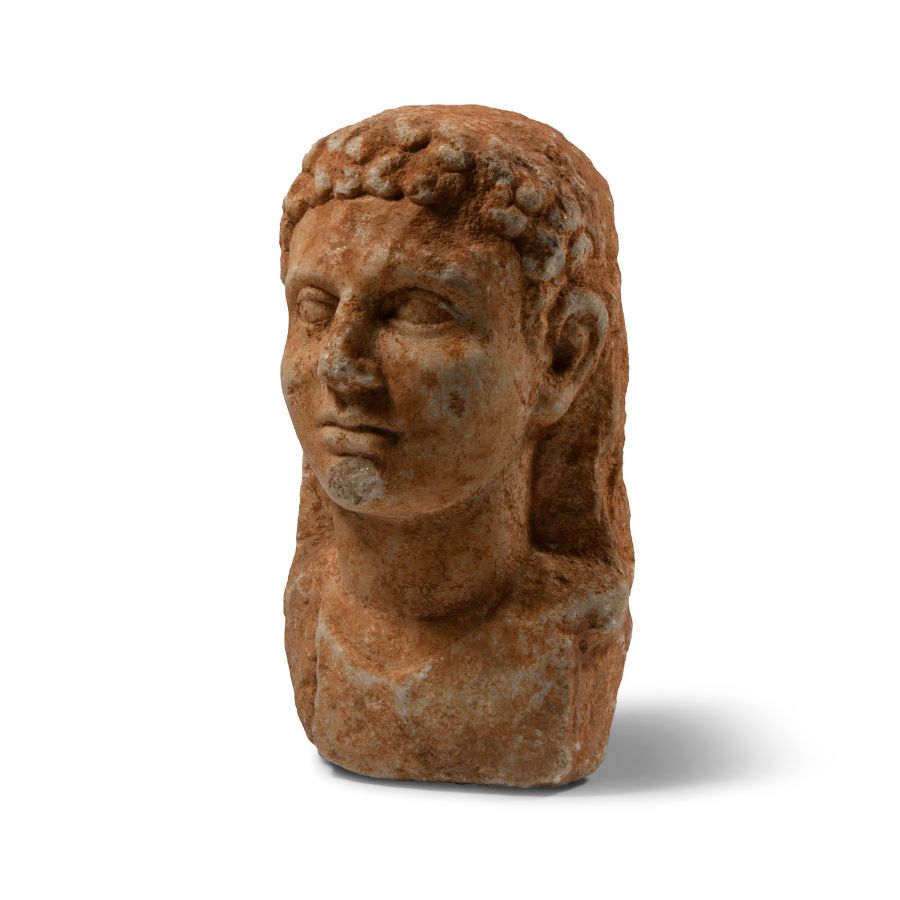
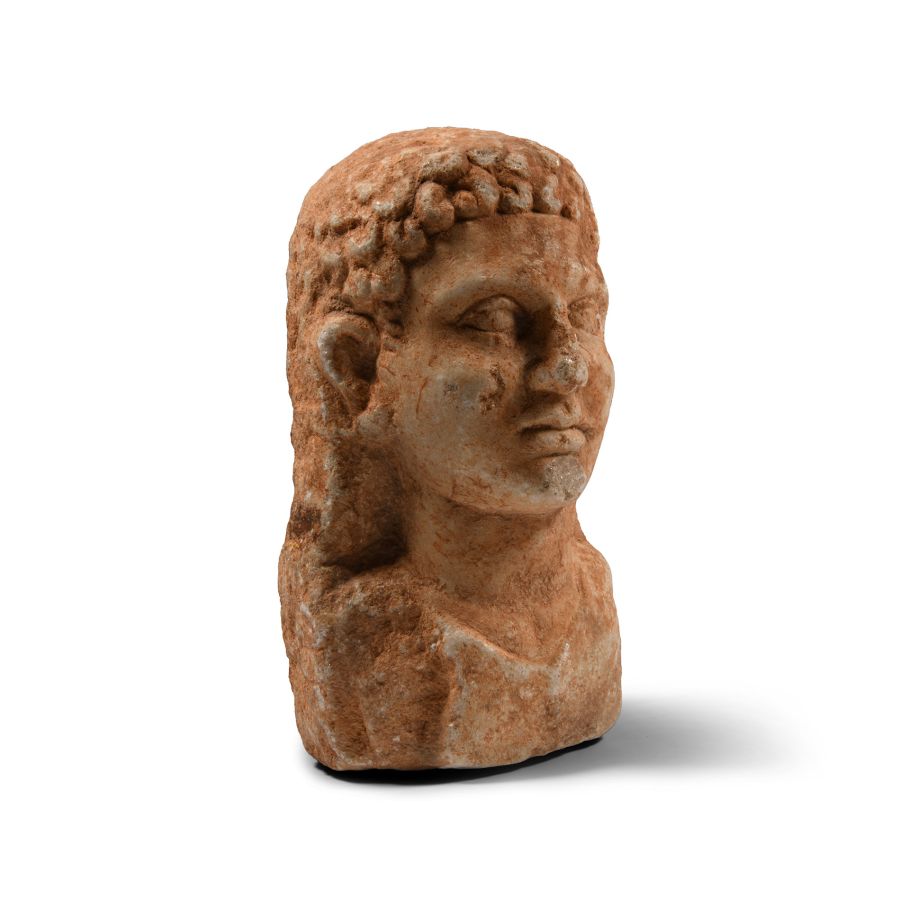
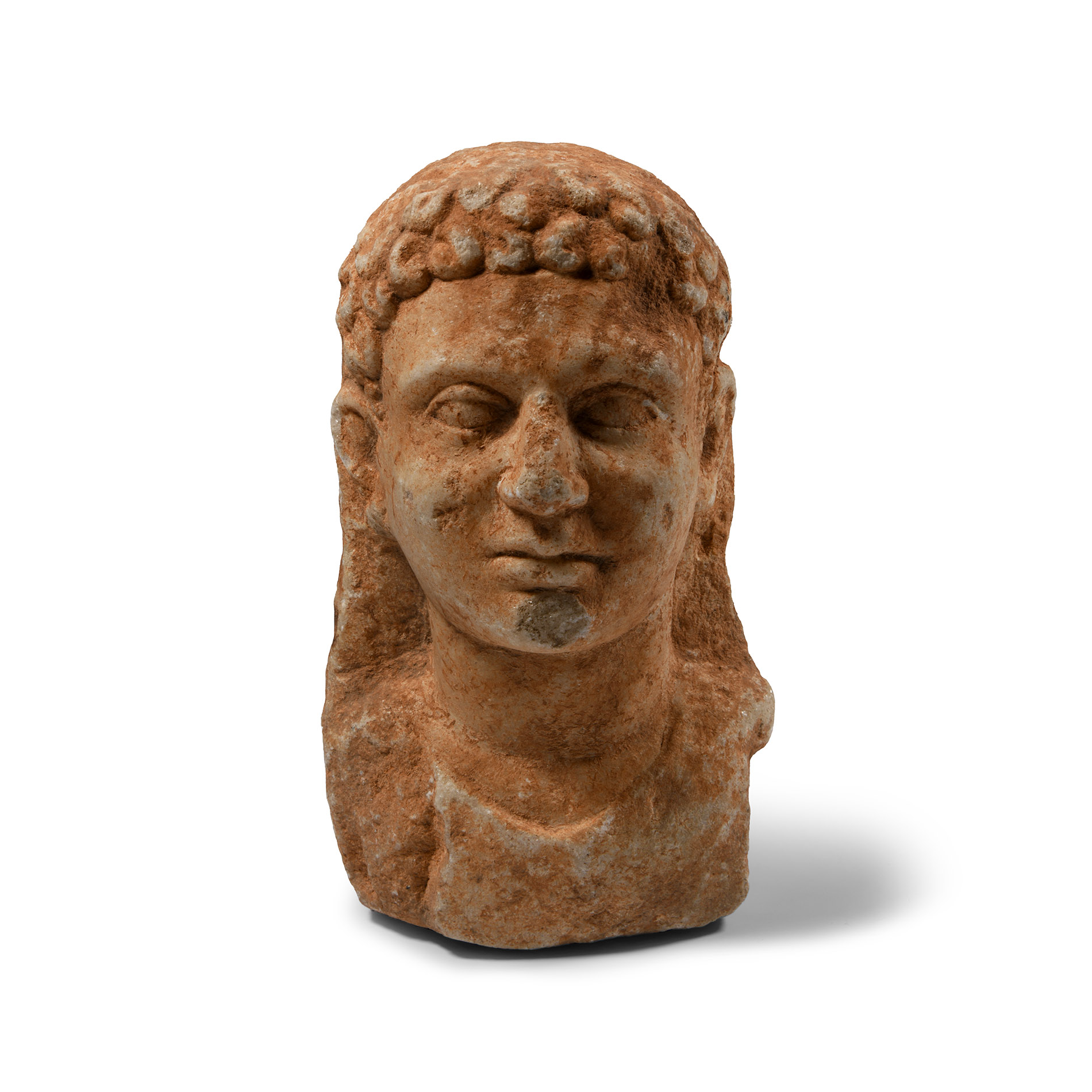
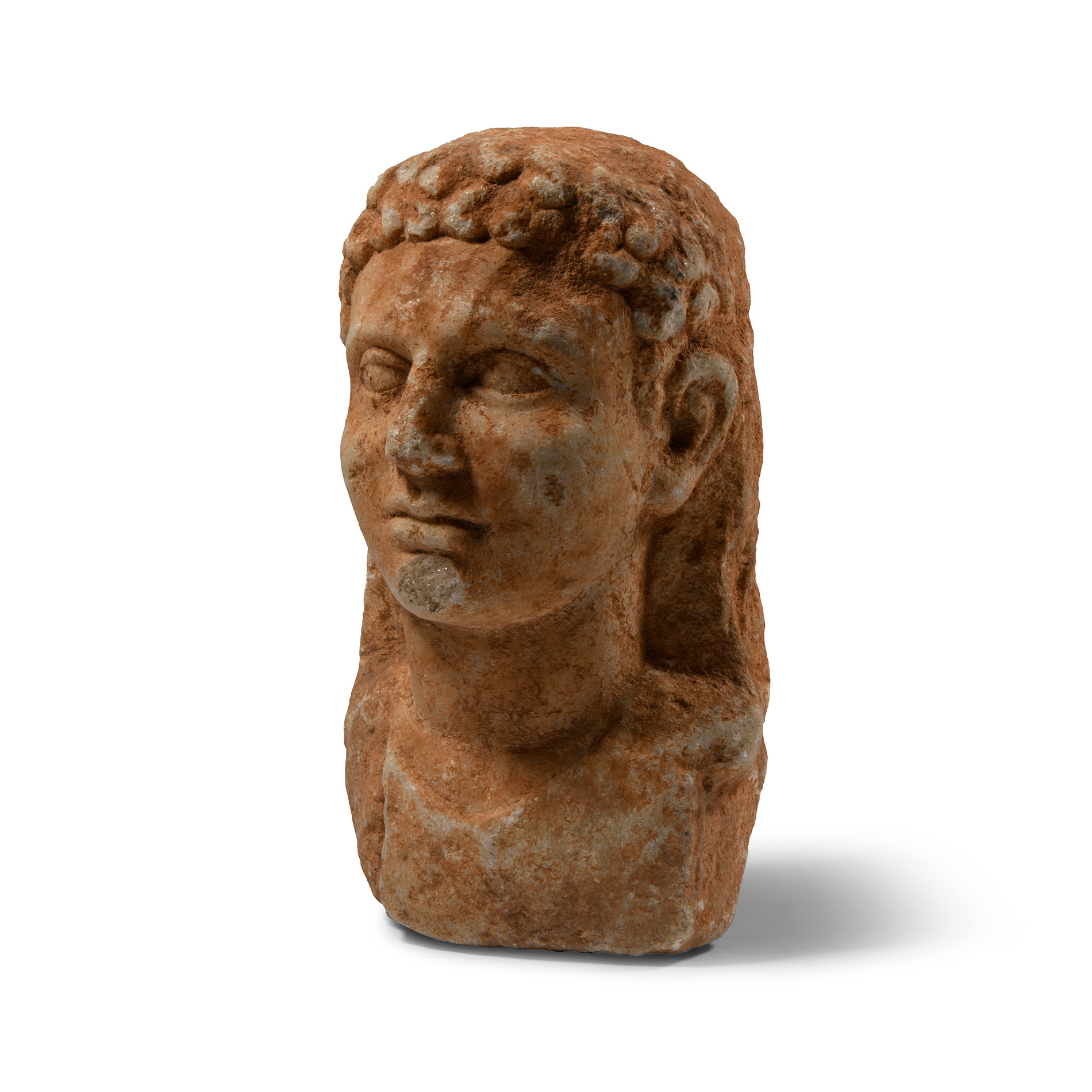
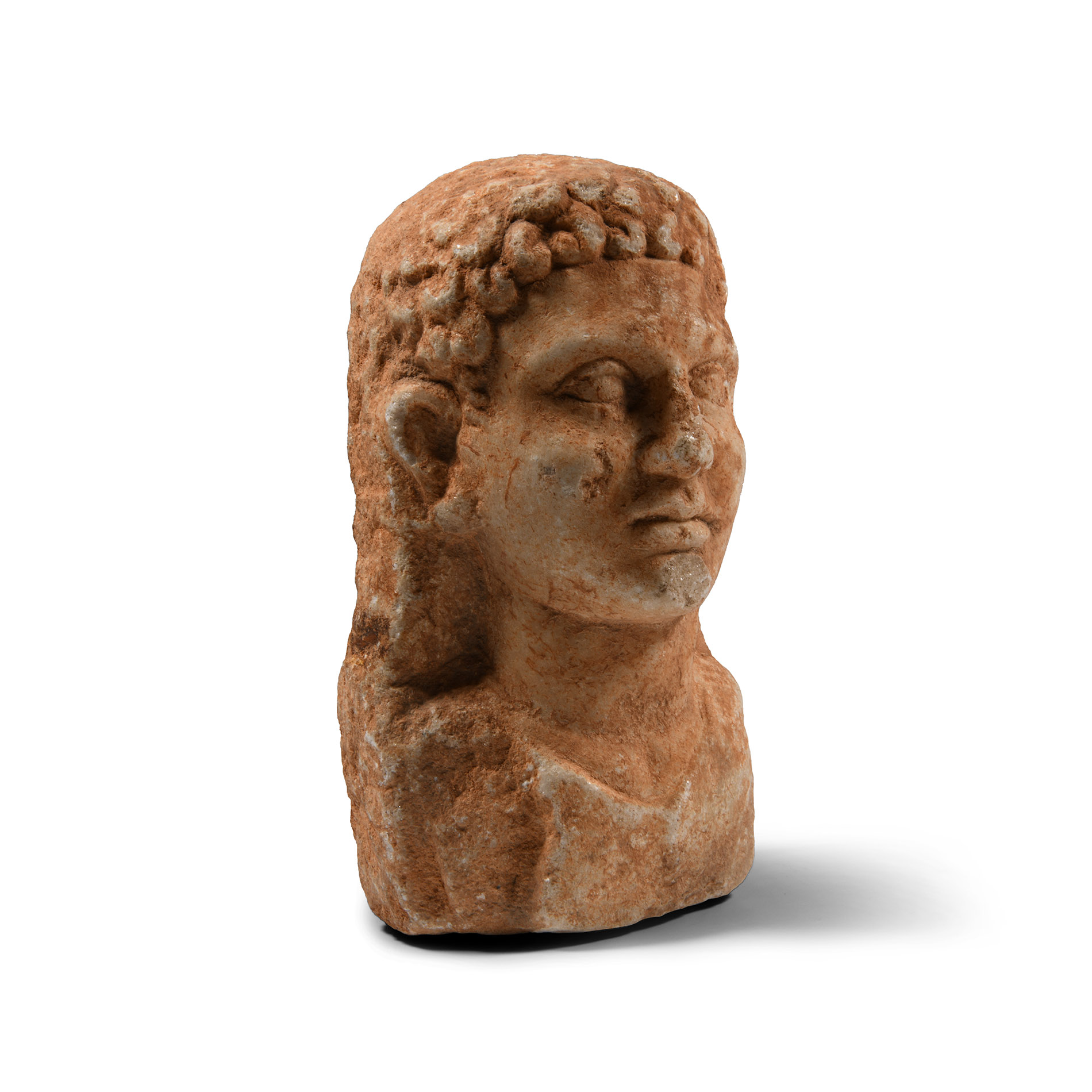
Roman Marble Bust of a Kouros
CIRCA 1ST CENTURY A.D.
8 5/8 in. (4.1 kg, 22 cm high).
Carved in the half-round as a bust of a kouros youth with soft features and tiered hair hanging in hanks to the sides of the clean-shaven face; flat to the reverse.
ProvenanceEx Paris collection.
French gallery, Paris, 1990-2000s.
This lot has been checked against the Interpol Database of stolen works of art and is accompanied by search certificate no.11959-209638.
Cf. similar figure in the British Museum, London, under accession no.1878,0120.1.
CONDITIONTimeLine Auctions follows a vetting process to ensure the authenticity and legality of all items, reinforcing our commitment to integrity and responsible trading. Each antiquity, antique, and coin lot undergoes thorough examination by a vetting committee of at least ten external specialists, professional trade association members, scientists, and archaeologists: Our Vetting Process
AUCTIONS:
TimeLine is a leading auction house specialising in antiquities, ancient art, collectables, natural history, coins, medals, and books. Our auctions offer museums, collectors, historians, and enthusiasts the opportunity to acquire unique and historically significant pieces.
LOT 0148
Roman Marble Bust of a Kouros
Estimate £3,500 - 4,500€4,060 - 5,220 (for guidance only)$4,730 - 6,080 (for guidance only)
-
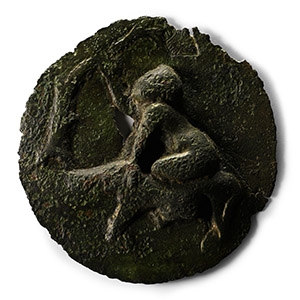
Roman 'The Wakefield' Bronze Founding of Rome Commemorative Military Phalera
1st century B.C.-1st century A.D.Estimate: £1,000 - 1,400 (+bp*)
Opening Bid: £500
With high-relief image depicting a she-wolf in profile advancing beneath a tree, with an infant or boy (Romulus?) on its back, nude and looking up towards the tree. 39 grams, 62 mm
Mostly intact, good condition.
Believed to have been found in Wakefield, UK, in the 1960s. From the Roman 'Invasion Period' private collection of Brian Riley, Wakefield, UK, 1960s-2007. Acquired from Brian Riley, Yorkshire, UK, circa 2007. Property of a Stowmarket, UK, gentleman. Accompanied by an academic report by Dr Raffaele D’Amato.
Military phalerae usually depicted heads of the gods, spirits of the underworld, birds and lions. The higher officers in the Roman army had the custom of wearing a rich suite of phalerae with its straps directly attached to leather garments or doublets, worn over their armour. These decorations were awarded in sets, commonly of nine, although sources confirm that this was not an always the case. -
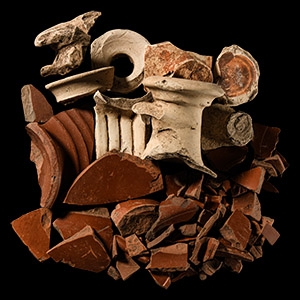
Roman 'Vechten Fort' Terracotta Sherd Collection
1st-4th century A.D.Sold for (Inc. bp): £33
Comprising a large quantity of pottery and red-ware sherds from large and small vessels, including an amphora neck and part of a handle. 586 grams total, 7-74 mm
Found near Vechten, Netherlands. Netherlands private collection. Acquired from a private collector in 2009. Property of a Nottinghamshire gentleman. Accompanied by a typed information sheet.
Fectio, modern Vechten, was a fort in the limes, the frontier zone of the Roman Empire, situated at the site of the bifurcation of the rovers Rhine and Vecht. Numismatic evidence suggests that it was founded by the Roman general Tiberius (the future emperor) during the 4/5th campaigns. It probably served as a military base during punitive raids. Around the middle of the 2nd century AD, the wood and earth fort was replaced by a stone fortification and occupied by the Ala I Thracum, who had previously been stationed in Britain. At the end of the 2nd/beginning of the 3rd century, the silting up of the Rhine’s arm on which Fectio lays had progressed to such an extent that access from the river was no longer possible. In the more than two and a half centuries of its existence, the camp was destroyed and rebuilt several times until the fort site was finally abandoned - as evidenced by archaeological traces of fire after a final destruction in 270/275 A.D. -
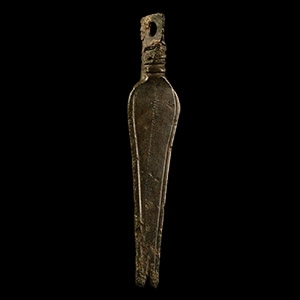
Roman Bronze Lanceolate Nail Cleaner
Circa 2nd-3rd century A.D.Sold for (Inc. bp): £33
Of pendant type with ribbed loop, flat-section neck with chamfered sides, piriform plate extending to split finial; central vertical panel of engraved Late Roman military style zig-zag ornament. 3.23 grams, 49 mm
Acquired late 1980s-early 1990s. Ex private collection, Nottinghamshire, UK. Acquired on the UK art market in 2012. Property of a Kent lady collector.
