
Loading, please wait...
LOT 0678
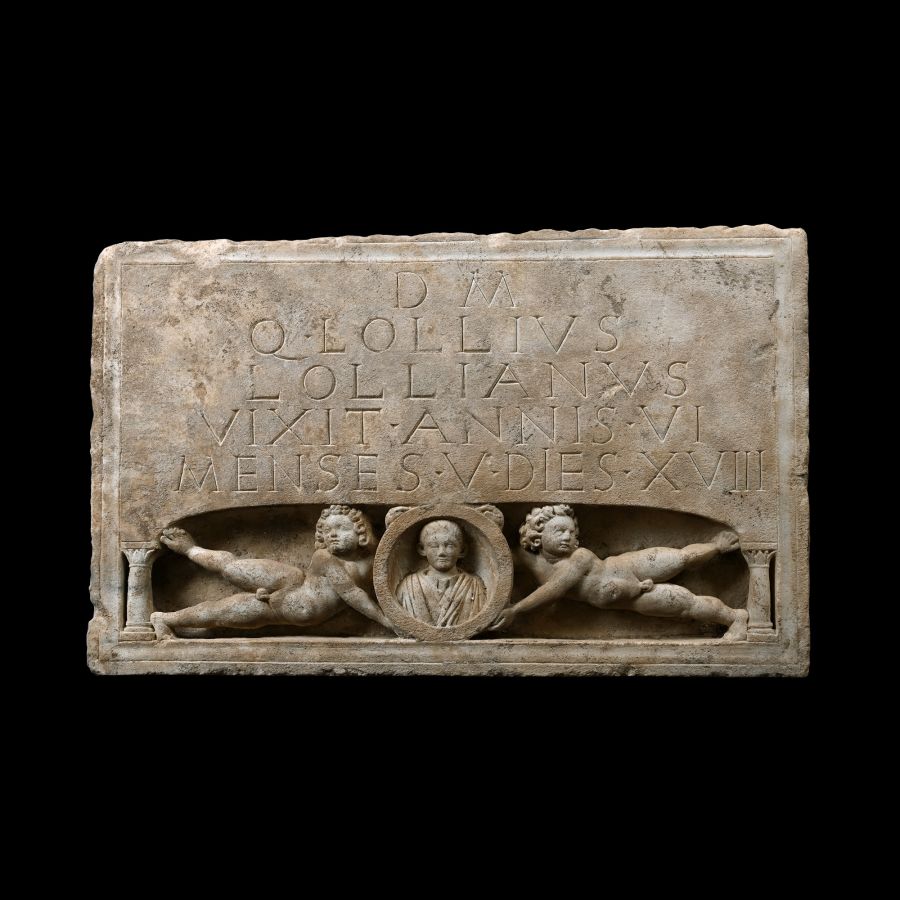
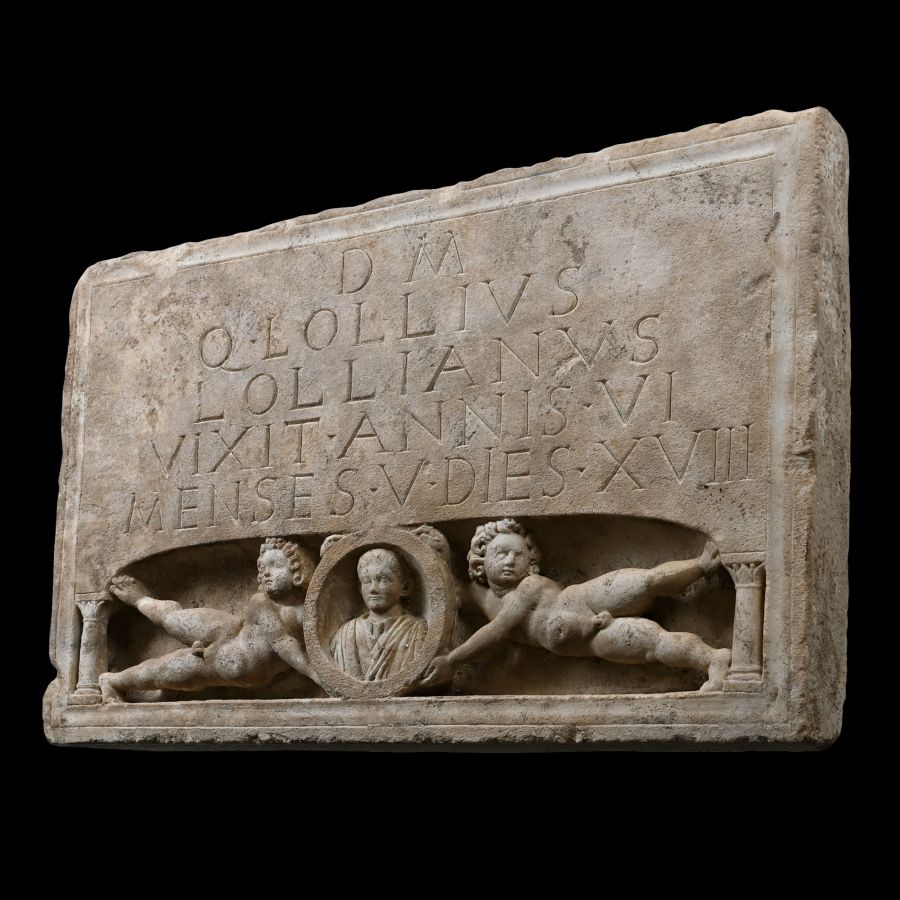
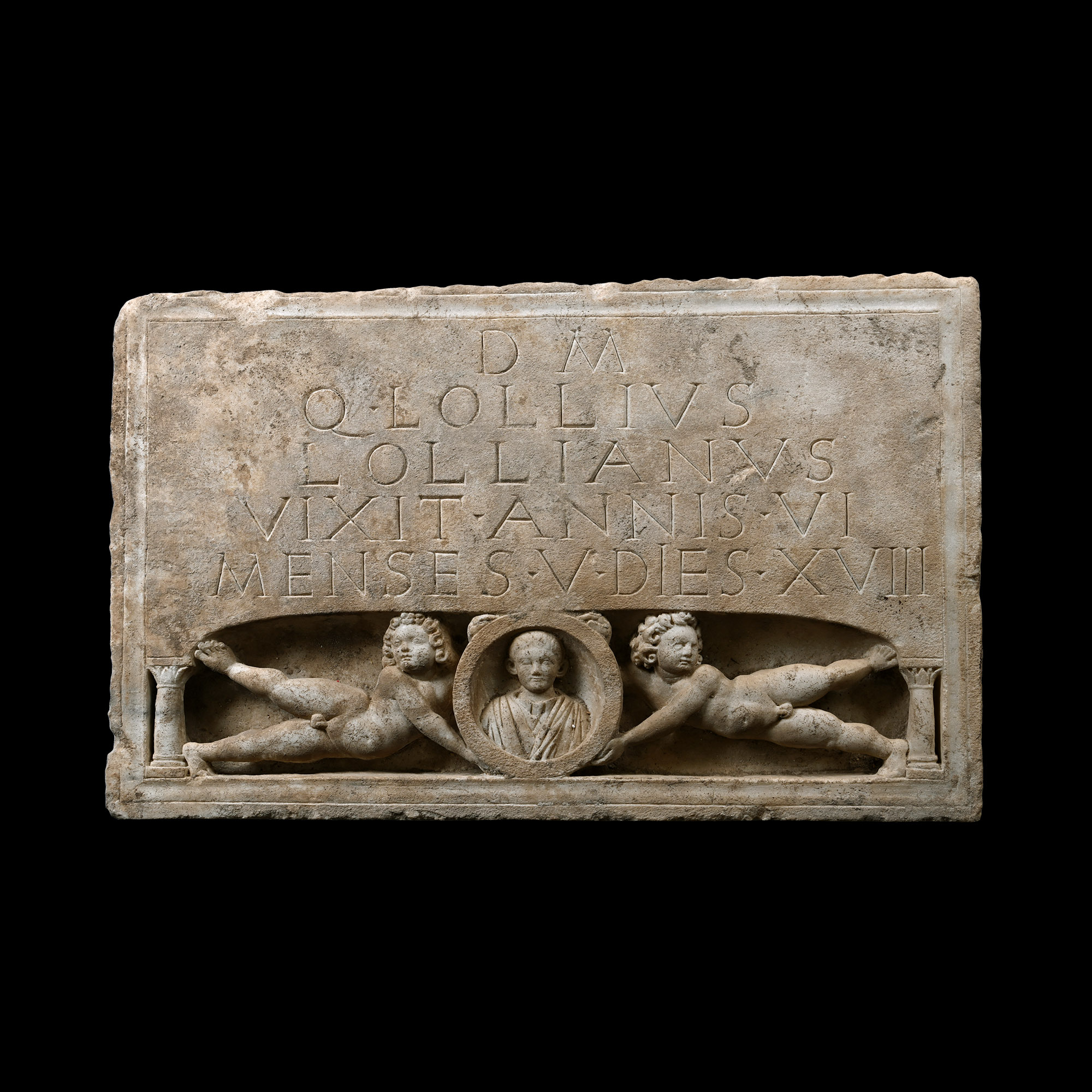
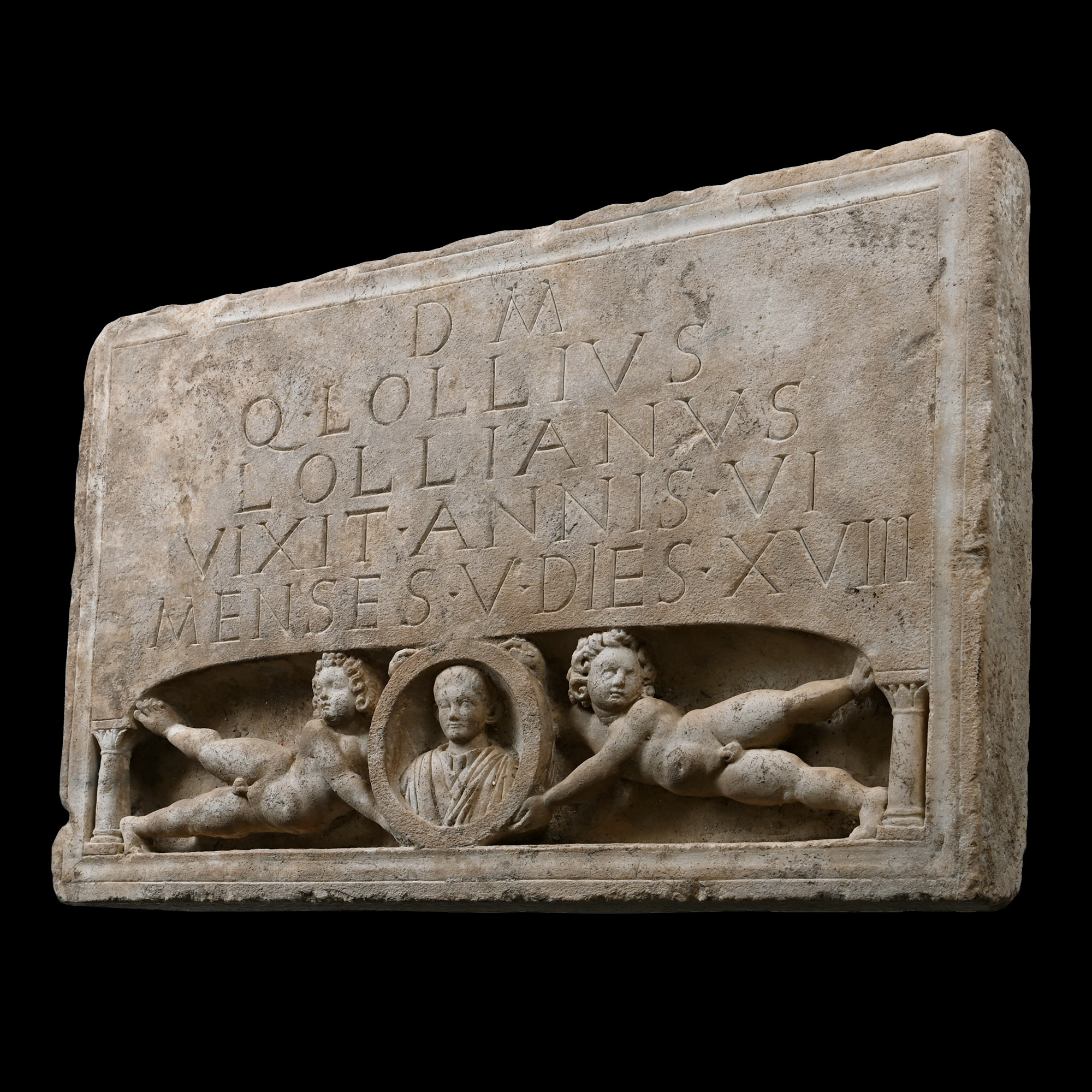
Roman Limestone Stele with Nude Putti
2ND-3RD CENTURY A.D. AND LATER
15 x 24 1/4 in. (40.1 kg, 38 x 61.5 cm).
Rectangular in plan with recessed panels to the lower edge, central bust of the deceased boy in a tondo supported by two nude horizontal putti with their legs extended towards a short column; deep undercuts to the columns and recess; later inscription in seriffed capitals 'DM / Q LOLLIVS / LOLLIANVS / VIXIT ANNIS VI / MENSES.V. DIES .XVIII.' [No Reserve]
ProvenanceFrom the private Netherlands collection of Mr Edward P. Van Dijk (1942-2024); his collection formed since the 1970s.
This lot has been checked against the Interpol Database of stolen works of art and is accompanied by search certificate number no.13243-251959.
Cf. Castagnoli, F., Il Vaticano nella Antichita' Classica, Roma, 1992, fig.135, for similar sarcophagi.
FootnotesThe inscription reports the usual dedication to the deceased, in this case a young boy six years of age: 'To the manes (spirits of the dead), Q(uintus) Lollius Lollianus, he lived 6 years, 5 months and 18 days'.
CONDITIONTimeLine Auctions follows a vetting process to ensure the authenticity and legality of all items, reinforcing our commitment to integrity and responsible trading. Each antiquity, antique, and coin lot undergoes thorough examination by a vetting committee of at least ten external specialists, professional trade association members, scientists, and archaeologists: Our Vetting Process
AUCTIONS:
TimeLine is a leading auction house specialising in antiquities, ancient art, collectables, natural history, coins, medals, and books. Our auctions offer museums, collectors, historians, and enthusiasts the opportunity to acquire unique and historically significant pieces.
-
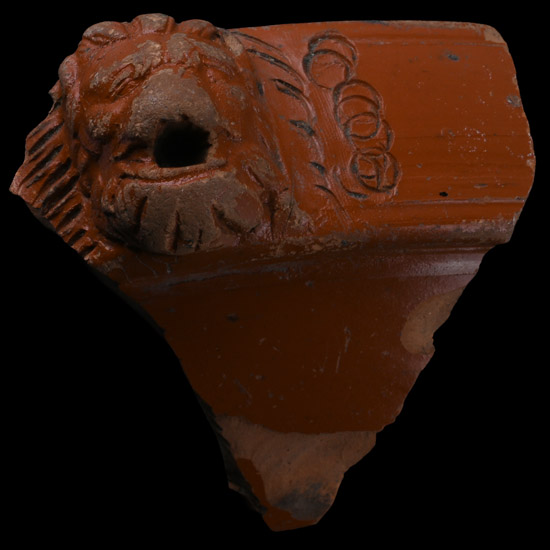
Roman Red Ware Platter Fragment with Lion's Head
Circa 3rd-4th century A.D.Sold for (Inc. bp): £65
A thick rim fragment with a high-relief lion face with an open mouth. 61 grams, 79.4 mm
From the private collection of Mr Brian Edwards, New Malden, Surrey, UK, formed from the late 1970s-early 1980s; thence by descent. Accompanied by the original collector's data sheet with reference no.A48. -
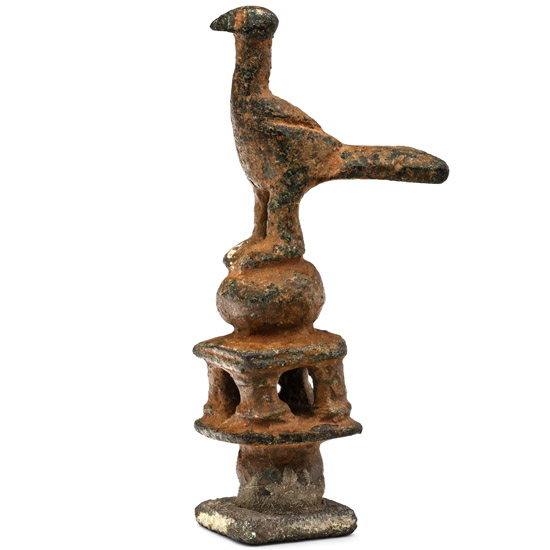
Eastern Roman Bronze Bird Statuette
2nd-4th century A.D.Sold for (Inc. bp): £221
Modelled as a stylised bird standing on a globe atop an openwork pillar, the bird with wide tail and bulbous eyes. 27.5 grams, 54 mm
Ex German art market, 2000s. Acquired from an EU collector living in London. From the collection of a Surrey, UK, gentleman. -
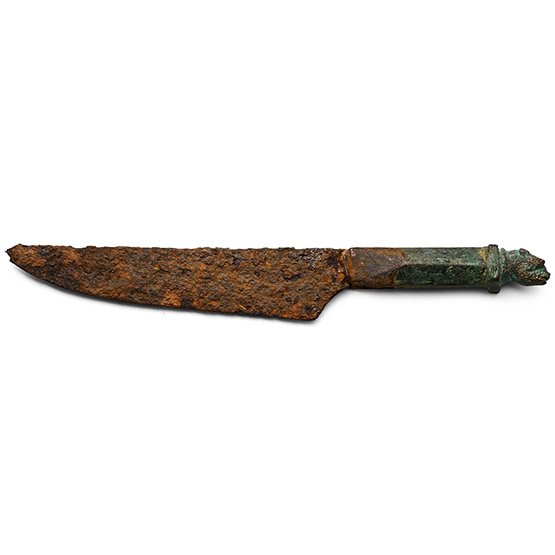
Roman Iron Knife with Bronze Dog's Head Handle
1st-4th century A.D.Sold for (Inc. bp): £260
Comprising a single-edged iron blade with a short facetted bronze handle, the pommel formed as a stylised dog head. 36.2 grams, 14.1 cm
Ex German art market, 2000s. Acquired from an EU collector living in London. From the collection of a Surrey, UK, gentleman.
