
Loading, please wait...
LOT 0579
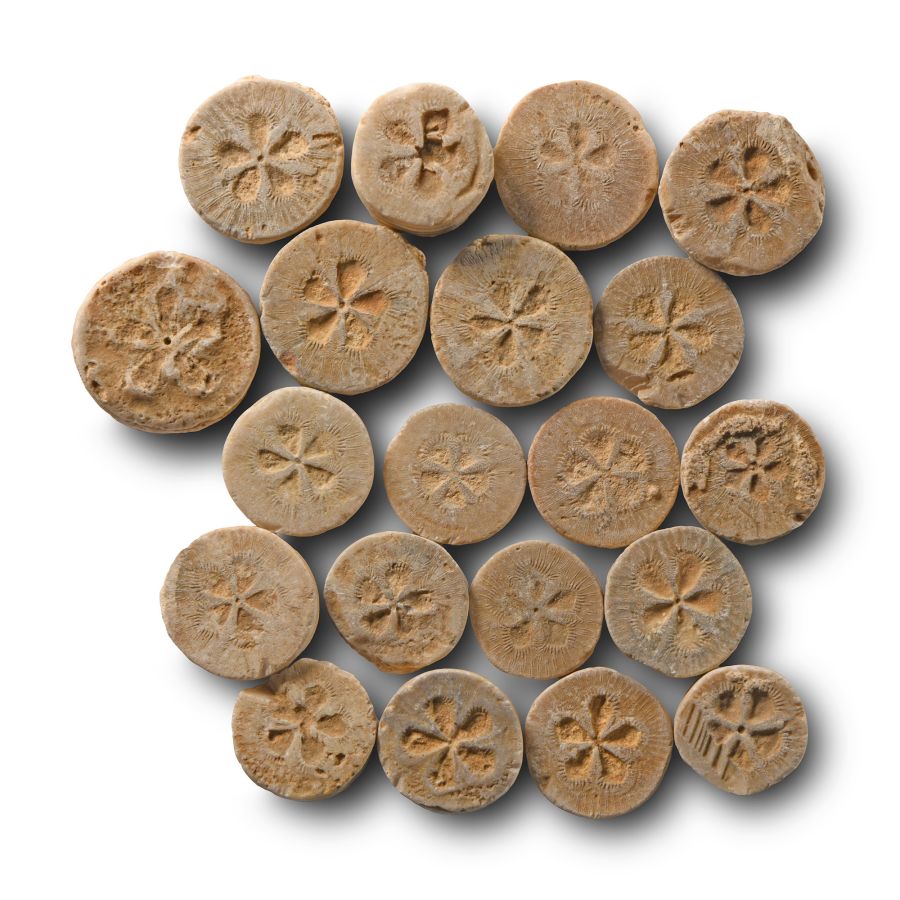
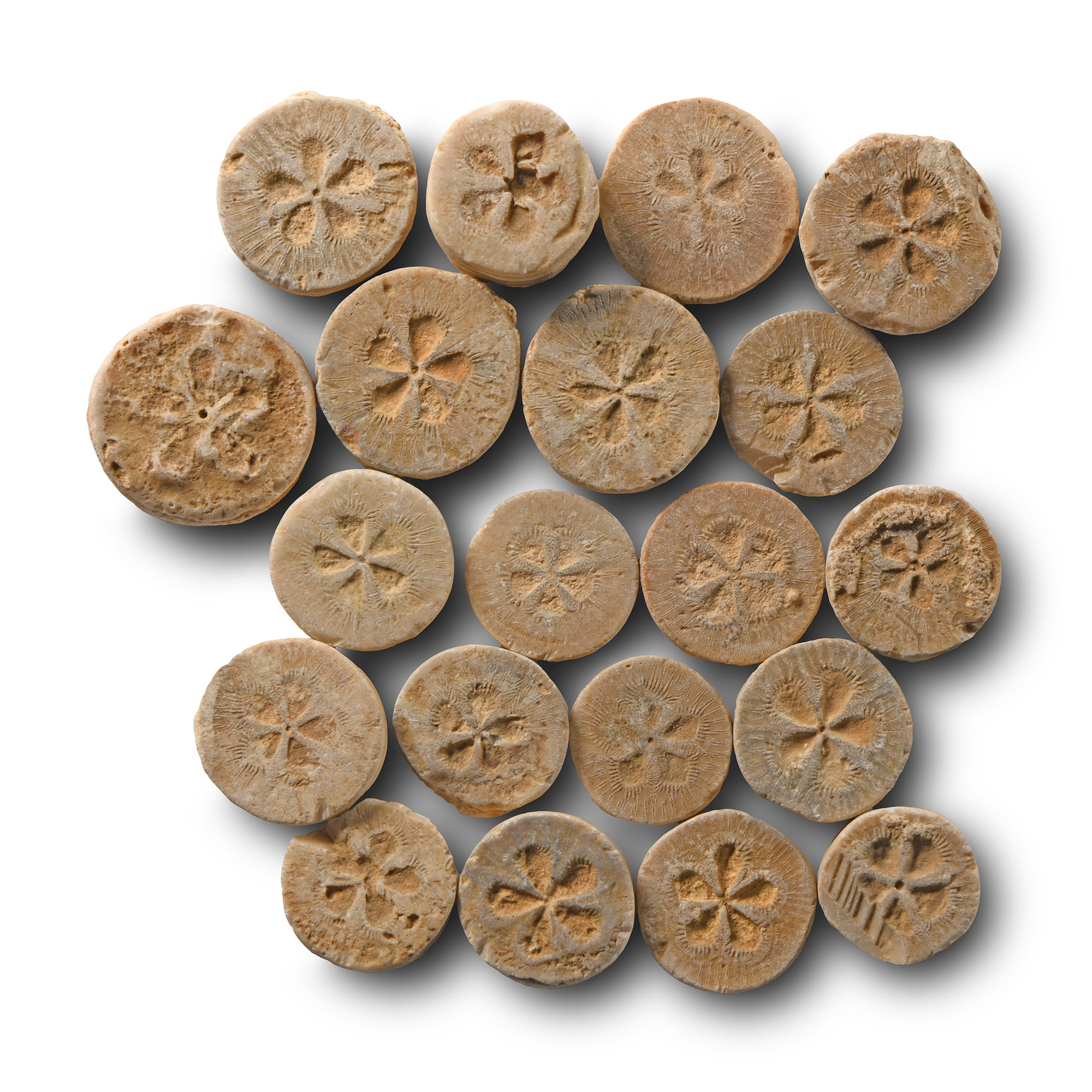
Roman Limestone Gaming Counter Group
1ST-4TH CENTURY A.D.
1/2 - 3/4 in. (36 grams total, 13-19 mm).
Twenty discoid limestone counters each with an incuse cinquefoil to both faces. [20, No Reserve]
ProvenancePrivate collection formed in the 1990s.
Acquired from a central London gallery.
Property of an Essex gentleman.
TimeLine Auctions follows a vetting process to ensure the authenticity and legality of all items, reinforcing our commitment to integrity and responsible trading. Each antiquity, antique, and coin lot undergoes thorough examination by a vetting committee of at least ten external specialists, professional trade association members, scientists, and archaeologists: Our Vetting Process
AUCTIONS:
TimeLine is a leading auction house specialising in antiquities, ancient art, collectables, natural history, coins, medals, and books. Our auctions offer museums, collectors, historians, and enthusiasts the opportunity to acquire unique and historically significant pieces.
-
.jpg)
Roman Intaglio Gemstone
Circa 2nd-3rd century A.D.Estimate: £150 - 200 (+bp*)
Opening Bid: £75
With intaglio bird perching on a twig; supplied with a museum-quality impression. 0.38 grams, 10 mm
From the collection of a Swiss gentleman formed in Europe from 1970-1980s; thence by descent from the family in London. -
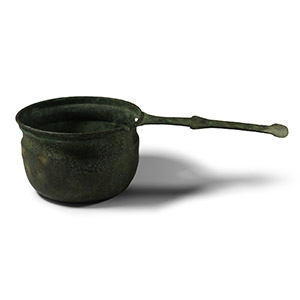
Roman Bronze Skillet
2nd-4th century A.D.Sold for (Inc. bp): £286
With a deep bowl and convex base, everted rim with a rounded lip; with restored flat-section handle with oval finial. 387 grams, 33 cm wide
From a family collection formed in the 1970s-1980s. From the Inglismaldie Castle estate, Angus, Scotland, by descent to the current owner. -
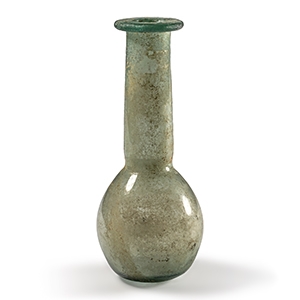
Roman Tall Pale Blue Glass Vial
3rd century A.D.Sold for (Inc. bp): £117
Bulbous with flat base, tall stem neck, splayed rim with an in-folded lip. 46 grams, 12.7 cm high
Acquired 1980-2015. Ex Abelita family collection.
During the early Roman period the glass-making techniques used by the Greeks were continued. Much of the glass was buried and as a result acquired an attractive lustrous patination. Roman glass became a medium for the promotion of the emperor and imperial propaganda, as well as having utilitarian purposes. Glass blowing, a new technique, meant that quantities of identical bottles could be produced.
