
Loading, please wait...
LOT 0120
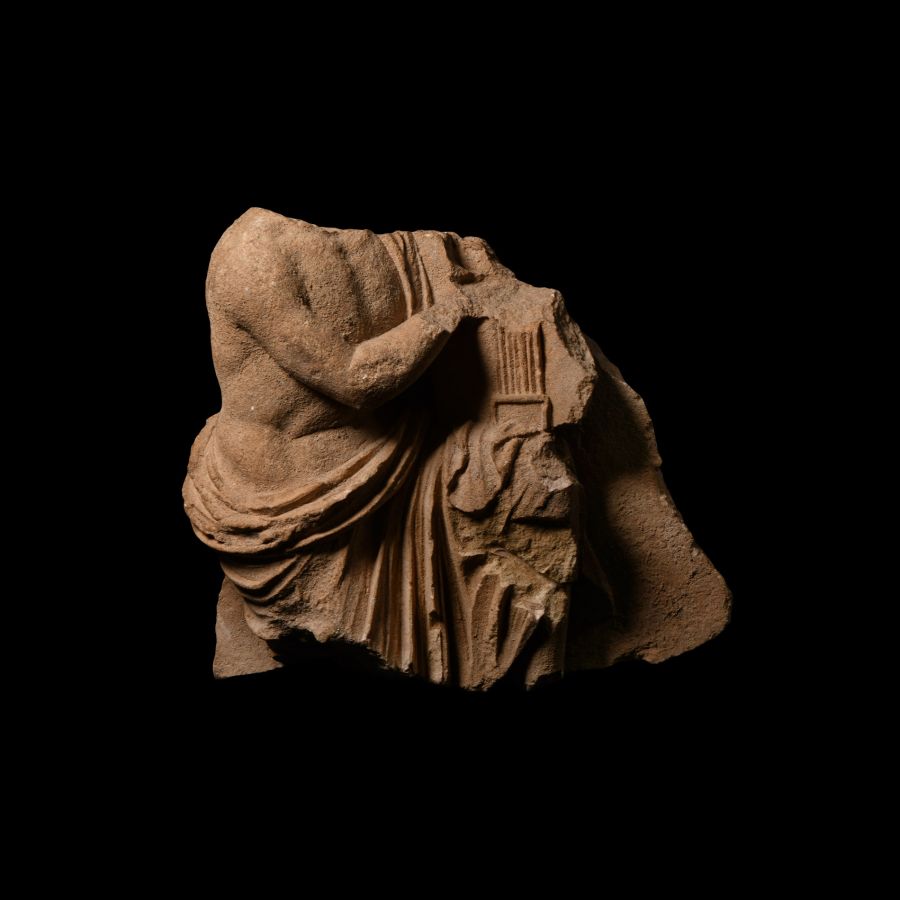
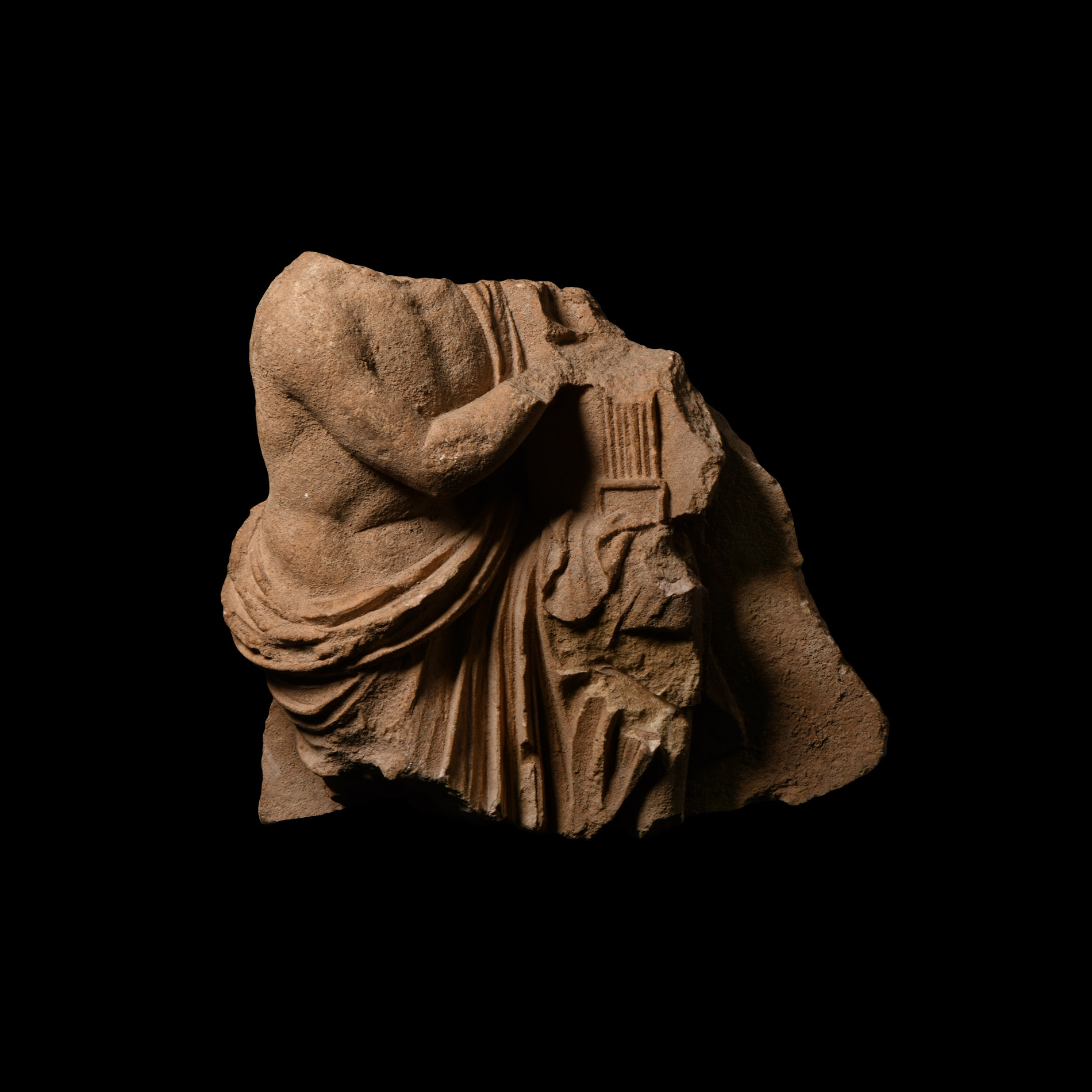
Roman Limestone Fragment of Draped Musician
CIRCA 1ST CENTURY A.D.
6 3/4 in. (1.98 kg, 17 cm).
A fragment of a carved limestone scene depicting a seated musician wearing a toga virilis draped to his shoulder and tucked at the waist, hanging over his bent knee supporting a lyre or cithara with seven strings.
ProvenanceEx Ingrid McAlpine, 1939-2018, London and Epsom, UK.
CONDITIONTimeLine Auctions follows a vetting process to ensure the authenticity and legality of all items, reinforcing our commitment to integrity and responsible trading. Each antiquity, antique, and coin lot undergoes thorough examination by a vetting committee of at least ten external specialists, professional trade association members, scientists, and archaeologists: Our Vetting Process
AUCTIONS:
TimeLine is a leading auction house specialising in antiquities, ancient art, collectables, natural history, coins, medals, and books. Our auctions offer museums, collectors, historians, and enthusiasts the opportunity to acquire unique and historically significant pieces.
-
Roman Gold Earring Pair
1st-3rd century A.D.Sold for (Inc. bp): £546
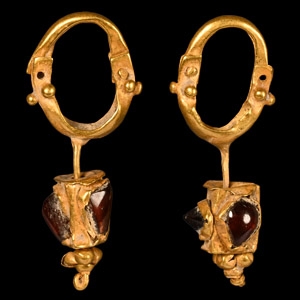
A matched pair of gold earrings, each a substantial hoop with hinged closure and granule detailing, columnar sleeve with applied cells and inset carnelian cloisons, granule cluster finial. 3.45 grams total, 31 mm each
Acquired early 1990s. Ex private American collection; thence by descent. Private collection since 1998. -
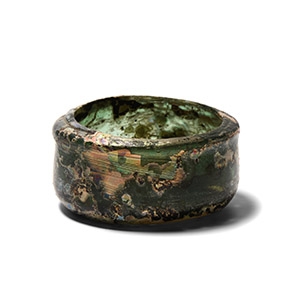
Roman Glass Cosmetic Dish
1st-3rd century A.D.Sold for (Inc. bp): £169
A green glass cosmetic dish or jar with a squat body and inverted rim; iridescent surfaces. 60 grams, 56 mm wide
French collection, 1960s-early 2000s. From an important Paris gallery, France. -
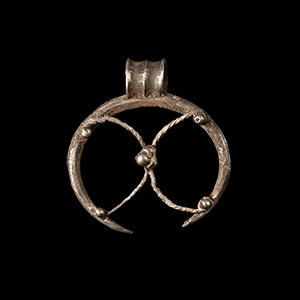
Roman Silver Openwork Lunar Pendant
2nd-3rd century A.D.Sold for (Inc. bp): £143
A silver lunula pendant composed of a crescentic body straddled by a slender silver wire X-motif embellished with granules; ribbed suspension loop. 3.77 grams, 29 mm
Acquired before 2000. From the collection of a European gentleman living in the UK.
