
Loading, please wait...
LOT 0646
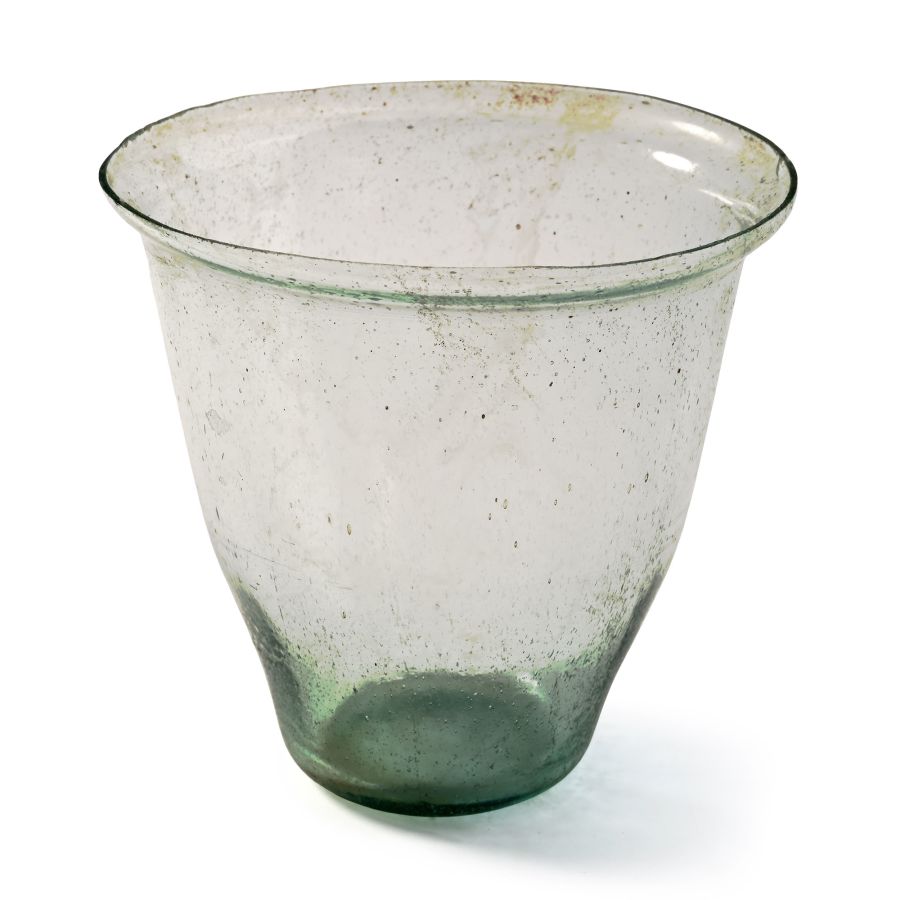
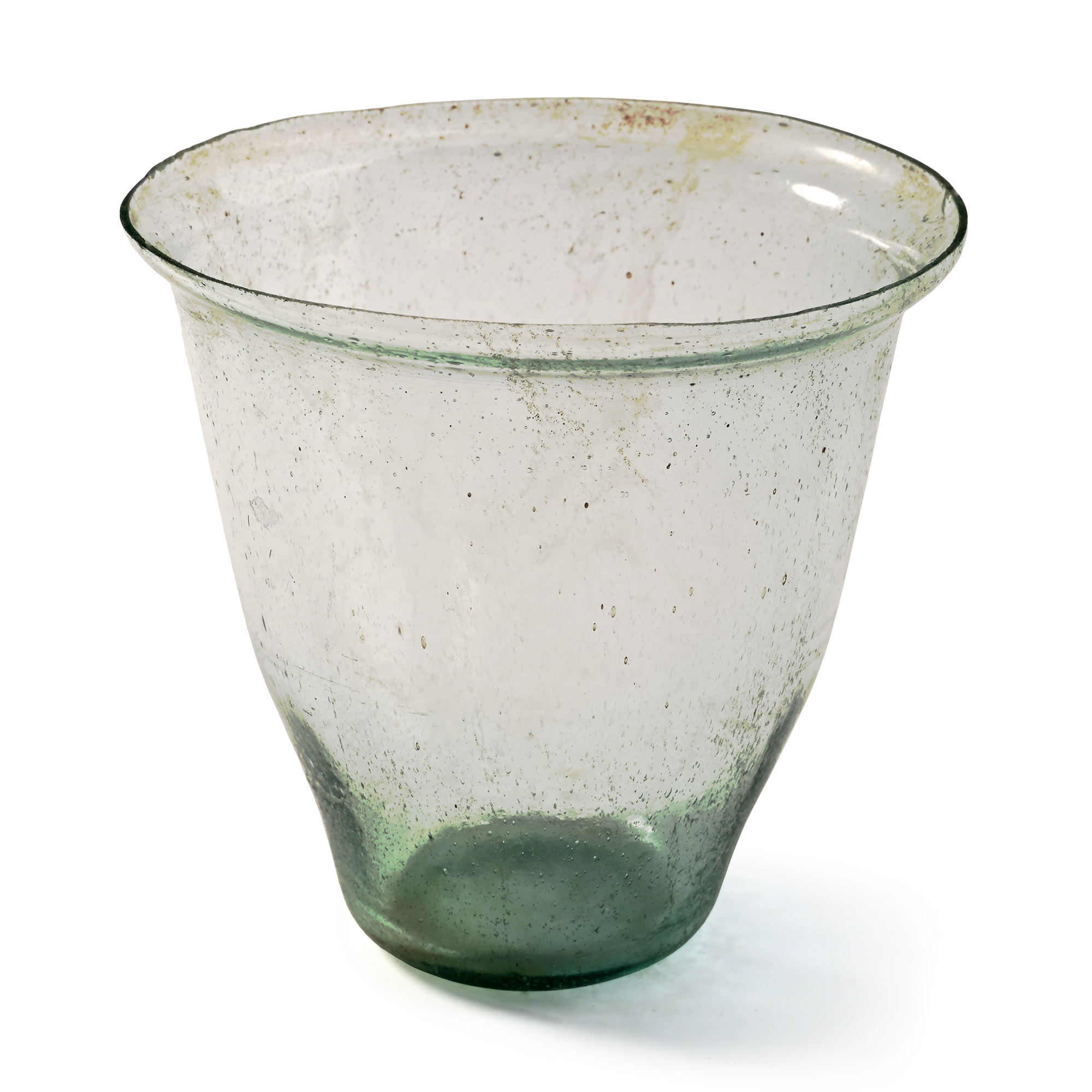
Roman Light Green Glass Lamp
CIRCA 4TH CENTURY A.D.
3 1/8 in. (41 grams, 80 mm).
Tapering body with pontil base, slightly everted rim; traces of iridescence.
ProvenanceFrom an important collection of glass, London, UK, 1990s.
LiteratureCf. The Metropolitan Museum of Art, item 74.51.310, for type of more pronounced conical form.
CONDITIONTimeLine Auctions follows a vetting process to ensure the authenticity and legality of all items, reinforcing our commitment to integrity and responsible trading. Each antiquity, antique, and coin lot undergoes thorough examination by a vetting committee of at least ten external specialists, professional trade association members, scientists, and archaeologists: Our Vetting Process
AUCTIONS:
TimeLine is a leading auction house specialising in antiquities, ancient art, collectables, natural history, coins, medals, and books. Our auctions offer museums, collectors, historians, and enthusiasts the opportunity to acquire unique and historically significant pieces.
LOT 0646
Roman Light Green Glass Lamp
Estimate £250 - 350€290 - 410 (for guidance only)$340 - 470 (for guidance only)
-
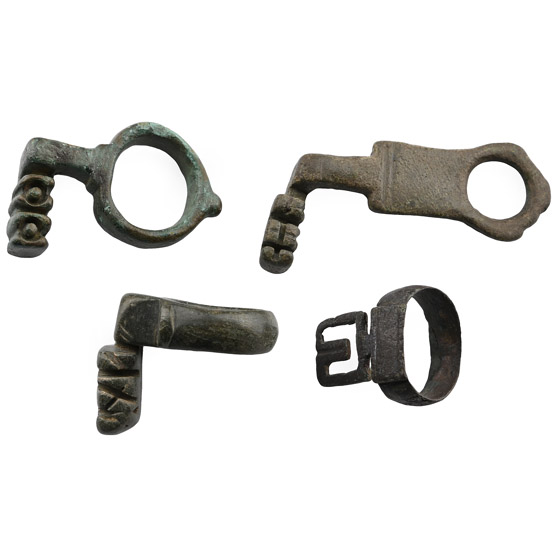
Roman Bronze Key Collection
1st-4th century A.D.Sold for (Inc. bp): £143
Including triangular and round bits, and other types. 54 grams total, 20-47 mm
Ex German art market, 2000s. Acquired from an EU collector living in London. From the collection of a Surrey, UK, gentleman. -
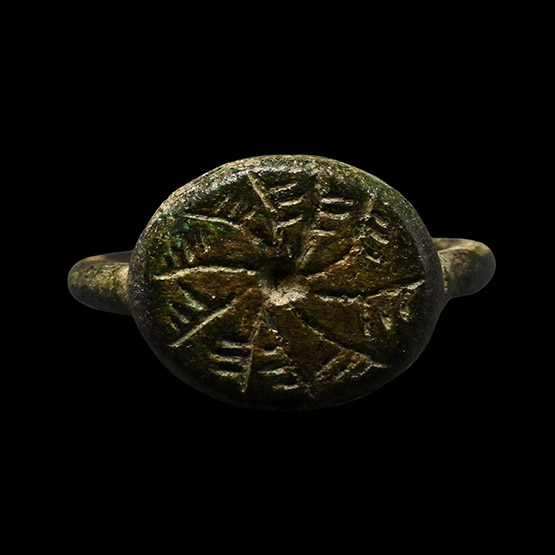
Romano-Celtic Bronze Ring with Tree of Life
1st century B.C.- 1st century A.D.Sold for (Inc. bp): £195
Slender D-section hoop with large discoid bezel with incuse tree of life motif. 7.62 grams, 26.22 mm overall, 19.80 mm internal diameter (approximate size British U, USA 10, Europe 22.52, Japan 21)
Acquired on the UK and EU art market before 2000. From the private collection of a Surrey, UK, gentleman.
The ring belongs to the category where the bezel and the ring’s platform merge together, forming a round plate. The round bezel is often decorated with an animal figure, but in this specimen, it is ornamented with the Celtic pattern of the Tree of Life. -
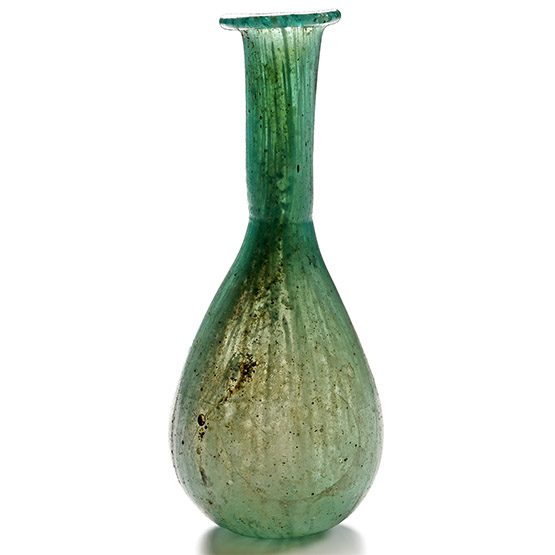
Roman Marbled Turquoise Glass Bottle
1st century A.D.Estimate: £500 - 700 (‡+bp*)
Opening Bid: £250
Comprising an iridescent piriform body, tapering tubular neck with pinched and everted rolled rim. 9.44 grams, 84 mm
Acquired on the European art market in 2001.
