
Loading, please wait...
LOT 0722
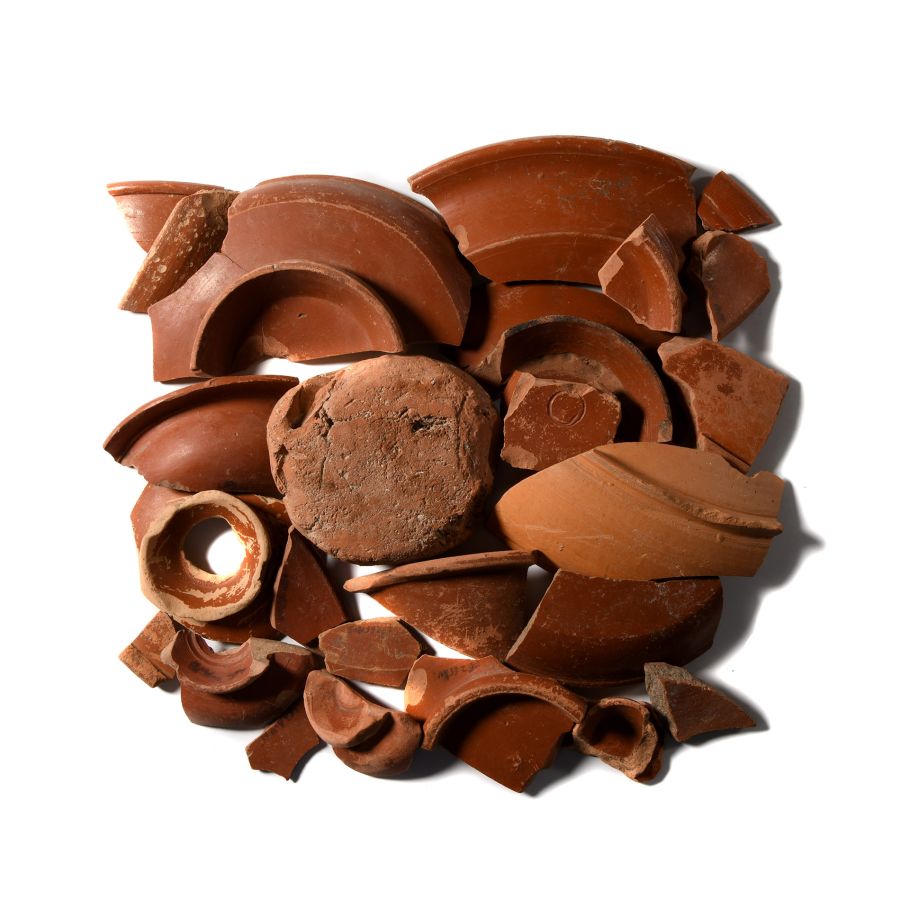
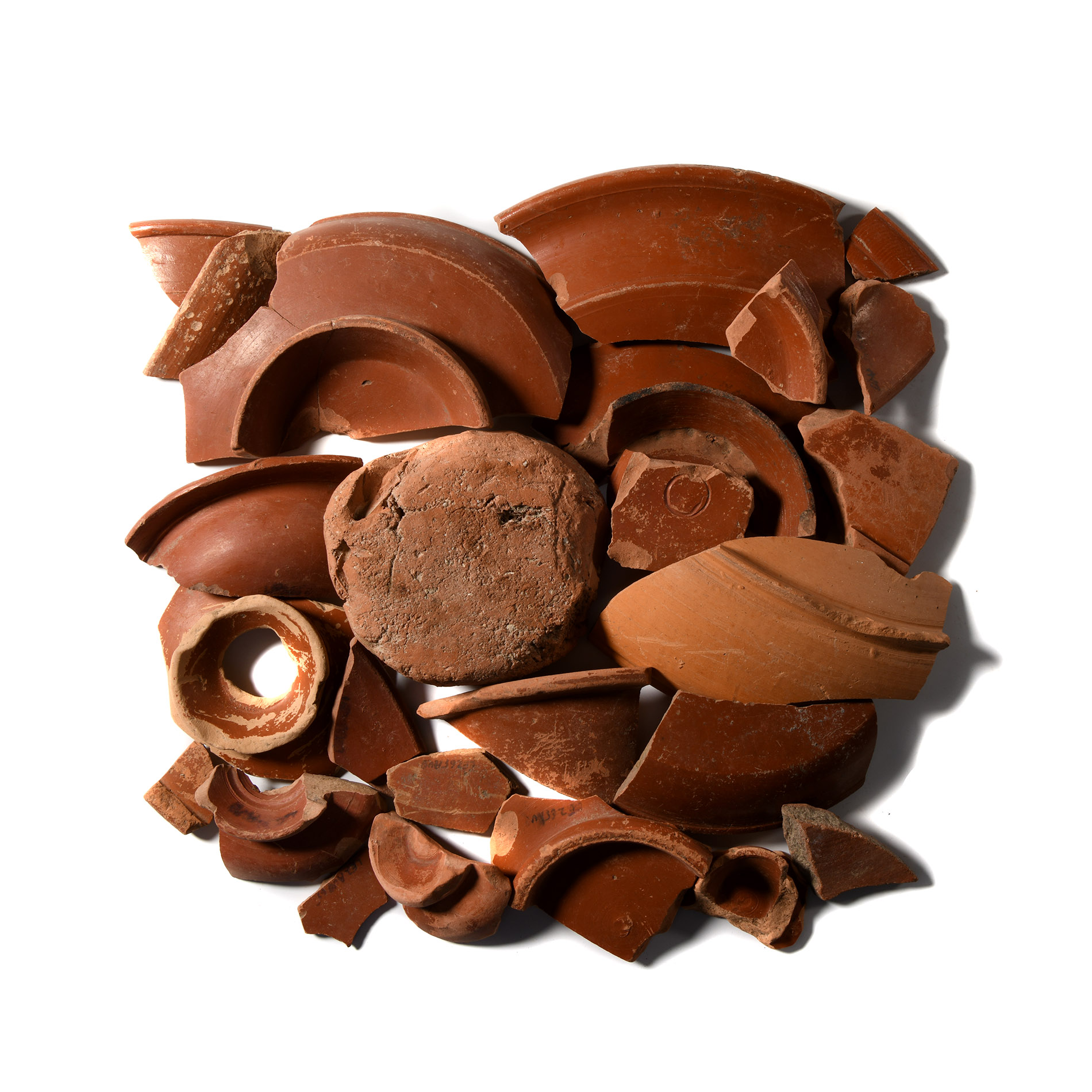
Roman 'Leicestershire' Redware Sherd Collection
3RD-4TH CENTURY A.D.
1 1/4 - 5 1/4 in. (900 grams total, 3.1-13.5 cm).
Comprising a large quantity of mixed vessel fragments, mostly displaying part of the base or rim, and a lump of unworked clay; some with old pencilled or inked collection numbers. [No Reserve]
ProvenanceAcquired from a private collector in 2004.
Property of a Nottinghamshire gentleman.
TimeLine Auctions follows a vetting process to ensure the authenticity and legality of all items, reinforcing our commitment to integrity and responsible trading. Each antiquity, antique, and coin lot undergoes thorough examination by a vetting committee of at least ten external specialists, professional trade association members, scientists, and archaeologists: Our Vetting Process
AUCTIONS:
TimeLine is a leading auction house specialising in antiquities, ancient art, collectables, natural history, coins, medals, and books. Our auctions offer museums, collectors, historians, and enthusiasts the opportunity to acquire unique and historically significant pieces.
-
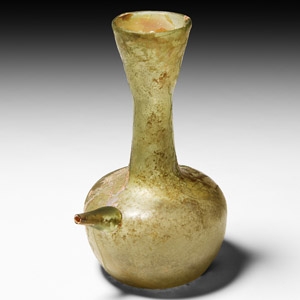
Roman Green Glass Nursing Bottle
4th-5th century A.D.Sold for (Inc. bp): £351
Composed of a squat bulbous body with broad shoulder, slender cylindrical neck with flared rim, conical spout to the shoulder; kick-up to base; iridescent surfaces. 50 grams, 13.7 cm high
Fine condition.
Paris collection, 1990s. From an important Paris gallery, France. Ex private Parisian collection. -

Roman Lead Bag Seal with XXIII
Circa 1st century B.C.Sold for (Inc. bp): £65
Circular in shape with a rectangular tag to the reverse; stamped with XXIII for the 23rd Legion, which was formed in the summer of 49 BCE by Julius Caesar. 4.83 grams, 25 mm
From a 1990s English collection. Property of an Essex gentleman. -
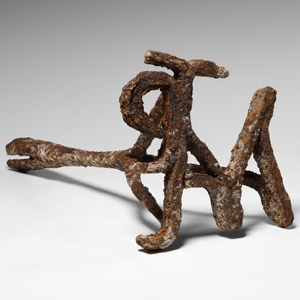
Late Roman Iron Branding Signaculum
5th-6th century A.D.Sold for (Inc. bp): £94
Featuring an elaborate monogram composed of Greek letters M, A, T and P on three supporting prongs; tapering cylindrical socket. 343 grams, 29.5 cm high
Acquired 1990s-early 2000s. East Anglian private collection.
Branding stamps or signacula, in particular those with large single letters, were used for marking livestock to identify the owner, the breed, the quality and other features of the animal. These signacula were usually made in bronze, but iron examples are also preserved.
