
Loading, please wait...
LOT 0670
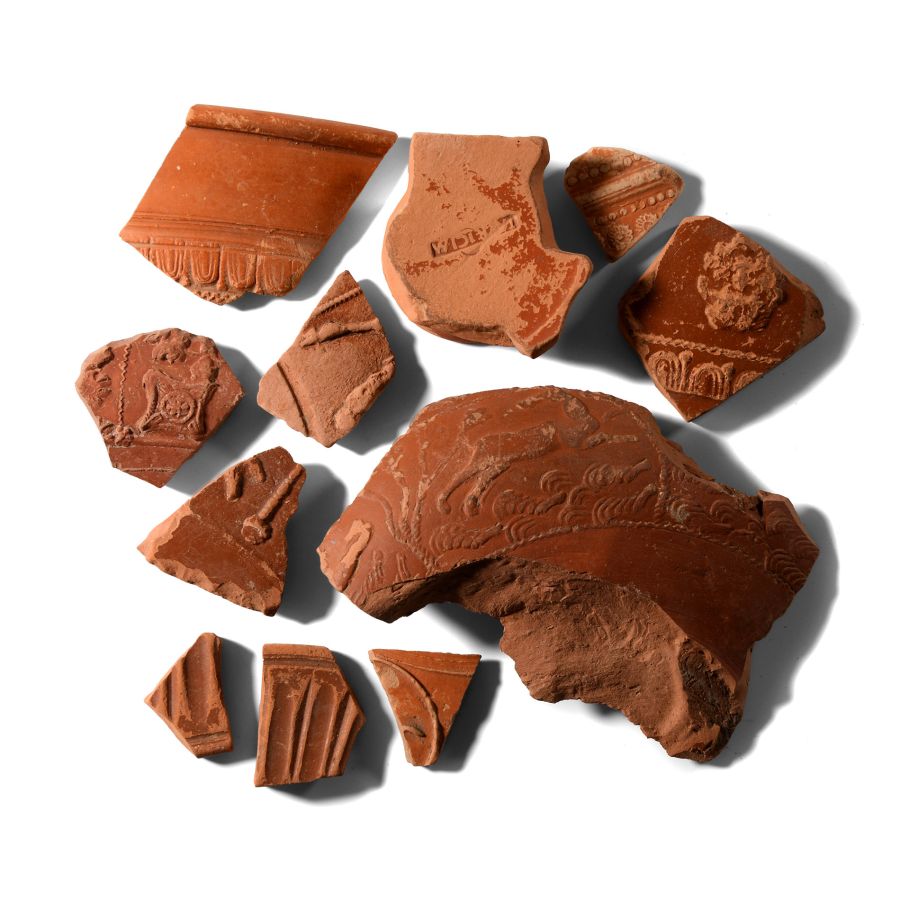
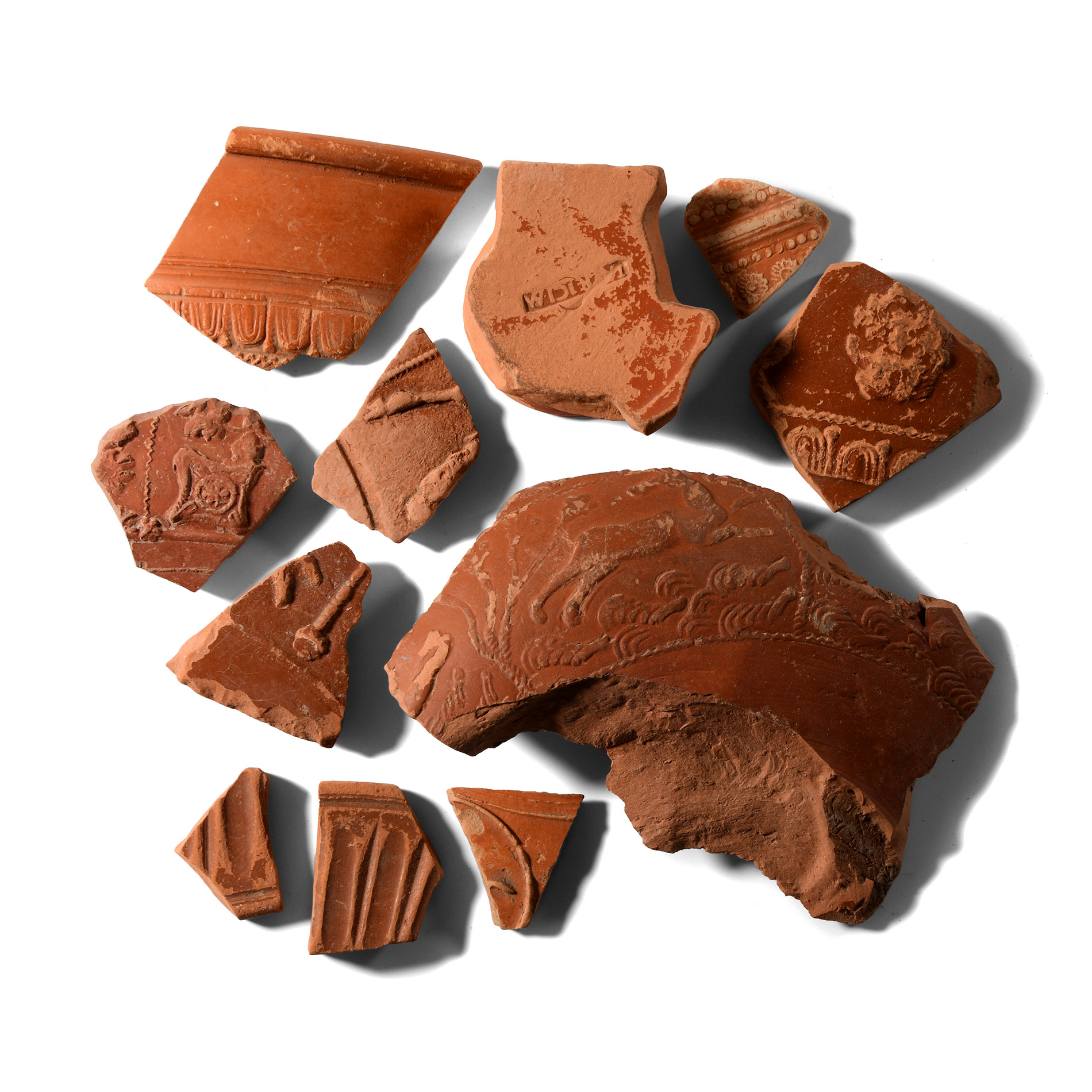
Roman 'Leicestershire' Decorated Redware Sherd Collection
3RD-4TH CENTURY A.D.
1 1/8 - 4 3/8 in. (185 grams total, 3-11.2 cm).
Comprising eleven fragments with low-relief decoration, one larger fragment with a leaping quadruped facing back, and the bottom of a platter stamped with maker's mark 'IA[ ]ICIM'. [11, No Reserve]
ProvenanceAcquired from a private collector in 2004.
Property of a Nottinghamshire gentleman.
TimeLine Auctions follows a vetting process to ensure the authenticity and legality of all items, reinforcing our commitment to integrity and responsible trading. Each antiquity, antique, and coin lot undergoes thorough examination by a vetting committee of at least ten external specialists, professional trade association members, scientists, and archaeologists: Our Vetting Process
AUCTIONS:
TimeLine is a leading auction house specialising in antiquities, ancient art, collectables, natural history, coins, medals, and books. Our auctions offer museums, collectors, historians, and enthusiasts the opportunity to acquire unique and historically significant pieces.
LOT 0670
Roman 'Leicestershire' Decorated Redware Sherd Collection
Sold for (Inc. bp): £46
-
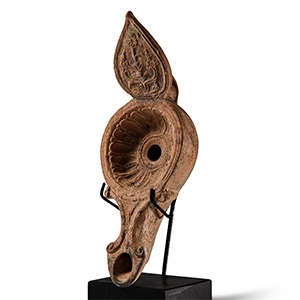
Large Roman Terracotta Oil Lamp with Reflector
1st century A.D.Sold for (Inc. bp): £780
Cup-shaped body with socketted lotiform discus and central filling hole, tapering nozzle with volute scrolls to the rim, D-shaped finial; loop handle and piriform reflector with low-relief ornament of an urn with vine scrolls and perching birds; mounted on a custom-made stand. 257 grams total, 18 cm wide including stand
From the private collection of the late Mr S.M., London, UK, 1969-1999; thence by descent. -
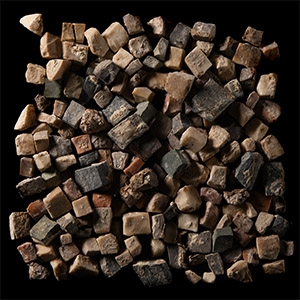
Roman Mosaic Tesserae Group
1st-4th century A.D.Sold for (Inc. bp): £117
A mixed group of one hundred and seventy single stone tesserae of various colours and sizes. 95 grams total, 4-14 mm
Acquired 1980-2015. Ex Abelita family collection. -
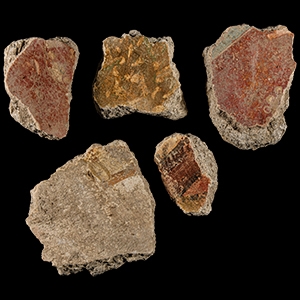
Roman Fresco Painted Wall Plaster Collection
1st century A.D.Sold for (Inc. bp): £65
Comprising five pieces in cream and red with sweeping and architectural motifs painted in contrasting colours. 539 grams total, 61-87 mm
Acquired in the 19th century. Ex Jeger collection, Switzerland.
