
Loading, please wait...
LOT 0589
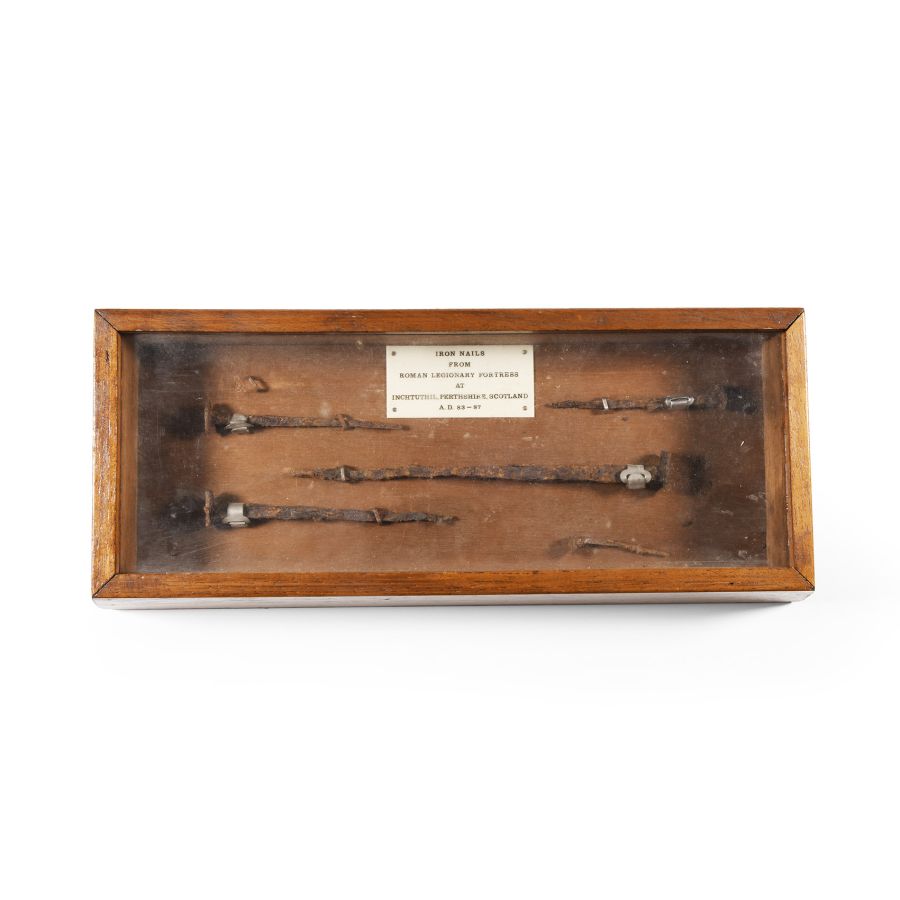
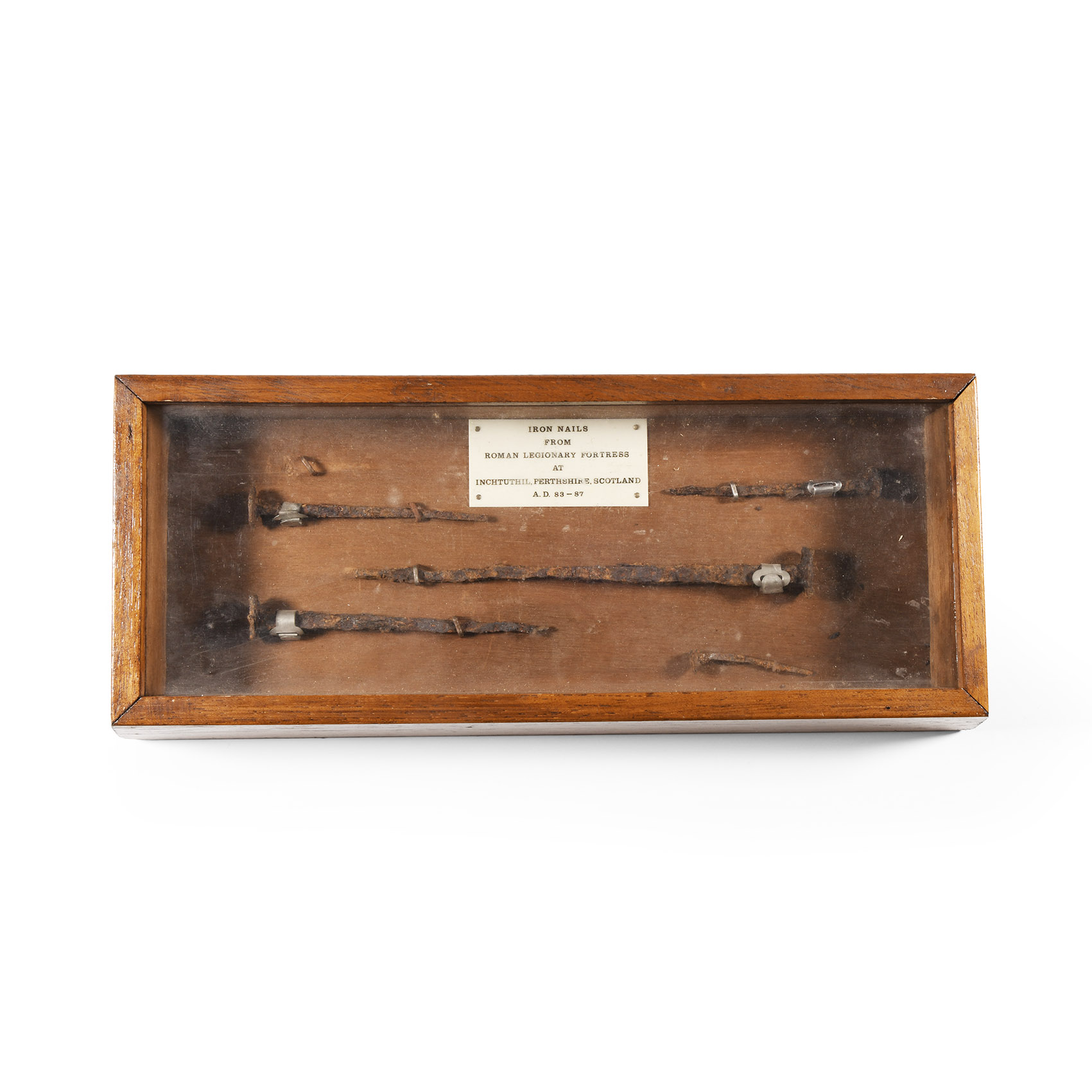
Roman Legionary Fortress Nails
1ST CENTURY A.D.
14 x 6 in. (622 grams, 35.5 x 15 cm).
Five variously sized iron nails with tapering square-section spikes and discoid heads; displayed in an old miniature wooden collector's display 'case' with sliding lid and identification label. [No Reserve]
ProvenanceFrom the Roman legionary fortress Inchtuthil, Perthshire, AD 83-87.
From a mid 20th century collection based on the display case.
TimeLine Auctions follows a vetting process to ensure the authenticity and legality of all items, reinforcing our commitment to integrity and responsible trading. Each antiquity, antique, and coin lot undergoes thorough examination by a vetting committee of at least ten external specialists, professional trade association members, scientists, and archaeologists: Our Vetting Process
AUCTIONS:
TimeLine is a leading auction house specialising in antiquities, ancient art, collectables, natural history, coins, medals, and books. Our auctions offer museums, collectors, historians, and enthusiasts the opportunity to acquire unique and historically significant pieces.
-
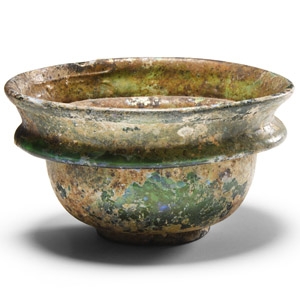
Roman Iridescent Glass Cup
2nd-3rd century A.D.Sold for (Inc. bp): £169
Green with applied slightly raised foot, u-shaped cross section with stepped double rim 54 grams, 75 mm wide
Acquired 1970s-1996. Property of a North American collector. London collection, 2016. -
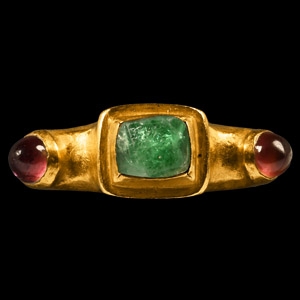
Late Eastern Roman Gold Ring with Emerald and Garnets
4th-5th century A.D.Sold for (Inc. bp): £4,420
Comprising a square-section hoop with expanding shoulders, each shoulder set with a garnet cabochon and the raised square bezel with an emerald. 6.97 grams, 24.18 mm overall, 15.20 mm internal diameter (approximate size British E 1/2, USA 2 1/2, Europe 3, Japan 3)
Acquired in the late 1980s-early 1990s. Important North West London collection. Accompanied by an academic report by Dr Raffaele D’Amato. This lot has been checked against the Interpol Database of stolen works of art and is accompanied by a search certificate number no.11783-204563.
The presence of emerald suggests that the place of origin of this ring could have been in Roman Egypt, and the good colour of the emerald proposes a dating to the 4th to 5th century A.D. -
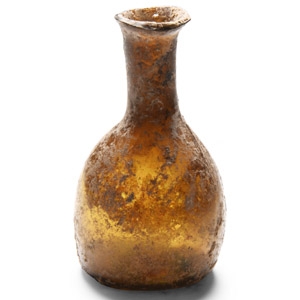
Roman Golden Amber Glass Unguentarium
2nd-3rd century A.D.Estimate: £200 - 300 (+bp*)
Opening Bid: £50
With bulbous body, flat bottom, barrel-shaped neck and everted rim. 12.6 grams, 68 mm
Acquired 1980-2015. Ex Abelita family collection.
