
Loading, please wait...
LOT 0855
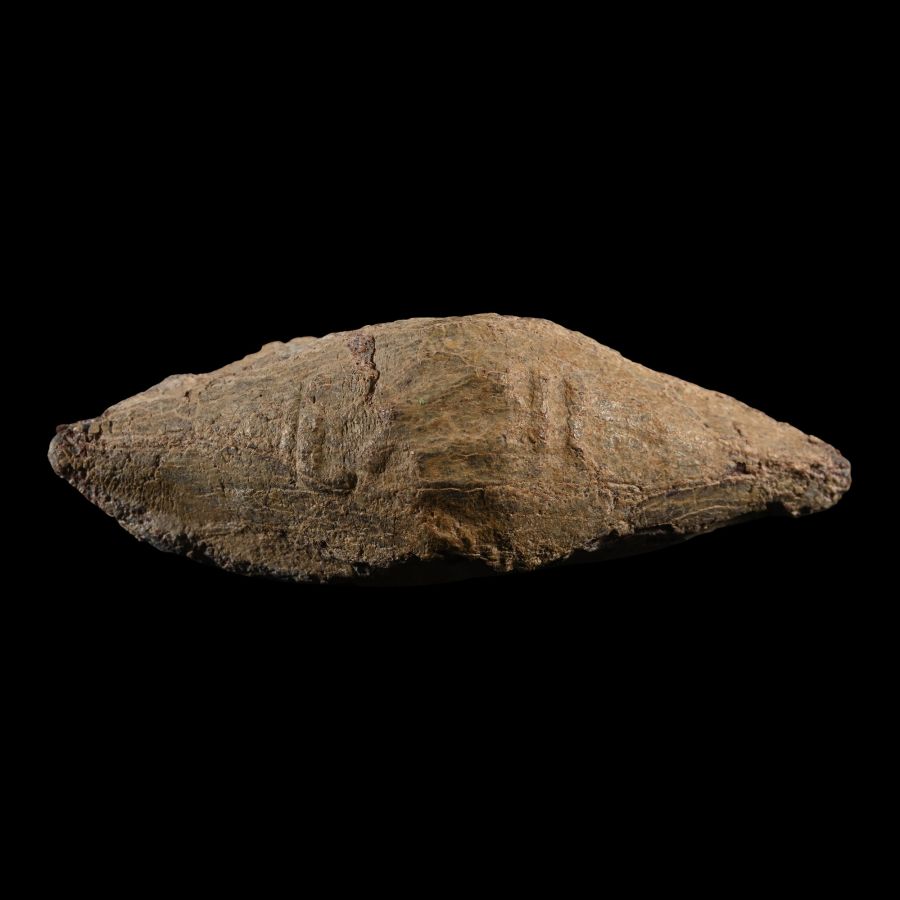
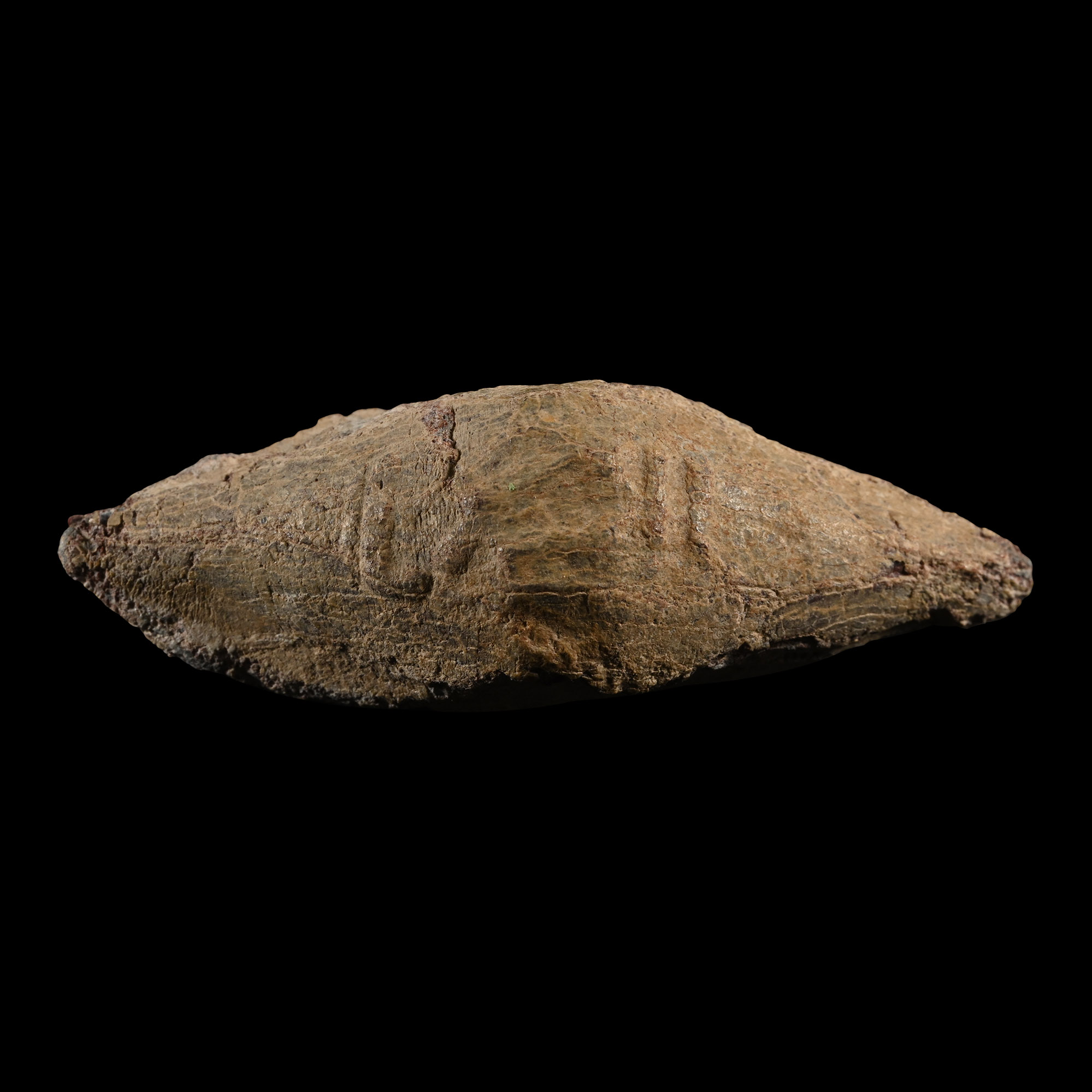
Roman Legion XIII 'Battle of Munda' Lead Slingshot
1ST CENTURY B.C.
2 in. (55.7 grams, 51 mm).
Fusiform with pointed ends, reserved 'LXIII' (LEGIO XIII = 13th Legion) legend. [No Reserve]
ProvenanceAcquired on the UK art market.
Property of a gentleman collector.
This lot is accompanied by an illustrated lot declaration signed by the Head of the Antiquities Department, Dr Raffaele D’Amato.
Cf. D'Amato, R. and Sumner, G., Arms and Armour of the Imperial Roman Soldier: From Marius to Commodus, 112 BC-AD 192, London, 2009, fig.32, p.45, for a similar glandes from Zaragoza Museum, from Munda battlefield; cf. also D'Amato, R., La Grande Storia delle Legioni Romane, Roma, 2021.
FootnotesThe shot (Völling type 1C) is marked with the abbreviated name of Legion XIII, and was probably used at the Battle of Monda (or Munda) against Julius Caesar, 17th March 45 B.C., or against the sons of Pompey, because both the generals (Pompey sons and Caesar) had in their army a Legio with the numeral XIII on that day. Interestingly, other glandes of the same typology from the same battlefield bear the name of Pompey, so that it is much possible that the glans belongs to the Legio XIII of Pompey, who was destroyed during the battle and whose survivors were massacred among the 22,000 defenders of Cordoba by the troops of Caesar (D'Amato, 2021, pp.421 and 424). The projectiles were made of different materials: lead (glandes) or in pottery or stone (lapides missiles).
CONDITIONTimeLine Auctions follows a vetting process to ensure the authenticity and legality of all items, reinforcing our commitment to integrity and responsible trading. Each antiquity, antique, and coin lot undergoes thorough examination by a vetting committee of at least ten external specialists, professional trade association members, scientists, and archaeologists: Our Vetting Process
AUCTIONS:
TimeLine is a leading auction house specialising in antiquities, ancient art, collectables, natural history, coins, medals, and books. Our auctions offer museums, collectors, historians, and enthusiasts the opportunity to acquire unique and historically significant pieces.
-

Roman Marble Portrait of Gaius Caesar
Augustan, circa 1 A.D.Estimate: £18,000 - 24,000 (+bp*)
Opening Bid: £10,000
Modelled in the round and carved in Parian marble, head of a male youth depicted turning slightly to his left, hair trimmed in the Julian style; with soft facial features and long neck; believed to be of Gaius Iulius Caesar Vipsanianus (20 B.C.- 4 A.D.); mounted on a custom-made stand. 17.4 kg total, 48 cm high including stand
Acquired on the London art market in the 1970s by the previous owner’s late father. with Christie’s London, 25 April 2007, no.260. UK private collection, London. Anonymous sale, Bonhams, London, 16 April 2015, no.130. Accompanied by an academic report by Dr Raffaele D’Amato. This lot has been checked against the Interpol Database of stolen works of art and is accompanied by a search certificate number no.163499-10061. This lot has been cleared against the Art Loss Register database, and is accompanied by an illustrated lot declaration signed by the Head of the Antiquities Department, Dr Raffaele D’Amato.
Gaius Caesar (20 B.C.-4 A.D.) and his brother Lucius Caesar (17 B.C.-2 A.D.) held significant positions in the political and dynastic plans of Emperor Augustus. Born to Augustus's daughter Julia and his advisor Marcus Vipsanius Agrippa, they were adopted by Augustus in 17 B.C. to become his heirs, since he lacked natural-born sons. Portraits of the brothers depict them as resembling Augustus, indicating their importance within the imperial family. Gaius's portraits were classified into five types, with this head identified as Type IV, likely created in 1 A.D. to celebrate his consulship. A similar portrait of Gaius exists in Corinth alongside his brother and Augustus. In 1 B.C., Gaius was appointed to govern the eastern provinces, where he successfully negotiated a peace treaty with King Phraates V of Parthia. However, tragedy struck when Gaius fell ill in Anatolia and died at 23 years of age, following the death of his brother Lucius. These deaths disrupted Augustus' plans for succession and led him to adopt Tiberius, his stepson, who eventually became emperor in 14 A.D. -
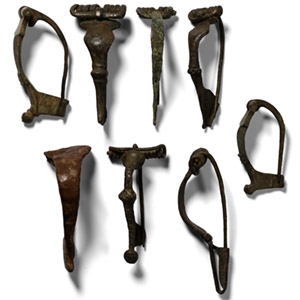
Roman Bronze Bow Brooch Collection
1st-3rd century A.D.Sold for (Inc. bp): £195
Including Hod Hill, Alesia and other types. 82 grams total, 41-63 mm
From an English collection formed before 2000. This lot is accompanied by an illustrated lot declaration signed by the Head of the Antiquities Department, Dr Raffaele D’Amato. -
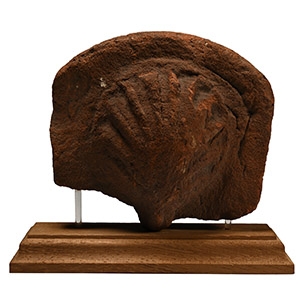
Roman 'Burgh Castle' Terracotta Antefix Shell Decoration
1st-4th century A.D.Sold for (Inc. bp): £169
The upper part of an antefix, rounded in shape and decorated with a 16-armed shell shape; mounted on a custom-made display stand. 342 grams total, 13 cm wide including stand
Found Burgh Castle, Great Yarmouth, Suffolk, UK. From the collection of a late East Anglian teacher and antiquarian who retired to the Isle of Wight in Hampshire, UK. He amassed a large collection of objects between the 1960s-1980s. This lot is accompanied by an illustrated lot declaration signed by the Head of the Antiquities Department, Dr Raffaele D’Amato.
Antefix tiles in Britain are rare and typically comprise a decorated vertical panel of triangular or pentagonal shape, though some are known to have a rounded top, and they have a lug or a semi-circular flange on the reverse designed to fit into the open end of either the lowest course of embraces on a roof, or into the gable end of the ridge tiles. Antefix tiles have sanded decorated surfaces showing that they were made in sanded moulds rather than being stamped. The majority of antefix tiles in Britain are decorated with human masks, though several other designs are known: pentagonal panels, vine leaves with grapes, gorgon heads, a female head with a stylised headdress, a second design of female head and a man fishing.
