
Loading, please wait...
LOT 0628
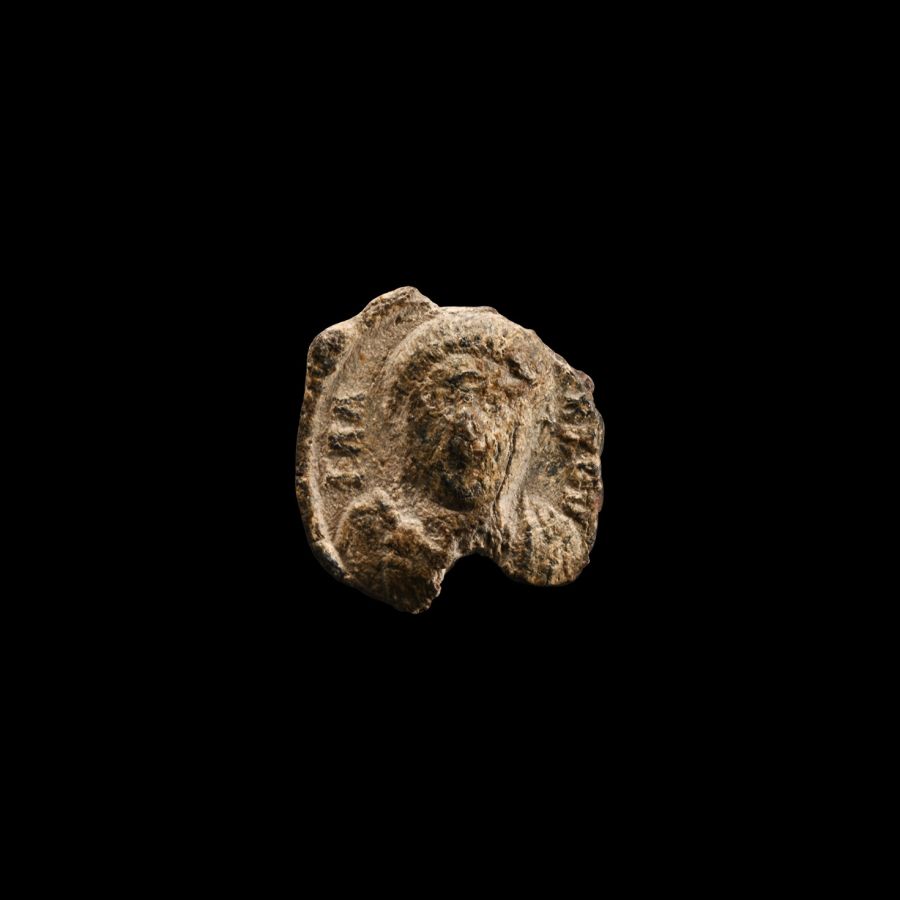
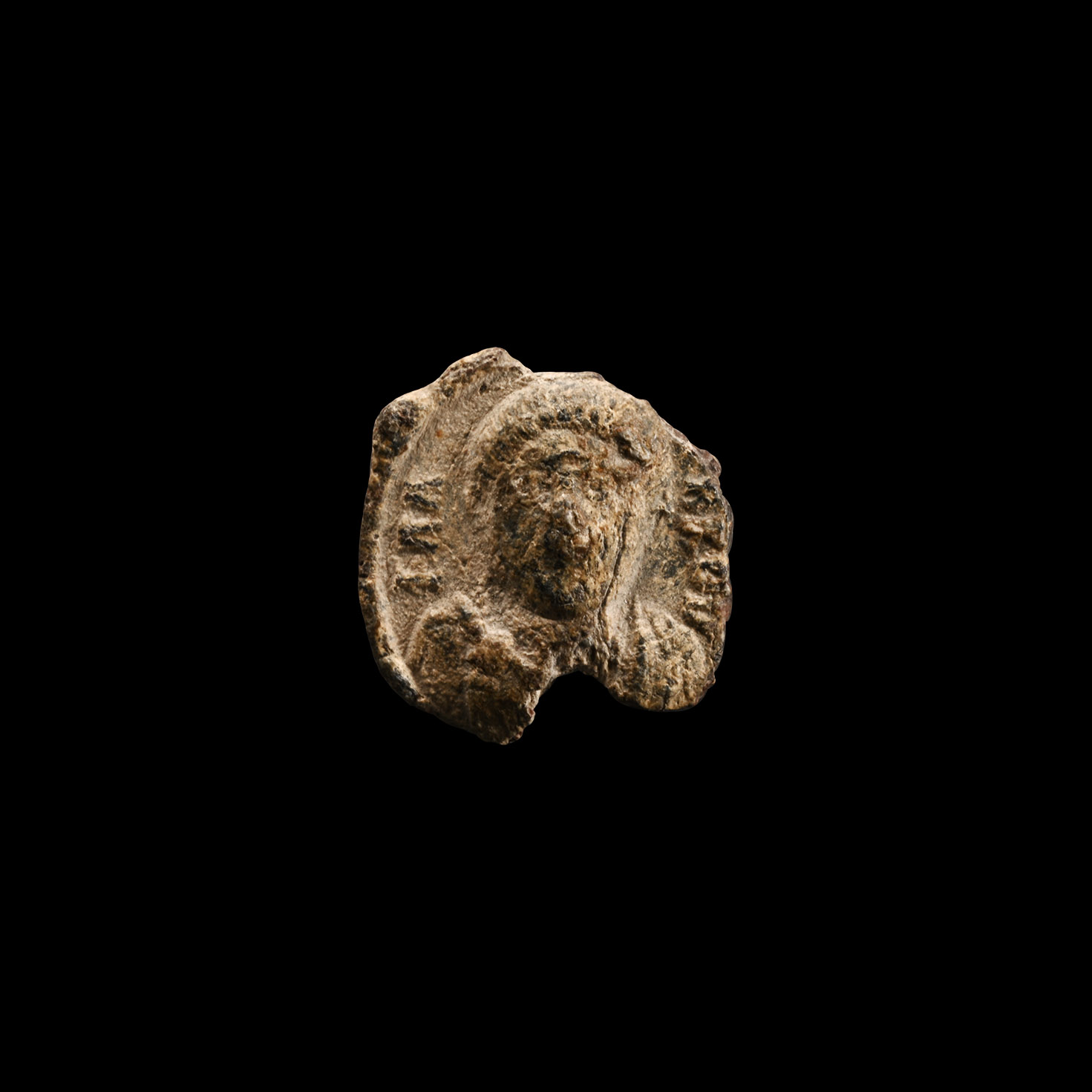
Roman Lead Sealing with Bust of an Emperor
3RD-4TH CENTURY A.D.
1/4 in. (2.3 grams, 13 mm).
A round lead seal with male portrait, wearing a military mantle fastened on the right side by a fibula, three Latin letters on the left side, possibly 'I A A'. [No Reserve]
ProvenanceAcquired in the 1970s.
Important European collection.
Cf. Beutler, F. et al., Der Adler Roms. Carnuntum und der Armee der Cäsaren, Bad-Deutsch Altenberg, 2017, items 625-630, for type.
FootnotesLead seals were used to seal documents. The sealing shows a facing male head with a bearded face, probably the portrait of a Roman emperor or a high imperial functionary, like a Dux or a Praefectus. The hairstyle is that of the Dominate, or late 3rd century AD.
CONDITIONTimeLine Auctions follows a vetting process to ensure the authenticity and legality of all items, reinforcing our commitment to integrity and responsible trading. Each antiquity, antique, and coin lot undergoes thorough examination by a vetting committee of at least ten external specialists, professional trade association members, scientists, and archaeologists: Our Vetting Process
AUCTIONS:
TimeLine is a leading auction house specialising in antiquities, ancient art, collectables, natural history, coins, medals, and books. Our auctions offer museums, collectors, historians, and enthusiasts the opportunity to acquire unique and historically significant pieces.
-
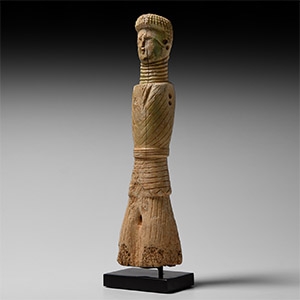
Roman Female Bone Doll
3rd-4th century A.D.Estimate: £500 - 700 (+bp*)
Opening Bid: £250
A Roman or Parthian bone figurine of a female with holes to accept pegs for separate articulated arms, hatching to the piled hairstyle, incised facial features, tiered collar, slender body with drape detailing to the bodice, belt and skirt; pierced ears to accept earrings; mounted on a custom-made stand. 214 grams total, 18 cm including stand
Fine condition.
Family collection since the 1960s. with Christie's, London, 29 April 2010, lot 373. Property of a Brussels gentleman. Accompanied by copies of the relevant Christie's catalogue pages.
The doll was made of a carved bone figure of woman with separate arms attached to the body, and pieces for the ears. All the surface shows extensive marks of working by a saw, knife or a file. The body is made from bone, and the style of the doll is typical of Roman Britain. The separate parts were attached with pins or string. On the doll are still visible the little holes for the connecting string. -
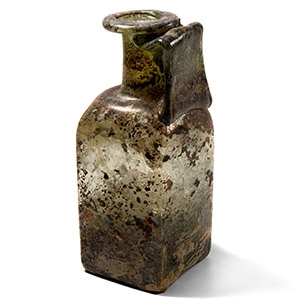
Large Roman Square Flask
2nd-3rd century A.D.Estimate: £1,000 - 1,400 (+bp*)
Opening Bid: £500
A 'clear' square glass flask with rounded corners to the shoulders, cylindrical neck, broad rim and applied stout rectangular handle with decorative ribbing; iridescent surfaces; base with moulded six-pointed stylised flower within double-walled roundel. 248 grams, 17 cm high
French collection, 1960s-early 2000s. From an important Paris gallery, France.
Cf. The Metropolitan Museum, accession number 81.10.21, for type. -
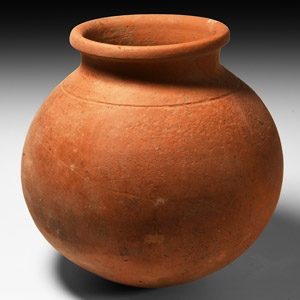
Roman Terracotta Jar
1st-4th century A.D.Sold for (Inc. bp): £182
A bulbous ceramic jar with a short neck and rounded base. 998 grams, 20 cm wide
Acquired 1980-2015. Ex Abelita family collection.
