
Loading, please wait...
LOT 0986
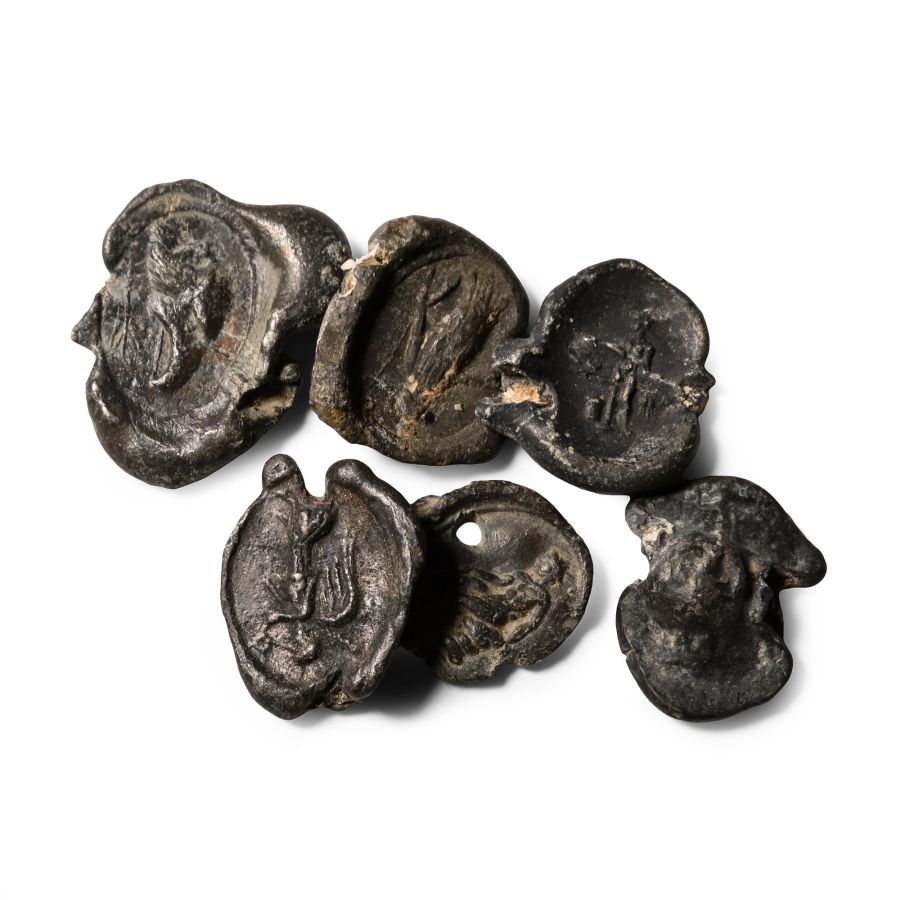
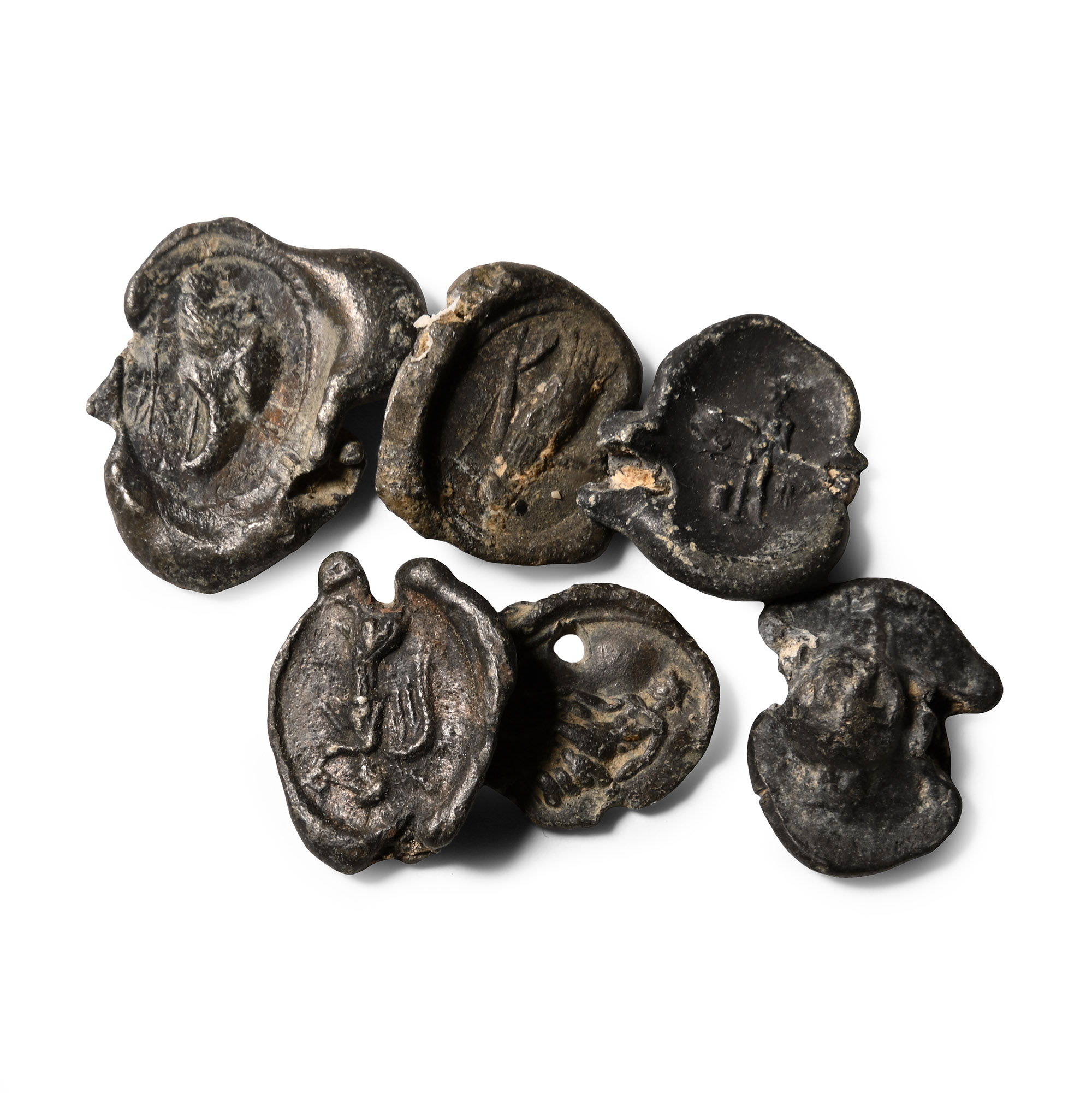
Roman Lead Seal Collection
2ND-4TH CENTURY A.D.
1/2 - 3/4 in. (12.16 grams total, 13-20 mm).
Each with a figural impression, including a lion, a bird, a seated figure, Victory, and two with a standing figure. [6, No Reserve]
ProvenanceFrom the private collection of a European gentleman (1942-2024), formed since the 1970s.
LiteratureCf. similar Roman seals in Marincean, I., ‘Lead Sealings Discovered in the Canabae and in the Roman Legionary Fortress in Potaissa’ in Journal of Ancient History and Archaeology, 2020, pp.106-109, figs.2-5.
CONDITIONTimeLine Auctions follows a vetting process to ensure the authenticity and legality of all items, reinforcing our commitment to integrity and responsible trading. Each antiquity, antique, and coin lot undergoes thorough examination by a vetting committee of at least ten external specialists, professional trade association members, scientists, and archaeologists: Our Vetting Process
AUCTIONS:
TimeLine is a leading auction house specialising in antiquities, ancient art, collectables, natural history, coins, medals, and books. Our auctions offer museums, collectors, historians, and enthusiasts the opportunity to acquire unique and historically significant pieces.
-
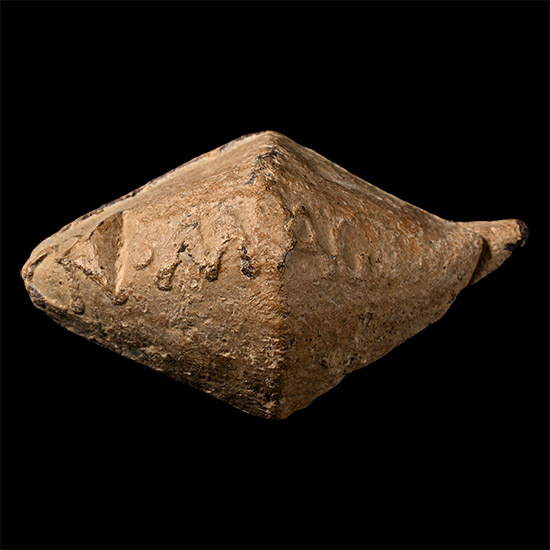
Roman Lead Cnaeus Pompey Battle of Munda Slingshot
1st century B.C.Sold for (Inc. bp): £221
Facetted lentoid-section sling shot (glans) with inscription in Latin letters 'CN' (Cneius) 'MAG' (Magnus) on one side, and 'IMP' for 'IMPERATOR' (victorious general) to the other side, i.e Gnaeus Pompeius Magnus Imperator (Pompey the Great the victorious general). 81grams, 43 mm
Previously from a private Spanish collection. Property of a Middlesex gentleman. Accompanied by a copy of a Spanish export licence. -
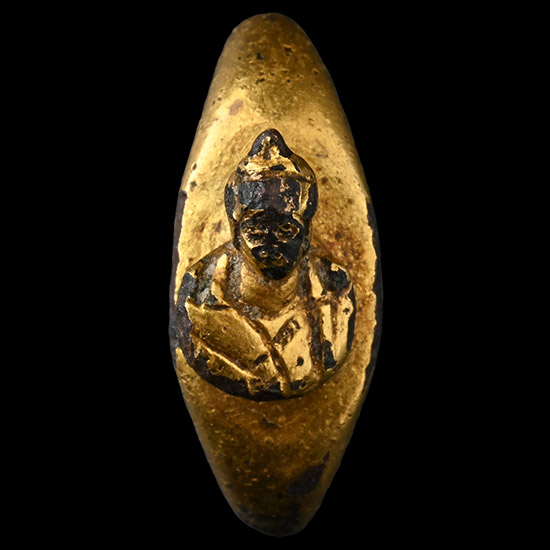
Roman Gold-Plated Bronze Ring with Bust of Minerva
1st-2nd century A.D.Estimate: £300 - 400 (+bp*)
Opening Bid: £150
Integral scaphoid bezel with female bust modelled in the round. 4.23 grams, 24.14 mm overall, 17.40 mm internal diameter (approximate size British G, USA 3 1/4, Europe 4.92, Japan 4)
Private collection, UK. Acquired on the English art market. -
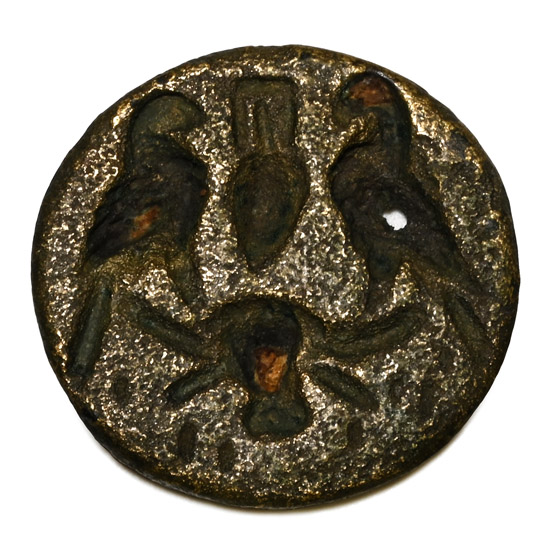
Roman Bronze Intaglio with Bull's Head and Birds
3rd-4th century A.D.Sold for (Inc. bp): £52
Discoid type with incuse design of a bull's head with a bird perched on each horn, ewer between; supplied with a museum-quality impression. 0.82 grams, 13 mm
From the private collection of a European gentleman (1942-2024), formed since the 1970s.
