
Loading, please wait...
LOT 0162
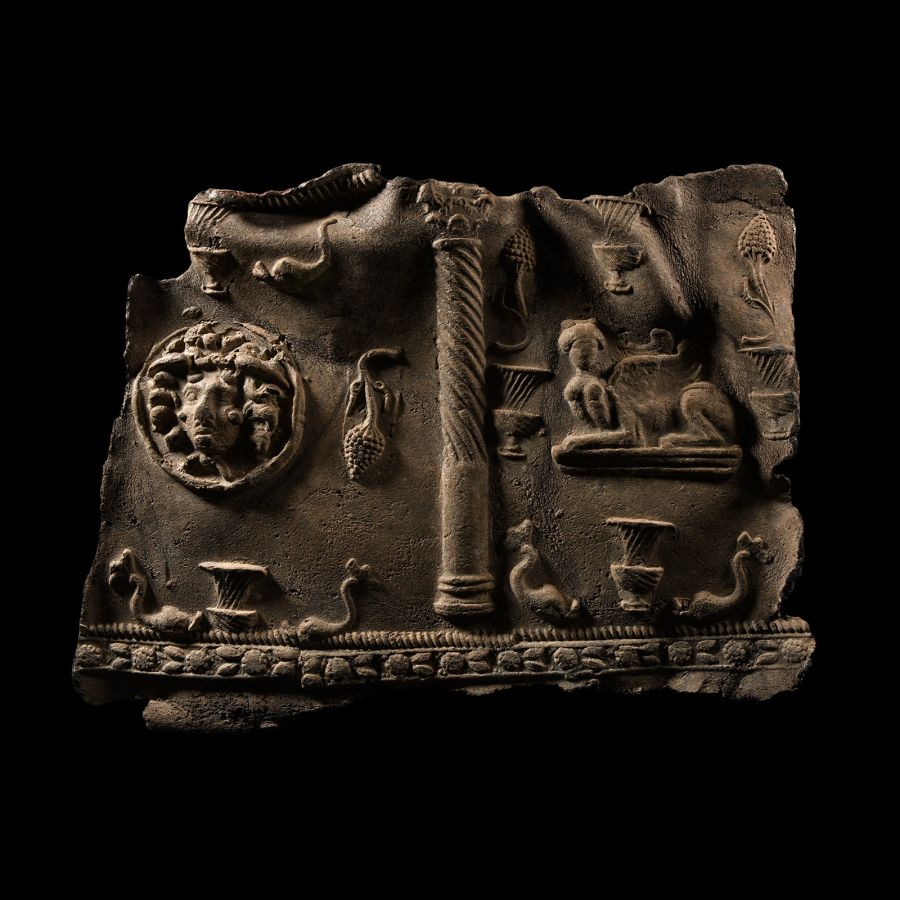
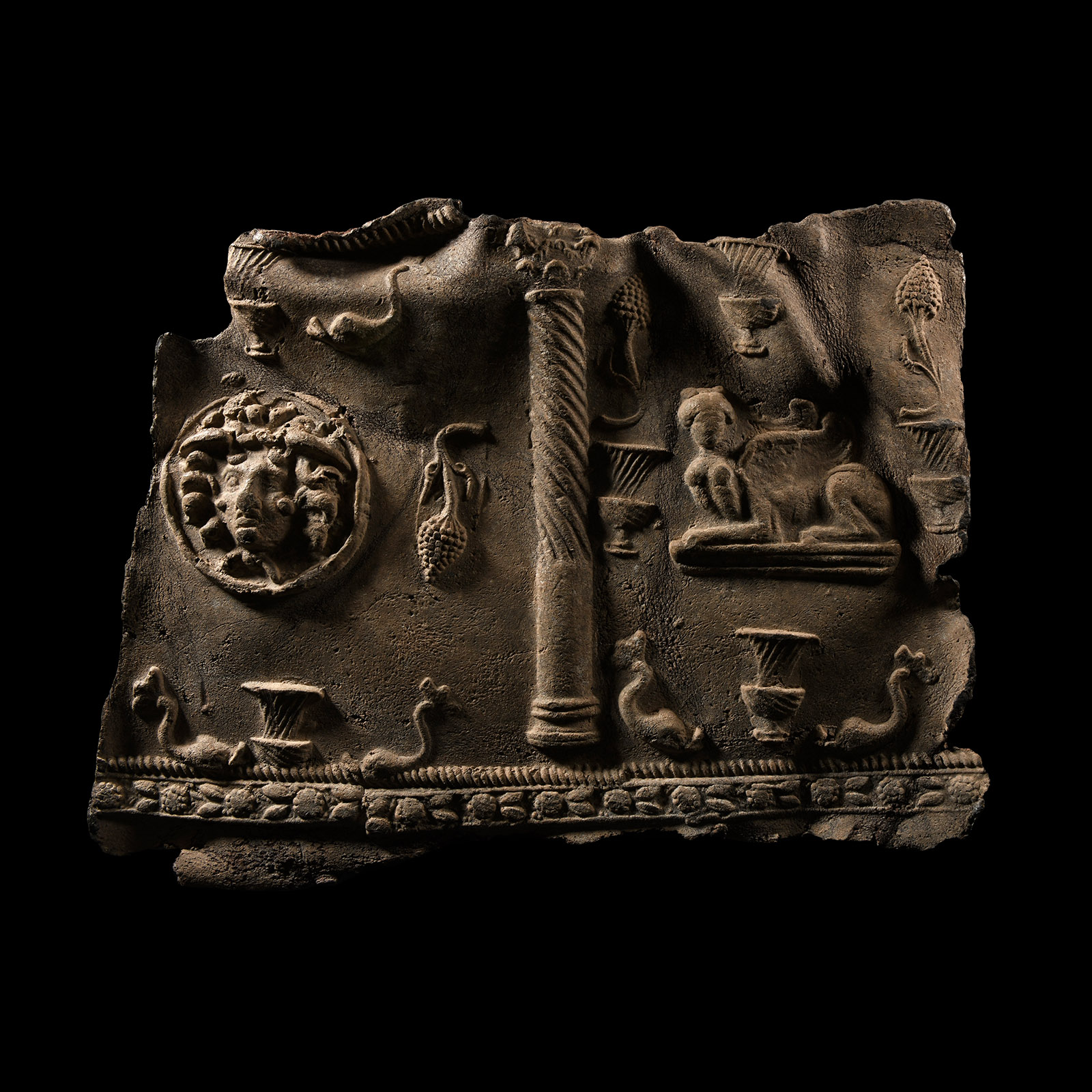
Roman Lead Sarcophagus Panel with Sphinxes, Dolphins and Masks of Medusa
2ND-3RD CENTURY A.D.
16 1/8 in. (6.4 kg, 41 cm wide).
Decorated with a high-relief pattern comprising sphinxes, dolphins and masks of Medusa in fields between columns; ropework and floral border strips with laurel leaves.
ProvenanceFrom a West Sussex, UK, collection, 1990s.
LiteratureSee Payne, G., Roman Leaden Coffin discovered at Plumstead in Archaeologia Cantiana, Vol.17, 1887, fig.10, for the presence of lead sarcophagi in Roman Britain; for a similar specimen in the Metropolitan Museum of Art, accession no.31.116a-i; Penn Museum, coffin panel B10280, from Lebanon (Tyre).
FootnotesThere were many ways of burying bodies during the Roman Empire. Although the majority were buried without coffins, there is evidence for wooden coffins, lead-framed wooden coffins, tile burials and lead and stone coffins. This item belongs to types widespread in the Eastern Mediterranean. The panel is decorated with a columned structure, and within each section are symbols of the outer-world, including gorgons,
sphinx and dolphins. The sphinx, having a human head and breasts, legs and paws of a lion, and wings of a bird, was generally associated with protecting imperial tombs and temples. The roundels featuring the head of Medusa, known for her potent gazes that could turn one to stone, was favoured on sarcophagi and architectural ornaments because it was believed that her image would protect those within. The dolphin was considered to ferry the souls of the dead to the afterlife. Very often these sarcophagi were connected by a pipe to the ground above so that
mourners could pour in offerings into the grave.
TimeLine Auctions follows a vetting process to ensure the authenticity and legality of all items, reinforcing our commitment to integrity and responsible trading. Each antiquity, antique, and coin lot undergoes thorough examination by a vetting committee of at least ten external specialists, professional trade association members, scientists, and archaeologists: Our Vetting Process
AUCTIONS:
TimeLine is a leading auction house specialising in antiquities, ancient art, collectables, natural history, coins, medals, and books. Our auctions offer museums, collectors, historians, and enthusiasts the opportunity to acquire unique and historically significant pieces.
LOT 0162
Roman Lead Sarcophagus Panel with Sphinxes, Dolphins and Masks of Medusa
Sold for (Inc. bp): £4,420
-
Roman Artefact Collection
1st-4th century A.D.Sold for (Inc. bp): £39
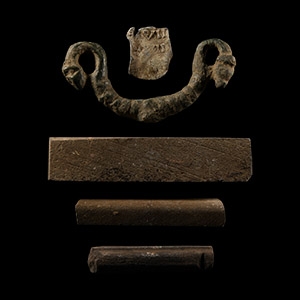
The group comprising: a bronze handle or a furniture mount with ribbed body and looped terminals; a lead disc with Roman numerals 'VII' in two lines; a whetstone and two moulded stone fragments. 118 grams total, 23-88 mm
Found Nottinghamshire, UK. Acquired from Ancient & Oriental in 2003. Property of a Nottinghamshire gentleman. -
.jpg)
British Roman Bronze Votive Beneficiarius Sceptre
2nd-3rd century A.D.Sold for (Inc. bp): £910
The upper part of a Beneficiarius dedicatory spear or sceptre, comprising a circular-section shaft with an ivy leaf finial, a crescent (lunula) below and the point with triple acorn-shaped spheres; the lower end of the shaft square-section and with a rosette for attaching it to the wooden part, engraved with X-motifs and circumferential lines. 62 grams, 49 cm
Found Cambridgeshire, UK. Accompanied by an academic report by Dr Raffaele D’Amato.
The beneficiarii, within the Roman army, were soldiers exempted from menial duties and acting as orderlies of senior officers; they were also charged with particular duties by governors and generals. Their distinctive insignia were decorated spears, often with a point shaped like an ivy leaf. The military stela from Perinth depicting a 3rd century beneficiarius shows a very similar spear, mounted over a particular structure on the midshaft of the spear. -
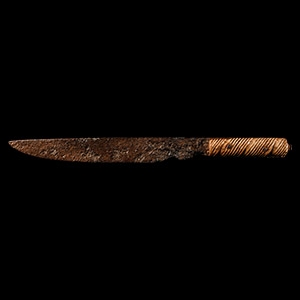
Roman Iron Knife with Bone Handle
1st-4th century A.D.Sold for (Inc. bp): £391
With single-edged blade gently curving towards the tip; applied bone handle with diagonally striated banding. 38.1 grams, 17.5 cm
Found near Wetwang, East Yorkshire, UK. Acquired from the finder in 2007. Property of a Nottinghamshire gentleman.
Tools which cannot be assigned to one of the more specific categories, such as agricultural or military equipment especially knife blades, tool handles, and hones. Three methods of attaching a handle to the tang of a knife or tool are distinguishable in the Roman culter. Rivetting was used on two-piece handles (like in our specimen). Driving the tang into the marrow-cavity of the bone, which was usually packed with wood-shavings, so that the irregularities of cancellous tissue and the wood-shavings prevented the tang from twisting or slipping out (often a collar was also used with this method). Lastly, the tang could be fixed to the handle by means of an iron clip.
