
Loading, please wait...
LOT 0889
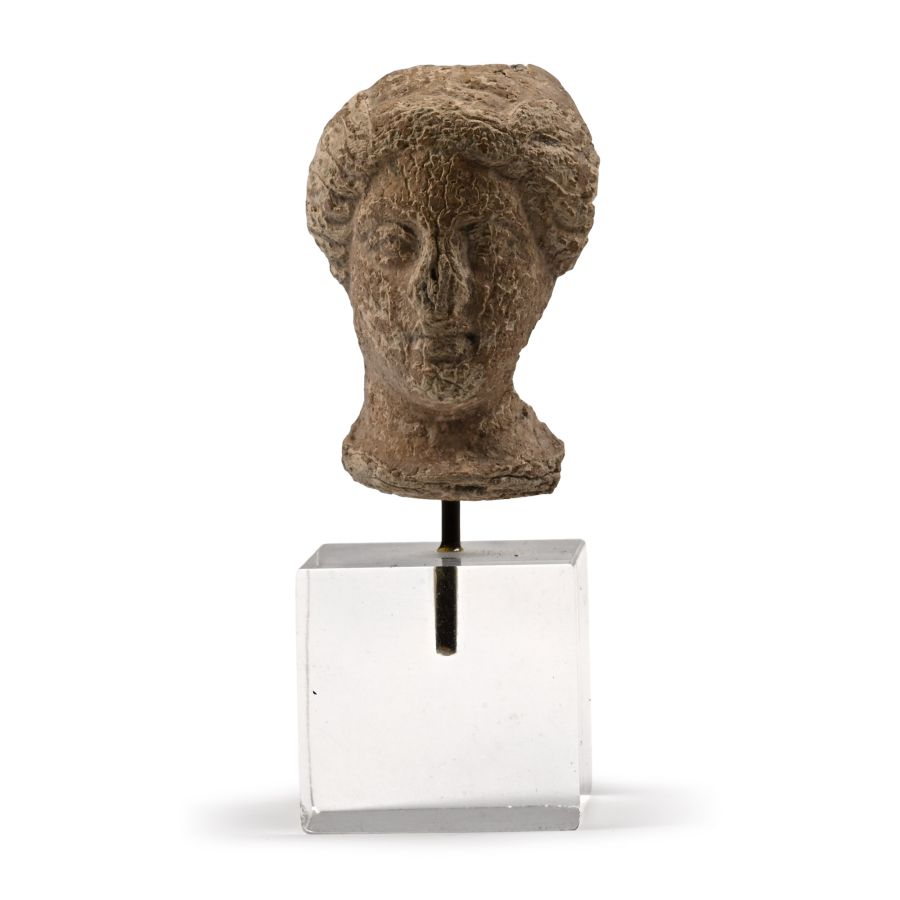
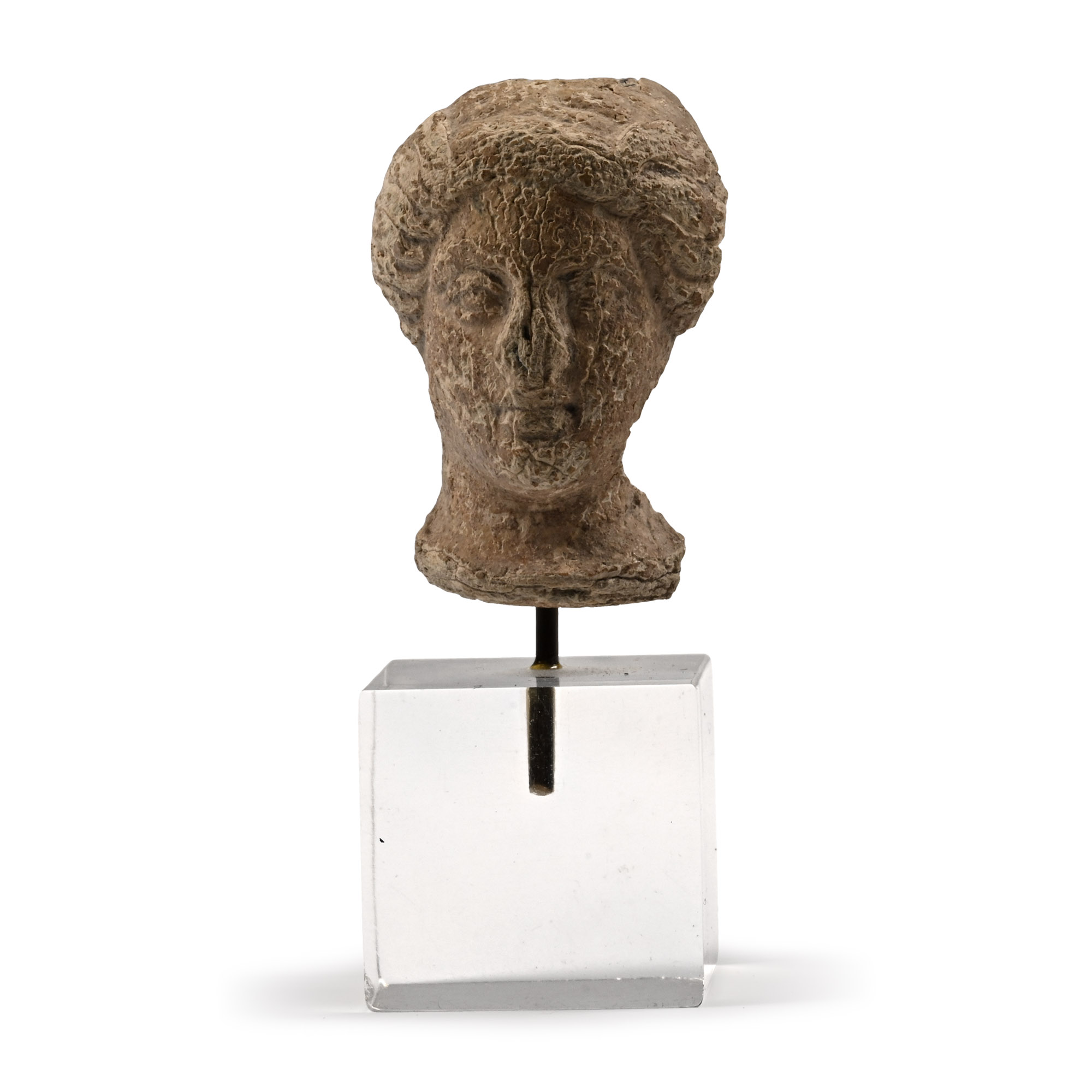
Roman Lead Head of a Woman
3RD-4TH CENTURY A.D.
2 1/8 in. (31.4 grams total, 55 mm including stand).
Modelled in the round as a facing female, semi-naturalistic facial detailing and dressed hair; mounted on a custom-made display stand. [No Reserve]
Provenancewith Arte Classica, Lugano, prior 2000.
Accompanied by a copy of an Art Loss Register certificate no.S00043014.
This lot is accompanied by an illustrated lot declaration signed by the Head of the Antiquities Department, Dr Raffaele D’Amato.
Cf. Cool, H.E.M., 'Roman Metal Hair Pins from Southern Britain' in Archaeological Journal, 1990, pp.148-182, fig.10, nos.7, 11, for similar.
FootnotesSome Roman metal hair pins had human figures as finials (Cool, sub-group A, p.168). Bone pin finials carved as female busts were relatively common in Britannia (see for example finds from Londinium or Rutupiae). Metal pins with human figures were rare, though where they occur they tended to be made in the late Roman period, such a similar example recovered in the Vermand area. The treatment of figures varied greatly, including 'Celtic' looking faces and 'Venus' types. This great diversity of treatment clearly suggests that these pins were the occasional products of a wide variety of workshops.
CONDITIONTimeLine Auctions follows a vetting process to ensure the authenticity and legality of all items, reinforcing our commitment to integrity and responsible trading. Each antiquity, antique, and coin lot undergoes thorough examination by a vetting committee of at least ten external specialists, professional trade association members, scientists, and archaeologists: Our Vetting Process
AUCTIONS:
TimeLine is a leading auction house specialising in antiquities, ancient art, collectables, natural history, coins, medals, and books. Our auctions offer museums, collectors, historians, and enthusiasts the opportunity to acquire unique and historically significant pieces.
-
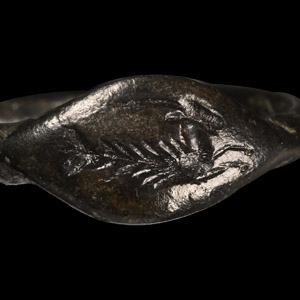
Large Roman Bronze Ring with Capricorn
2nd-3rd century A.D.Sold for (Inc. bp): £247
With integral ellipsoid bezel, incuse capricorn motif. 2.34 grams, 23.52 mm overall, 19.68 mm internal diameter (approximate size British S 1/2, USA 9 1/4, Europe 20.63, Japan 19)
Ex German art market, 2000s. Acquired from an EU collector living in London. From the collection of Surrey, UK, gentleman. This lot is accompanied by an illustrated lot declaration signed by the Head of the Antiquities Department, Dr Raffaele D’Amato. -
.jpg)
Roman Ring Gemstone Collection
2nd-3rd century A.D.Sold for (Inc. bp): £286
Mainly ellipsoid carnelian plaques with incuse designs including standing figure, bird in flight and other types. 4.21 grams total, 8-15 mm
From an old UK collection, 1980s. This lot is accompanied by an illustrated lot declaration signed by the Head of the Antiquities Department, Dr Raffaele D’Amato. -
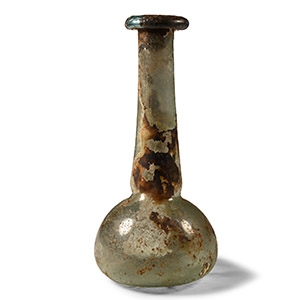
Large Roman Glass Unguentarium
1st-2nd century A.D.Estimate: £150 - 200 (+bp*)
Opening Bid: £75
With plano-convex body and flat base, tapering neck and everted rim. 42 grams, 14 cm
From a London, UK, collection, 1990s. This lot is accompanied by an illustrated lot declaration signed by the Head of the Antiquities Department, Dr Raffaele D’Amato.
