Loading, please wait...

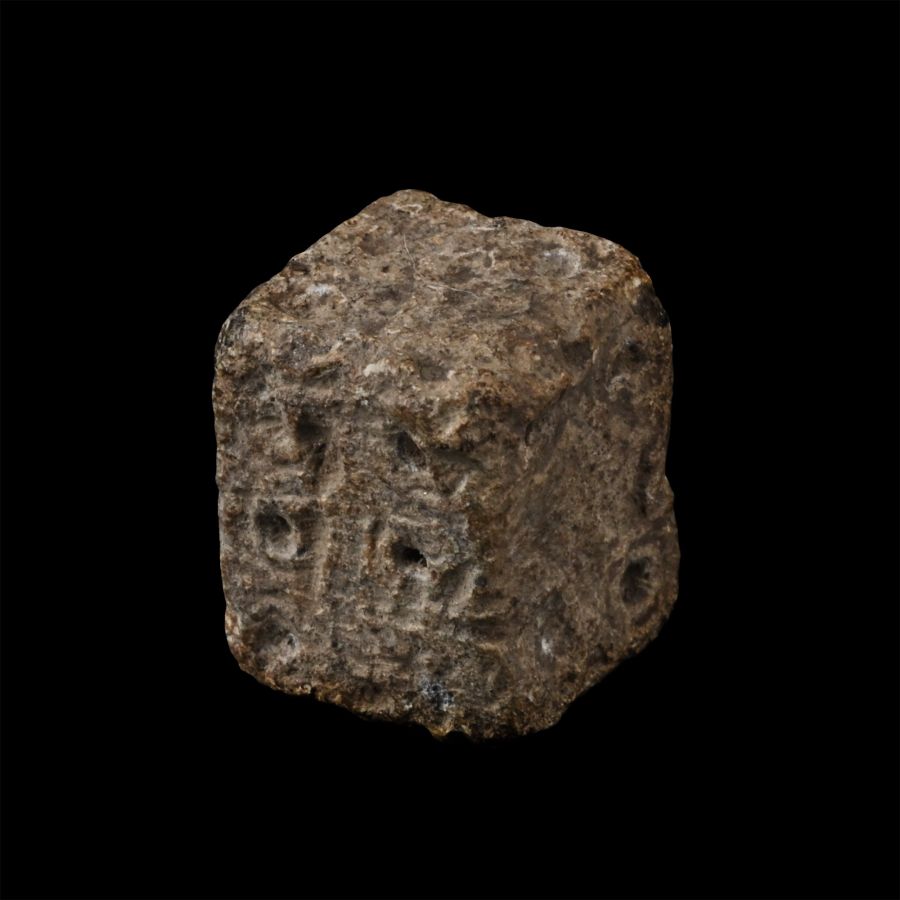
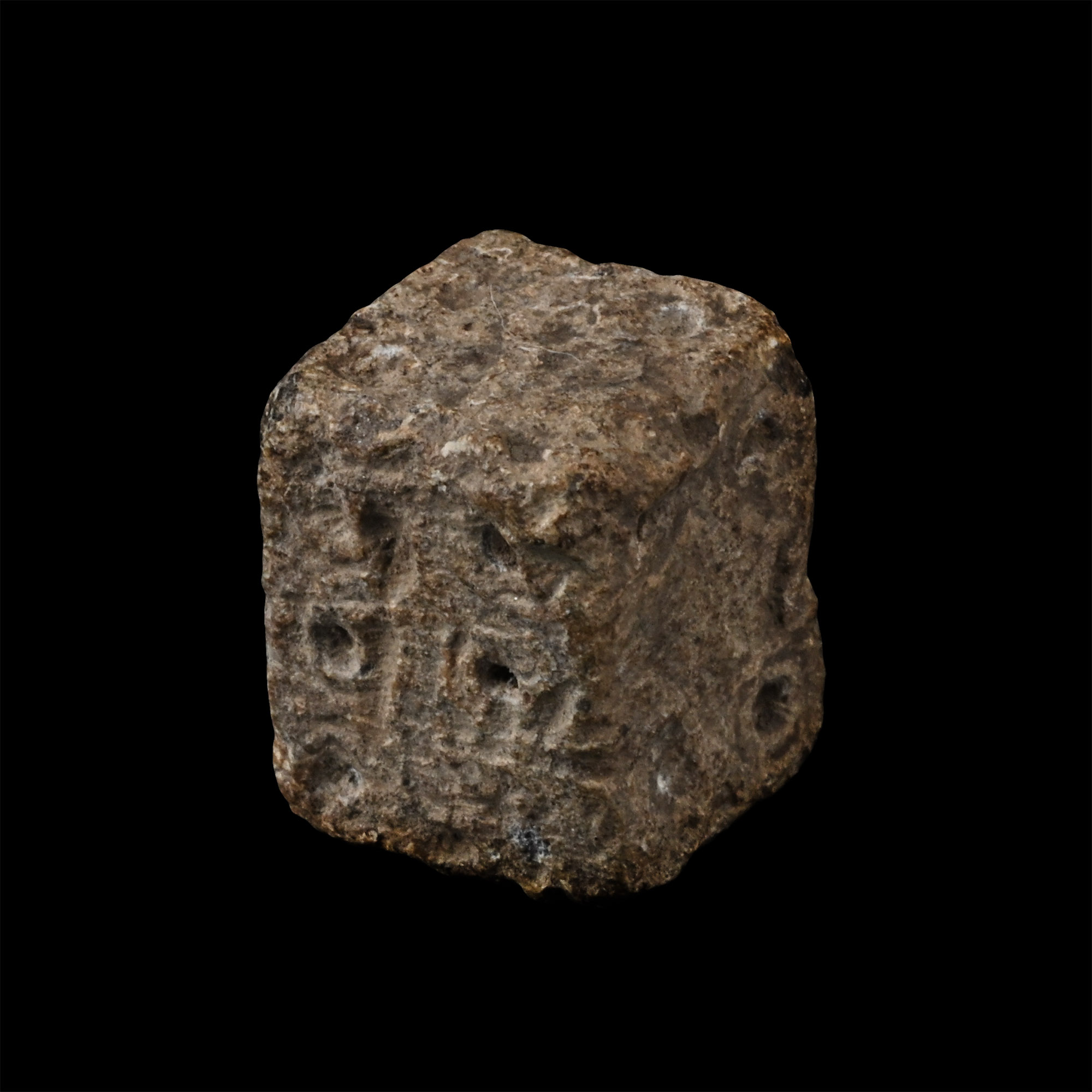
Roman Lead Gaming Die Roman Lead Gaming Die Roman Lead Gaming Die
Use mousewheel to zoom in and out, click to enlarge
Details

LOT 0639

Roman Lead Gaming Die

CIRCA 1ST-4TH CENTURY A.D.

1/2 in. (7.94 grams, 11 mm).

Cuboid dice with impressed markings unusually disposed 1:6, 4:5, 3:?. [No Reserve]

Provenance

Ex gentleman collector of antique and antiquity games from Berkshire, UK, having collected for over 20 years.

CONDITION
VETTING:

TimeLine Auctions follows a vetting process to ensure the authenticity and legality of all items, reinforcing our commitment to integrity and responsible trading. Each antiquity, antique, and coin lot undergoes thorough examination by a vetting committee of at least ten external specialists, professional trade association members, scientists, and archaeologists: Our Vetting Process


AUCTIONS:

TimeLine is a leading auction house specialising in antiquities, ancient art, collectables, natural history, coins, medals, and books. Our auctions offer museums, collectors, historians, and enthusiasts the opportunity to acquire unique and historically significant pieces.

LOT 0639

Roman Lead Gaming Die

Estimate £30 - 40€35 - 46 (for guidance only)$41 - 54 (for guidance only)

Current bid: £5 +BP*
(1 Bid, Reserve met)

Sign in to Bid

Please enter a e-mail
Please enter a password
Or Create Account here.
Please confirm to accept TC and Privacy policy

(1 Bid, Reserve met)   |   Current bid: £5
RELATED LOTS
  • Roman Glass Bead Necklace String
    Roman Glass Bead Necklace String
    1st-4th century A.D. and later

    Estimate: £50 - 70 (+bp*)

    Opening Bid: £5

    Composed mainly of oblate and annular beads with larger beads as a central feature, restrung. 9.78 grams, 39 cm


    Acquired in the 1990s. Ex London, UK, collection.

    Lot Details

  • Jewish Terracotta Bullae, Tesserae or Token Group
    Jewish Terracotta Bullae, Tesserae or Token Group
    3rd century B.C.-1st century A.D.

    Estimate: £60 - 80 (+bp*)

    Opening Bid: £5

    A mixed group of ceramic bullae, tesserae or theatre tokens bearing low-relief motifs of profile busts, three with Hebrew text to the reverse. 3.97 grams total, 12-17 mm


    From the private collection of a European gentleman (1942-2024), formed since the 1970s.

    The term 'tessera' was used in Roman times to convey the Greek term σύμβολον (token). Small tiles are known as tokens, often shaped like coins, made of metal (copper, lead, iron), clay, bone, wood, or glass, stamped as well as engraved. The tokens, however, are not exclusively coin-shaped, as the Latin term 'tessera' refers to a four-sided shape. Tokens and tesserae seem to have been used both in Athens and Rome for the distribution of goods. According to written sources, the term ‘token’ is identified with credentials of the official authorities. They have also been interpreted as tokens of identity, as entrance tickets to theatre performances, tribunals or assemblies of citizens, archival material of seal engraving, as pawns in games, Charon’s obols and even as amulets.

    Lot Details

  • Large Graeco-Roman Silver Wine Infundibulum
    With a Nine-Page Report by Dr Mikhail Treister
    Large Graeco-Roman Silver Wine Infundibulum
    5th century B.C.-1st century A.D.

    Estimate: £30,000 - 40,000 (+bp*)

    Bids: 4   |   Current Bid: £27,000

    With a hollow spherical body decorated with slightly concave petals radiating from each end, separated by a central grooved band; one end with a tapering funnel marked by horizontal grooves, the other with a short tapering neck and a wide rim. 356 grams, 29.5 cm


    Old Austrian private collection, 1980s. Accompanied by a copy of a nine-page examination report number 154/2026 by Dr habil Mikhail Treister. Accompanied by an academic report by Dr Raffaele D’Amato. This lot has been checked against the Interpol Database of stolen works of art and is accompanied by search certificate number no.12905-242699.

    Comparable instruments, usually called clepsydra in Greek and infundibulum in Latin, were in use in the 5th – first half of the 4th centuries B.C. A total of 13 such objects, or clepsydra, are known, including two of the unknown origin), represented by the finds both from Central (Lazio) and South (Campania, Calabria and Basilicata) Italy, Illyria (Apollonia) and Central Greece (Boeotia, Phocis) (all made of bronze), from the Taman peninsula in the North Pontic area, a fragmented one – from the Ulyap kurgan necropolis in the Trans-Kuban region and a silver piece from an aristocratic Thracian burial in the Plovdiv region. A distinctive feature of all these metal objects is the combination of a narrow vertical tube, at the lower end turning into a container with holes in the bottom.

    Lot Details