
Loading, please wait...
LOT 0854
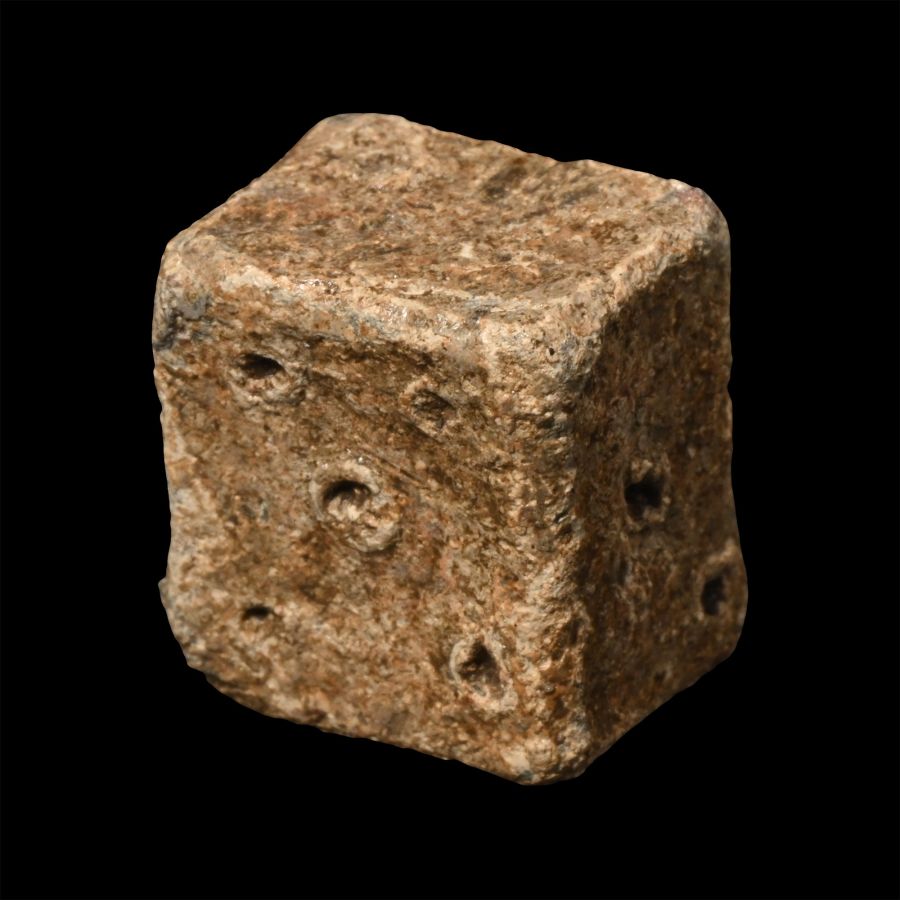
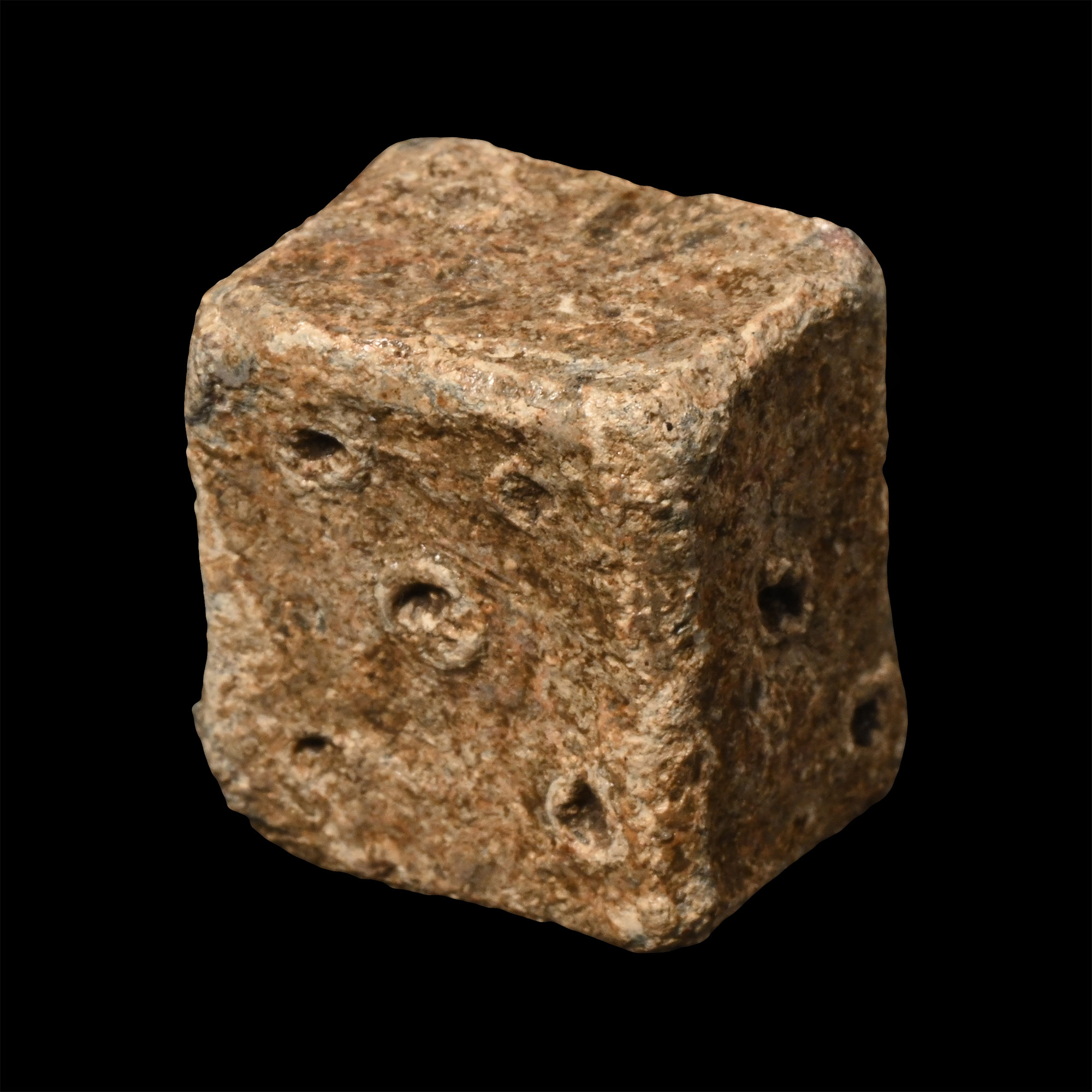
Roman Lead Gaming Dice
1ST-4TH CENTURY A.D.
3/4 in. (44.5 grams, 20 mm).
Roughly cuboid in form with traces of impressed dot markings. [No Reserve]
ProvenanceFrom the private collection of Colin Narbeth, UK, 1990s.
CONDITIONTimeLine Auctions follows a vetting process to ensure the authenticity and legality of all items, reinforcing our commitment to integrity and responsible trading. Each antiquity, antique, and coin lot undergoes thorough examination by a vetting committee of at least ten external specialists, professional trade association members, scientists, and archaeologists: Our Vetting Process
AUCTIONS:
TimeLine is a leading auction house specialising in antiquities, ancient art, collectables, natural history, coins, medals, and books. Our auctions offer museums, collectors, historians, and enthusiasts the opportunity to acquire unique and historically significant pieces.
-
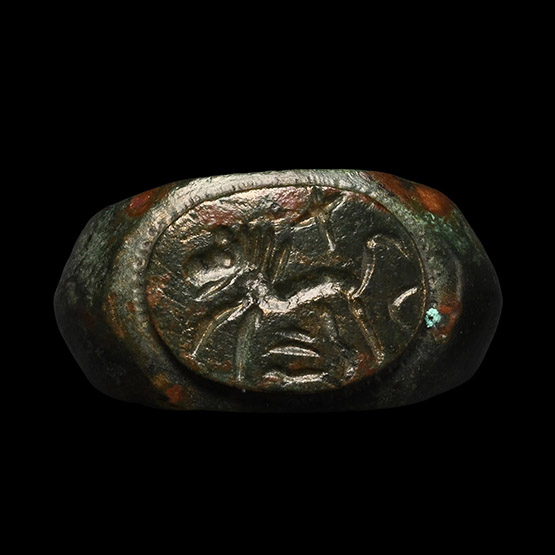
Roman Bronze Ring with Leaping Lion
2nd-3rd century A.D.Sold for (Inc. bp): £111
Keeled hoop expanding at the shoulders, raised oval bezel with incuse stylised lion leaping left, star above. 11.25 grams, 25.66 mm overall, 19.35 mm internal diameter (approximate size British M 1/2, USA 6 1/4, Europe 13.09, Japan 12)
Acquired on the UK and EU art market before 2000. From the private collection of a Surrey, UK, gentleman.
The shape of the ring belongs to the typologies of the Severian Age. Under Caracalla, the theme of the lion was popular on civilian and soldiers' rings, the lion being the emperor's favourite animal. Stars and lions were, from the age of Caracalla, symbols of the Praetorian Guard. -
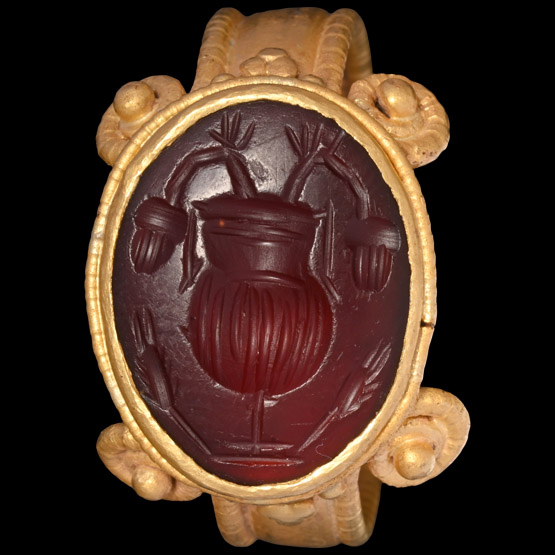
Roman Vase Gemstone in Gold Ring
2nd-3rd century A.D.Estimate: £1,200 - 1,700 (+bp*)
Opening Bid: £600
A cloison garnet intaglio with vase, flowers and seeds; set into a later gold finger ring comprising a broad hoop with beaded wire rims, scrolled shoulders with granule detailing, discoid bezel; set into a later gold ring; supplied with a museum-quality impression. 8.48 grams, 22.56 mm overall, 19.58 mm internal diameter (approximate size British Q, USA 8, Europe 17.49, Japan 16)
Private collection, before 1975. Private collection, England. -
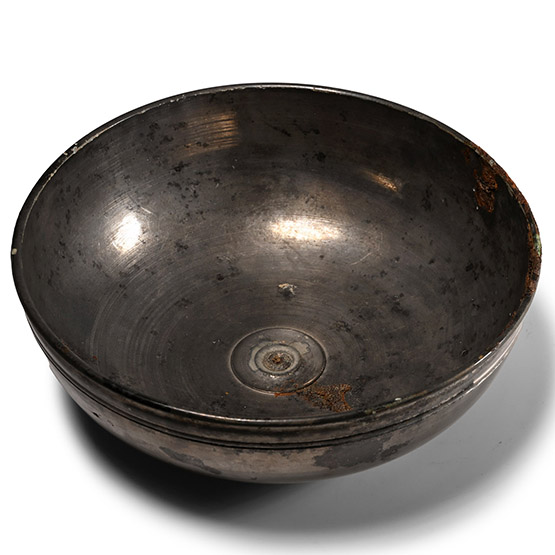
Roman Tinned Bronze Bowl
1st-3rd century A.D.Estimate: £1,200 - 1,700 (‡+bp*)
Opening Bid: £600
Hemispherical in profile with low foot, incised circumferential lines to rim; high-tin surface with silvery appearance. 177 grams, 10.3 cm
Acquired in the mid 1980s-1990s. Private collection, Switzerland, thence by descent. Private collection, since the late 1990s. This lot has been checked against the Interpol Database of stolen works of art and is accompanied by search certificate number no.12234-222176.
