
Loading, please wait...
LOT 0161
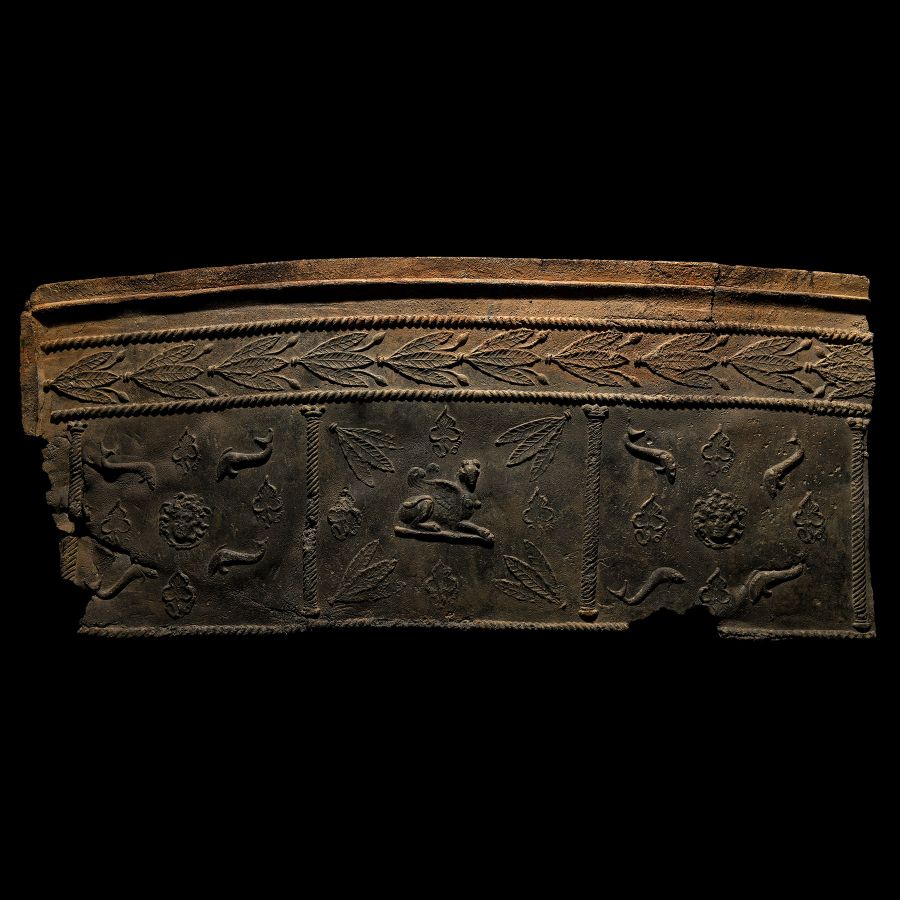
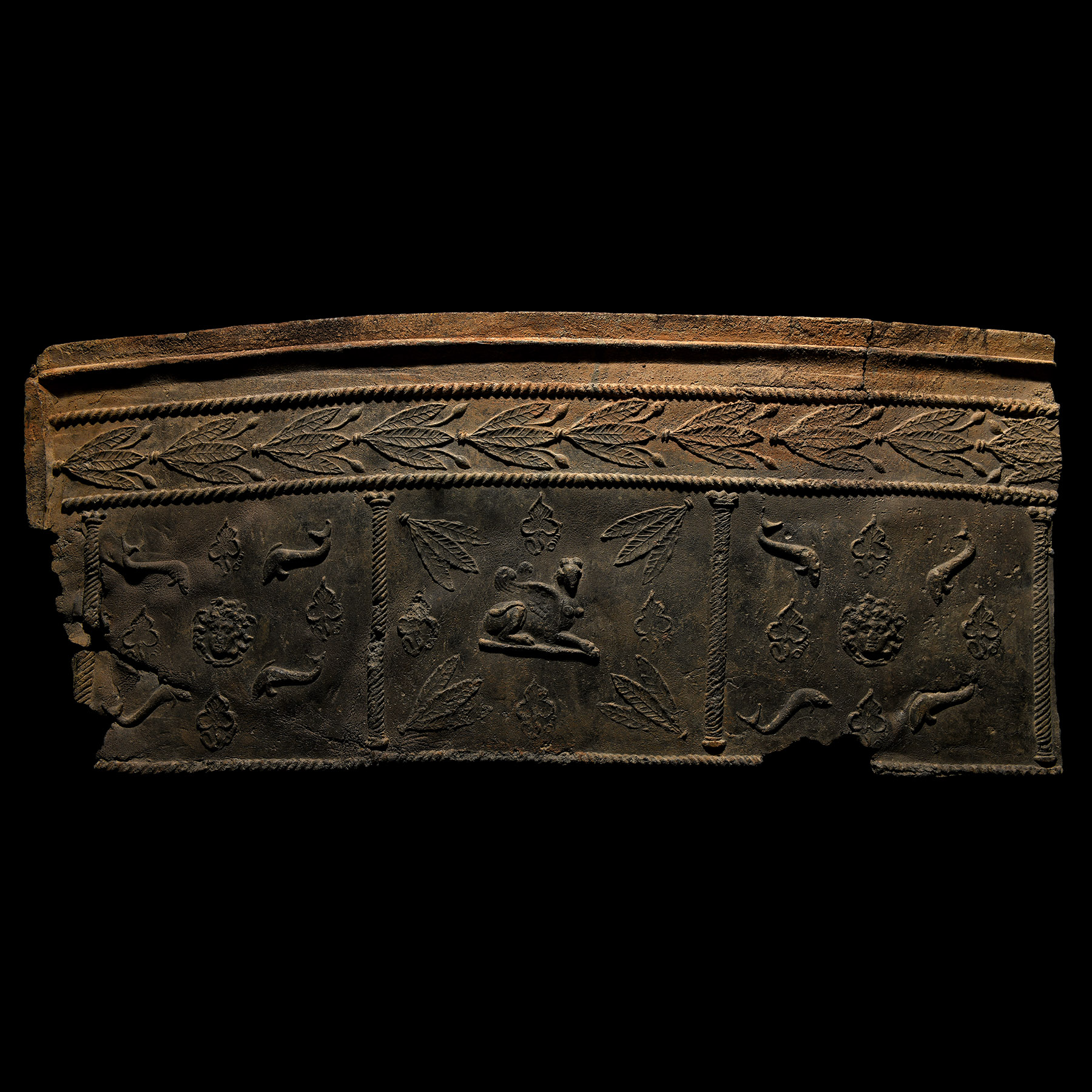
Roman Lead Coffin Panel with Sphinx, Medusa and Dolphins
2ND-3RD CENTURY A.D.
35 1/2 in. (19.75 kg, 90 cm).
Decorated with patterns comprising sphinxes, dolphins, and masks of Medusa in fields between columns, and floral border strips with laurel leaves.
ProvenanceAcquired 1970s-early 1990s.
Property of a North American collector.
London collection, 2016.
This lot has been checked against the Interpol Database of stolen works of art and is accompanied by search certificate no.11993-209841.
See Payne, G., 'Roman Leaden Coffin discovered at Plumstead' in Archaeologia Cantiana, Vol.17, 1887, fig.10, for the presence of lead sarcophagi in Roman Britain; for a similar specimen in the Metropolitan Museum of Art, accession no.31.116a-i; Penn Museum, coffin panel B10280, from Lebanon (Tyre).
FootnotesThere were many ways of burying bodies during the Roman Empire. Although the majority were buried without coffins, there is evidence for wooden coffins, lead-framed wooden coffins, tile burials and lead and stone coffins. This item belongs to types widespread in the Eastern Mediterranean. The panel is decorated with a columned structure, and within each section are symbols of the outer-world, including gorgons,
sphinx and dolphins. The sphinx, having a human head and breasts, legs and paws of a lion, and wings of a bird, was generally associated with protecting imperial tombs and temples. The roundels featuring the head of Medusa, known for her potent gazes that could turn one to stone, was favoured on sarcophagi and architectural ornaments because it was believed that her image would protect those within. The dolphin was considered to ferry the souls of the dead to the afterlife. Very often these sarcophagi were connected by a pipe to the ground above so that
mourners could pour in offerings into the grave.
TimeLine Auctions follows a vetting process to ensure the authenticity and legality of all items, reinforcing our commitment to integrity and responsible trading. Each antiquity, antique, and coin lot undergoes thorough examination by a vetting committee of at least ten external specialists, professional trade association members, scientists, and archaeologists: Our Vetting Process
AUCTIONS:
TimeLine is a leading auction house specialising in antiquities, ancient art, collectables, natural history, coins, medals, and books. Our auctions offer museums, collectors, historians, and enthusiasts the opportunity to acquire unique and historically significant pieces.
LOT 0161
Roman Lead Coffin Panel with Sphinx, Medusa and Dolphins
Sold for (Inc. bp): £1,820
-
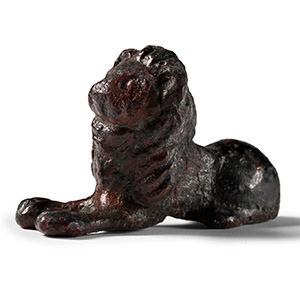
Roman Bronze Lion Statuette
1st-3rd century A.D.Sold for (Inc. bp): £117
Crouching adult male lion with forepaws extended. 24.7 grams, 36 mm wide
Acquired in the late 1960s-early 1970s. Ex property of a European gentleman. Acquired on the UK art market in 2015. Property of a Kent lady collector. -
.jpg)
Roman Capricorn Intaglio Gemstone
Circa 1st century A.D.Estimate: £150 - 200 (+bp*)
Opening Bid: £75
Cabochon garnet with intaglio capricorn engraved on an earlier gemstone; supplied with a museum-quality impression. 0.6 grams, 10 mm
From the collection of a Swiss gentleman formed in Europe from 1970-1980s; thence by descent from the family in London. -
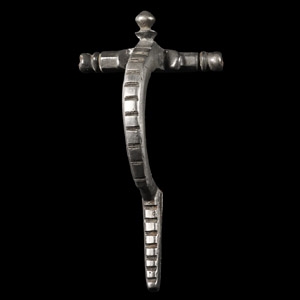
Roman Silver Crossbow Brooch
Circa 4th century A.D.Sold for (Inc. bp): £130
With balustered arms ending in knops and third knop above the bow, remains of hinged pin; deep bow with hatched outer face extending to the tapering footplate with catch to the reverse. 6.48 grams, 48 mm
Acquired at a London Coin Fair in the 1980s. Property of an Essex collector.
