
Loading, please wait...

LOT 0948
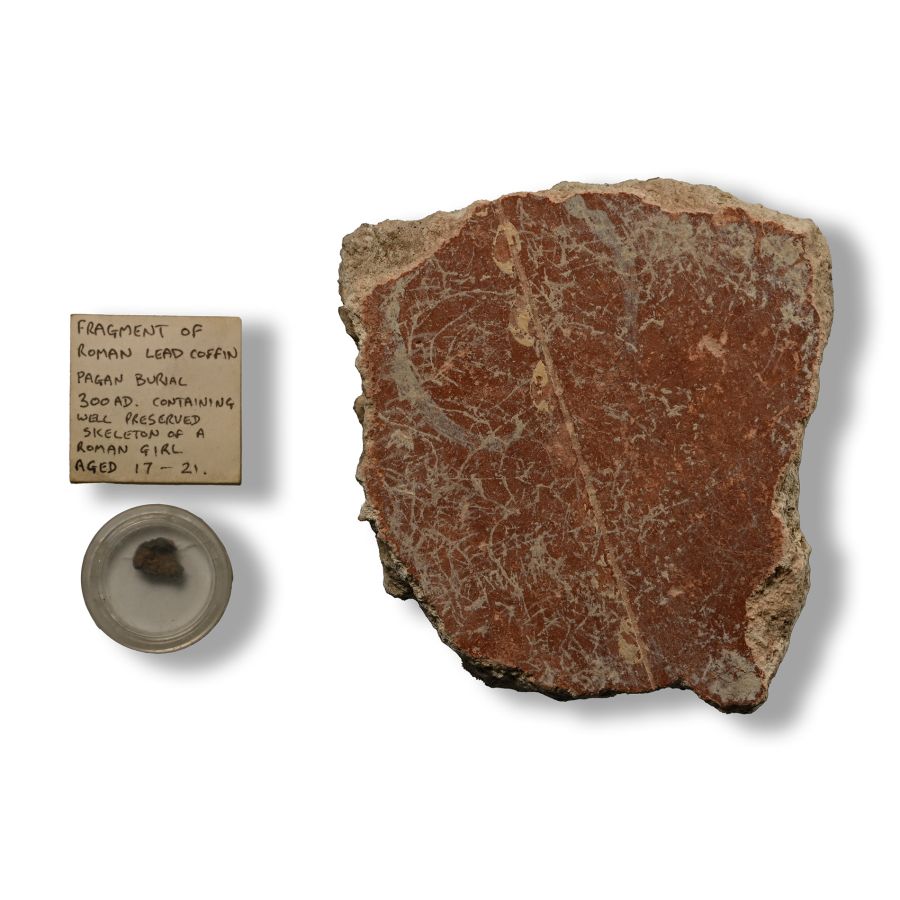
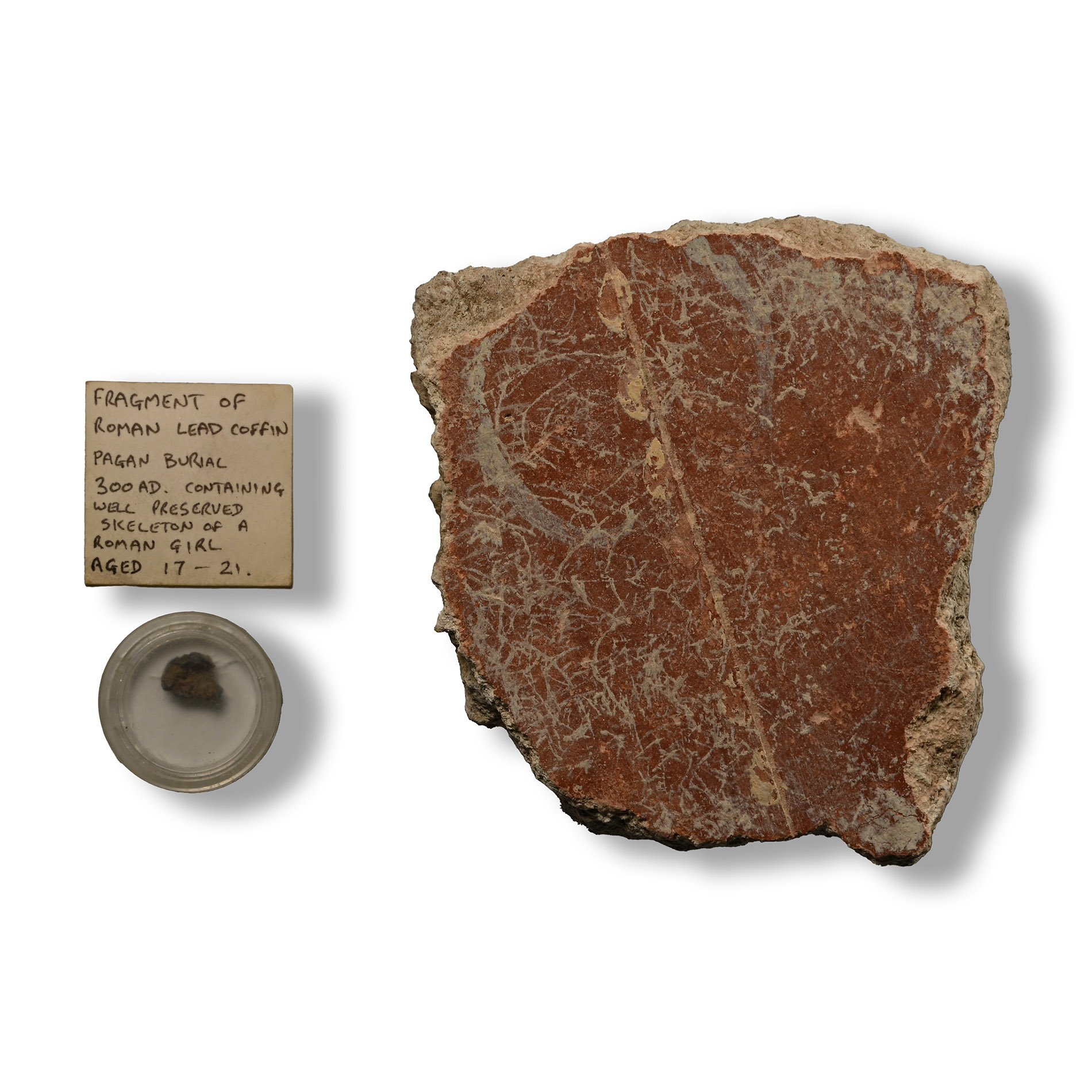
Roman Lead Coffin and Painted Fresco Fragments
3RD-4TH CENTURY A.D.
3/8 - 3 7/8 in. (218 grams total, 9-98 mm).
Wall-plaster fragment with remains of laths to the reverse, dressed surface with painted red and white detailing; with a fragment of a lead coffin believed to have contained the remains of a Roman girl about 17-21 years of age; with old collector's ticket. [2, No Reserve]
ProvenanceThe coffin fragment found at Brough, Nottinghamshire, UK, 1970s-1980s.
Acquired from Ancient & Oriental, UK, in the 1990s.
Ian Wilkinson collection, Nottinghamshire, UK, formed since 1985.
This lot is accompanied by an illustrated lot declaration signed by the Head of the Antiquities Department, Dr Raffaele D’Amato.
TimeLine Auctions follows a vetting process to ensure the authenticity and legality of all items, reinforcing our commitment to integrity and responsible trading. Each antiquity, antique, and coin lot undergoes thorough examination by a vetting committee of at least ten external specialists, professional trade association members, scientists, and archaeologists: Our Vetting Process
AUCTIONS:
TimeLine is a leading auction house specialising in antiquities, ancient art, collectables, natural history, coins, medals, and books. Our auctions offer museums, collectors, historians, and enthusiasts the opportunity to acquire unique and historically significant pieces.
-
Roman Glass Vessel
1st-2nd century A.D.Sold for (Inc. bp): £85
With bulbous body and regular pattern of shallow dimples, flat base, narrow obstructed neck, mouth with flared and folded rim. 85 grams, 10.2 cm
Ex London art market 1990s. From a London, UK, collection. This lot is accompanied by an illustrated lot declaration signed by the Head of the Antiquities Department, Dr Raffaele D’Amato. -
Roman Glass Flask with Gallery
3rd-4th century A.D.Estimate: £1,000 - 1,400 (+bp*)
Opening Bid: £500
Globular in profile with wide double-stepped rolled rim, applied wavy line trails forming a gallery from rim to body. 113 grams, 81 mm wide
From an important glass collection, London, UK, 1980-1990. This lot is accompanied by an illustrated lot declaration signed by the Head of the Antiquities Department, Dr Raffaele D’Amato. -
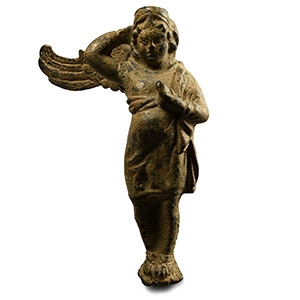
Roman Bronze Statuette of Eros Disguised as Actor
1st century B.C.-1st century A.D.Estimate: £2,000 - 3,000 (+bp*)
Opening Bid: £1,111
Modelled in the round figure in knee-length tunic and draped mantle gathered in the left hand; actor's mask worn tipped back onto the top of the head with curly hair framing the face, left hand raised to support the mask, unfurled wings to reverse (one absent); feet angled. 550 grams, 14.1 cm
Ex Paris auction, 1990s. From a French collection, 2000s. This lot has been checked against the Interpol Database of stolen works of art and is accompanied by a search certificate number no.12526-231887. This lot has been cleared against the Art Loss Register database, and is accompanied by an illustrated lot declaration signed by the Head of the Antiquities Department, Dr Raffaele D’Amato.
