
Loading, please wait...


LOT 0993
Roman Lead Cnaeus Pompey Battle of Munda Slingshot
1ST CENTURY B.C.
1 3/4 in. (81grams, 43 mm).
Facetted lentoid-section sling shot (glans) with inscription in Latin letters 'CN' (Cneius) 'MAG' (Magnus) on one side, and 'IMP' for 'IMPERATOR' (victorious general) to the other side, i.e Gnaeus Pompeius Magnus Imperator (Pompey the Great the victorious general). [No Reserve]
ProvenancePreviously from a private Spanish collection.
Property of a Middlesex gentleman.
Accompanied by a copy of a Spanish export licence.
Cf. D'Amato, R. and Sumner, G., Arms and Armour of the Imperial Roman Soldier: From Marius to Commodus, 112 BC-AD 192, London, 2009, fig.32, p.45, for a similar glans in the Zaragoza Museum, found on the Munda battlefield, inscribed with Pompey’s name.
CONDITIONTimeLine Auctions follows a vetting process to ensure the authenticity and legality of all items, reinforcing our commitment to integrity and responsible trading. Each antiquity, antique, and coin lot undergoes thorough examination by a vetting committee of at least ten external specialists, professional trade association members, scientists, and archaeologists: Our Vetting Process
AUCTIONS:
TimeLine is a leading auction house specialising in antiquities, ancient art, collectables, natural history, coins, medals, and books. Our auctions offer museums, collectors, historians, and enthusiasts the opportunity to acquire unique and historically significant pieces.
-
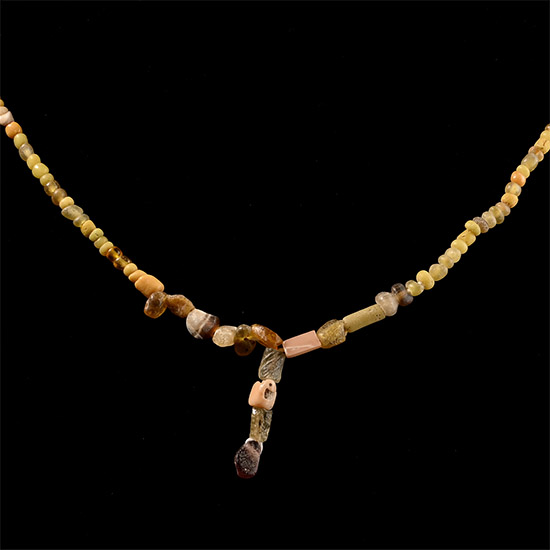
Roman Yellow Glass and Other Bead Necklace String
1st-4th century A.D. and laterSold for (Inc. bp): £20
Composed mainly of annular and oblate beads with a central drop, restrung. 6.8 grams, 36.5 cm
Acquired in the 1990s. Ex London, UK, collection. -
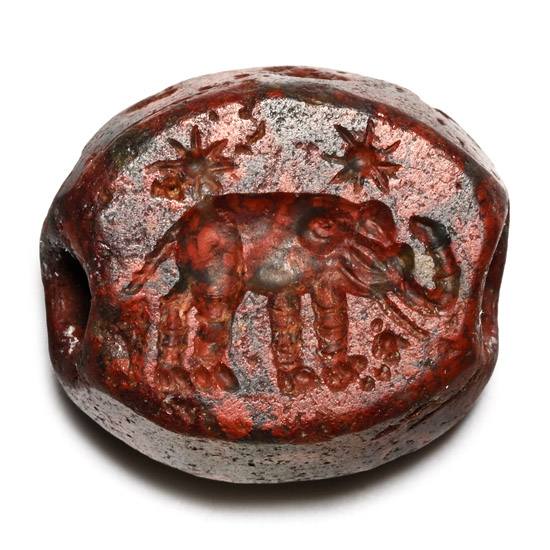
Roman Red Variegated Gemstone with Elephant
3rd century A.D.Sold for (Inc. bp): £1,040
Scaraboid type with incuse design to the underside of an elephant with stars above; supplied with a museum-quality impression. 3.04 grams, 17 mm
From the private collection of a European gentleman (1942-2024), formed since the 1970s.
The Romans first encountered elephants in Pyrrhos' army, and the representation of elephants in Roman art begins from this period. Victorious emperors like Caesar and Vespasian celebrated elephants on their coins. Apart from the celebration of elephants as ‘war machines’, the image of elephants was linked to other aspects in the Roman Imperial Period. Before becoming emperor, Elagabalus was one of the priests of Helios-Sun worship in Emesa. He had elephant depictions on his coins during his reign. The elephants raise their heads to the sun when the sun rises. Thus, the sun is represented on the gemstone together with the elephant. -
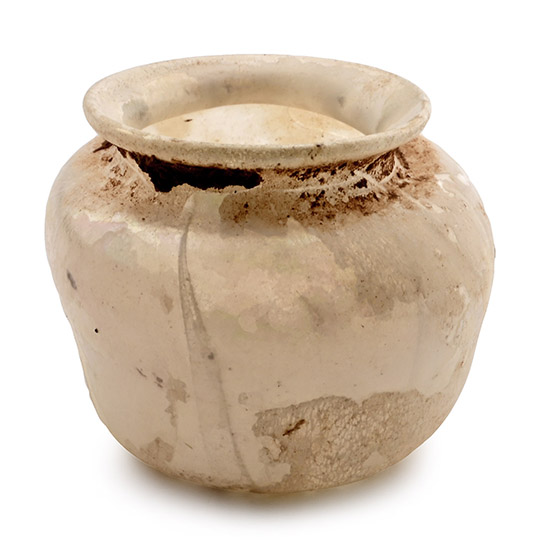
Roman Glass Vase
4th century A.D.Estimate: £100 - 140 (‡+bp*)
Opening Bid: £50
Squat in profile with sloped shoulder, everted flange rim. 13.7 grams, 50 mm
Acquired in the late 1980s. Private collection, thence by descent. Private collection, since the late 1990s.
