
Loading, please wait...
LOT 0729
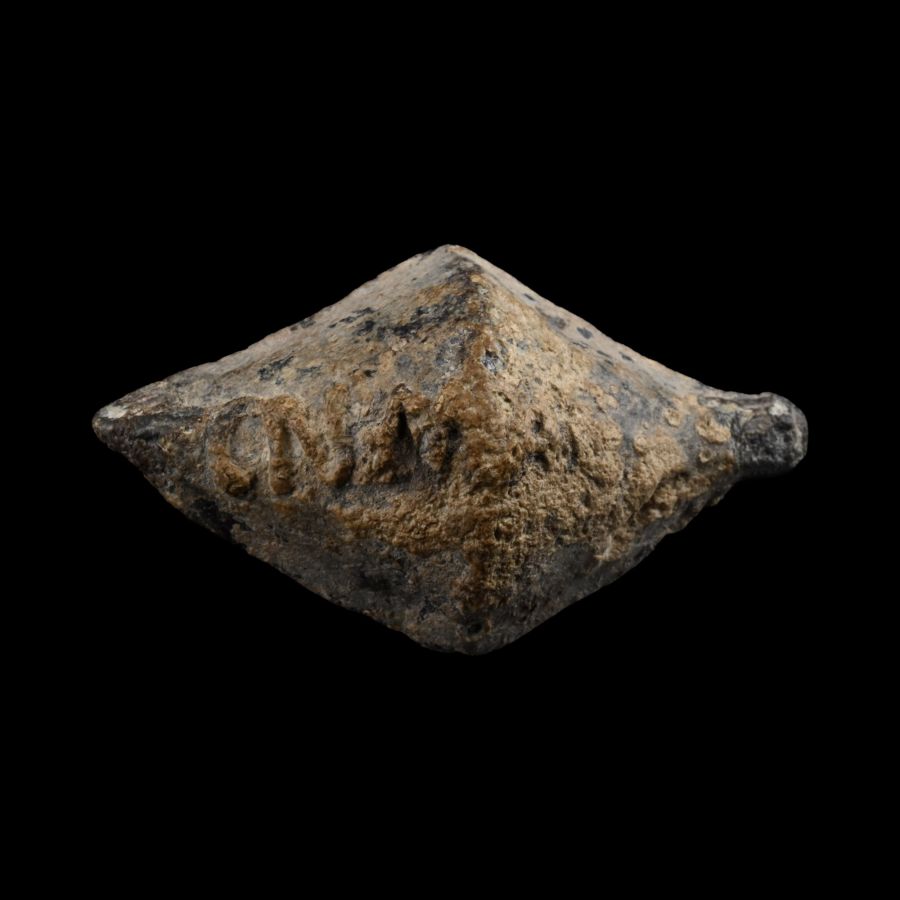
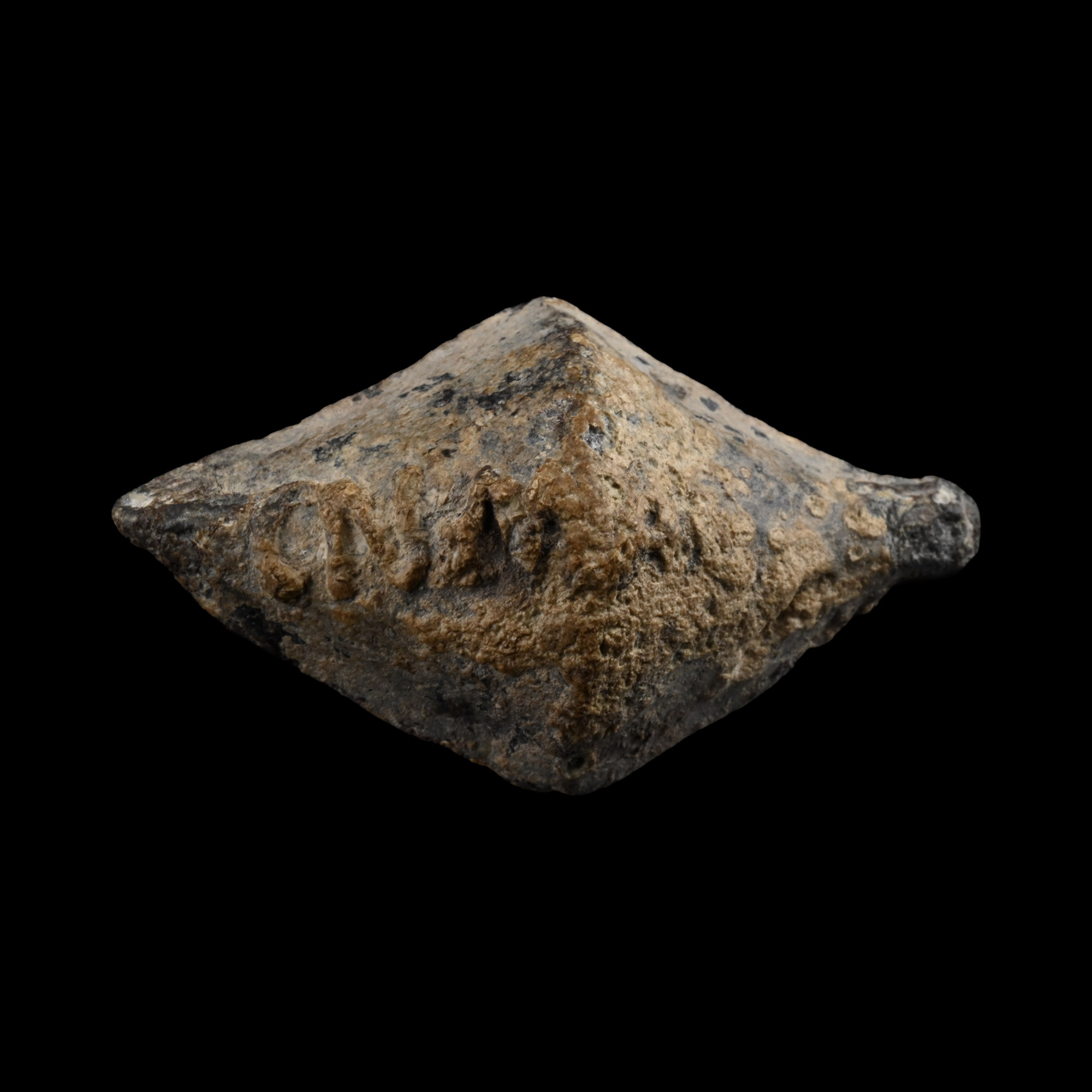
Roman Lead Cnaeus Pompey Battle of Munda Sling Shot
1ST CENTURY B.C.
1 3/4 in. (80.6 grams, 46 mm).
A facetted lentoid-section sling shot (glans) with inscription in Latin letters 'CN' (Cneius) 'MAG' (Magnus) on one side, and 'IMP' for 'IMPERATOR' (victorious general) to the other side, i.e Gnaeus Pompeius Magnus Imperator (Pompey the Great the victorious general). [No Reserve]
ProvenanceFrom an old London, UK, collection since 1985.
This lot is accompanied by an illustrated lot declaration signed by the Head of the Antiquities Department, Dr Raffaele D'Amato.
Cf. D'Amato, R. and Sumner, G., Arms and Armour of the Imperial Roman Soldier: From Marius to Commodus, 112 BC-AD 192, London, 2009, fig.32, p.45, for a similar glandes from Zaragoza Museum, that with the name of Pompey inscribed from Munda battlefield.
FootnotesThe shot (Völling type 1C) is marked with the abbreviated name of Gnaeus Pompey; it was used in quantity at the Battle of Monda (or Munda) against Julius Caesar, 17th March 45 BC. The projectiles could be of different material: in lead (glandes) or in pottery or stone (lapides missiles). Sometimes they were signed with the name of the general, as is our specimen.
CONDITIONTimeLine Auctions follows a vetting process to ensure the authenticity and legality of all items, reinforcing our commitment to integrity and responsible trading. Each antiquity, antique, and coin lot undergoes thorough examination by a vetting committee of at least ten external specialists, professional trade association members, scientists, and archaeologists: Our Vetting Process
AUCTIONS:
TimeLine is a leading auction house specialising in antiquities, ancient art, collectables, natural history, coins, medals, and books. Our auctions offer museums, collectors, historians, and enthusiasts the opportunity to acquire unique and historically significant pieces.
-
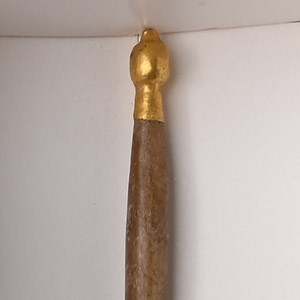
Roman Bone Pin with Gold Terminal
3rd century A.D.Sold for (Inc. bp): £143
Round in section and tapering to each end, with knop finial and applied gilding. 1.99 grams, 74 mm
Acquired from Coincraft, London, UK. From the private collection of Kenneth Machin (1936-2020), Buckinghamshire, UK; his collection of antiquities and natural history was formed since 1948; thence by descent. Accompanied by a Coincraft certificate of authenticity. This lot is accompanied by an illustrated lot declaration signed by the Head of the Antiquities Department, Dr Raffaele D'Amato. -
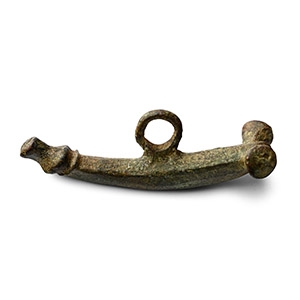
Roman Bronze Phallic Pendant
1st-4th century A.D.Sold for (Inc. bp): £124
Modelled as an elongated phallus with lateral testis and ridged glans, integral suspension loop above. 10.7 grams, 45 mm
Acquired on the UK art market during the late 20th century. From the private collection of David King (1940-2024), Hoddesdon, Hertfordshire, UK. This lot is accompanied by an illustrated lot declaration signed by the Head of the Antiquities Department, Dr Raffaele D'Amato. -
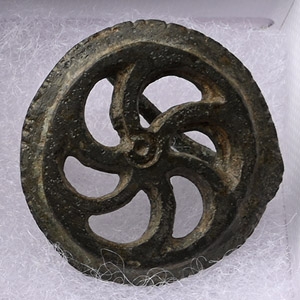
Romano-British Bronze Sun Wheel Plate Brooch
2nd century A.D.Sold for (Inc. bp): £85
With stepped rim, openwork radiating cured arms from a central hub; pin, pin-lugs, and catch to the reverse. 13.1 grams, 30 mm
Found Thames foreshore, London, UK. Acquired from Coincraft, London, UK. From the private collection of Kenneth Machin (1936-2020), Buckinghamshire, UK; his collection of antiquities and natural history was formed since 1948; thence by descent. Accompanied by a Coincraft certificate of authenticity. This lot is accompanied by an illustrated lot declaration signed by the Head of the Antiquities Department, Dr Raffaele D'Amato.
