
Loading, please wait...
LOT 0597
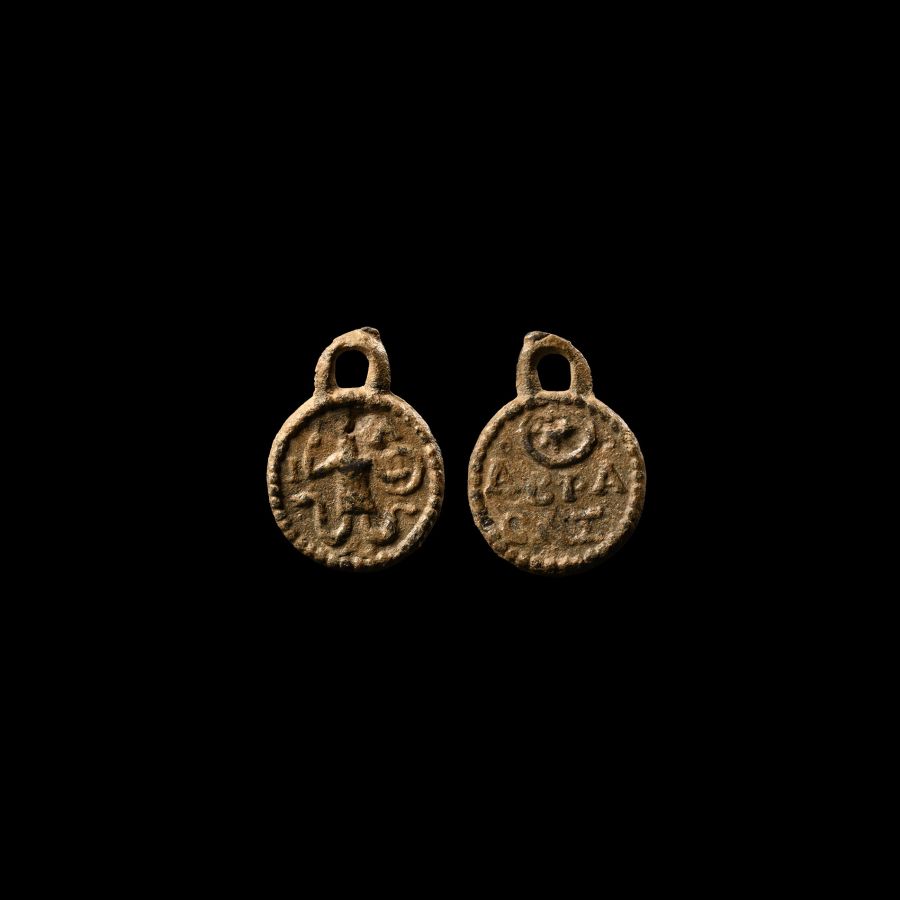
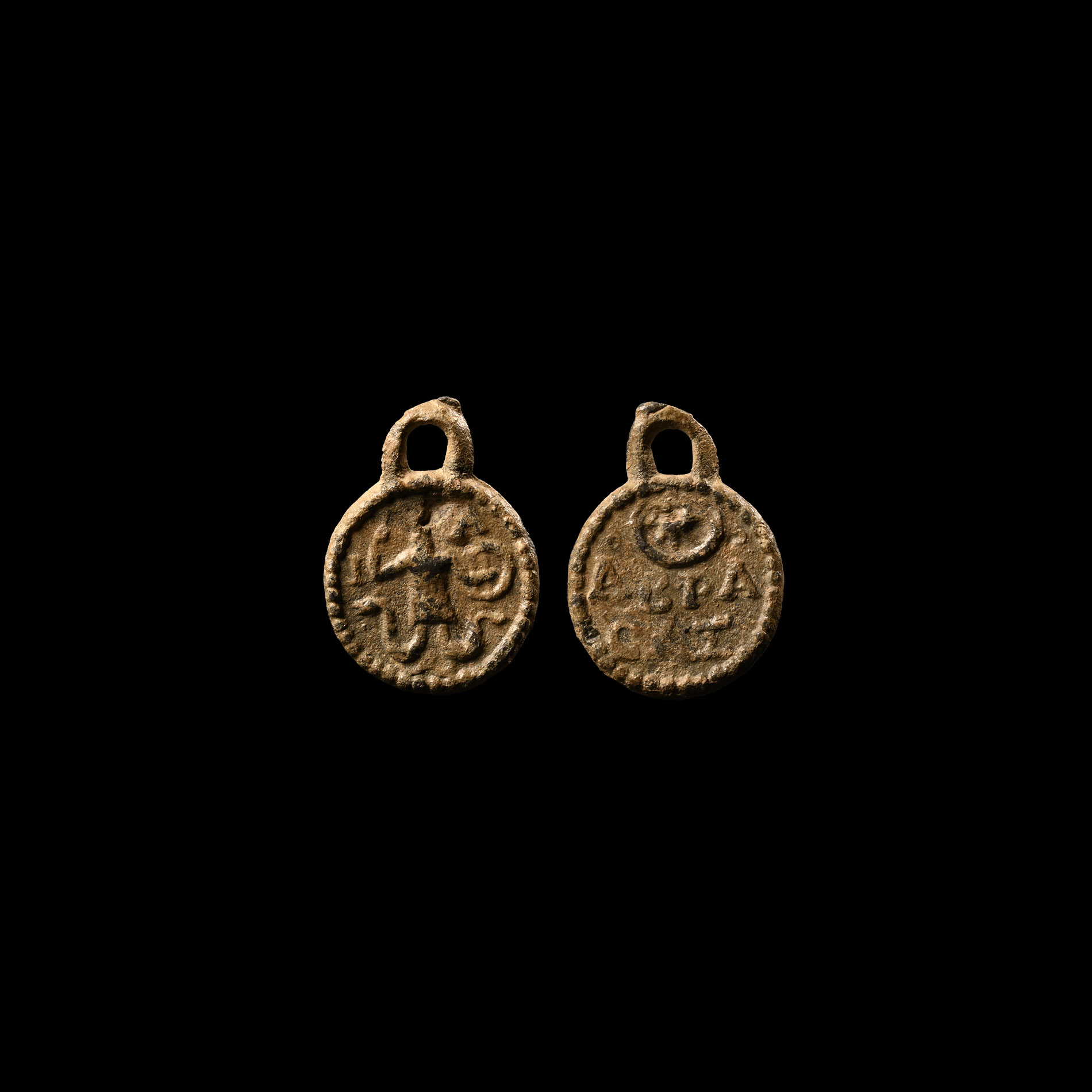
Roman Lead Abraxas Bifacial Pendant
4TH-5TH CENTURY A.D.
1 in. (3.9 grams, 24 mm).
A bifacial discoid lead pendant with suspension loop, one face displaying a star within crescent and lettering below: 'ABPA / CAE'; figure of Abraxas.
ProvenanceAcquired before 2000.
From the collection of a European gentleman living in the UK.
TimeLine Auctions follows a vetting process to ensure the authenticity and legality of all items, reinforcing our commitment to integrity and responsible trading. Each antiquity, antique, and coin lot undergoes thorough examination by a vetting committee of at least ten external specialists, professional trade association members, scientists, and archaeologists: Our Vetting Process
AUCTIONS:
TimeLine is a leading auction house specialising in antiquities, ancient art, collectables, natural history, coins, medals, and books. Our auctions offer museums, collectors, historians, and enthusiasts the opportunity to acquire unique and historically significant pieces.
-
.jpg)
Roman Jupiter Holding Victory Gemstone in Gold Ring
2nd century A.D.Sold for (Inc. bp): £1,170
An onyx cabochon with intaglio image of Jupiter holding a miniature icon of Victory, set into a later gold ring. 4.05 grams, 24.06 mm overall, 18.78 mm internal diameter (approximate size British R 1/2, USA 8 3/4, Europe 19.38, Japan 18)
English private collection. -
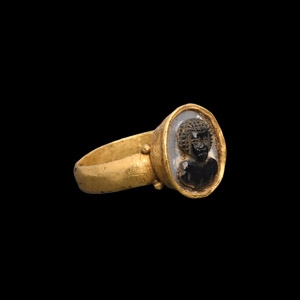
Roman Ring with Nubian Bust Cameo
2nd century A.D.Estimate: £4,500 - 6,500 (+bp*)
Opening Bid: £2,500
A gold finger ring with granules flanking an ellipsoid cell containing an onyx cameo facing bust of a Nubian with dressed hair executed in the half-round. 7.53 grams, 28.75 mm overall, 20.36 mm internal diameter (approximate size British V, USA 10 1/2, Europe 23.77, Japan 22)
Fine condition.
Acquired 1970-1990. Ex property of a deceased lady. Accompanied by scholarly note TL05452 by Dr Ronald Bonewitz. This lot has been checked against the Interpol Database of stolen works of art and is accompanied by search certificate no.114494-195582. -
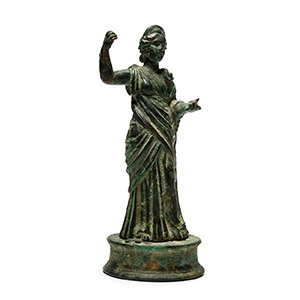
Roman Statuette of the Goddess Fortuna
1st-2nd century A.D.Estimate: £2,000 - 3,000 (+bp*)
Opening Bid: £1,000
A bronze statuette of the goddess Fortuna, modelled in the round standing on a circular plinth base, her feet emerging from beneath her floor length robes, her hair held in a chignon at the back of the head and crowned with a diadem. 205 grams total, 13 cm high including stand
Acquired London art market in early 1960s. From the private collection of the late Walter Steinberg, London, UK. This lot has been checked against the Interpol Database of stolen works of art and is accompanied by search certificate no.11633-199467.
The cult of Fortuna was associated with the round of the agricultural year, the wheel of time and the changing fortunes of the individual, both bad and good. The Rota Fortunae (wheel of fortune) is a symbol of the changeable nature of one's luck and was already a recognised idiom by the time of Cicero, writing in the 1st century B.C.
