
Loading, please wait...
LOT 0654
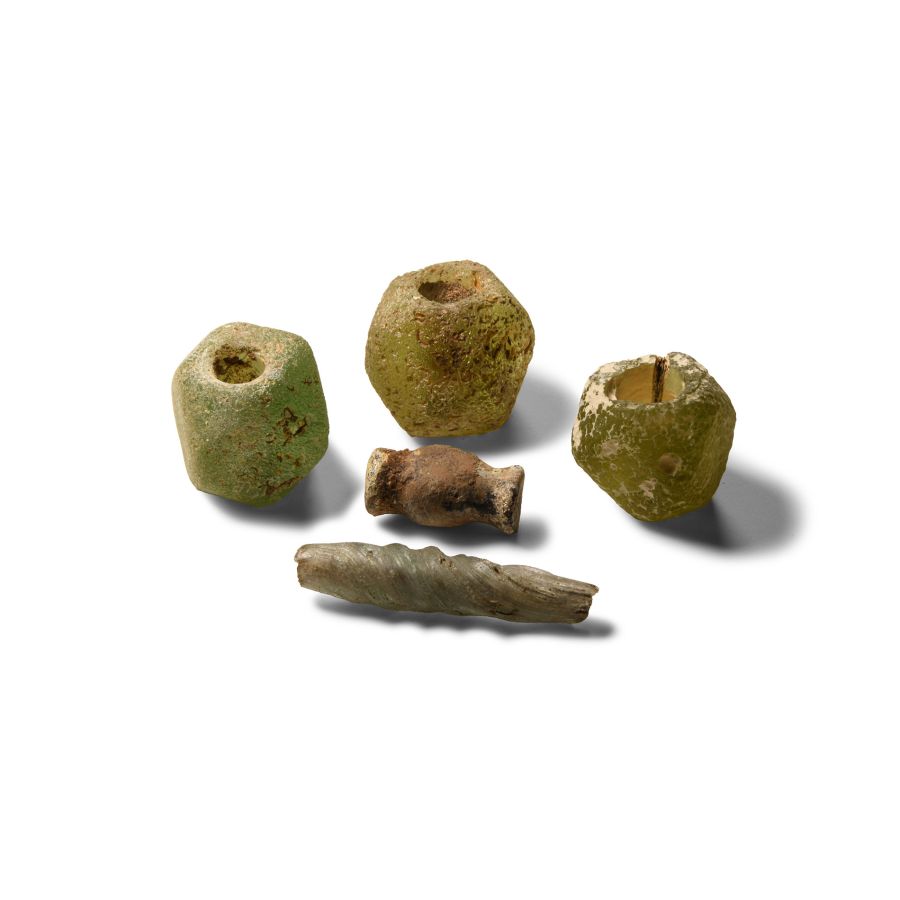
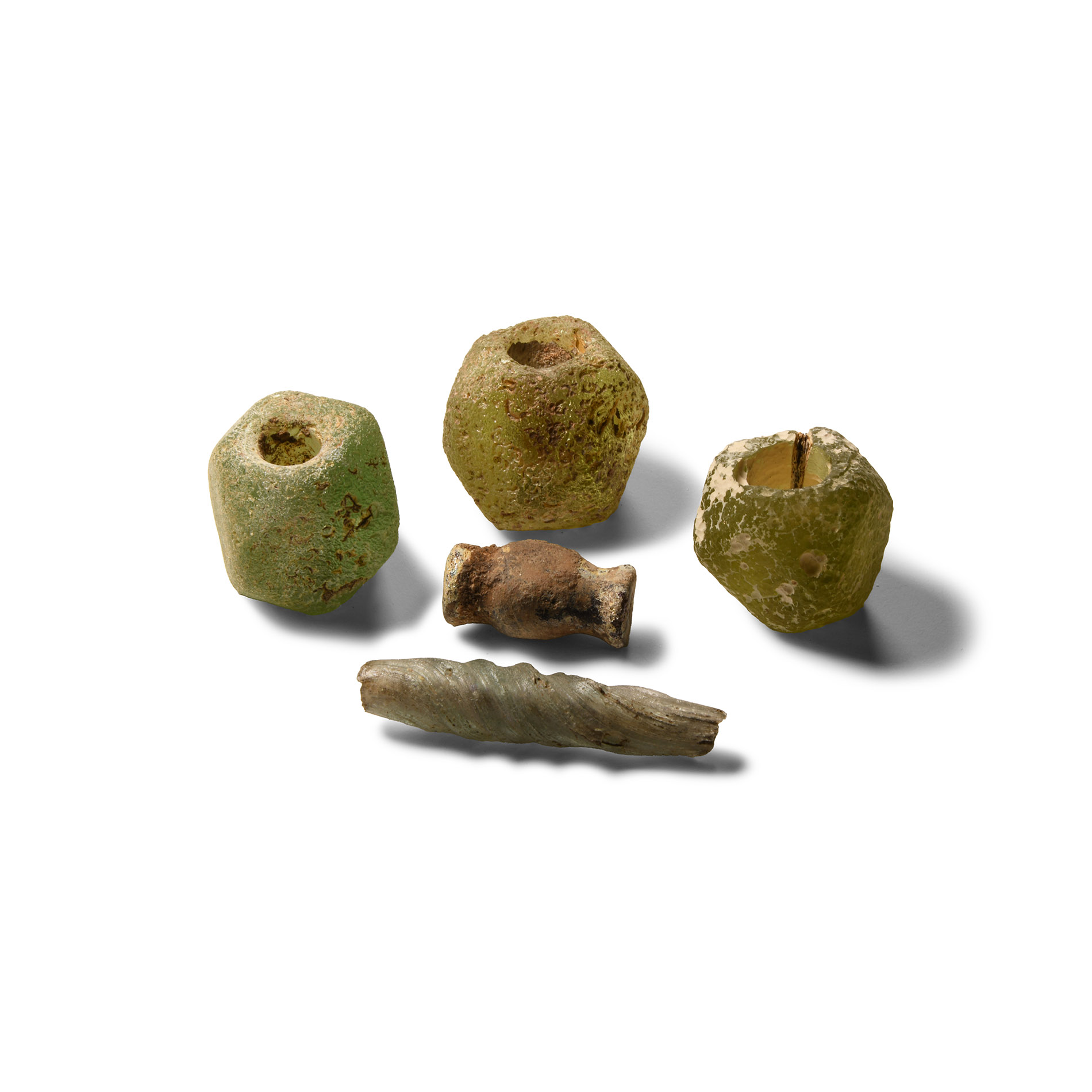
Roman Large Glass Necklace Bead Group
CIRCA 1ST-4TH CENTURY A.D.
1 - 1 3/4 in. (60 grams total, 24-44 mm).
Comprising five opaque glass beads, including three large facetted beads, a decoratively twisted tubular bead and a 'bow-tie' shaped clay bead with bulbous mid-section; some with traces of iridescence to the surface. [5, No Reserve]
ProvenanceUK gallery, early 2000s.
CONDITIONTimeLine Auctions follows a vetting process to ensure the authenticity and legality of all items, reinforcing our commitment to integrity and responsible trading. Each antiquity, antique, and coin lot undergoes thorough examination by a vetting committee of at least ten external specialists, professional trade association members, scientists, and archaeologists: Our Vetting Process
AUCTIONS:
TimeLine is a leading auction house specialising in antiquities, ancient art, collectables, natural history, coins, medals, and books. Our auctions offer museums, collectors, historians, and enthusiasts the opportunity to acquire unique and historically significant pieces.
-
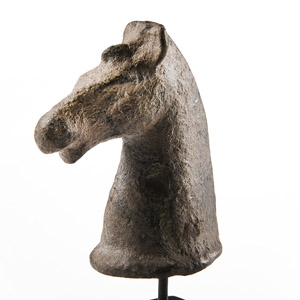
Roman Bronze Horse Head Protome
1st-4th century A.D.Sold for (Inc. bp): £338
Modelled with naturalistic detailing with signs of attachment. 81 grams, 49 mm
‘The Ancient Menagerie Collection’ formerly the property of a Cambridgeshire lady, collected since the 1990s and acquired from auctions and dealers throughout Europe and the USA, now ex London collection. -
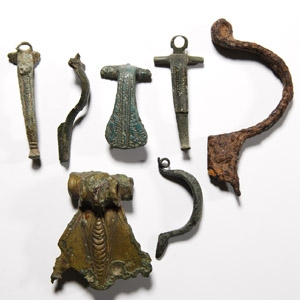
Romano-British Bow Brooch Collection
Circa 1st-2nd century A.D.Sold for (Inc. bp): £33
Comprising: a large fly, together with a number decorated with simple geometric ornament; pins absent. 85 grams total, 37-74 mm
Found Norfolk, Essex, and Wiltshire, UK. Ex private Merseyside, UK, collection. -
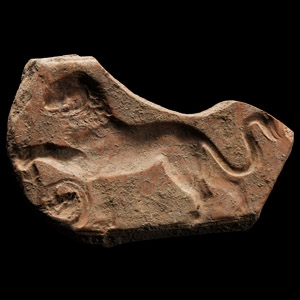
Roman Terracotta Lion Mould
1st-4th century A.D.Sold for (Inc. bp): £338
The amorphous fragment with a mould in the form of a lion advancing left to one face, one front paw raised. 107 grams, 10.4 cm
Acquired 1980-2015. Ex Abelita family collection.
