
Loading, please wait...
LOT 0725
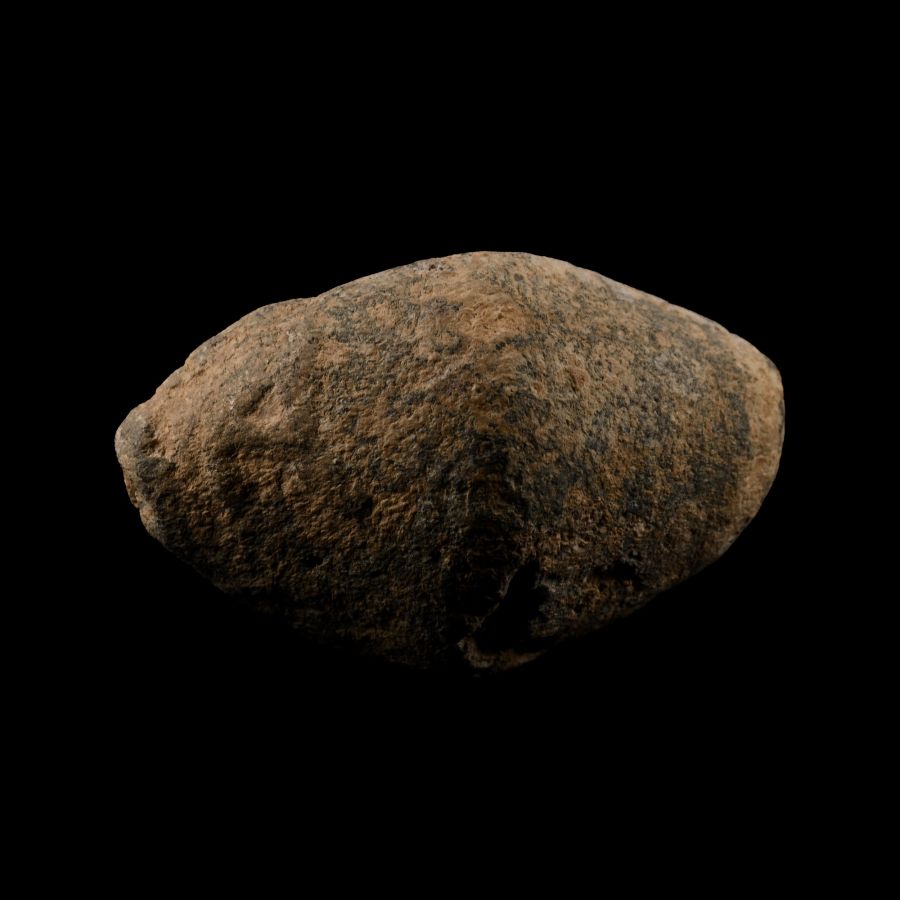
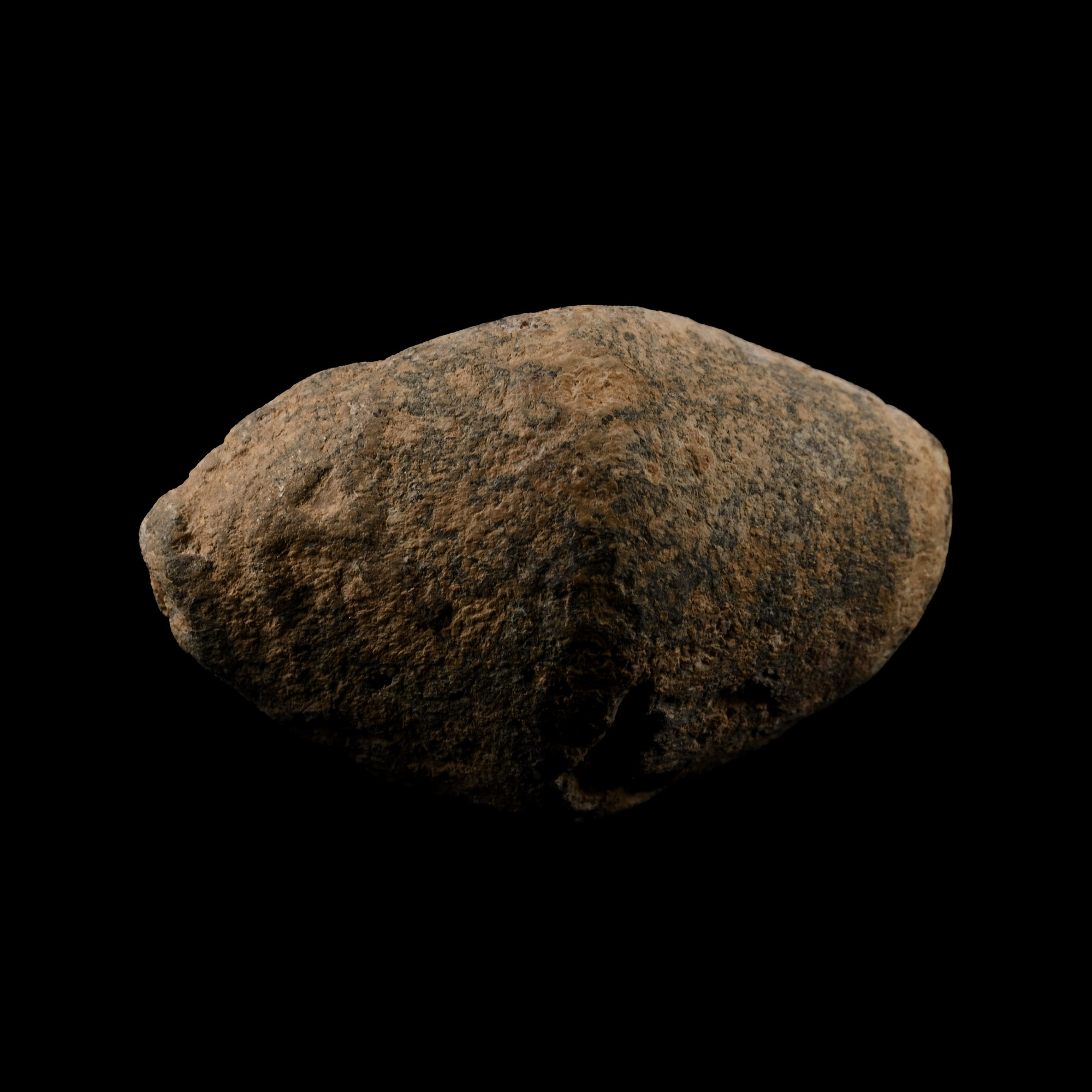
Roman Julius Caesar 'Battle of Munda' Lead Slingshot
45 B.C.
1 1/4 in. (38.6 grams, 31 mm).
A biconical facetted lentoid-section lead sling shot (glans), inscription monogram a combination of letters 'C', 'A' and 'E', for 'C A E S' referring to Julius Caesar. [No Reserve]
ProvenanceAcquired on the UK art market.
Property of a gentleman collector.
Accompanied by an academic paper by military specialist Dr Raffaele D'Amato, dated 4th May 2022 and titled 'Roman Res Publica - Lead Slingshots (glandes) of Caesarian Age - 45 B.C circa'.
This lot is accompanied by an illustrated lot declaration signed by the Head of the Antiquities Department, Dr Raffaele D'Amato.
Cf. D'Amato, R. and Sumner, G., Arms and Armour of the Imperial Roman Soldier: From Marius to Commodus, 112 BC-AD 192, London, 2009, fig.32, p.45, for similar glandes from Zaragoza Museum, one with the name of Pompey inscribed also coming from Munda battlefield; Schinco, G., Small, A.M., 'A previously unknown siege of Botromagno/Silvium: the evidence of slingshots from Gravina in Puglia (Provincia di Bari, Puglia)' in Papers of the British School at Rome, 2019, pp.1-52, figs.31, 37.
FootnotesThe shot (type IIb of the Völling classification) is marked with the abbreviated name of Julius Caesar; vast quantities were used at the Battle of Munda (or Monda) against the last supporters of Pompey, the leaders of the Optimates, on the 17th March 45 BC. Similar shots were used during Caesar's wars. The slingers of Caesar's age were part of the light infantry. Caesar speaks of his Balearic slingers during the conquest of Gaul. They wore a short tunic, with leather or rope sandals to the feet, and a warm overcoat which could also have been used to store projectiles. They also used a satchel to carry deadly lead-like stones or bullets.
CONDITIONTimeLine Auctions follows a vetting process to ensure the authenticity and legality of all items, reinforcing our commitment to integrity and responsible trading. Each antiquity, antique, and coin lot undergoes thorough examination by a vetting committee of at least ten external specialists, professional trade association members, scientists, and archaeologists: Our Vetting Process
AUCTIONS:
TimeLine is a leading auction house specialising in antiquities, ancient art, collectables, natural history, coins, medals, and books. Our auctions offer museums, collectors, historians, and enthusiasts the opportunity to acquire unique and historically significant pieces.
-
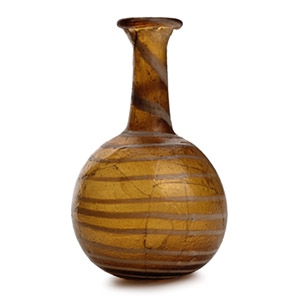
Roman Honey-Coloured Flask with White Trail
1st century B.C.-1st century A.D.Sold for (Inc. bp): £364
With globular body, tall tubular neck with everted rolled rim, applied helical white glass trail from rim to base. 65 grams, 12 cm
Mayfair, London, UK, gallery, 2000s. Ex Surrey, UK, gentleman. This lot is accompanied by an illustrated lot declaration signed by the Head of the Antiquities Department, Dr Raffaele D'Amato. -
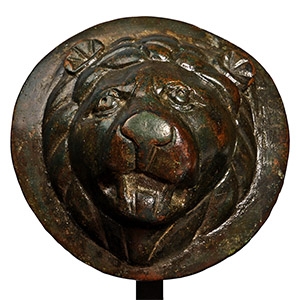
Roman Bronze Lion Head Mount
2nd-3rd century A.D.Estimate: £400 - 600 (+bp*)
Opening Bid: £200
Discoid mount with a lion-head modelled in the round to the centre, the beast with fierce expression and gaping jaws; mounted on a custom-made display stand. 218 grams total, 10 cm high including stand
Private collection of Mr K.A., acquired in the 1990s-early 2000s. This lot is accompanied by an illustrated lot declaration signed by the Head of the Antiquities Department, Dr Raffaele D'Amato.
Bronze lions were chosen guardian figures for millennia in both the Greek and Roman worlds. Representations of lions have been discovered in various contexts, appearing on gates and tombs in ancient Greece and on Roman coffins (sarcophagi), where they symbolise victory of the soul over death and evil. -
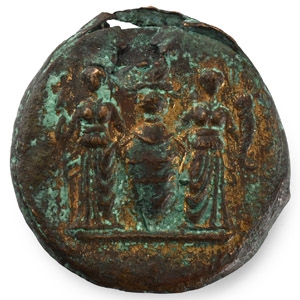
Roman Gilt Bronze Medallion with Mythological Scene
3rd-5th century A.D.Sold for (Inc. bp): £91
Discoid in plan with repoussé sheet-bronze cover on a bronze disc; facing image of two goddesses holding cornucopiae (Fortuna and Isis) flanking an altar, on a baseline. 7.5 grams, 23 mm
Acquired in 1993. Private collection, thence by descent. Private collection, since the late 1990s. This lot is accompanied by an illustrated lot declaration signed by the Head of the Antiquities Department, Dr Raffaele D'Amato.
There are reliefs and paintings from across the Empire showing religious processions involving cult statues of the two goddesses. The famous Roman novel 'The Golden Ass' by Lucius Apuleius provides literary evidence of such processions in honour of the goddess Isis. The statue of the goddess was taken from the temple and processed through the streets with great pomp and ceremony on an elaborate bier or cart by the priests and devotees to the accompaniment of music and prayers.
