
Loading, please wait...
LOT 1470
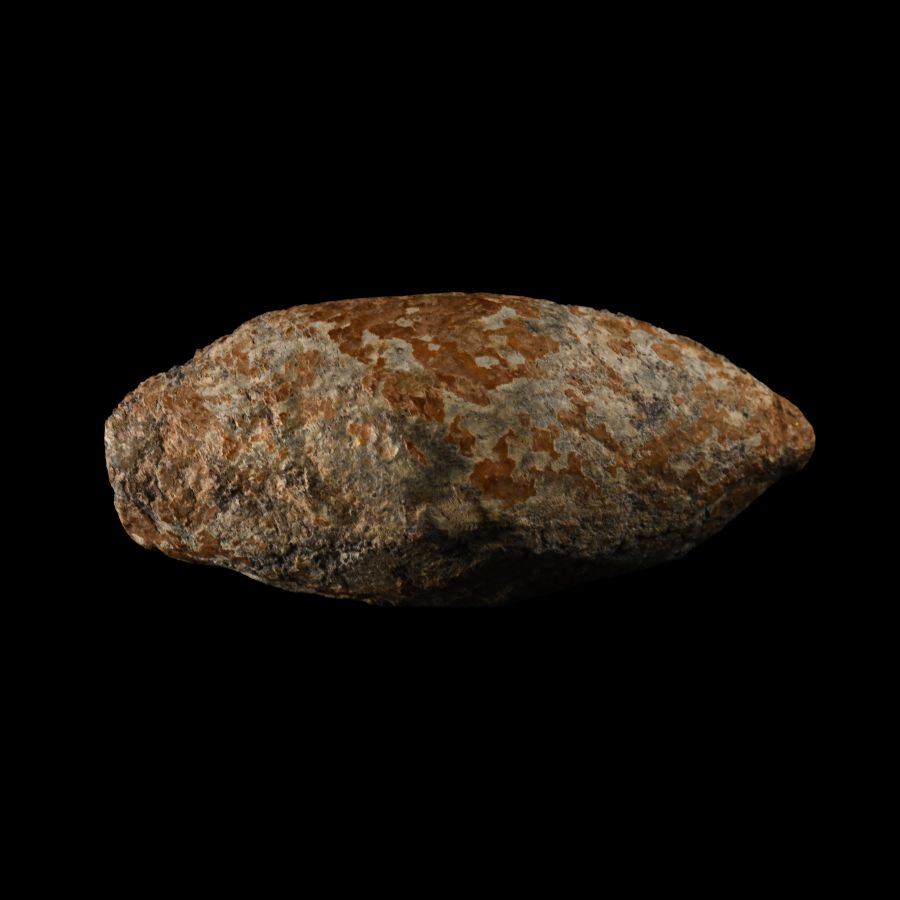
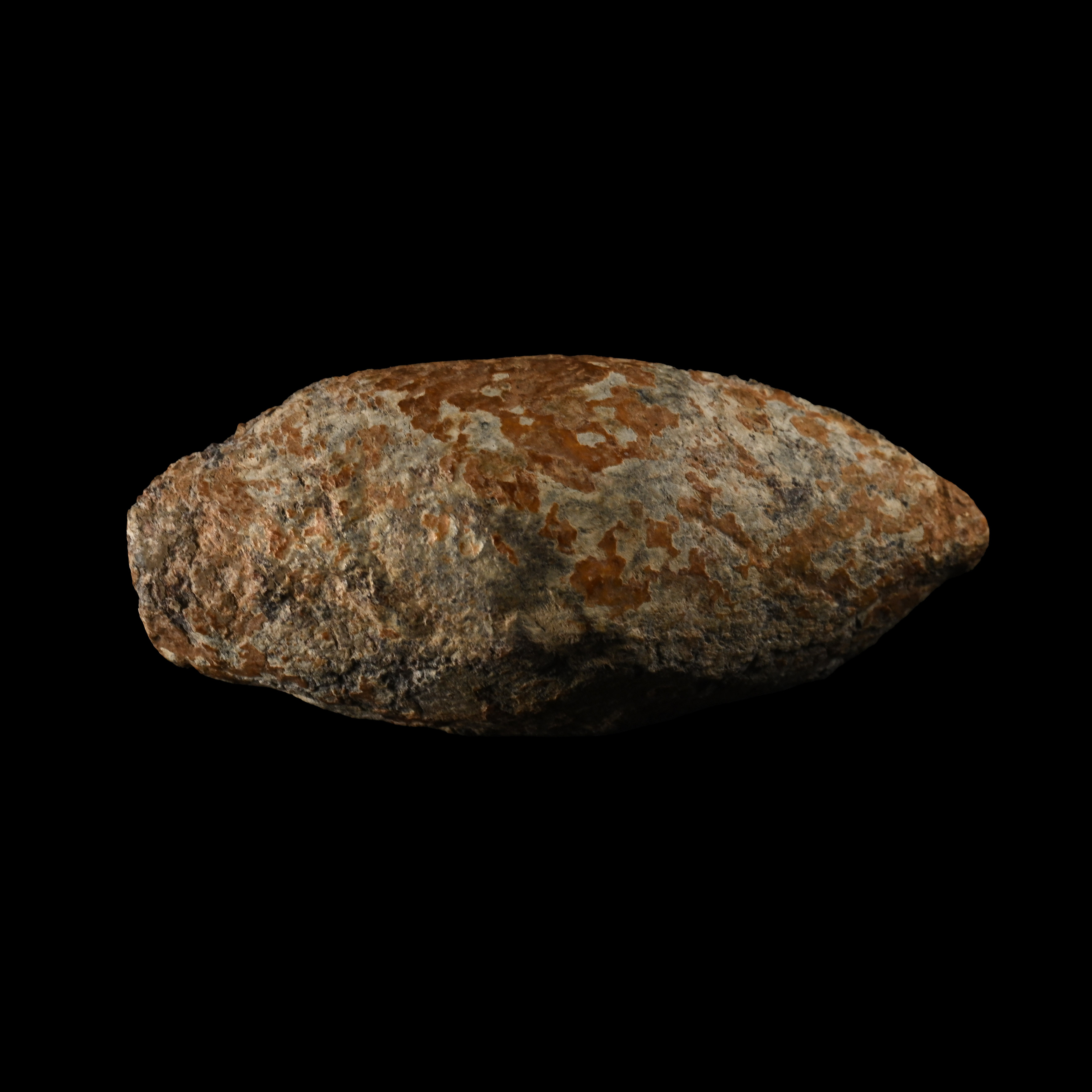
Roman Julius Caesar 'Battle of Munda' Lead Slingshot
45 B.C.
1 1/2 in. (48.5 grams, 37 mm).
A biconical facetted lentoid-section lead sling shot (glans), inscription monogram a combination of letters 'C', 'A' and 'E', for 'C A E S' referring to Julius Caesar. [No Reserve]
ProvenanceAcquired on the UK art market.
Property of a gentleman collector.
Accompanied by an academic paper by military specialist Dr Raffaele D'Amato, dated 4th May 2022 and titled 'Roman Res Publica - Lead Slingshots (glandes) of Caesarian Age - 45 B.C circa'.
This lot is accompanied by an illustrated lot declaration signed by the Head of the Antiquities Department, Dr Raffaele D'Amato.
Cf. D'Amato, R. and Sumner, G., Arms and Armour of the Imperial Roman Soldier: From Marius to Commodus, 112 BC-AD 192, London, 2009, fig.32, p.45, for similar glandes from Zaragoza Museum, one with the name of Pompey inscribed also coming from Munda battlefield; Schinco, G., Small, A.M., 'A previously unknown siege of Botromagno/Silvium: the evidence of slingshots from Gravina in Puglia (Provincia di Bari, Puglia)' in Papers of the British School at Rome, 2019, pp.1-52, figs.31, 37.
FootnotesThe shot (type IIb of the Völling classification) is marked with the abbreviated name of Julius Caesar; vast quantities were used at the Battle of Munda (or Monda) against the last supporters of Pompey, the leaders of the Optimates, on the 17th March 45 BC. Similar shots were used during Caesar's wars. The slingers of Caesar's age were part of the light infantry. Caesar speaks of his Balearic slingers during the conquest of Gaul. They wore a short tunic, with leather or rope sandals to the feet, and a warm overcoat which could also have been used to store projectiles. They also used a satchel to carry deadly lead-like stones or bullets.
CONDITIONTimeLine Auctions follows a vetting process to ensure the authenticity and legality of all items, reinforcing our commitment to integrity and responsible trading. Each antiquity, antique, and coin lot undergoes thorough examination by a vetting committee of at least ten external specialists, professional trade association members, scientists, and archaeologists: Our Vetting Process
AUCTIONS:
TimeLine is a leading auction house specialising in antiquities, ancient art, collectables, natural history, coins, medals, and books. Our auctions offer museums, collectors, historians, and enthusiasts the opportunity to acquire unique and historically significant pieces.
-

Byzantine 'Greek Fire' Ceramic Fire Bomb or Hand Grenade
9th-11th century A.D.Sold for (Inc. bp): £65
Bulbous body with domed mouth, incised circumferential bands above the shoulder; intended to be filled with explosive liquid and a wick, and used as a hand grenade. 392 grams, 10 cm
From an important specialist collection, London, UK, 1990s onwards. Accompanied by an academic paper by military specialist Dr Raffaele D'Amato, dated 15 July 2019 and titled 'Eastern Roman Empire - Greek Fire Bomb or Hand Grenade (μεσαίον kακάβιον) 9th-11th century AD'. This lot is accompanied by an illustrated lot declaration signed by the Head of the Antiquities Department, Dr Raffaele D'Amato.
Apart from the use of siphons or manual flame-throwers called cheirosiphona, special corps of Roman soldiers employed terracotta grenades, in the form of small jars, abundantly evidenced in archaeological excavations. They were called μεσαία kακαβιά or κυτροκακάβια where the former had a bulbous shape and the latter a more cylindrical form. -
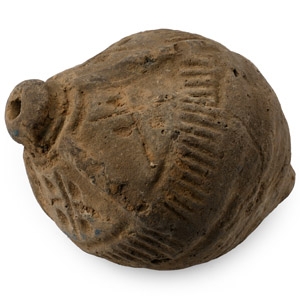
Byzantine 'Greek Fire' Ceramic Fire Bomb or Hand Grenade
9th-11th century A.D.Sold for (Inc. bp): £78
Piriform body with domed mouth, four raised lugs to the upper body with a hatched band beneath, the field decorated with X-motifs with impressed dots between the arms; intended to be filled with explosive liquid and a wick, and used as a hand grenade. 387 grams, 11.5 cm
From an important specialist collection, London, UK, 1990s onwards. Accompanied by an academic paper by military specialist Dr Raffaele D'Amato, dated 15 July 2019 and titled 'Eastern Roman Empire - Greek Fire Bomb or Hand Grenade (μεσαίον kακάβιον) 9th-11th century AD'. This lot is accompanied by an illustrated lot declaration signed by the Head of the Antiquities Department, Dr Raffaele D'Amato.
Apart from the use of siphons or manual flame-throwers called cheirosiphona, special corps of Roman soldiers employed terracotta grenades, in the form of small jars, abundantly evidenced in archaeological excavations. They were called μεσαία kακαβιά or κυτροκακάβια where the former had a bulbous shape and the latter a more cylindrical form. -
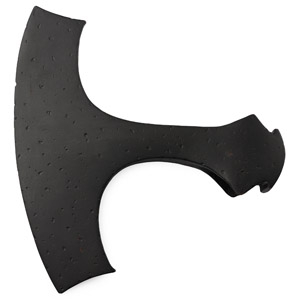
Viking Age Iron Curved T-Shaped Axehead
9th-12th century A.D.Sold for (Inc. bp): £468
With broad curved edge, slender neck, round flared socket with lateral wings to each face and round extension on the rear; professionally cleaned, conserved and restored. 482 grams, 17 cm
Very fine condition,
Ex property of a London businessman, from his grandfather's collection formed after World War II; thence by descent 1972. This lot is accompanied by an illustrated lot declaration signed by the Head of the Antiquities Department, Dr Raffaele D'Amato.
These axes are typical of Baltic workmanship. During this age, the axes were the favourite weapons of many Baltic people, including the Curonian army which included lightly armed soldiers who fought with spears, shields, fighting knives and axes. A heavily armed soldier could also carry a sword, a helmet, a shield, and a wide-bladed axe.
