
Loading, please wait...
_900x900.jpg "Roman Jasper Gemstone with Helmetted Bust")
_200x200.jpg "Roman Jasper Gemstone with Helmetted Bust")
.jpg "Roman Jasper Gemstone with Helmetted Bust")
LOT 0746
Roman Jasper Gemstone with Helmetted Bust
2ND-3RD CENTURY A.D.
3/8 in. (0.47 grams, 11 mm).
Ellipsoid in plan with incuse profile bust, bearded and wearing a crested helmet [No Reserve]
ProvenanceProperty of a European gentleman, acquired from the estate of a London collector (formed before 2000).
CONDITIONTimeLine Auctions follows a vetting process to ensure the authenticity and legality of all items, reinforcing our commitment to integrity and responsible trading. Each antiquity, antique, and coin lot undergoes thorough examination by a vetting committee of at least ten external specialists, professional trade association members, scientists, and archaeologists: Our Vetting Process
AUCTIONS:
TimeLine is a leading auction house specialising in antiquities, ancient art, collectables, natural history, coins, medals, and books. Our auctions offer museums, collectors, historians, and enthusiasts the opportunity to acquire unique and historically significant pieces.
-
.jpg)
Roman Carnelian Gemstone with Sol and Greek Inscription
1st century A.D.Sold for (Inc. bp): £975
Domed base, featuring a standing god Sol (Greek Helios) wearing a radiate crown and muscled cuirass, his left arm raised and the right hand holding a long whip, Greek inscription 'ΦλλNOY' = gem belonging to a man named Phaanos = 'the radiant one, the shining one ', creating a play-of-words between the owner's name and the solar deity. 1.24 grams, 16 mm
Private collection, UK. UK private collection, acquired on the English art market in the 2000s. -
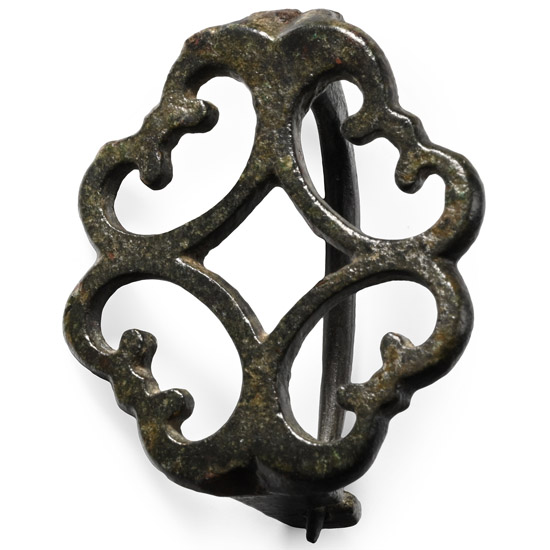
Roman Bronze Openwork Plate Brooch
2nd-3rd century A.D.Sold for (Inc. bp): £130
Openwork body composed of four pelta-shaped motifs radiating from a central lozenge; pin and catch on the reverse. 10.6 grams, 37 mm
From the private coin collection of a West London, UK, gentleman, formed since the mid 1980s. -
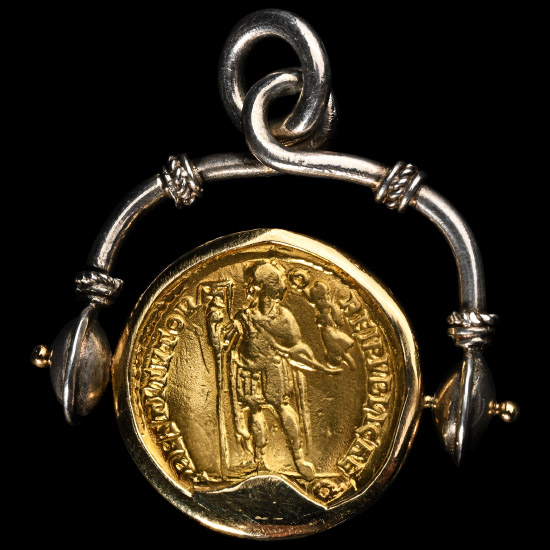
Roman Valentinian I Gold Solidus Coin Set in Gold Pendant Mount
364-375 A.D. and laterEstimate: £1,000 - 1,400 (+bp*)
Current Winning Bid: £750
Obverse with pearl-diademed bust with legend 'DN VALENTINIANVS PF AVG', the reverse with 'RESTITVTOR REIPVBLICAE', Valentinian standing facing, holding a labarum and Victory on globe; set in a later 18 carat gold mount with diamond, set in a silver swivel mount with ropework decoration. 12.05 grams, 38 mm
Acquired 1960s-1990s. From the private collection of the late Alison Barker (1951-2021).
