
Loading, please wait...
LOT 0309
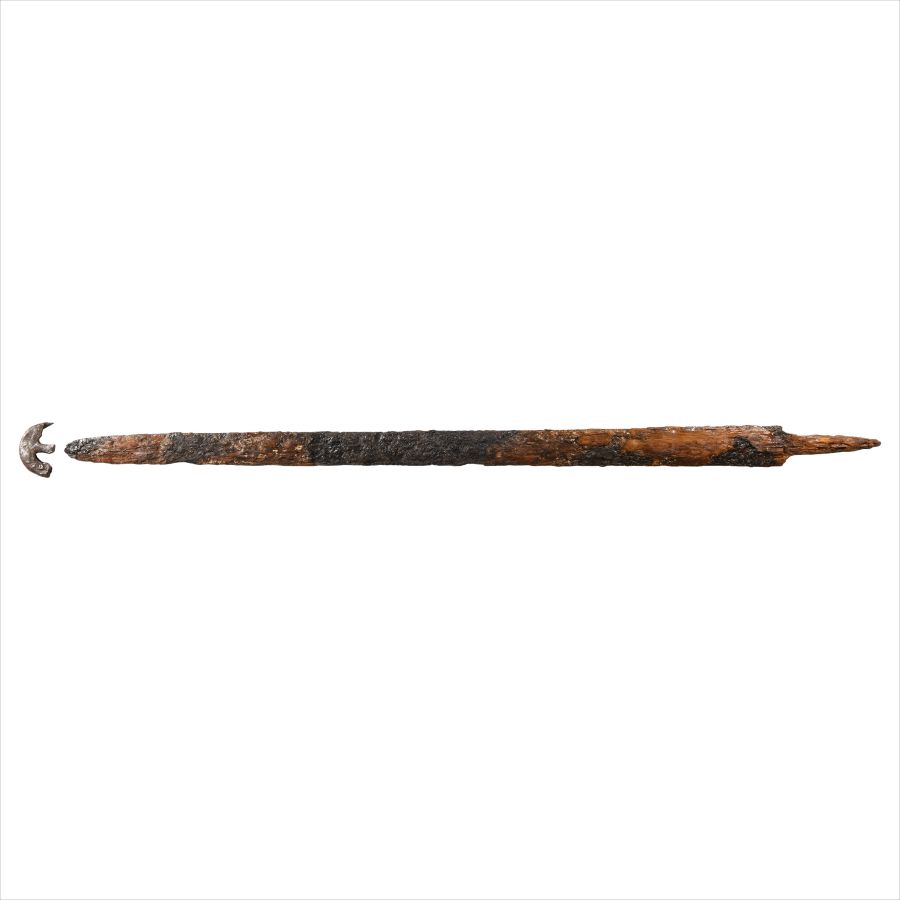
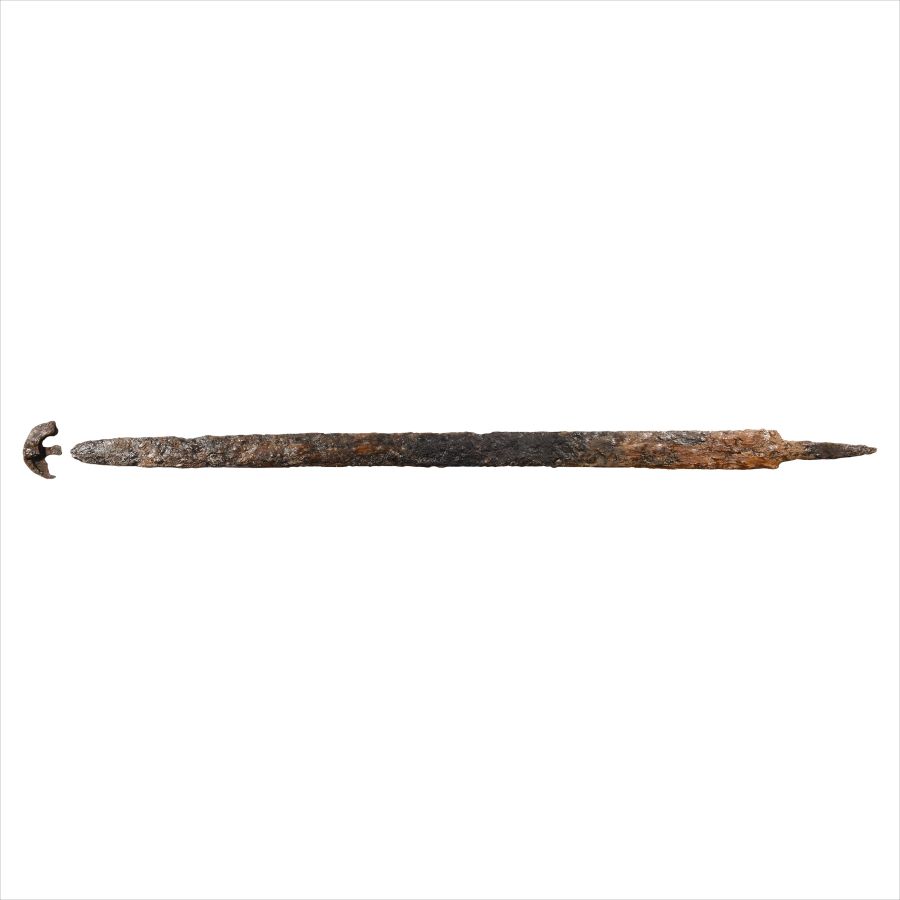
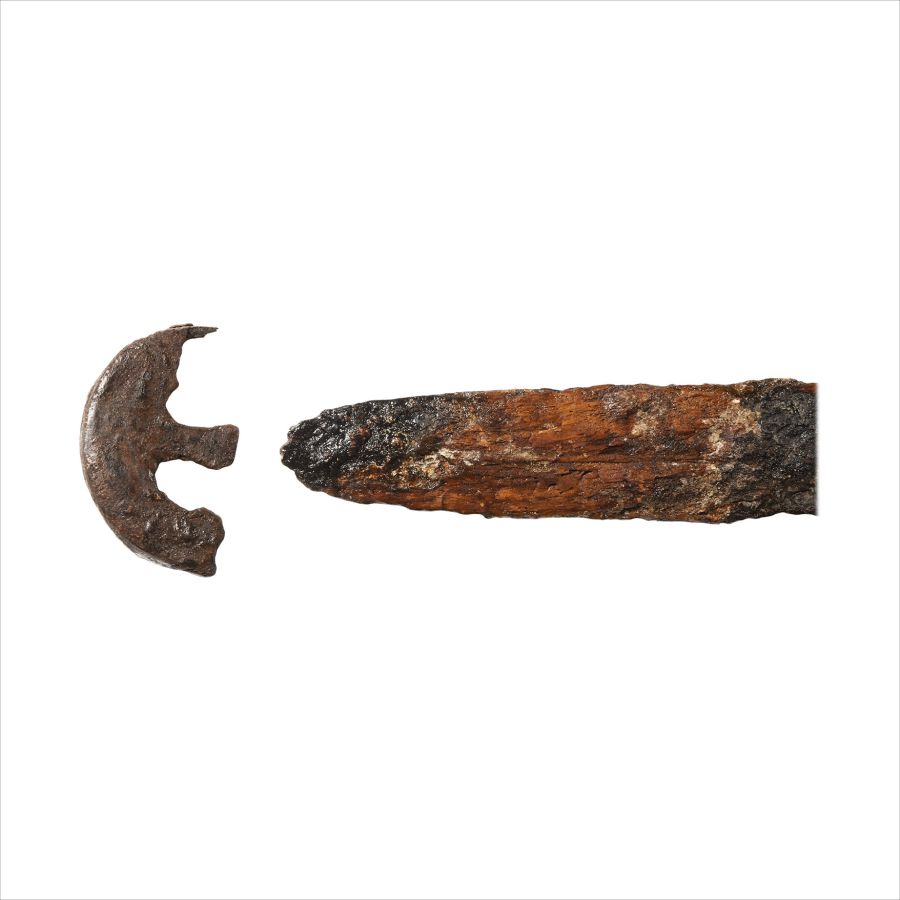
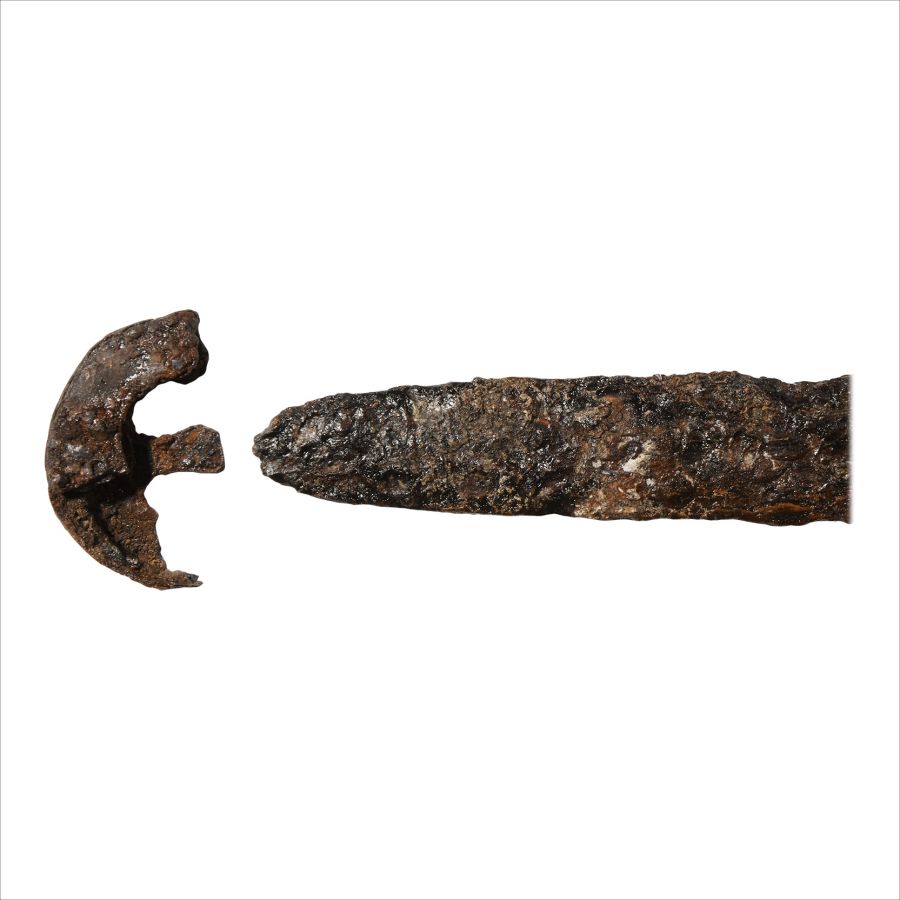
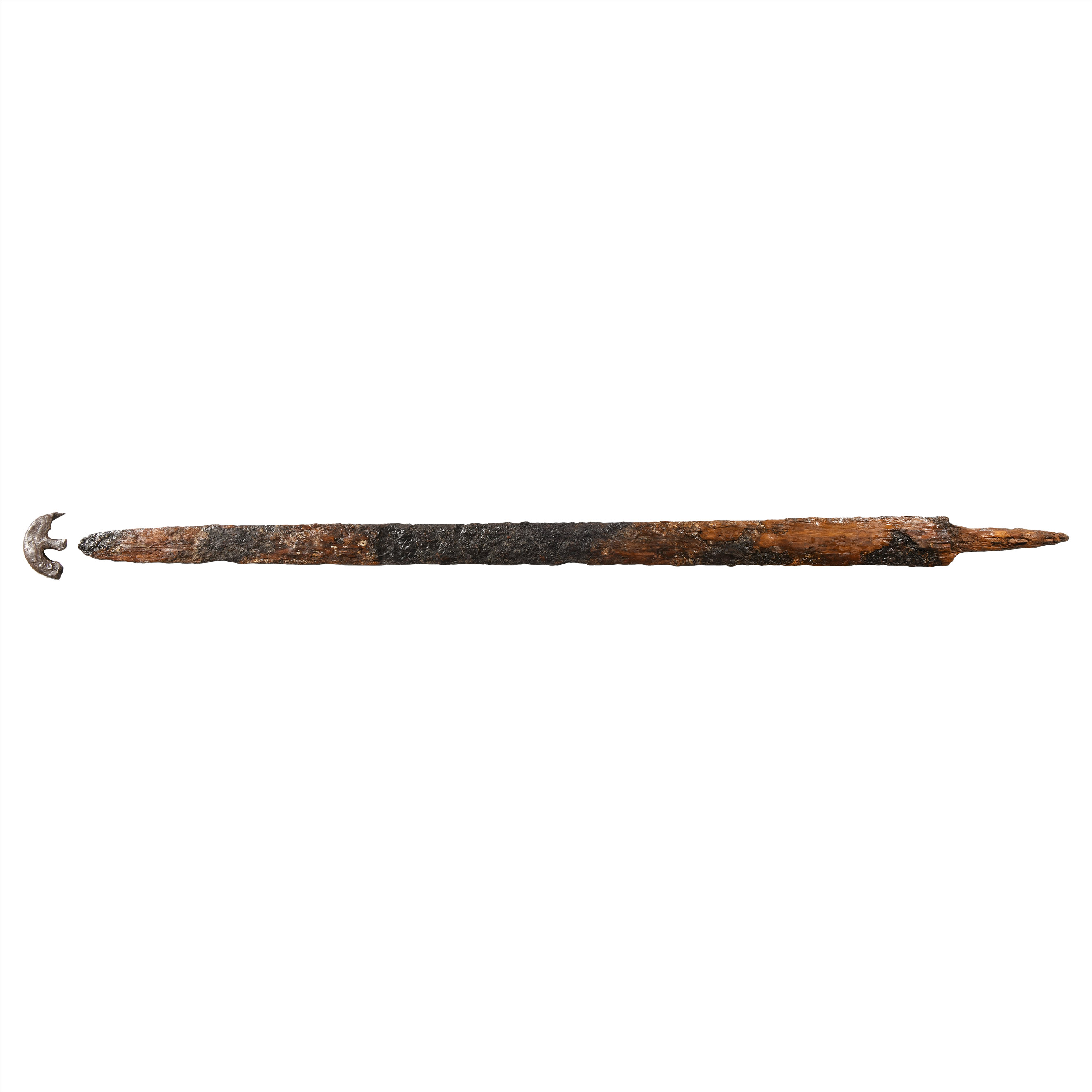
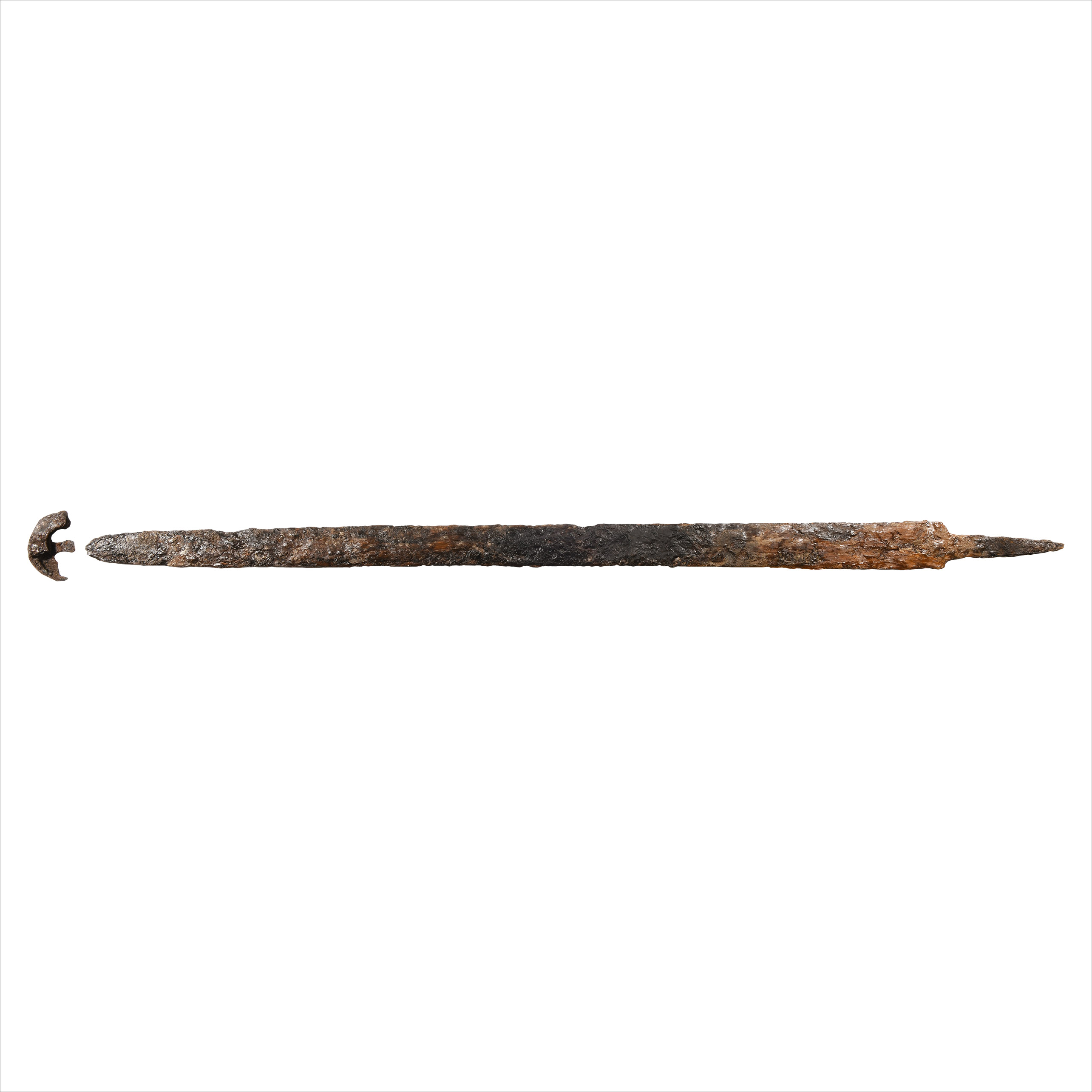
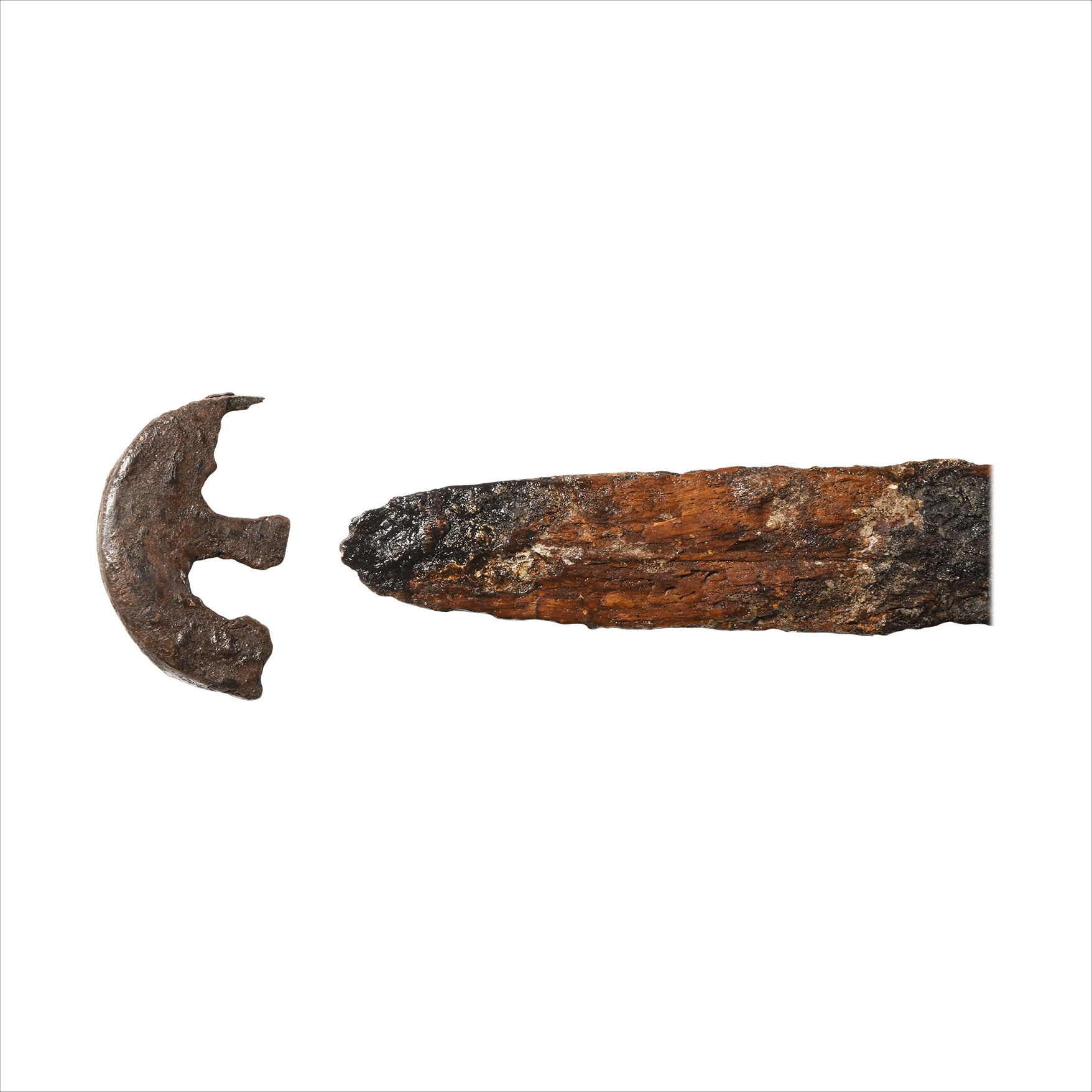
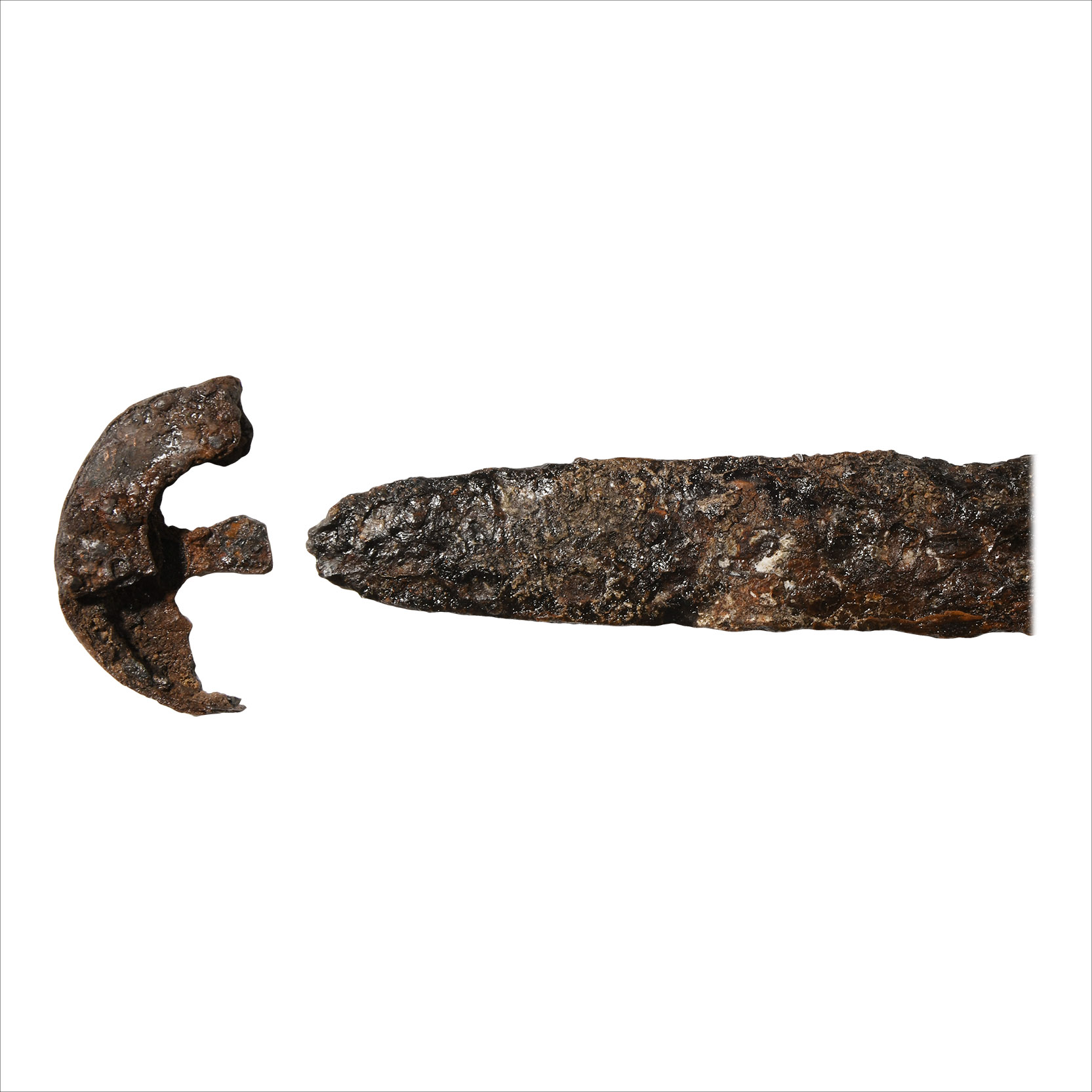
Roman Iron Spatha with Remains of Scabbard and Chape
4TH CENTURY A.D.
2 1/2 - 37 1/4 in. (1.02 kg total, 6.5-94.5 cm).
With a double-edged blade of Illerup-Wyhl Type, narrow parallel cutting edges tapering towards the point; remains of wooden scabbard on the blade and remains of wooden grip on the hilt; accompanied by a crescent-shaped iron chape. [2]
ProvenanceFrom the private collection of a London gentleman, from his grandfather's collection formed before the early 1970s.
Accompanied by an academic report by Dr Raffaele D’Amato.
This lot has been checked against the Interpol Database of stolen works of art and is accompanied by search certificate no.11924-209661.
Cf. Bishop, M. C. & Coulston, J.C.N., Roman military equipment, from the Punic wars to the fall of Rome, London, 1993; Miks, C., Studien zur Romischen Schwertbewaffnung in der Kaiserzeit, I-II Banden, Rahden, 2007; D’Amato, R., Roman army Units in the Western Provinces, Oxford, 2019; for a very similar specimen see Miks, 2007, no.A146, 67 (Eisbøl).
FootnotesThe iconographic sources indicate that Roman swords changed in the later 2nd and 3rd centuries A.D. Longer swords, which were more popular within Germanic and Celtic cultures and more useful for fighting on horseback, were soon widespread among infantry units and mass-produced in the Roman workshops. They were brought home by foreigners after mercenary or auxiliary service in the Roman army. This, together the possibility of war booty, may explain why a great number of these swords have been found in the distant areas such as Nydam Mose, Eisbøl and Illerup Adal, all in modern Denmark.
CONDITIONTimeLine Auctions follows a vetting process to ensure the authenticity and legality of all items, reinforcing our commitment to integrity and responsible trading. Each antiquity, antique, and coin lot undergoes thorough examination by a vetting committee of at least ten external specialists, professional trade association members, scientists, and archaeologists: Our Vetting Process
AUCTIONS:
TimeLine is a leading auction house specialising in antiquities, ancient art, collectables, natural history, coins, medals, and books. Our auctions offer museums, collectors, historians, and enthusiasts the opportunity to acquire unique and historically significant pieces.
-
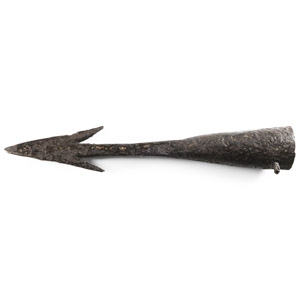
Late Roman Iron Socketted Javelin
4th-6th century A.D.Sold for (Inc. bp): £208
Fitted with a triangular blade with two barbs, expanding tubular socket. 213 grams, 23.5 cm
From the private collection of a London gentleman, from his grandfather's collection formed before the early 1970s.
Since the third century, Roman soldiers increasingly started to use long shafted socketed weapons with barbed heads. These weapons were called bebrae by Vegetius, according to whom they were able to cut heads with a single stroke. They first appeared in Northern Europe, as shown by numerous finds of barbed heads in graves and peat-bogs, especially Danish, and were introduced to the Roman army by Germanic mercenaries. -
.jpg)
Hellenistic Bronze Armour Section with Herakles Fighting Hydra
Circa 4th-3rd century B.C.Sold for (Inc. bp): £3,120
Comprising an embossed fragment of a breast-plate from muscle-type armour (thorax statos) representing Herakles fighting against the Hydra of Lerna; three-quarters of the hero's body preserved showing him naked in a dynamic position, wearing a fluttering short cloak (chlamys), overlooking the body of the monster of which the long tail covered with scales and fins is visible; fragment of cloak preserved separately. 122 grams total, 3.4-17.5 cm
Good portion of armour, extremely rare
Acquired on the French art market before 2000. From an EU collection before 2020.
This kind of armour is very rare, especially for this period, when most of the attested armour is plain or only slightly decorated. The young Herakles appears in heroic nudity running to the right, but, as on the cheek-piece from Gurlo, his head was probably turned in the opposite direction. The plasticism of the scene finds a good match in the Thracian tradition of the representation of weapons and armour, and the embossed elements with the highly prized work of the Panagyurishte treasure. The warrior-theme and the representation of Herakles or other fighting scenes on the Thracian and Hellenistic armours was a reference to the spirit of the immortal fighter. -
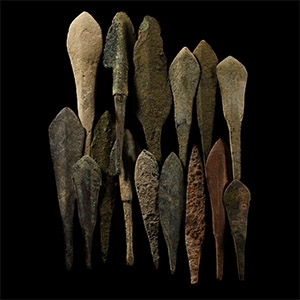
Western Asiatic Bronze Arrowhead Group
2nd-1st millennium B.C.Estimate: £100 - 140 (+bp*)
Opening Bid: £50
Comprising fifteen tanged examples, including one slender arrowhead in iron. 112 grams total, 44-75 mm
Acquired 1980-2015. Ex Abelita family collection.
