
Loading, please wait...
_900x900.jpg "Roman Iron Ring with Gryllos Gemstone")
_200x200.jpg "Roman Iron Ring with Gryllos Gemstone")
.jpg "Roman Iron Ring with Gryllos Gemstone")
LOT 0830
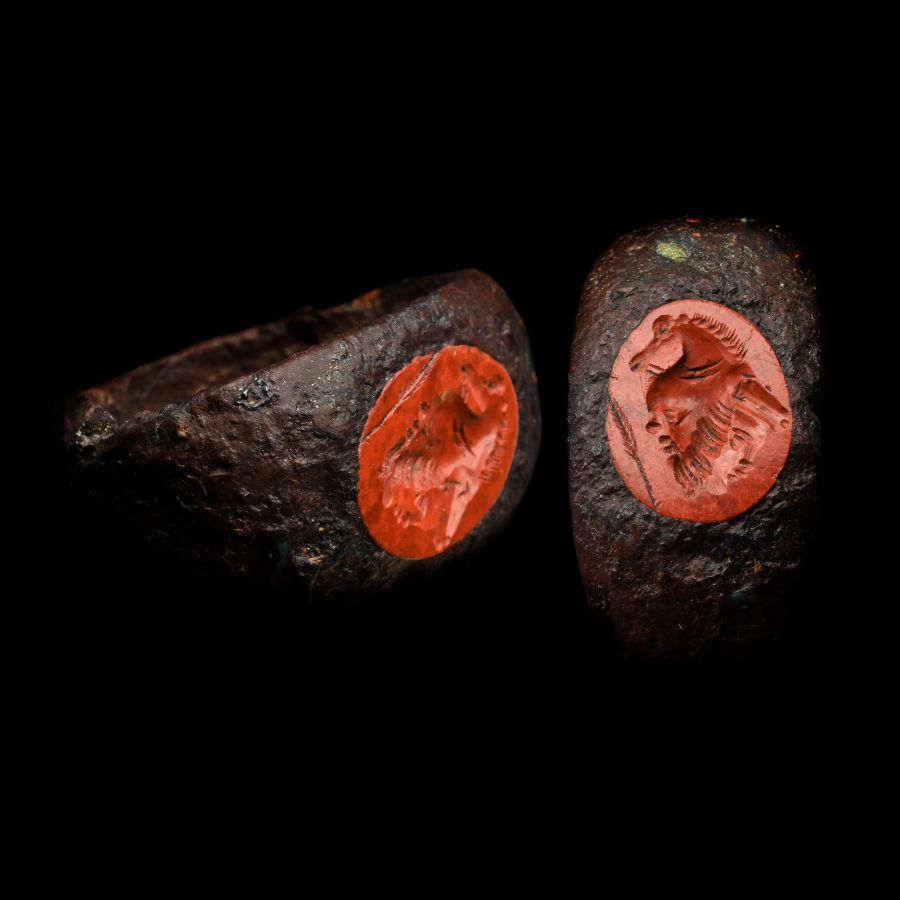
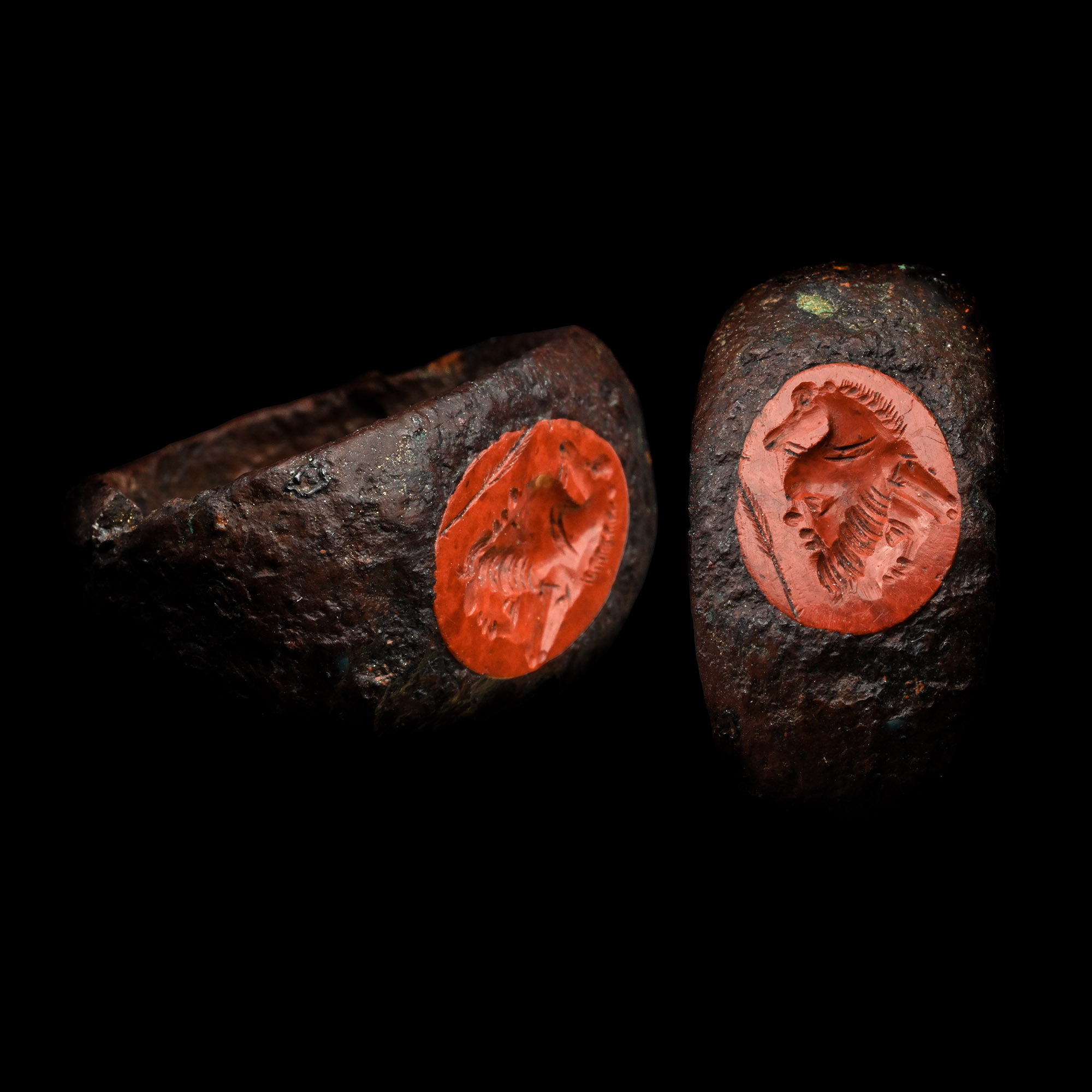
Roman Iron Ring with Gryllos Gemstone
2ND-3RD CENTURY A.D.
1 in. (9.06 grams, 27.29 mm overall, 20.24 x 16.48 mm internal diameter (approximate size British N 1/2, USA 6 3/4, Europe 14.35, Japan 13)).
Substantial D-section hoop set with a red jasper intaglio with a gryllos motif; supplied with a museum-quality impression. [No Reserve]
ProvenanceFrom an old English collection, Camden, London, UK.
LiteratureCf. Boardman, J., Classical Phoenician Scarabs: A Catalogue and Study, Oxford, 2003, cat. no. 37/18 Tharros pl. 59e (BM ANE 133440), London no. 407, for a similarly-themed motif of a facing bearded head, with an African head to one side over a boar forepart; Boardman, J., 'Greek Gem Engravers, Their Subjects and Style' in Ancient Art in Seals: Essays by Pierre Amiet, Nimet Özgüç, and John Boardman, edited and introduced by Porada, E., Princeton, 1980, 113-114, for discussion.
FootnotesGrylli motifs usually combine various human and animal heads, sometimes including animal legs.
CONDITIONTimeLine Auctions follows a vetting process to ensure the authenticity and legality of all items, reinforcing our commitment to integrity and responsible trading. Each antiquity, antique, and coin lot undergoes thorough examination by a vetting committee of at least ten external specialists, professional trade association members, scientists, and archaeologists: Our Vetting Process
AUCTIONS:
TimeLine is a leading auction house specialising in antiquities, ancient art, collectables, natural history, coins, medals, and books. Our auctions offer museums, collectors, historians, and enthusiasts the opportunity to acquire unique and historically significant pieces.
-
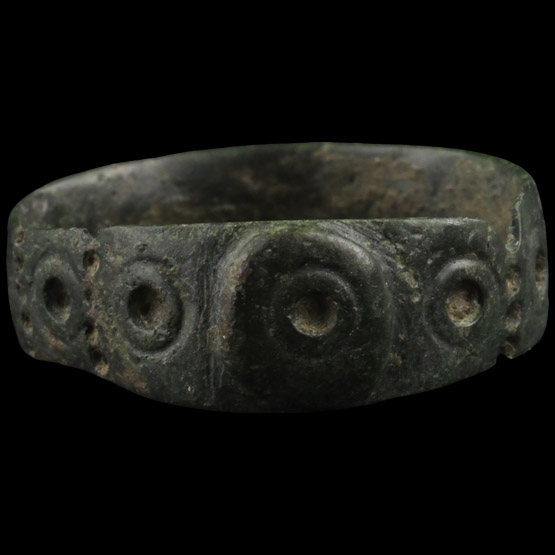
Romano-Pannonian Bronze Ring with Ring-and-Dot Design
2nd-3rd century A.D.Sold for (Inc. bp): £46
Flat-section hoop with a raised circular bezel with a ring-and-dot motif, a pair of incuse ring-and-dot motifs on each shoulder. 3.51 grams, 22.85 mm overall, 18.61 mm internal diameter (approximate size British N, USA 6 1/2, Europe 13.72, Japan 13)
Acquired on the UK and EU art market before 2000. From the private collection of a Surrey, UK, gentleman.
Romano-Pannonian rings of the 3rd century A.D. were characterised by a small circular bezel with wide, sloping shoulders and a fairly thick hoop. The dots decorating them were often filled with enamel. -
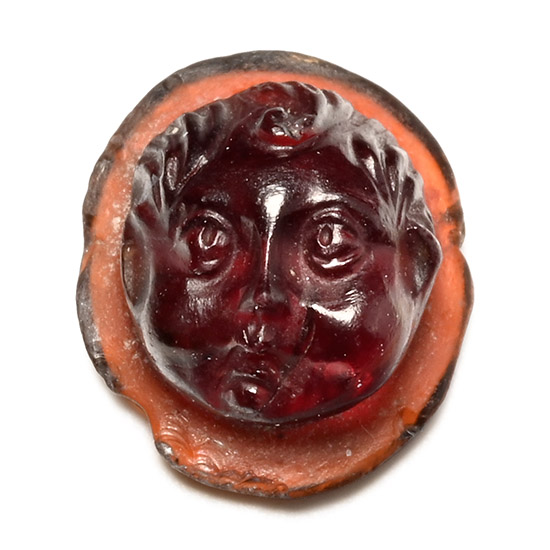
Roman Garnet Cameo of Eros the Greek God of Love
1st-2nd century A.D.Sold for (Inc. bp): £845
Discoid in plan with high-relief mask of Cupid (Greek Eros). 0.42 grams, 8 mm
Private English collection, formed between the late 1970s and early 1990s. Private collection, London, UK. -
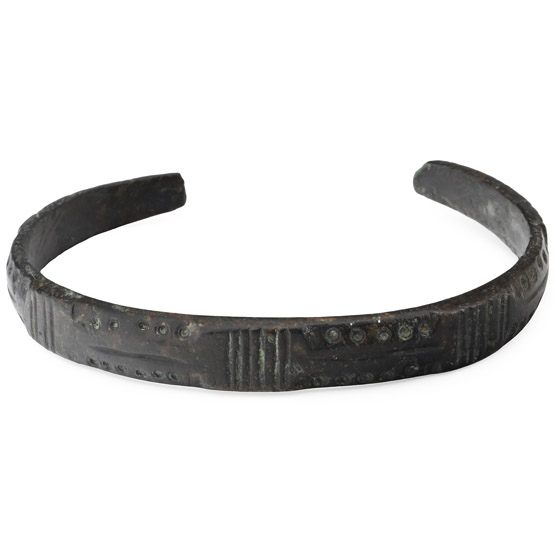
Roman Bronze Decorated Military Bracelet
1st-4th century A.D.Sold for (Inc. bp): £169
Penannular type with rounded ends, chamfered panels with punched-point detailing, hatching. 26.09 grams, 67 mm
Ex German art market, 2000s. Acquired from an EU collector living in London. From the collection of a Surrey, UK, gentleman.
