
Loading, please wait...
LOT 0755
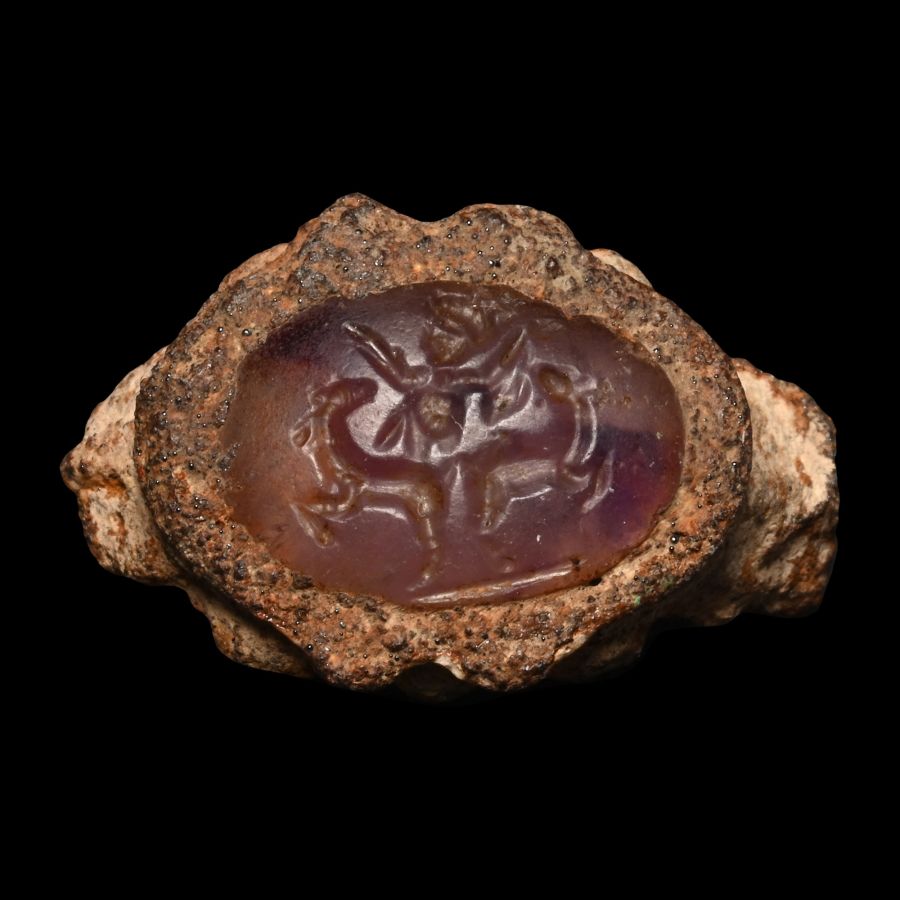
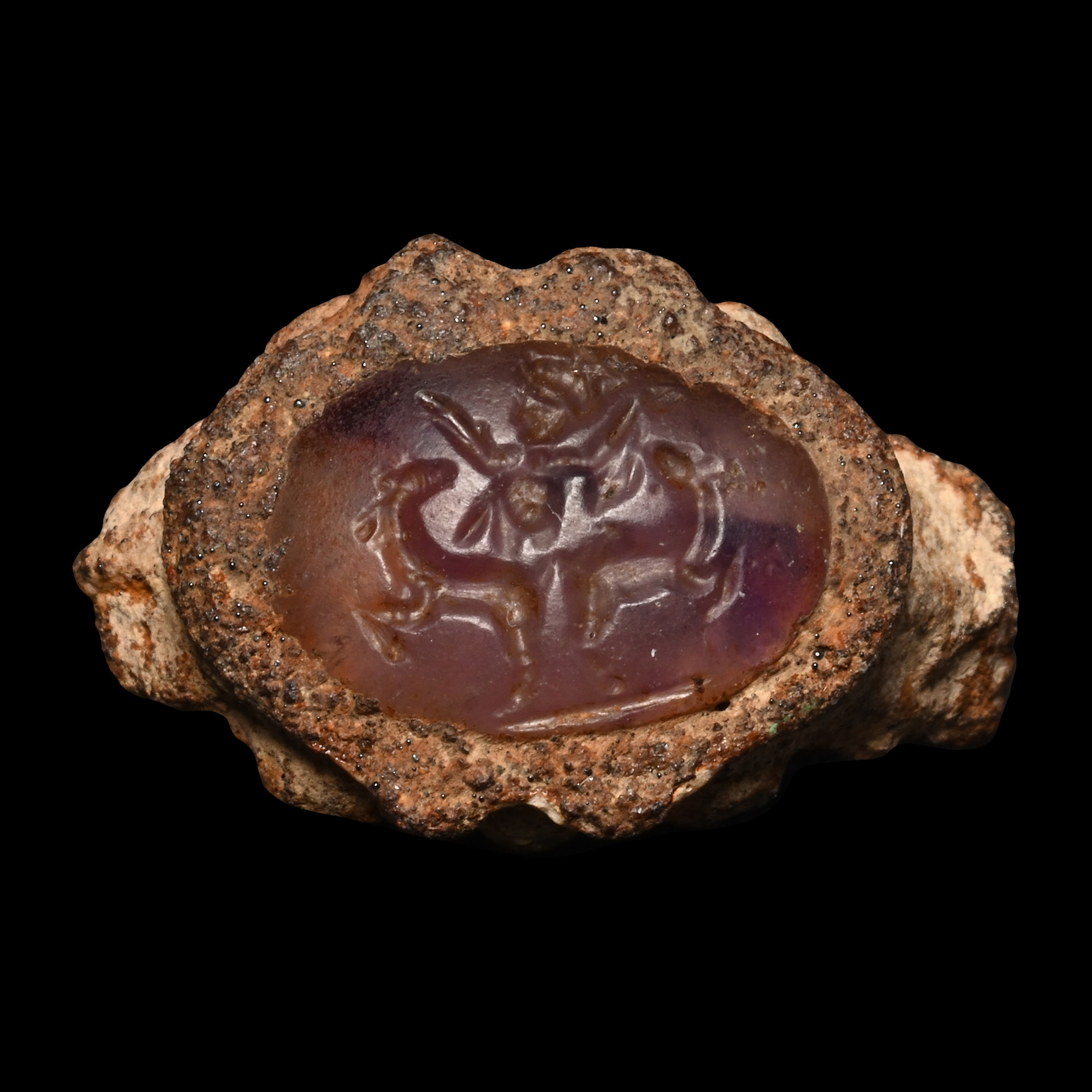
Roman Iron Ring Bezel with Master of Beasts Gemstone
3RD CENTURY A.D.
3/4 in. (2.67 grams, 21 mm).
Bezel and fragment of the hoop, inset with an amethyst cabochon; intaglio with two addorsed prancing horses, figure above with raised arms.
ProvenanceFrom the collection of a gentleman, acquired on the London art market in the 1990s.
LiteratureCf. Ruseva-Slokoska, L., Roman Jewellery, Sofia, 1991, item 270, for type.
CONDITIONTimeLine Auctions follows a vetting process to ensure the authenticity and legality of all items, reinforcing our commitment to integrity and responsible trading. Each antiquity, antique, and coin lot undergoes thorough examination by a vetting committee of at least ten external specialists, professional trade association members, scientists, and archaeologists: Our Vetting Process
AUCTIONS:
TimeLine is a leading auction house specialising in antiquities, ancient art, collectables, natural history, coins, medals, and books. Our auctions offer museums, collectors, historians, and enthusiasts the opportunity to acquire unique and historically significant pieces.
-
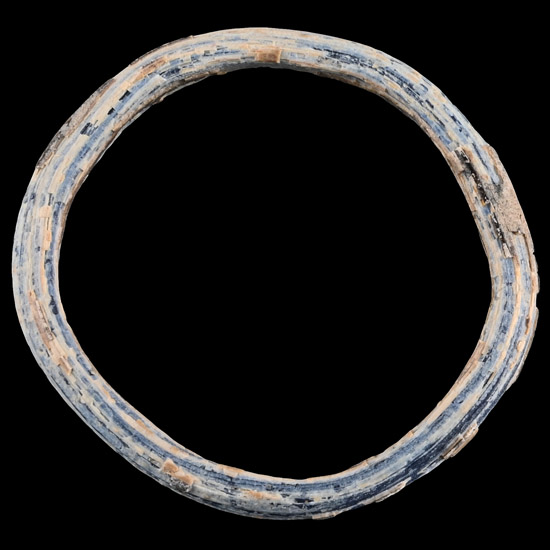
Roman Glass Child's Bangle
2nd-4th century A.D.Sold for (Inc. bp): £91
Formed of dark blue glass with ribbed outer face. 2.53 grams, 40 mm
Ex major S.M. collection, London, UK, 1970-2010. Property of a West Northamptonshire, UK, gentleman. Accompanied by an Ancient Art certificate of authenticity. -
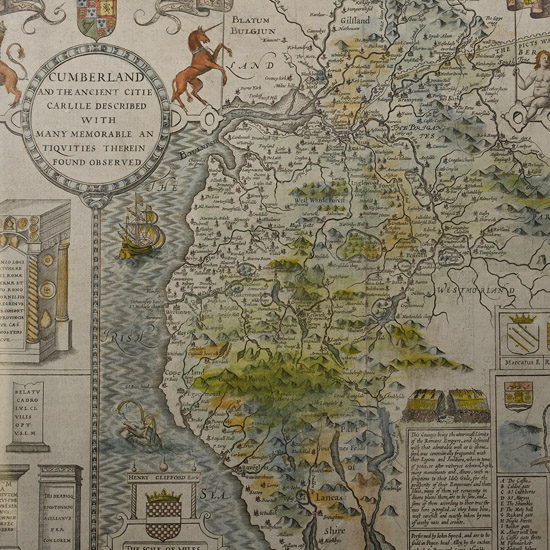
Hadrian's Wall and Roman Antiquities Map by John Speed
Published 1610 A.D.Sold for (Inc. bp): £286
A fine original double-page hand-coloured map of Cumberland and adjacent areas by John Speed, published in 1610, depicting Hadrian's Wall, Roman antiquities, the fortified city of Carlisle, tribal lands of 'The Brigantes', etc. Framed and glazed; reverse damaged. 1.57 kg, 53.8 x 41.5 cm
Ian Wilkinson collection, Nottinghamshire, UK, formed since 1985. -
.jpg)
Roman Carnelian Gemstone with Altar
2nd-3rd century A.D.Sold for (Inc. bp): £72
With intaglio altar; supplied with a museum-quality impression. 0.37 grams, 10.15 mm
From the private collection of a European gentleman (1942-2024), formed since the 1970s.
