
Loading, please wait...
LOT 0275
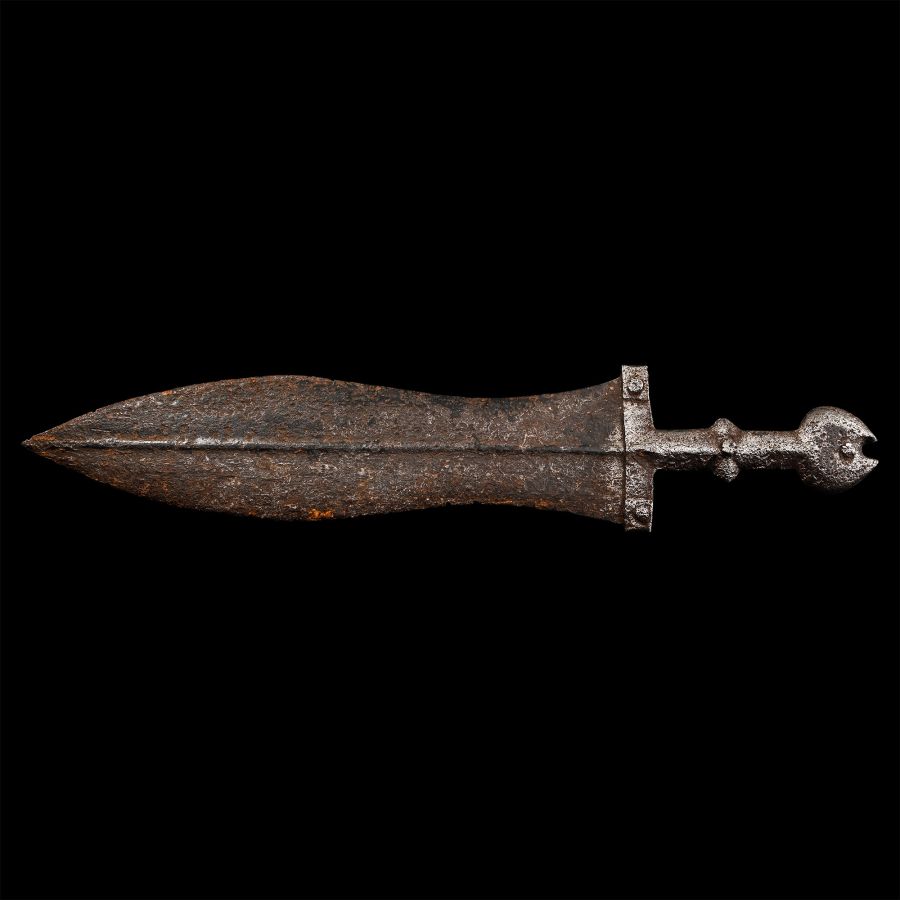
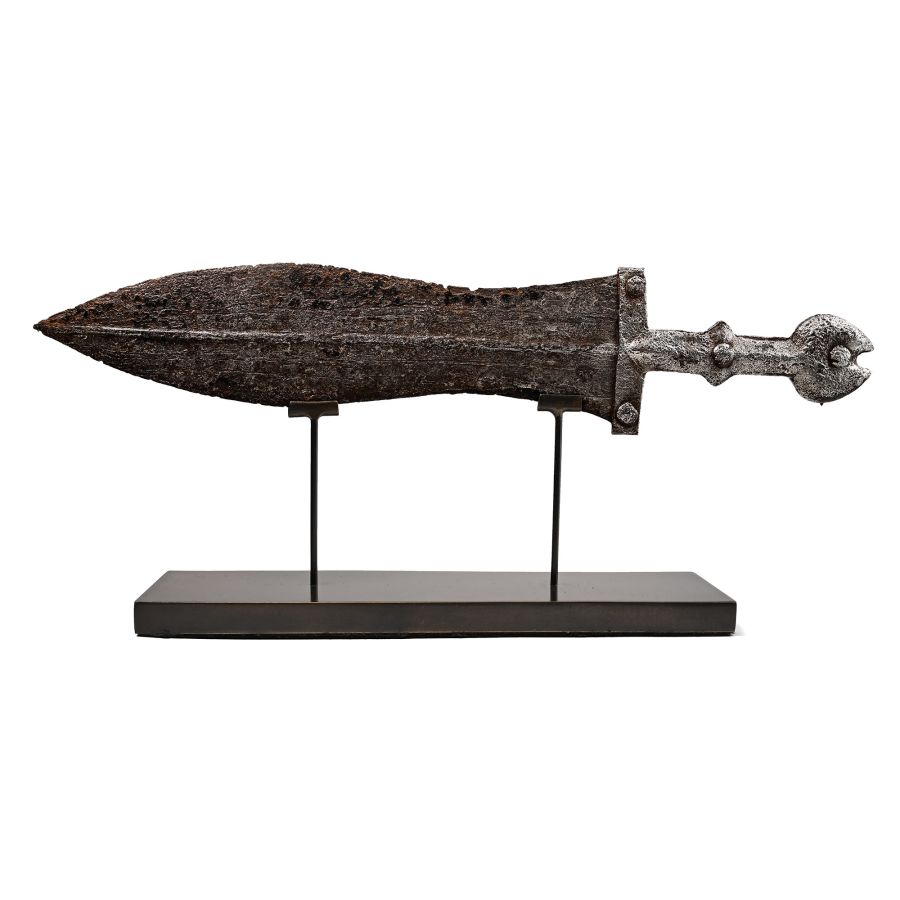
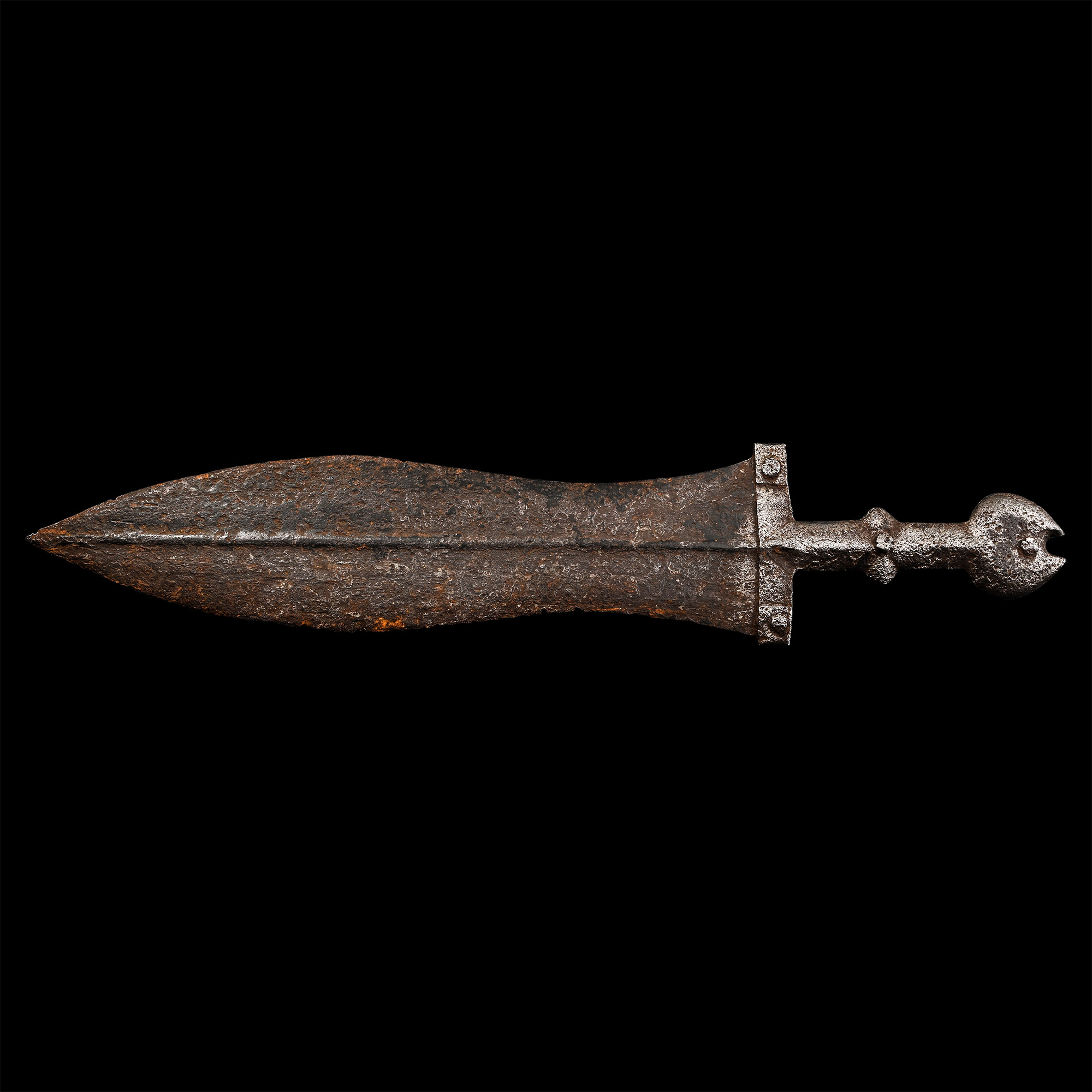
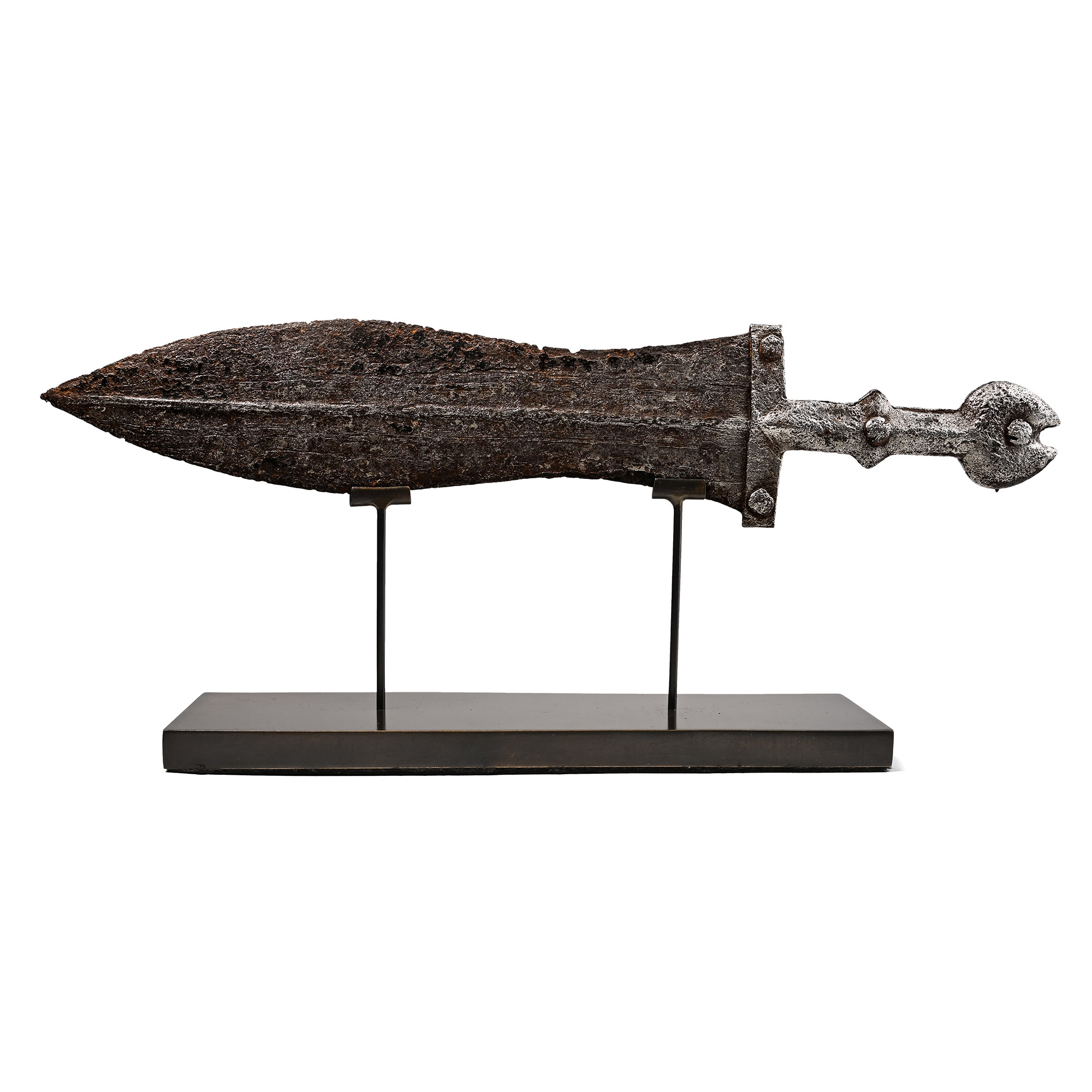
Roman Iron Pugio Dagger
CIRCA 3RD CENTURY A.D.
14 1/2 in. (772 grams total including stand, dagger: 343 grams, 37 cm).
Leaf-shaped wide blade with a narrow waist, a thick crossbar and a lozenge-section handle with a double-lobed pommel; accompanied by a custom-made display stand.
ProvenanceSpanish collection, German auction, 1980s.
Ex John Lawton private collection, Surrey, UK.
Accompanied by a copy of a previous illustrated catalogue page, including provenance.
This lot has been checked against the Interpol Database of stolen works of art and is accompanied by search certificate no.13495-263284.
See Bishop, M.C. & Coulston, J.C.N., Roman military equipment, from the Punic wars to the fall of Rome, London, 1993; Bishop, M. C. & Coulston, J.C.N., Roman military equipment from the Punic Wars to the fall of Rome, London, 2006; Ibañez, F.C., ‘Post Vestigium Exercitus. Militaria romana en la región septentrional de la Península Ibérica durante la época Altoimperial’ in Morillo, A. (ed.), Actas del II Congreso de Arqueología Militar Romana en Hispania. Universidad de León-Ayuntamiento de León, León, 2006, pp.257-308; Casprini, F., Saliola, M., Pugio gladius brevis est, storia e tecnologia del pugnale da guerra romano, Roma, 2012.
FootnotesThis dagger belongs to the last period of evolution of the Roman type III pugio, and to the blade types of the III period, according to the Saliola-Casprini classification (Saliola-Casprini, 2012, nos.45,54). Compared to the previous types of the 1st century A.D., the slender, lanceolate blade shows a considerable size, up to 45 cm long or longer, with a plain appearance and no decoration, even on the scabbard, when preserved.
CONDITIONTimeLine Auctions follows a vetting process to ensure the authenticity and legality of all items, reinforcing our commitment to integrity and responsible trading. Each antiquity, antique, and coin lot undergoes thorough examination by a vetting committee of at least ten external specialists, professional trade association members, scientists, and archaeologists: Our Vetting Process
AUCTIONS:
TimeLine is a leading auction house specialising in antiquities, ancient art, collectables, natural history, coins, medals, and books. Our auctions offer museums, collectors, historians, and enthusiasts the opportunity to acquire unique and historically significant pieces.
LOT 0275
Roman Iron Pugio Dagger
Estimate £2,500 - 3,500€2,900 - 4,060 (for guidance only)$3,380 - 4,730 (for guidance only)
Opening Bid
£1,250 (EUR 1,450; USD 1,688) +BP*
-
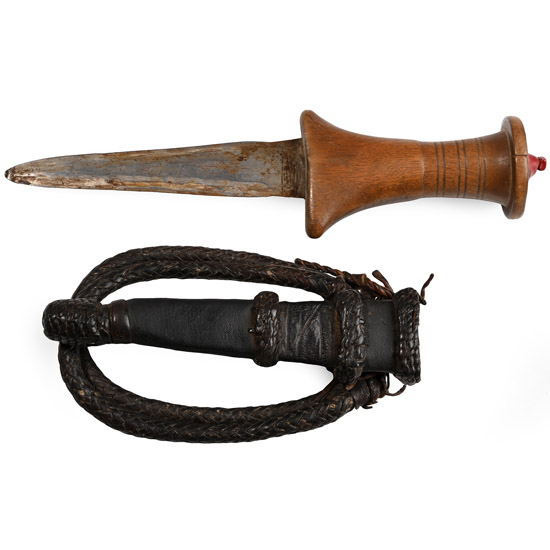
Mahdi Arm Dagger with Sheath
Sudan, late 19th-early 20th century A.D.Estimate: £80 - 100 (+bp*)
Bids: 1 | Current Bid: £5
Comprising a thin triangular two-edged blade in a carved wooden hilt with integral crossguard and pommel with a conical button; wooden sheath with leather covering, two braided leather thongs each forming a thick suspension loop and similar binding forming a chape. 172 grams, 26.2 cm
From the private collection of Peter Clayton, FCILIP, Dip, Arch, FSA, FRNS, Hemel Hempstead, Hertfordshire, UK; formed since the late 1950s. -
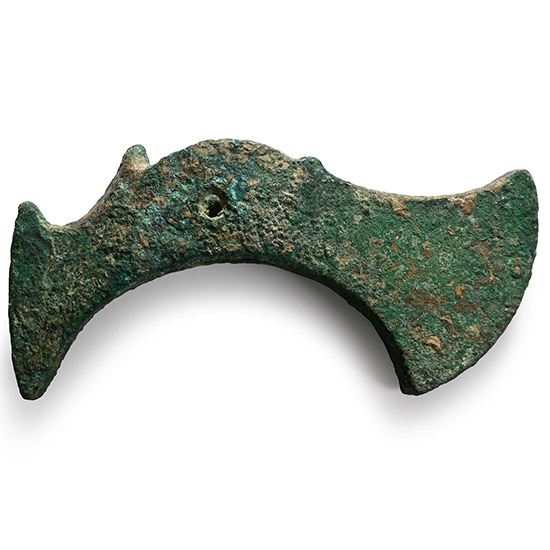
Bactrian Bronze Axehead
3rd-2nd millennium B.C.Estimate: £250 - 350 (‡+bp*)
Opening Bid: £138
With curved flaring cutting edge, characteristic curving shape and narrow socket, blade end squaring off, shaft hole pierced on both sides. 227 grams, 10.6 cm
Acquired in the mid 1980s-1990s. Private collection, Switzerland, thence by descent. Private collection, since the late 1990s.
These collared axes have the specific feature of being equipped with variously shaped rear extensions. The provenance of this typology is clearer than others: these axes came from Margiana and southern Bactria. Gonur Depe and Susa yielded a rather atypical and probably imported example. P. Amiet suggests that they were an adoption of Elamite material, from conceptual and institutional models. They would have developed from the end of the 3rd and the beginning of the 2nd millennium B.C. -
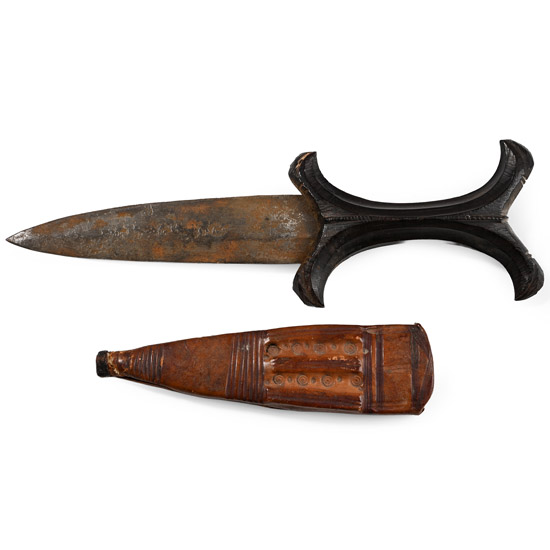
Beja or Hadendoa Dagger with Sheath
Sudan, late 19th-early 20th century A.D.Estimate: £60 - 80 (+bp*)
Bids: 1 | Current Bid: £5
Comprising a thin leaf-shaped two-edged blade in an X-shaped wooden hilt with carved fluting and median rib; leather sheath with moulded detailing and stamped roundels. 72 grams, 21.5 cm
From the private collection of Peter Clayton, FCILIP, Dip, Arch, FSA, FRNS, Hemel Hempstead, Hertfordshire, UK; formed since the late 1950s.
