
Loading, please wait...


LOT 0599
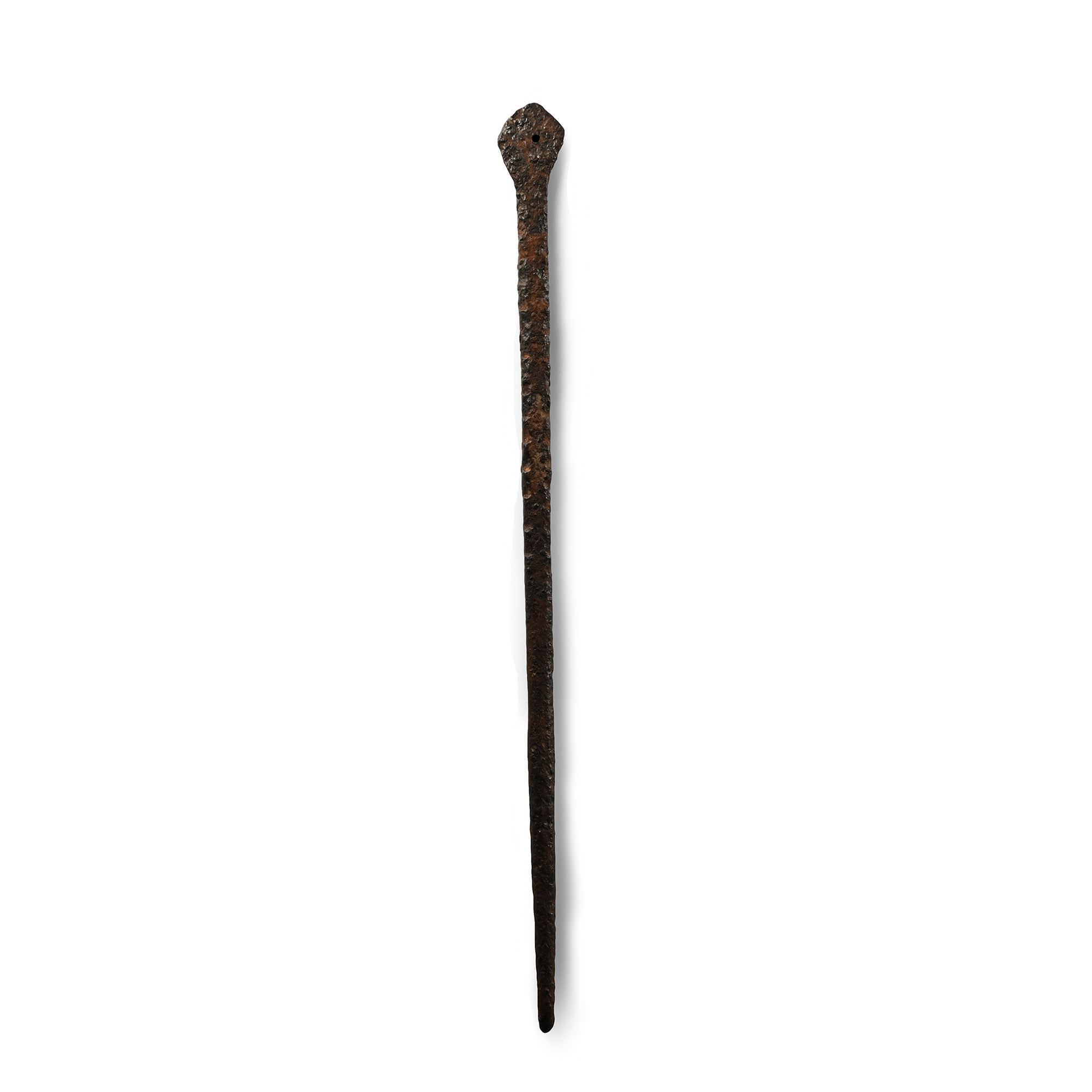
Roman Iron Medical Spatula
1ST-4TH CENTURY A.D.
5 1/4 in. (10.2 grams, 13.5 cm).
With tapering shank and broad lozengiform blade. [No Reserve]
ProvenanceIan Wilkinson collection, Nottinghamshire, UK, formed since 1985.
This lot is accompanied by an illustrated lot declaration signed by the Head of the Antiquities Department, Dr Raffaele D’Amato.
TimeLine Auctions follows a vetting process to ensure the authenticity and legality of all items, reinforcing our commitment to integrity and responsible trading. Each antiquity, antique, and coin lot undergoes thorough examination by a vetting committee of at least ten external specialists, professional trade association members, scientists, and archaeologists: Our Vetting Process
AUCTIONS:
TimeLine is a leading auction house specialising in antiquities, ancient art, collectables, natural history, coins, medals, and books. Our auctions offer museums, collectors, historians, and enthusiasts the opportunity to acquire unique and historically significant pieces.
-
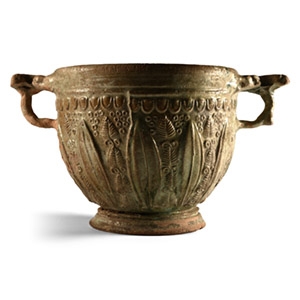
Roman Lead-Glazed Lotus Cup
1st century B.C.Sold for (Inc. bp): £3,900
With vertical leaf detailing to the bowl on a field of pellets with band of egg-and-dart below the ribbed rim, stepped foot; lateral loop handles with T-shaped scrolled panel above. 214 grams, 17 cm wide
Acquired 1979-1999. London collection of the late Mr S.M., thence by descent. This lot has been checked against the Interpol Database of stolen works of art and is accompanied by search certificate number no.12510-231919. This lot has been cleared against the Art Loss Register database, and is accompanied by an illustrated lot declaration signed by the Head of the Antiquities Department, Dr Raffaele D’Amato. -
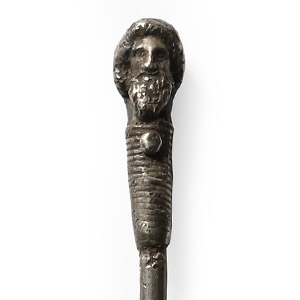
Roman Silver Pin with Bust
1st-4th century A.D.Sold for (Inc. bp): £131
With ribbed knop surmounted by a bearded head. 7.37 grams, 10.5 cm
Ex German art market, 2000s. Acquired from an EU collector living in London. From the collection of Surrey, UK, gentleman. This lot is accompanied by an illustrated lot declaration signed by the Head of the Antiquities Department, Dr Raffaele D’Amato. -
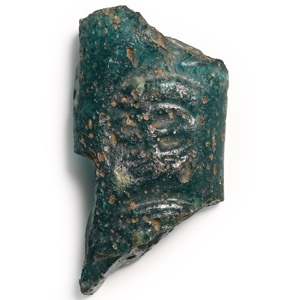
Roman Glass Bracelet Fragment with Menorah Stamp
1st-4th century A.D.Estimate: £100 - 140 (+bp*)
Opening Bid: £50
Plano-convex in section with stamped detail to the outer face, arcade with menorah. 1.56 grams, 22 mm
Acquired 1979-1999. London collection of the late Mr S.M., thence by descent. This lot is accompanied by an illustrated lot declaration signed by the Head of the Antiquities Department, Dr Raffaele D’Amato.
