
Loading, please wait...
_900x900.jpg "Roman Iron Key with Bronze Lion Handle")
_200x200.jpg "Roman Iron Key with Bronze Lion Handle")
.jpg "Roman Iron Key with Bronze Lion Handle")
LOT 0858
Roman Iron Key with Bronze Lion Handle
2ND-3RD CENTURY A.D.
5 in. (116 grams, 12.5 cm).
Formed as a lion extending from an acanthus leaf column capital, with forepaws outstretched and the head of a ram in its mouth; detailing to the full mane, ears, head and muzzle; ferrous shank with perpendicular wards.
ProvenanceEx German art market, 2000s.
Acquired from an EU collector living in London.
From the collection of a Surrey, UK, gentleman.
This lot is accompanied by an illustrated lot declaration signed by the Head of the Antiquities Department, Dr Raffaele D'Amato.
See The Metropolitan Museum of Art, accession numbers 06.176.26 and 06.176.48, for broadly comparable objects, dated 1st-7th century AD; see accession number 06.176.24, for a similar object formed as a horse; 06.176.71, for similar formed as a leaping feline.
CONDITIONTimeLine Auctions follows a vetting process to ensure the authenticity and legality of all items, reinforcing our commitment to integrity and responsible trading. Each antiquity, antique, and coin lot undergoes thorough examination by a vetting committee of at least ten external specialists, professional trade association members, scientists, and archaeologists: Our Vetting Process
AUCTIONS:
TimeLine is a leading auction house specialising in antiquities, ancient art, collectables, natural history, coins, medals, and books. Our auctions offer museums, collectors, historians, and enthusiasts the opportunity to acquire unique and historically significant pieces.
-
.jpg)
Roman Bronze Mercury Statuette
Eastern Provincial, 3rd-4th century A.D.Sold for (Inc. bp): £715
Modelled in the round, standing nude with attributes, cloak and caduceus on the left arm, coin-purse in the right hand; winged diadem; on a square base with stub legs. 102 grams, 10 cm
Ex German art market, 2000s. Acquired from an EU collector living in London. From the collection of a Surrey, UK, gentleman. This lot is accompanied by an illustrated lot declaration signed by the Head of the Antiquities Department, Dr Raffaele D'Amato. -
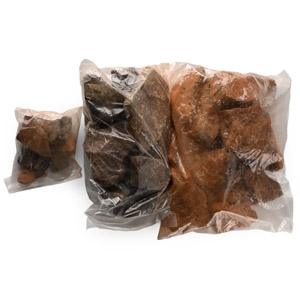
Roman Roof Tile and Pottery Sherd Group
1st-4th century A.D.Sold for (Inc. bp): £26
A large quantity of variously sized fragments. 2.81 kg total, 3.1-10.6 cm
Found whilst searching in Devon, Somerset and Wiltshire, UK. This lot is accompanied by an illustrated lot declaration signed by the Head of the Antiquities Department, Dr Raffaele D'Amato.
N.B. This lot is for UK buyers only. -
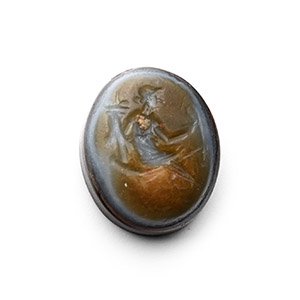
Roman Agate Gemstone with Seated Figure
2nd-3rd century A.D.Sold for (Inc. bp): £234
Plano-convex in section with incuse sitting figure of Isis holding a cornucopia with a ship's rudder beside her. 0.58 grams, 9 mm
From the Fadel family collection, London, UK, 1970s. This lot is accompanied by an illustrated lot declaration signed by the Head of the Antiquities Department, Dr Raffaele D'Amato.
