
Loading, please wait...
LOT 0304
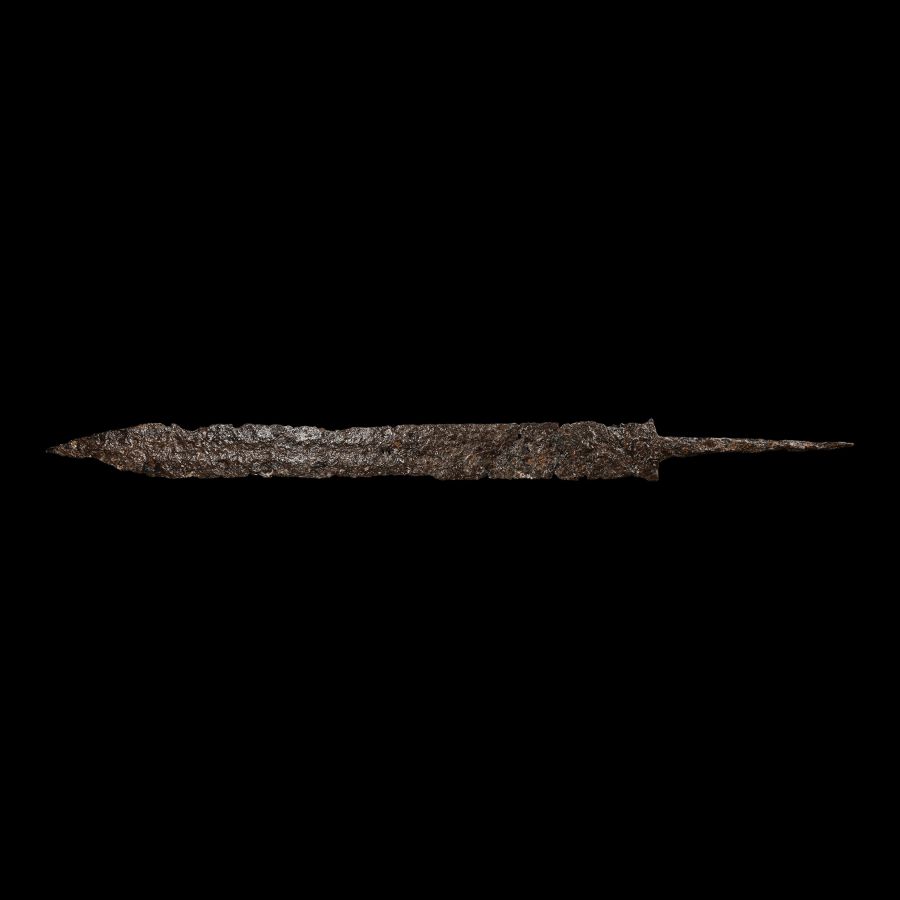
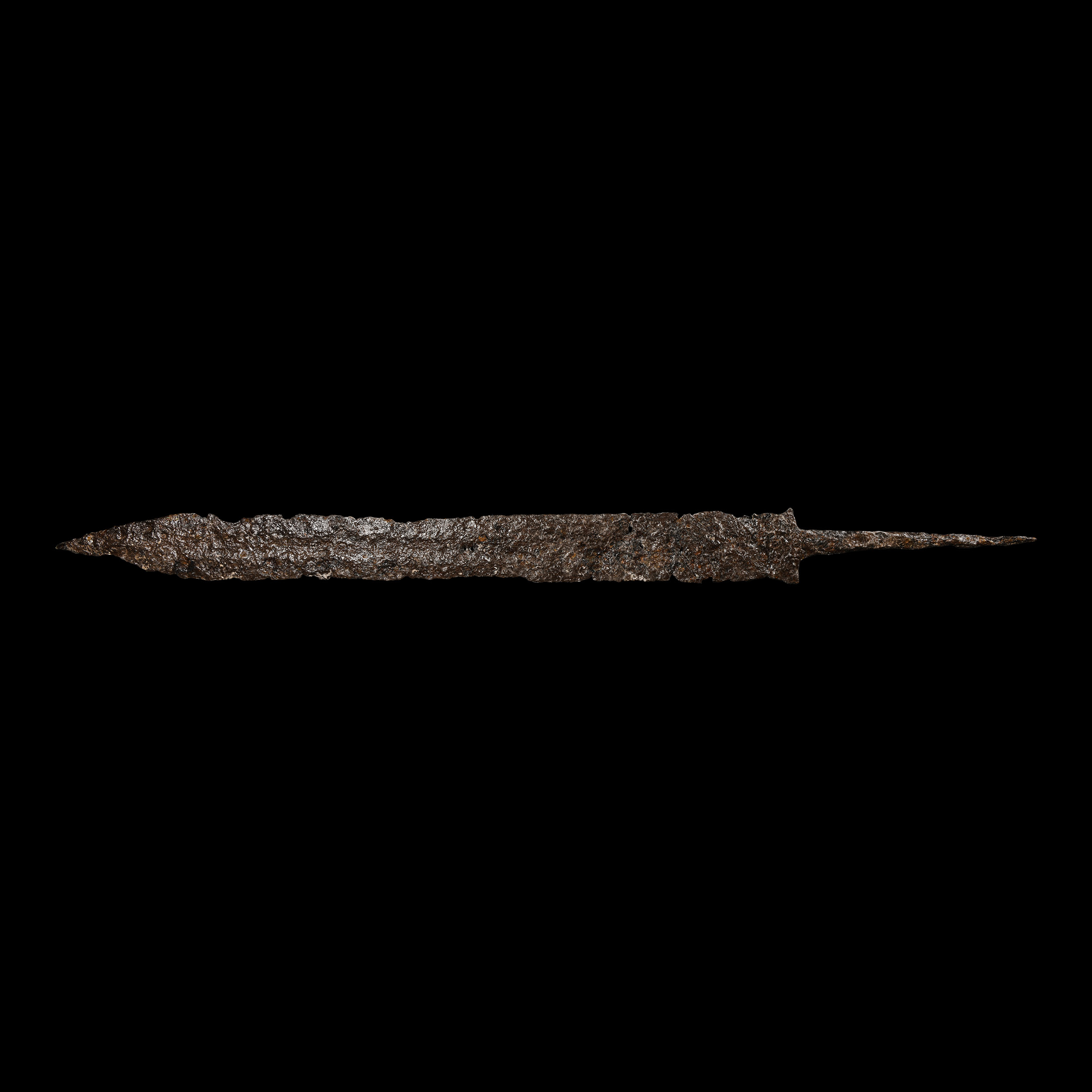
Roman Iron Gladius
1ST-2ND CENTURY A.D.
32 5/8 in. (557 grams, 83 cm).
Or semi-spatha blade with parallel-sided lentoid-section body and a long rectangular-section tang; Mainz type, Wederath-Canterbury-Kopki variant; repaired and surface treated.
ProvenanceEx South London collection, acquired 1970-1990.
The Kusmirek Collection, UK.
Accompanied by an academic report by Dr Raffaele D'Amato.
See Miks, C., Studien zur Romischen Schwertbewaffnung in der Kaiserzeit, I-II Banden, Rahden, 2007, p.637, no.A369, for similar specimen from Korytnica (Poland), found in 1999.
FootnotesIn contrast to the average length of the Roman Pompeii type gladius, some Roman swords, continuing the typology of the Mainz gladius, tend to be longer and transform themselves into a semi-spatha. Both the weapon from Eich (Miks, 2001, AI43), and especially a gladius from Korytnica with approximate blade length of 548mm (total length 762mm) is very close to the length limit of a semi-spatha. The same can be said of a blade from Godmanchester (Miks, 2001, no.A824) for its dimensions and proportions, where the tip of the blade already gives a significantly shorter impression, showing a certain relationship to 'Lauriacum-Hrornöwka', 'Mainz-Canterbury' variant type spathae.
CONDITIONTimeLine Auctions follows a vetting process to ensure the authenticity and legality of all items, reinforcing our commitment to integrity and responsible trading. Each antiquity, antique, and coin lot undergoes thorough examination by a vetting committee of at least ten external specialists, professional trade association members, scientists, and archaeologists: Our Vetting Process
AUCTIONS:
TimeLine is a leading auction house specialising in antiquities, ancient art, collectables, natural history, coins, medals, and books. Our auctions offer museums, collectors, historians, and enthusiasts the opportunity to acquire unique and historically significant pieces.
-
.jpg)
Medieval Iron Socketted Javelin
Circa 15th-16th century A.D.Sold for (Inc. bp): £85
With square-section spike and tapering socket. 249 grams, 32 cm
Ex California, USA, collection formed since the late 1960s. European art market before the late 1990s. -
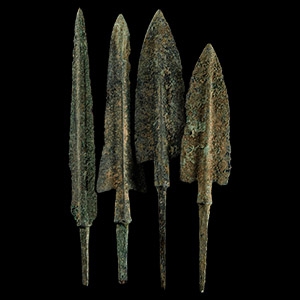
Western Asiatic Bronze Arrowhead Group
13th-6th century B.C.Sold for (Inc. bp): £117
Comprising four large triangular-shaped arrowheads, each with a raised midrib. 129 grams total, 14-15.5 cm
Acquired 1980-2015. Ex Abelita family collection.
Although different in shape, these four heads are apparently related types of a polythetic group. There are represented two basic deltoid forms: one has a sharp, flat blade, the ends of which extend to form wings or barbs, and a prominent midrib extending into a long tang that often has a stop; the blade shape varies from deltoid to more manifestly triangular. The other form has no barbs, but it has a prominent midrib extending to the tang, it is narrow and leaf shaped. -
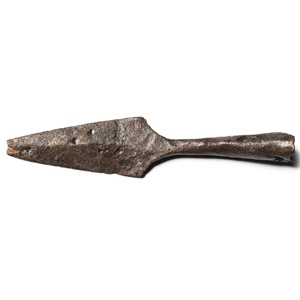
Anglo-Saxon Iron Socketted Arrowhead
Circa 6th-8th century A.D.Sold for (Inc. bp): £72
Comprising a triangular leaf-shaped blade with tapering socket. 10 grams, 87 mm
Found Cambridgeshire, UK.
