
Loading, please wait...
LOT 1879
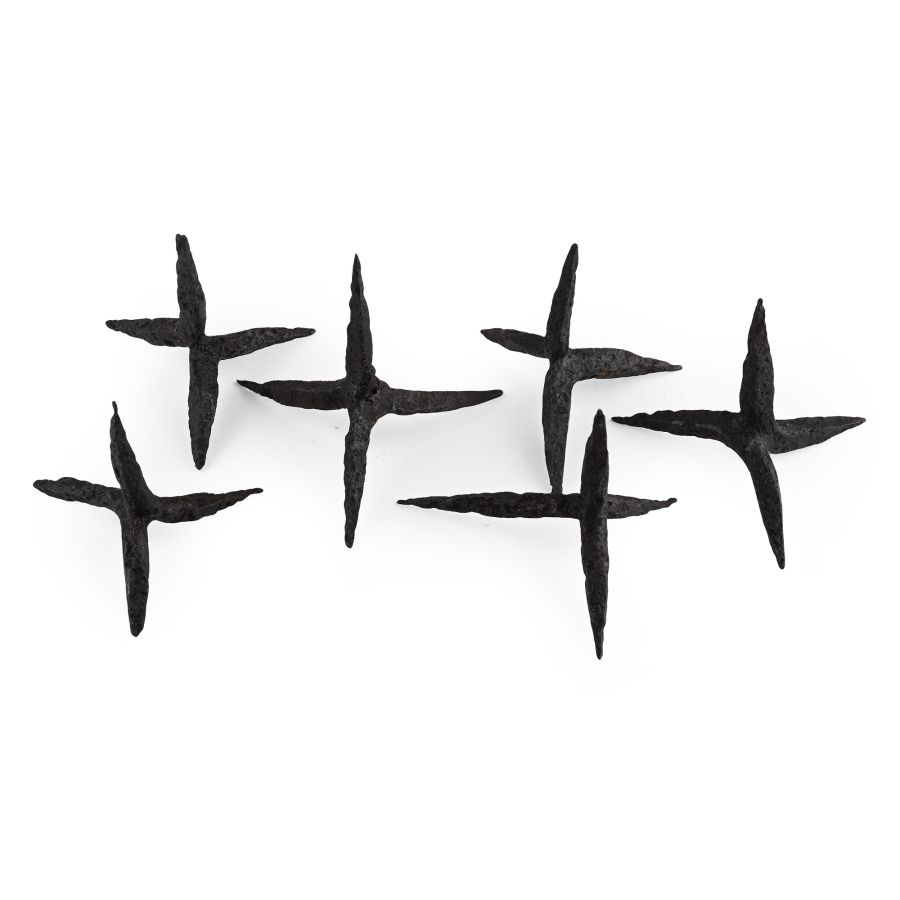
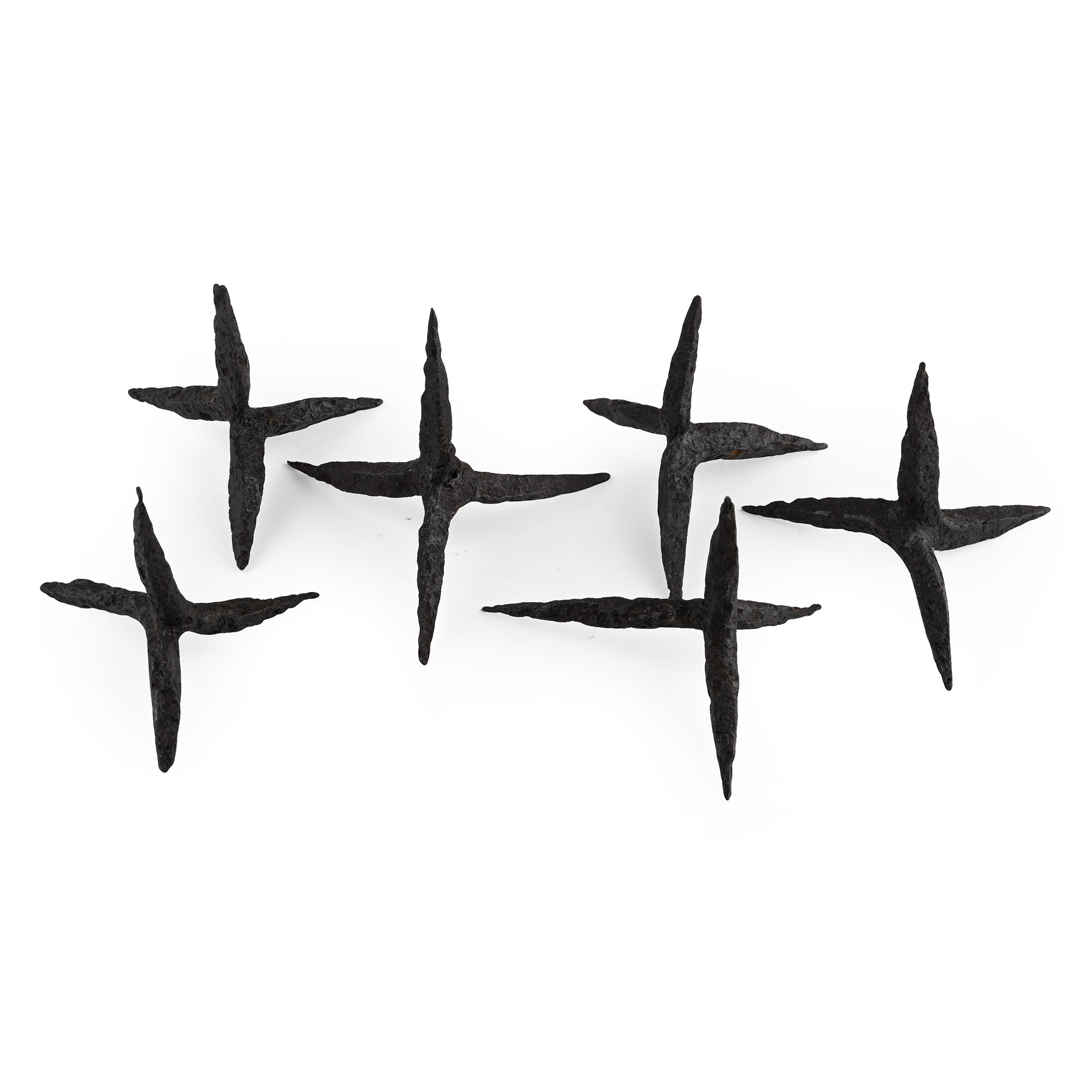
Roman Iron Anti-Cavalry Caltrop Group
3RD-4TH CENTURY A.D.
3 - 3 5/8 in. (338 grams total, 76-93 mm).
Comprising six caltrops, hand-forged with square-section spikes. [6, No Reserve]
ProvenanceFrom the private collection of a London gentleman, from his grandfather's collection formed before the early 1970s.
LiteratureCf. Beutler, F. et al., Der Adler Roms. Carnuntum und die Armee der Cäsaren, Bad-Deutsch-Altenburg, 2017, item 204, for type.
FootnotesCaltrops were scattered on battlefields in an effort to stop or slow advancing enemy cavalry or foot soldiers; regardless of how a caltrop lands, one spike is always facing upwards. Caesar used them widely at Alesia (Caes., BG 7.73; 82): 'Stakes a foot long, with iron hooks attached to them, were entirely sunk in the ground before these, and were planted in every place at small intervals; these they called spurs'.
CONDITIONTimeLine Auctions follows a vetting process to ensure the authenticity and legality of all items, reinforcing our commitment to integrity and responsible trading. Each antiquity, antique, and coin lot undergoes thorough examination by a vetting committee of at least ten external specialists, professional trade association members, scientists, and archaeologists: Our Vetting Process
AUCTIONS:
TimeLine is a leading auction house specialising in antiquities, ancient art, collectables, natural history, coins, medals, and books. Our auctions offer museums, collectors, historians, and enthusiasts the opportunity to acquire unique and historically significant pieces.
-
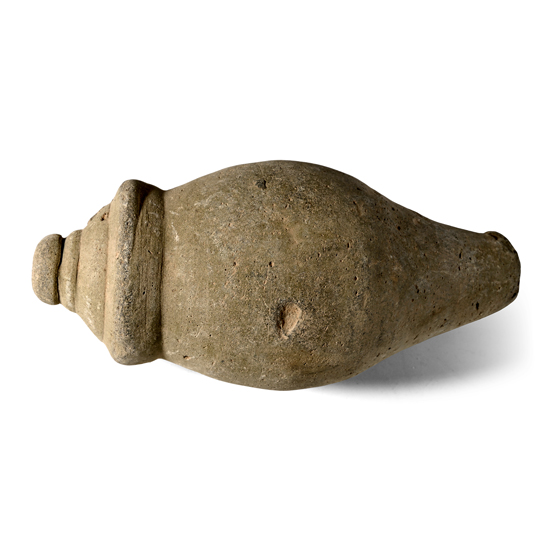
Turco-Mongol 'Greek Fire' Ceramic Fire Bomb or Hand Grenade
14th-15th century A.D.Sold for (Inc. bp): £98
Piriform in profile with a domed mouth and a stepped neck; intended to be filled with explosive liquid and a wick, and used as a hand grenade. 505 grams, 15.7 cm
From an important specialist collection, London, UK, 1990s.
Apart from the use of siphons or manual flame-throwers called cheirosiphona, special corps of Roman soldiers employed terracotta grenades, in the form of small jars, abundantly evidenced in archaeological excavations. They were called μεσαία kακαβιά or κυτροκακάβια, where the former had a bulbous shape and the latter a more cylindrical form. -
.jpg)
Viking Iron Sword Pommel, Upper Guard and Lower Guard
Later 11th century A.D.Sold for (Inc. bp): £1,170
Comprising: lower guard, parallel-sided in plan with rounded ends and slightly curved in profile with recessed underside, slot to accept the tang; upper guard, lentoid in plan with scooped long edges and section of tang in situ; pommel with large median lobe and lateral shoulders, Petersen's Type Z. 522 grams total, 6.7-11.5 cm
London, UK, collection, formed in the late 1990s. -
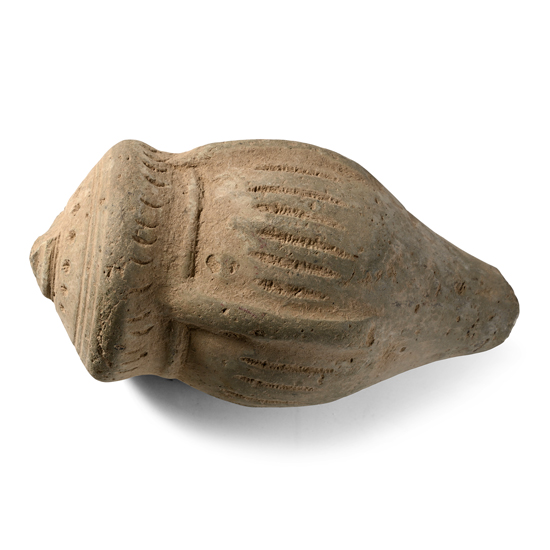
Turco-Mongol 'Greek Fire' Ceramic Fire Bomb or Hand Grenade
9th-11th century A.D.Sold for (Inc. bp): £221
Piriform in profile with a stepped neck, incised decoration and three raised lugs; intended to be filled with explosive liquid and a wick, and used as a hand grenade. 534 grams, 14 cm
From an important specialist collection, London, UK, 1990s.
Apart from the use of siphons or manual flame-throwers called cheirosiphona, special corps of Roman soldiers employed terracotta grenades, in the form of small jars, abundantly evidenced in archaeological excavations. They were called μεσαία kακαβιά or κυτροκακάβια, where the former had a bulbous shape and the latter a more cylindrical form.
