
Loading, please wait...
LOT 1212
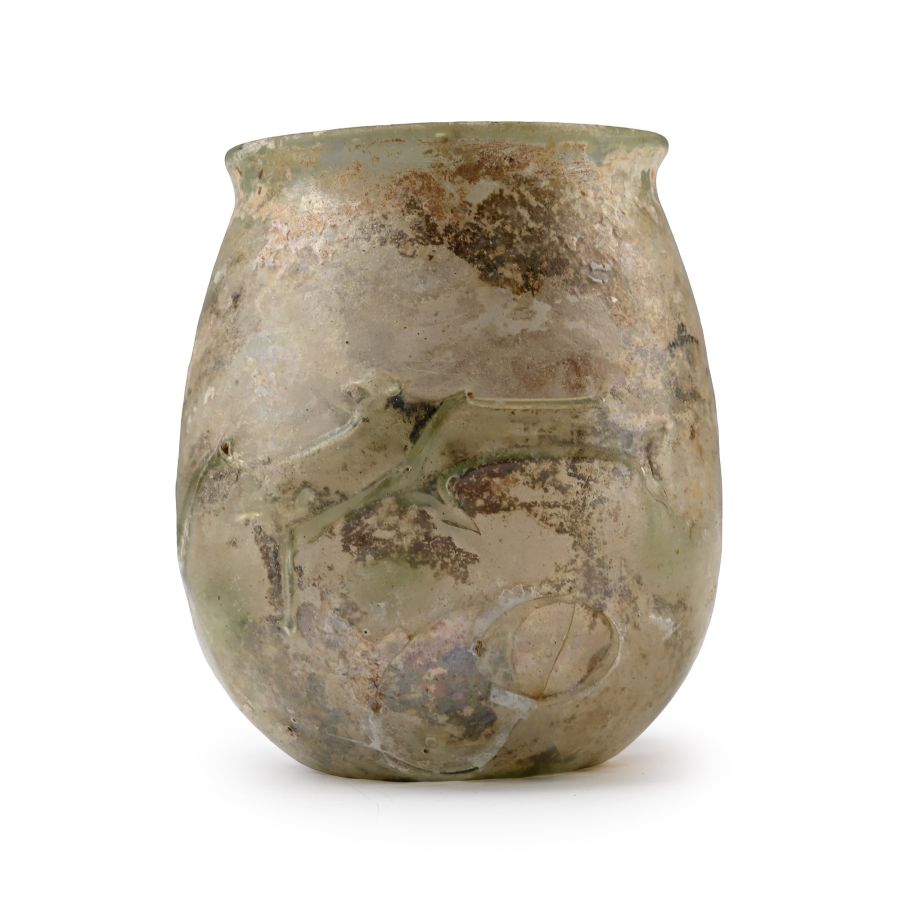
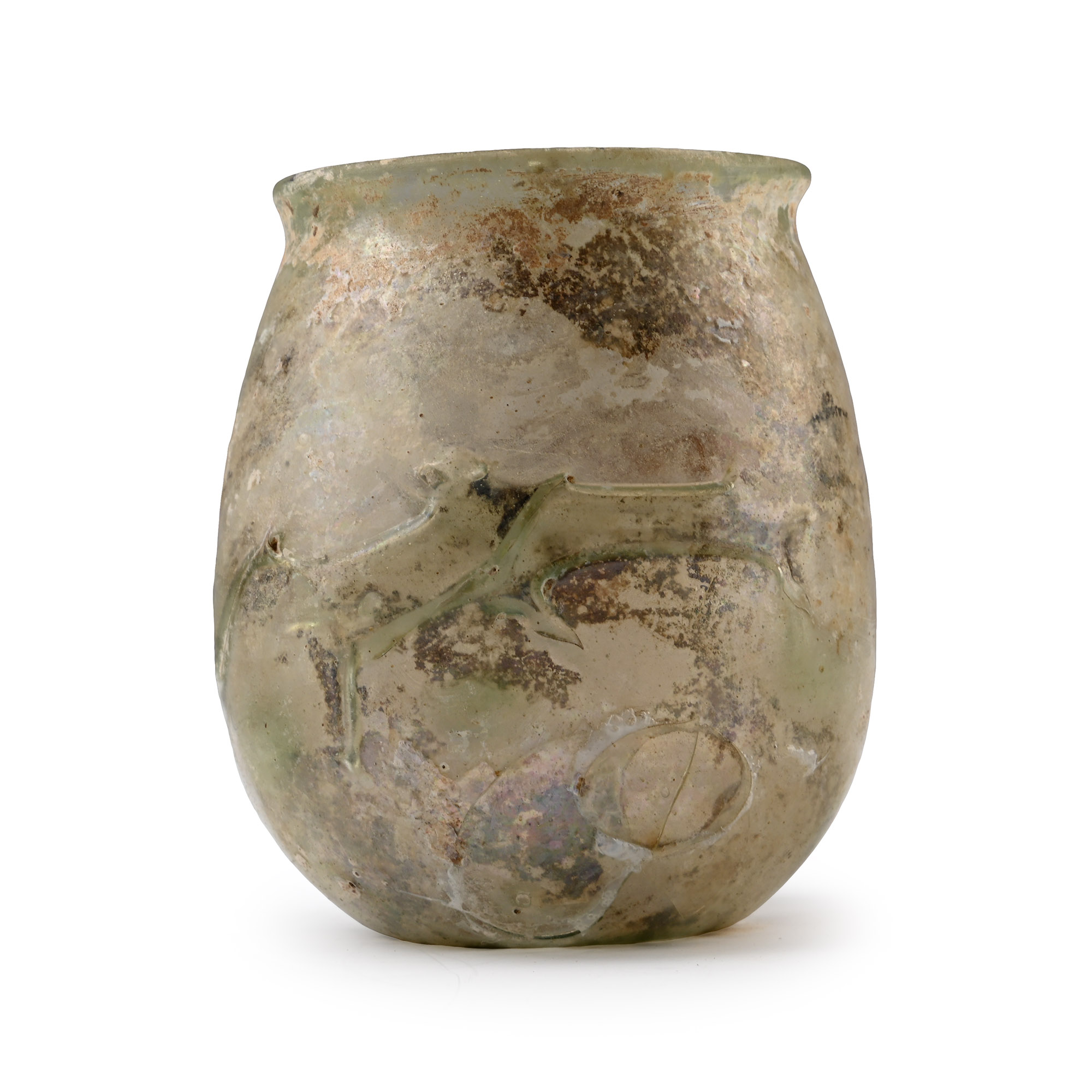
Roman Iridescent Translucent Glass Beaker
CIRCA 1ST-2ND CENTURY A.D.
3 1/4 in. (26.4 grams, 82 mm).
With bulbous body, dimple base, convex rim, pinched circumferential band. [No Reserve]
ProvenanceFrom the collection of Dr Gerhard Muller-Afers, Speyer; thence by family descent.
Private collection, Europe, acquired from the above.
See Whitehouse, D., Roman Glass: The Corning Museum of Glass,volume I, New York, 1997, item 388.
CONDITIONTimeLine Auctions follows a vetting process to ensure the authenticity and legality of all items, reinforcing our commitment to integrity and responsible trading. Each antiquity, antique, and coin lot undergoes thorough examination by a vetting committee of at least ten external specialists, professional trade association members, scientists, and archaeologists: Our Vetting Process
AUCTIONS:
TimeLine is a leading auction house specialising in antiquities, ancient art, collectables, natural history, coins, medals, and books. Our auctions offer museums, collectors, historians, and enthusiasts the opportunity to acquire unique and historically significant pieces.
LOT 1212
Roman Iridescent Translucent Glass Beaker
Estimate £80 - 100€93 - 116 (for guidance only)$108 - 135 (for guidance only)
Opening Bid
£5 (EUR 6; USD 7) +BP*
-
Roman Bronze Statue Plinth with Inscription for Emperor Valerian
253-260 A.D.Estimate: £2,000 - 3,000 (‡+bp*)
Opening Bid: £1,175
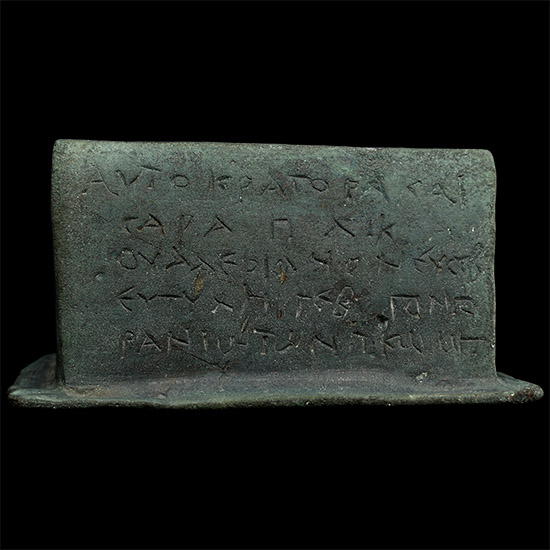
Hollow rectangular plinth with everted basal rim; hastily incised, five-line Greek inscription on one side: 'Αυτοκρατορα Και/σαρα Π Λικ/Ουαλεριανον ευσεβ/ευτυχη Σεβ 50-Ν-50 (?)/ρανιωτων η κωμ(ι)τ' (translated as 'To the Imperator Caesar P(ublius) Licinius Valerianus, pious and good-fortuned Augustus ... the village of the Raniotes'. 1.04 kg, 12.8 cm
with Hirsch Auction 246, 19-20 September 2006, no.838. This lot has been checked against the Interpol Database of stolen works of art and is accompanied by search certificate no.13547-263147.
Probably the base of a statuette of the Roman Emperor Publius Licinius Valerianus (r. 253–260 A.D.), presumably used by devotees of the imperial cult. Marks made by the standing statuette are still visible on top of the plinth. An important document from the time of Valerian, who is also known for having persecuted the Christians. Similar inscriptions set up, for instance by cities, municipalities and other local communities indicating their loyalty, must be seen in this context. -
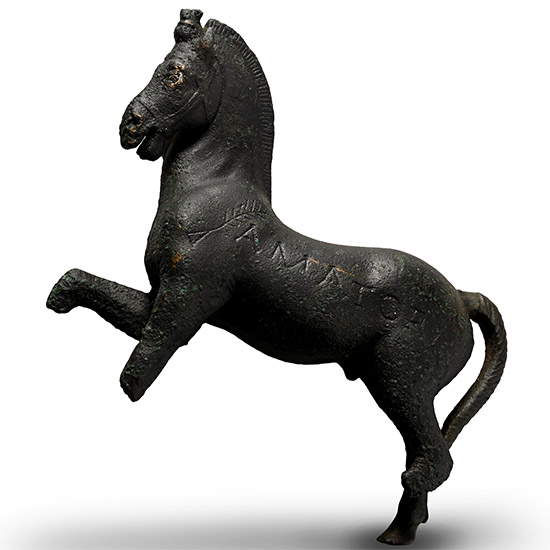
Large Roman 'AMATOR' Bronze Prancing Horse Statue
3rd century A.D.Estimate: £4,000 - 6,000 (+bp*)
Bids: 1 | Current Bid: £2,000
Modelled in the round with an elongated neck, right foreleg raised, head turned slightly to the right with open mouth wearing a bridle, short mane and tail with ribbed engraved decoration, inscription 'AMATOR' next to a branch; lower parts of three legs absent. 376 grams, 11.1 cm
Found Norfolk, UK. Acquired on the UK art market in the 1980s. From an East Anglian private collection. Accompanied by an academic report by Dr Raffaele D'Amato. This lot has been checked against the Interpol Database of stolen works of art and is accompanied by search certificate no.13549-262542.
Romans frequently used 'amator' combined with a noun to show a deep dedication to a particular craft or lifestyle. On a freestanding bronze horse statue, it could be a self-dedication by the person who commissioned it. Alternatively, 'amator' could be the name of the person who owned the statue or a demonstration of dedication to a specific horse or craft of horse-breeding. -
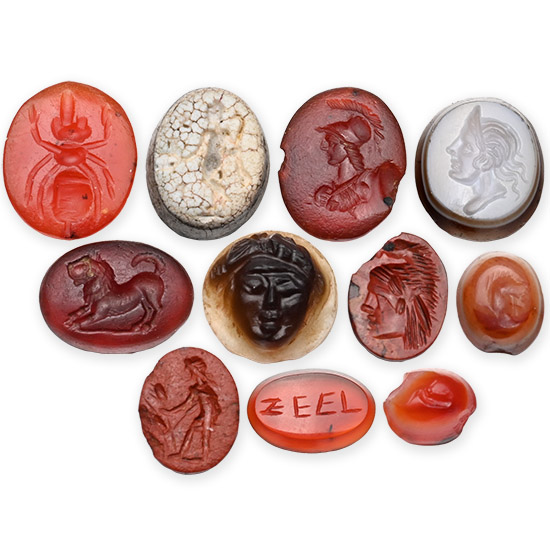
Large Roman Carnelian and Other Gemstone Collection
1st-2nd century A.D. and laterEstimate: £1,500 - 2,000 (+bp*)
Opening Bid: £750
Comprising eleven gemstones with various motifs, including: a cameo with a face, a profile bust wearing a filet, an insect with a stinger, a bust of Minerva, a lion on a baseline, a helmetted head of a warrior, a harvesting scene, two with a bird(?), an advancing nude female with an inscription before, and one inscribed 'ZEEL'. 5.33 grams total, 7-13 mm
Private collection, London.
