
Loading, please wait...
LOT 1049
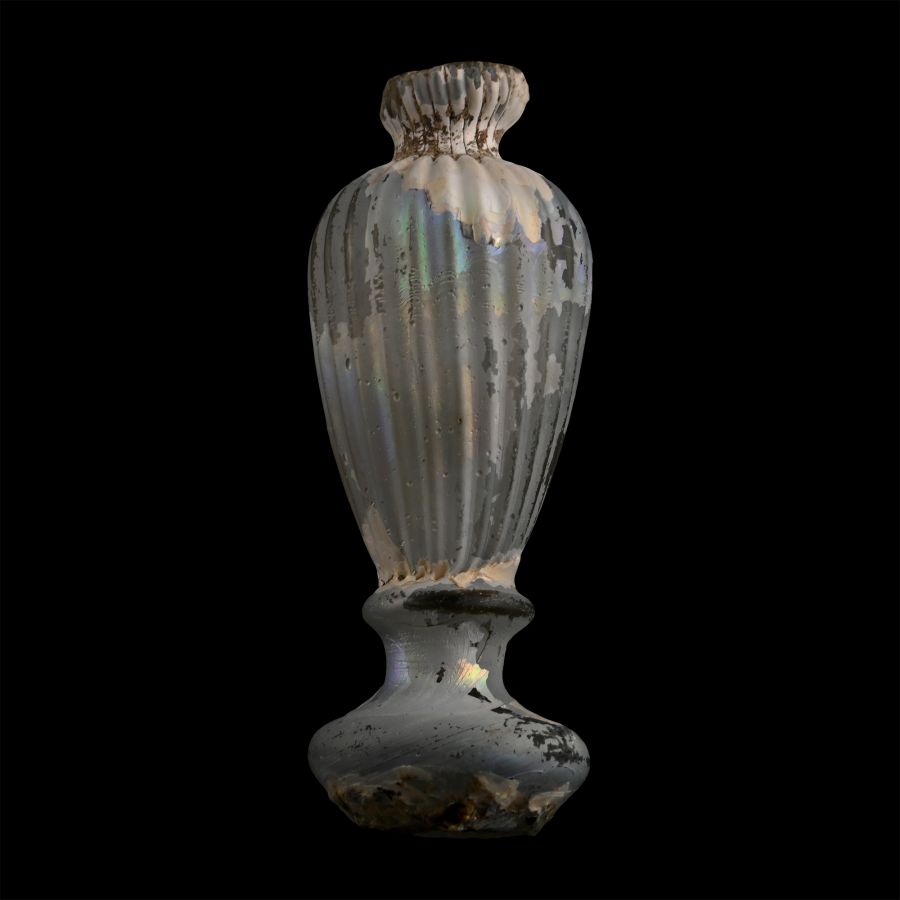
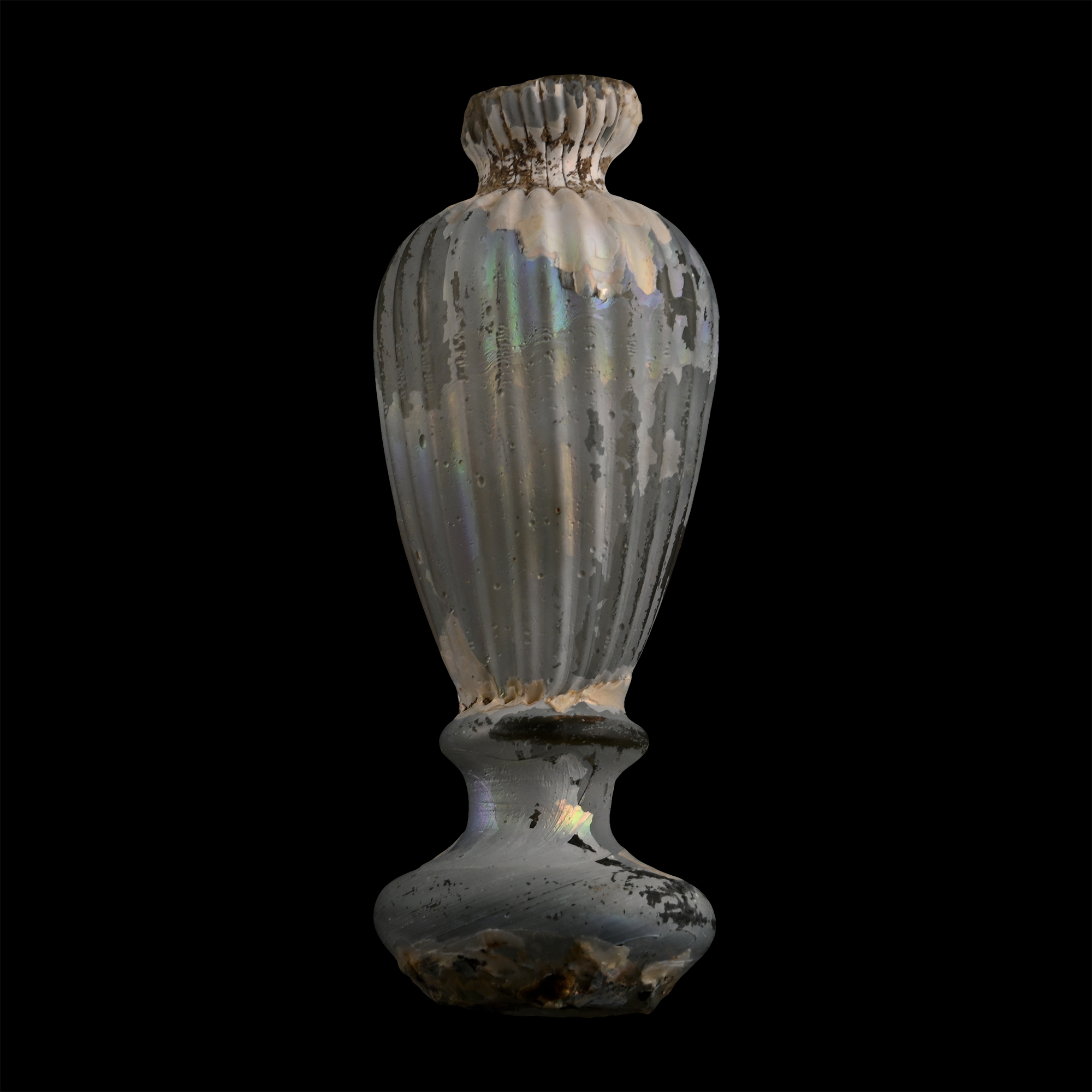
Roman Iridescent Moulded Fluted Glass Perfume Bottle
CYPRUS, CIRCA 1ST CENTURY A.D.
2 3/8 in. (19.7 grams, 60 mm).
Piriform fluted body with narrow neck and everted rim, flared base. [No Reserve]
ProvenancePrivate collection, Oxfordshire, UK, by direct descent from the collection of Judge George Cyril Griffith-Williams (1893-1983), Supreme Court Judge of the Colony of Cyprus; items having been collected in the 1930s and 1940s in Cyprus during his tenure there.
CONDITIONTimeLine Auctions follows a vetting process to ensure the authenticity and legality of all items, reinforcing our commitment to integrity and responsible trading. Each antiquity, antique, and coin lot undergoes thorough examination by a vetting committee of at least ten external specialists, professional trade association members, scientists, and archaeologists: Our Vetting Process
AUCTIONS:
TimeLine is a leading auction house specialising in antiquities, ancient art, collectables, natural history, coins, medals, and books. Our auctions offer museums, collectors, historians, and enthusiasts the opportunity to acquire unique and historically significant pieces.
-
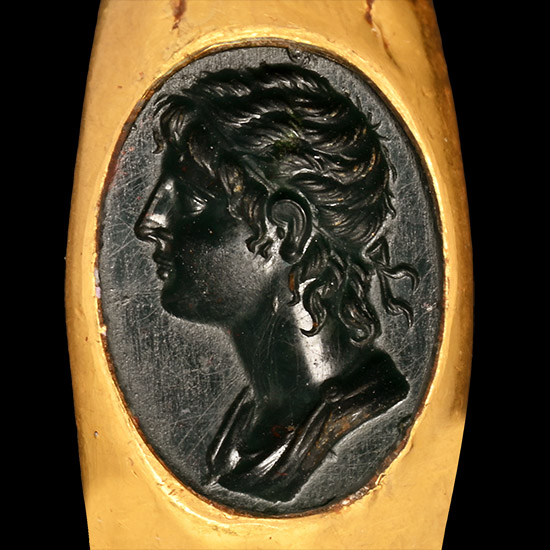
Roman Gold Ring with Portrait Gemstone
Circa 2nd-3rd century A.D.Sold for (Inc. bp): £2,860
Hollow-formed with a broad hoop, lateral facets, an inset cloison with intaglio profile of a youthful male bust. 9.75 grams, 29.29 mm overall, 16.57 x 12.76 mm internal diameter (approximate size British F 1/2, USA 3, Europe 4.3, Japan 4)
Property of a North American gentleman, London, UK, 1990-2010. This lot has been checked against the Interpol Database of stolen works of art and is accompanied by search certificate number no.13282-253350. -
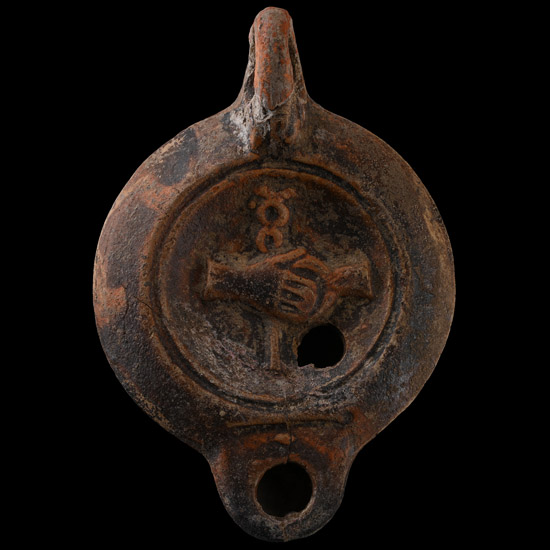
Roman Terracotta Oil Lamp with Clasped Hands Holding a Caduceus
Circa 2nd century A.D.Sold for (Inc. bp): £364
Circular body with short nozzle and a loop handle, discus with clasped hands before a caduceus. 57.5 grams, 92 mm
From the private collection of Mr Brian Edwards, New Malden, Surrey, UK, formed from the late 1970s-early 1980s; thence by descent. Accompanied by the original collector's data sheet with reference no.A40. -
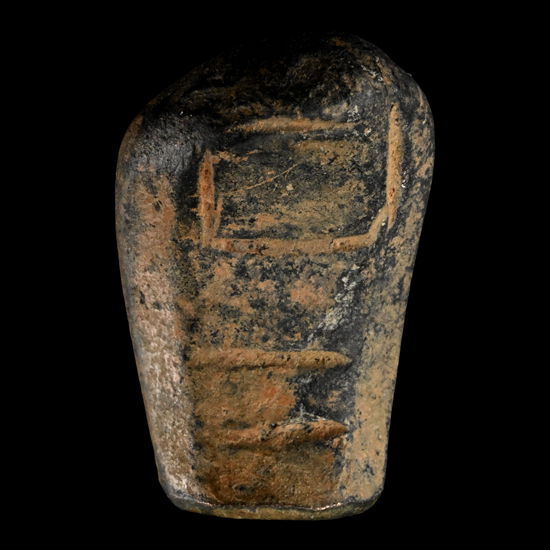
Roman Bronze Thumb from a Statue
1st-4th century A.D.Sold for (Inc. bp): £33
Modelled in the round thumb from the left hand with wrinkles and rectangular nail. 27 grams, 26 mm
From the collection of a gentleman, acquired on the London art market in the 1990s.
