
Loading, please wait...


LOT 0832
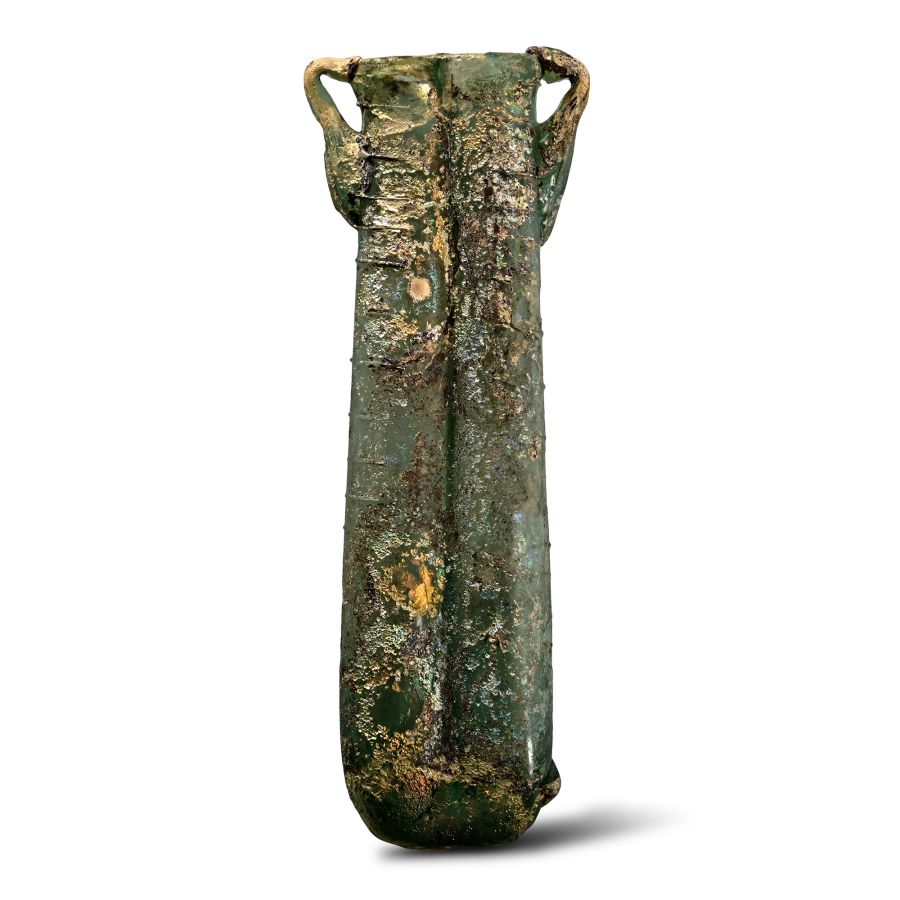
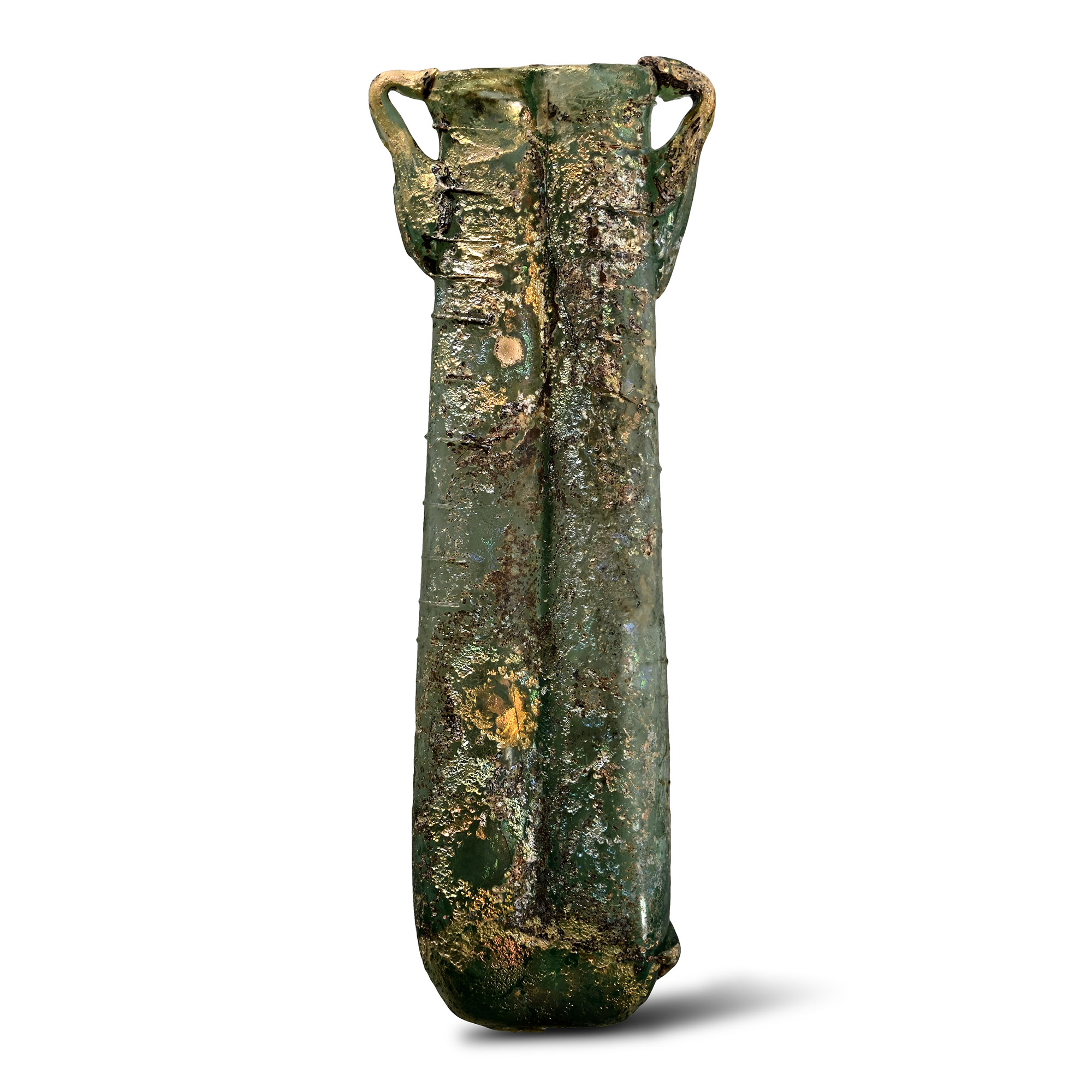
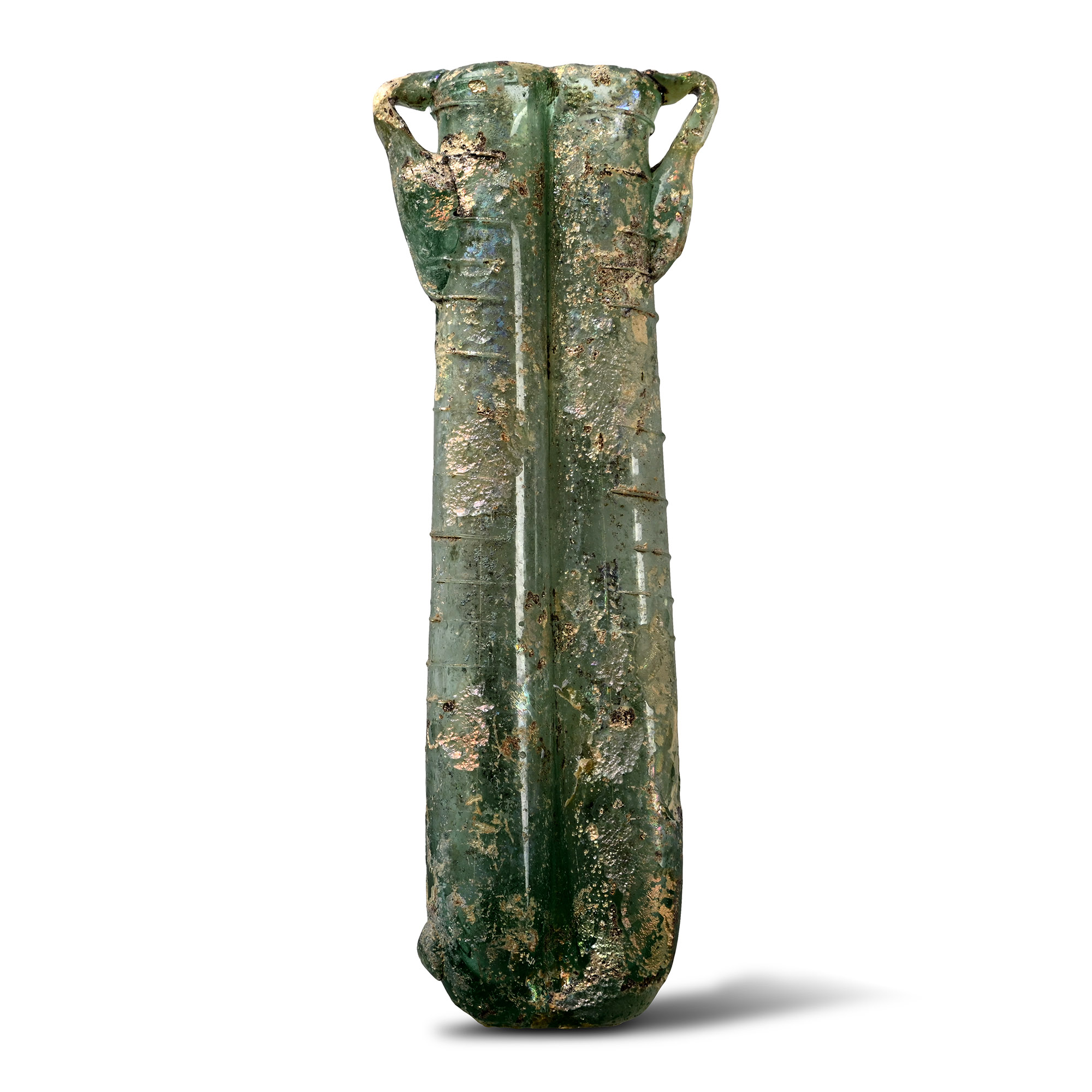
Roman Iridescent Green Glass Double Balsamarium
CIRCA 4TH CENTURY A.D.
5 in. (46.5 grams, 12.6 cm).
Twin-handled, rounded bottom with trailing around body. [No Reserve]
ProvenanceAcquired from Shirley Warren Antique Glass, Surrey, UK, in 1993 with reference no.SW.
From the collection of a Bedfordshire, UK, lady.
Accompanied by an original Shirley Warren invoice no.2347 dated 27 March 1993 (£180.00).
Cf. for a similar example Filarska, B., Szkla Starozytne (Ancient Glass), vol.II, Warszawa, 1972, II, cat.179, pl.XXXIX,4.
CONDITIONTimeLine Auctions follows a vetting process to ensure the authenticity and legality of all items, reinforcing our commitment to integrity and responsible trading. Each antiquity, antique, and coin lot undergoes thorough examination by a vetting committee of at least ten external specialists, professional trade association members, scientists, and archaeologists: Our Vetting Process
AUCTIONS:
TimeLine is a leading auction house specialising in antiquities, ancient art, collectables, natural history, coins, medals, and books. Our auctions offer museums, collectors, historians, and enthusiasts the opportunity to acquire unique and historically significant pieces.
-
.jpg)
Roman Gold Ring with Carved Hedgehog
1st century B.C.Sold for (Inc. bp): £3,640
Comprising a thick hoop expanding at the shoulders, the bezel with a standing hedgehog on a baseline with detailed spines. 7.53 grams, 20.12 mm overall, 15.03 mm internal diameter (approximate size British F 1/2, USA 3, Europe 4.3, Japan 4)
Private collection, 1990s-early 2000s. -
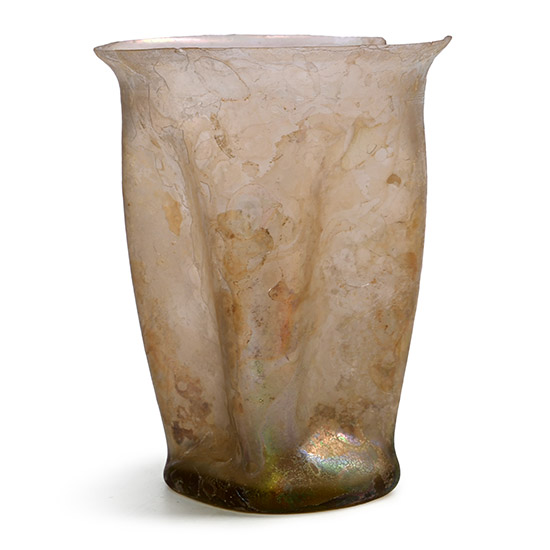
Roman Iridescent Glass Pinched Beaker
Circa 2nd-3rd century A.D.Sold for (Inc. bp): £78
Flat base and a conical body with an everted rim; rim chipped. 53 grams, 10.3 cm
From the collection of a late Norfolk, UK gentleman's collection, formed from the late 1960s-1970s. -
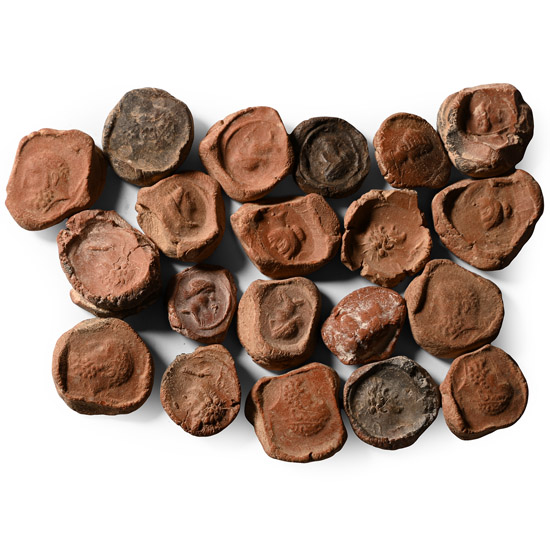
Roman Terracotta Bullae, Tesserae or Token Group
3rd century B.C.-1st century A.D.Sold for (Inc. bp): £130
A mixed group of ceramic bullae, tesserae or theatre tokens bearing low-relief motifs, mainly consisting of profile busts of deities. 36.7 grams total, 16-22 mm
From the private collection of a European gentleman (1942-2024), formed since the 1970s.
The term 'tessera' was used in Roman times to convey the Greek term σύμβολον (token). Small tiles are known as tokens, often shaped like coins, made of metal (copper, lead, iron), clay, bone, wood, or glass, stamped as well as engraved. The tokens, however, are not exclusively coin-shaped, as the Latin term 'tessera' refers to a four-sided shape. Tokens and tesserae seem to have been used both in Athens and Rome for the distribution of goods. According to written sources, the term ‘token’ is identified with credentials of the official authorities. They have also been interpreted as tokens of identity, as entrance tickets to theatre performances, tribunals or assemblies of citizens, archival material of seal engraving, as pawns in games, Charon’s obols and even as amulets.
