
Loading, please wait...
LOT 1052
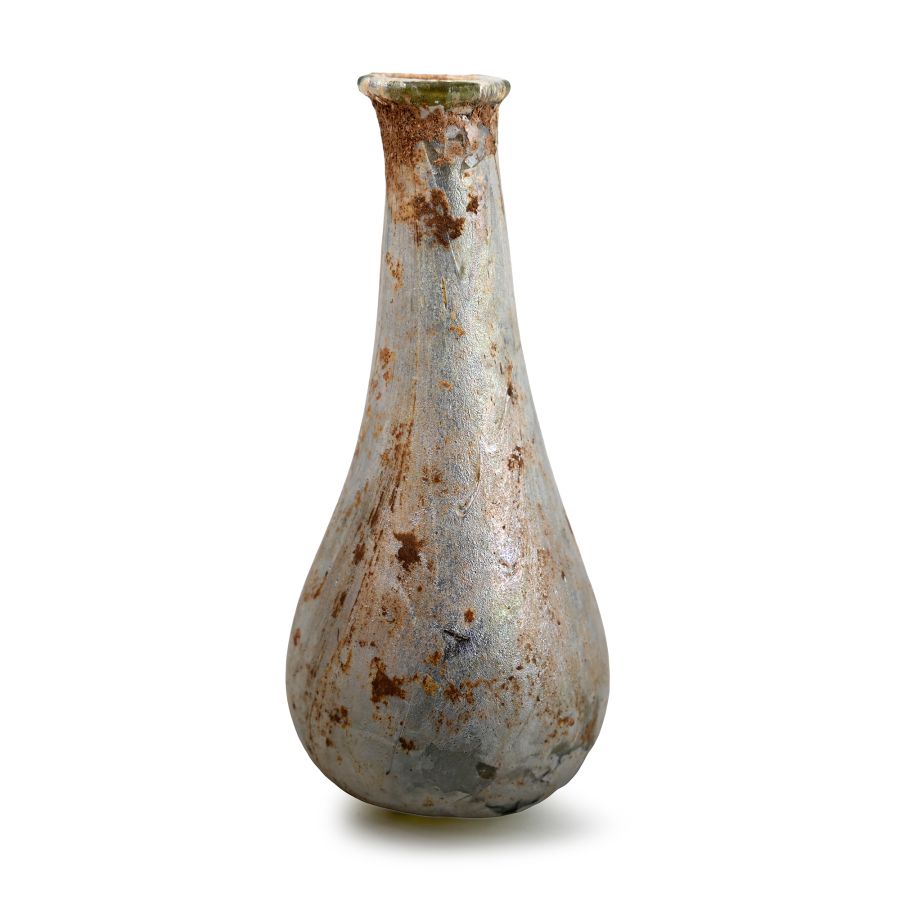
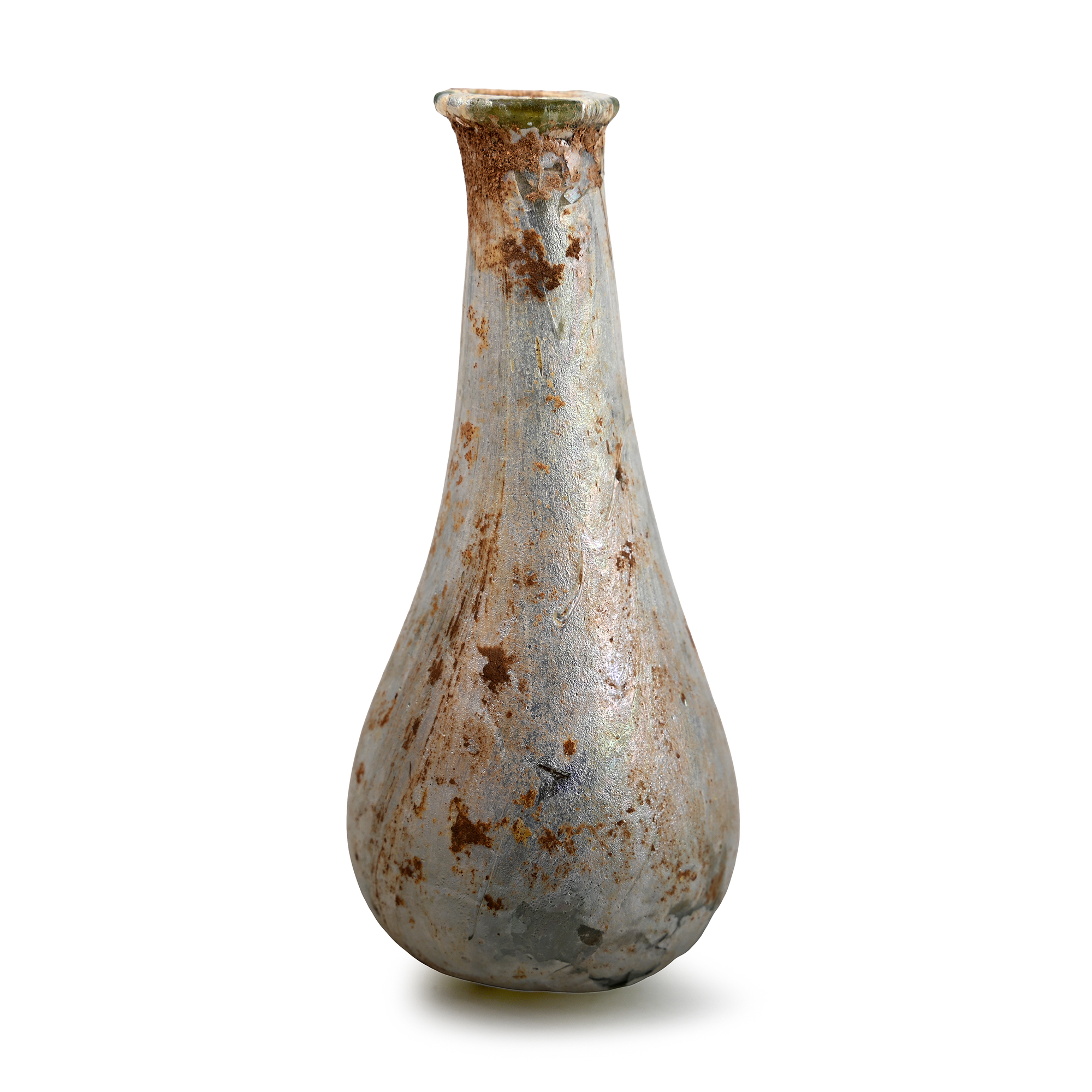
Roman Iridescent Glass Vessel
1ST-4TH CENTURY A.D.
3 5/8 in. (17.4 grams, 91 mm).
Comprising a piriform body with everted folded rim to the mouth and iridescent surface.
ProvenanceEx London, UK, art market 1990s.
CONDITIONTimeLine Auctions follows a vetting process to ensure the authenticity and legality of all items, reinforcing our commitment to integrity and responsible trading. Each antiquity, antique, and coin lot undergoes thorough examination by a vetting committee of at least ten external specialists, professional trade association members, scientists, and archaeologists: Our Vetting Process
AUCTIONS:
TimeLine is a leading auction house specialising in antiquities, ancient art, collectables, natural history, coins, medals, and books. Our auctions offer museums, collectors, historians, and enthusiasts the opportunity to acquire unique and historically significant pieces.
-
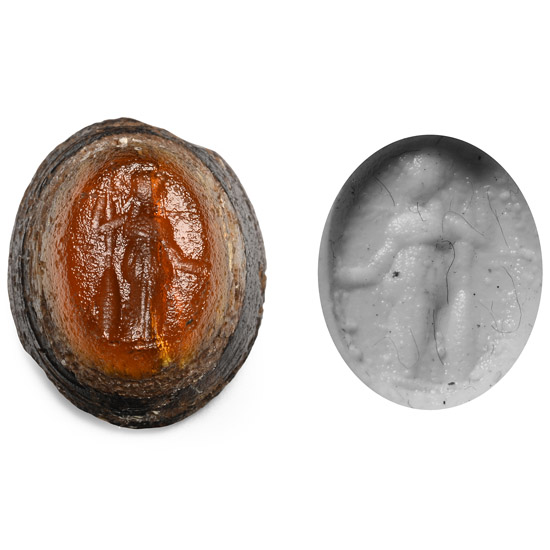
Roman Glass Gem with Minerva
2nd-3rd century A.D.Sold for (Inc. bp): £65
With intaglio Minerva holding spear and shield; supplied with a museum-quality impression. 1.56 grams, 14.75 mm
From the private collection of a European gentleman (1942-2024), formed since the 1970s. -
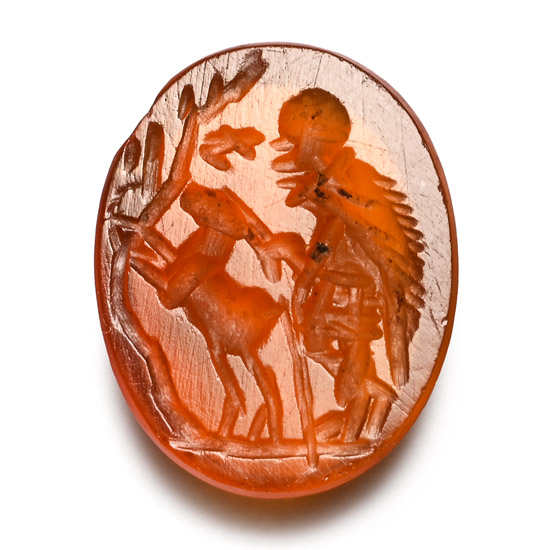
Roman Carnelian Gemstone with Shepherd and Goat
2nd-3rd century A.D.Sold for (Inc. bp): £156
With intaglio scene of a goat reaching up to nibble the bark of a tree, profile old man with a stick to the rear; supplied with a museum-quality impression. 0.54 grams, 11.82 mm
From the private collection of a European gentleman (1942-2024), formed since the 1970s. -
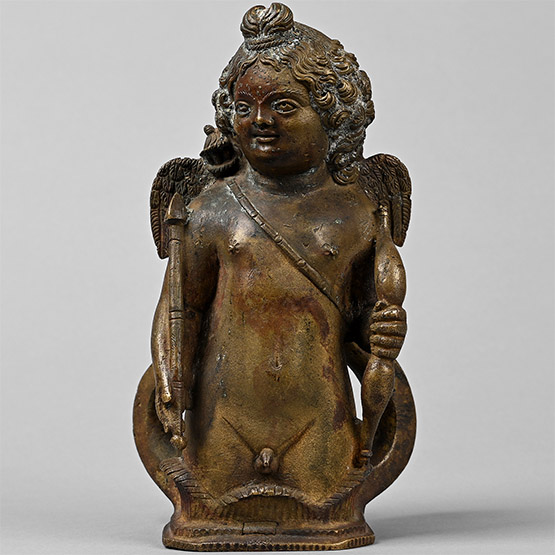
Large Roman Bronze Chariot or Lectica Mount of Cupid
2nd-3rd century A.D.Estimate: £25,000 - 35,000 (‡+bp*)
Opening Bid: £12,500
Modelled in the round hollow-formed figure of Cupid standing nude emerging from a flower, with dressed curly hair bound into a forelock, small dorsal wings on the shoulders, a recurved bow in his left hand and an arrow supported on his right forearm; looped handles to the rear and stepped base below. 1.79 kg, 19.9 cm
From the collection of J-Ph, Mariaud de Serres, Paris, France, 1990s. Piasa Auctions, 17-18 March 2003, no.584. Private collection, Europe. Accompanied by an academic report by Dr Raffaele D'Amato. This lot has been checked against the Interpol Database of stolen works of art and is accompanied by search certificate number no.13215-249253. Accompanied by a copy of French passport no.237039.
These prismatic fittings covered the ends of the wooden beams, reinforcing the floor of the undercarriage on both long sides. The heavy and ornate nature of these accessories suggests they were originally attached to a more substantial vehicle such as a pilentum (used to transport aristocrats on state occasions), a carruca (for transporting emperors and aristocratic matrons) or even a thensa (a ceremonial chariot used to transport deities to the imperial games) or a lectica (portable bed for patricii and matronae). Contemporary sources describe ornate inlay, rare woods and metalwork incorporated into these vehicles, and, probably, the present fitting would originally have been gilded.
