
Loading, please wait...
LOT 0628
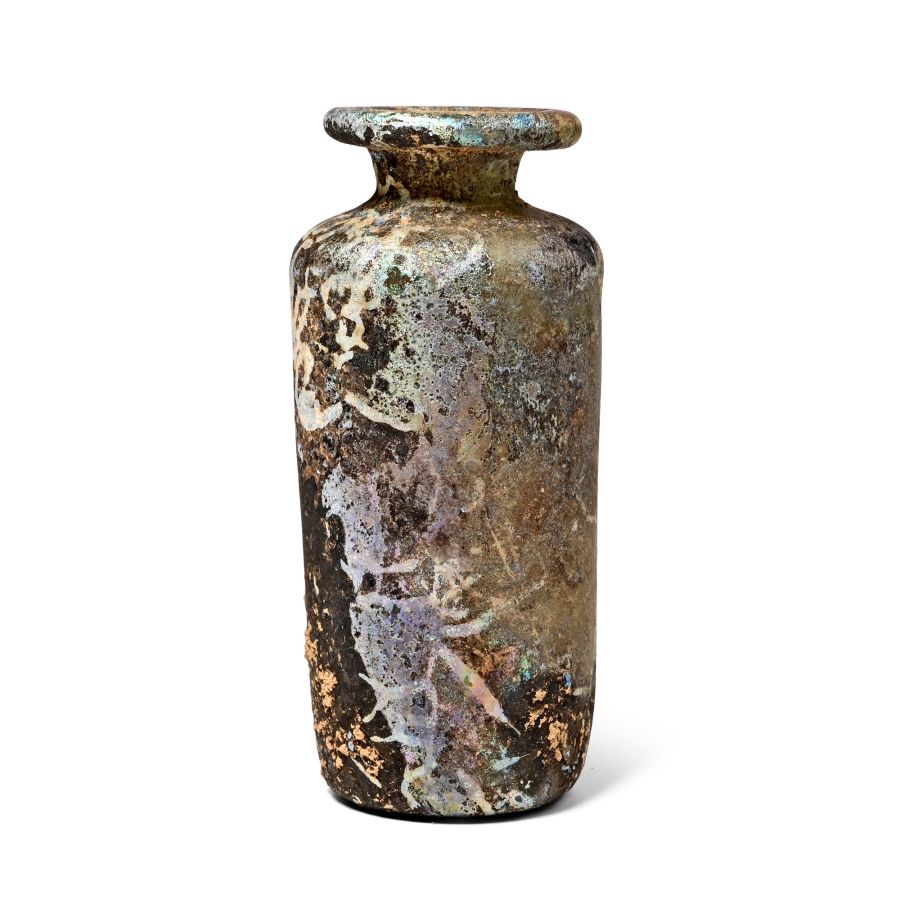
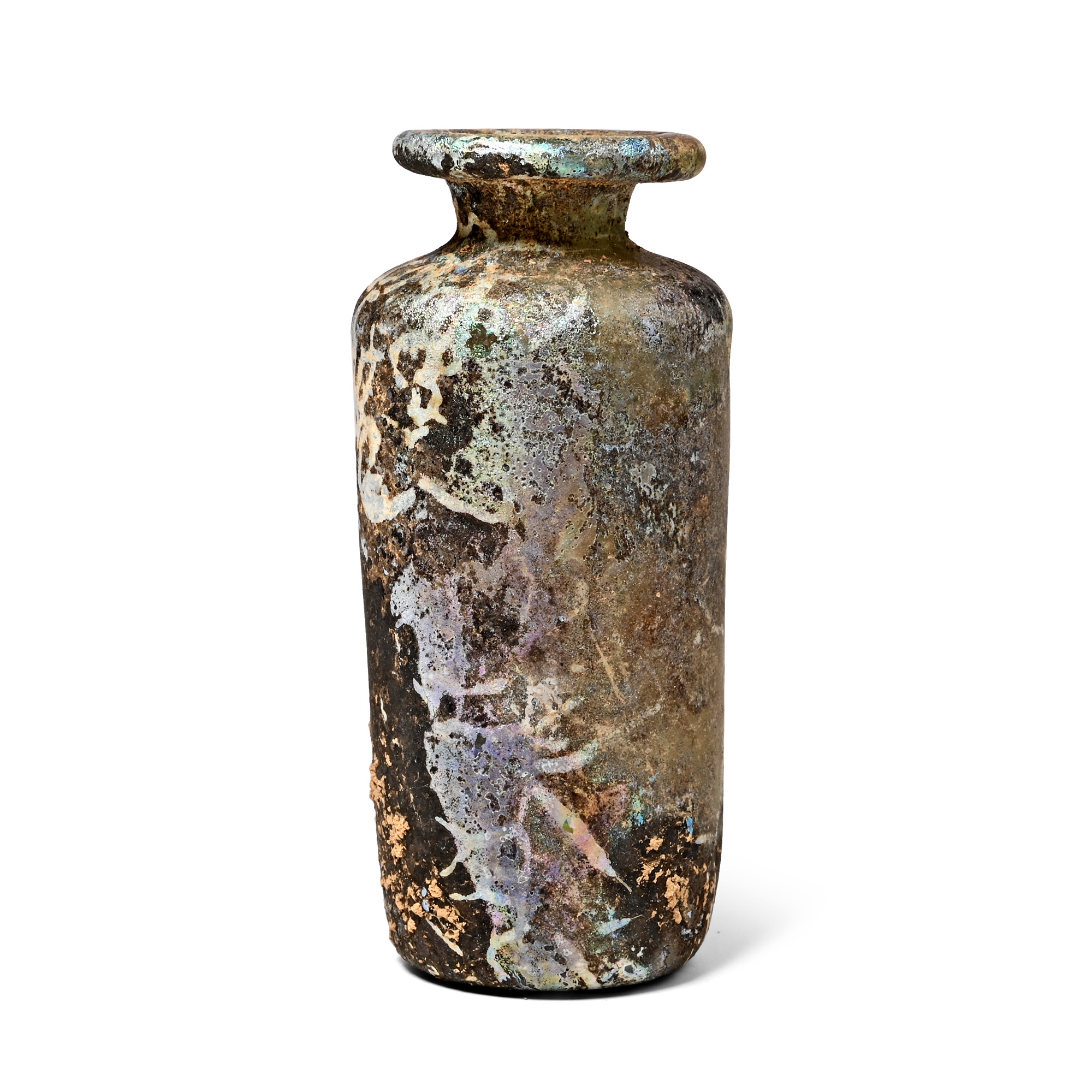
Roman Iridescent Glass Storage Vessel
2ND CENTURY A.D.
3 3/4 in. (30 grams, 94 mm).
Tubular body with a narrow neck and a thick rim, dimple base.
ProvenanceAcquired in the 1990s from London dealerships and auction houses.
From the Lonson collection.
Cf. Whitehouse, D., Roman Glass in the Corning Museum of Glass, vol.1, New York, 2001, item 308, for a similar type of bottle.
CONDITIONTimeLine Auctions follows a vetting process to ensure the authenticity and legality of all items, reinforcing our commitment to integrity and responsible trading. Each antiquity, antique, and coin lot undergoes thorough examination by a vetting committee of at least ten external specialists, professional trade association members, scientists, and archaeologists: Our Vetting Process
AUCTIONS:
TimeLine is a leading auction house specialising in antiquities, ancient art, collectables, natural history, coins, medals, and books. Our auctions offer museums, collectors, historians, and enthusiasts the opportunity to acquire unique and historically significant pieces.
-
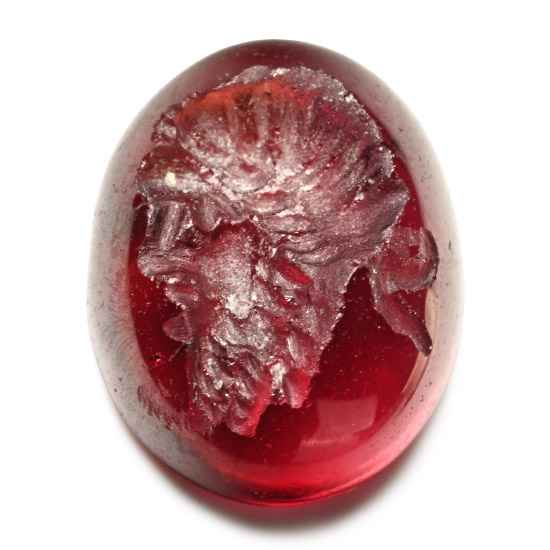
Roman Garnet Gemstone with Youthful Portrait
2nd-3rd century A.D.Sold for (Inc. bp): £65
Plano-convex type with incuse design of a profile portrait bust of a youthful male; supplied with a museum-quality impression. 0.43 grams, 8 mm
From the private collection of a European gentleman (1942-2024), formed since the 1970s. -
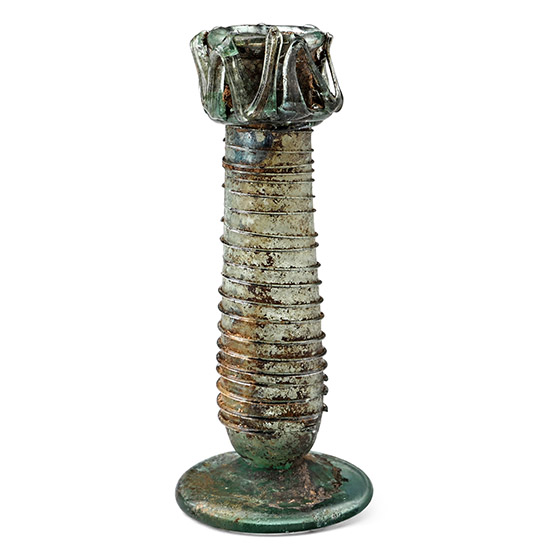
Roman Glass Vessel with Applied Trails
1st-4th century A.D.Sold for (Inc. bp): £546
Candlestick type vessel with tall tubular neck with applied trail decoration, applied cagework around the mouth. 37.1 grams, 98 mm
From an important London, UK, collection 1980-2020. -
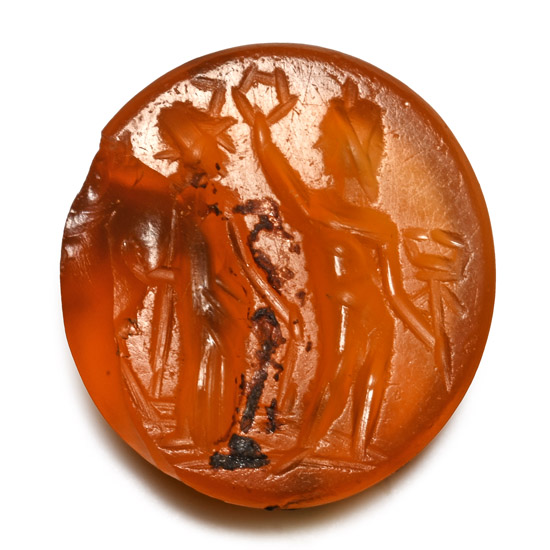
Roman Carnelian Gemstone with Minerva and Mercury
2nd-3rd century A.D.Sold for (Inc. bp): £117
Discoid type with incuse design of two figures on a baseline, helmetted Minerva left with cloak and Mercury with caduceus holding a victory wreath above her head. 0.70 grams, 12 mm
From the private collection of a European gentleman (1942-2024), formed since the 1970s.
