
Loading, please wait...
LOT 0736
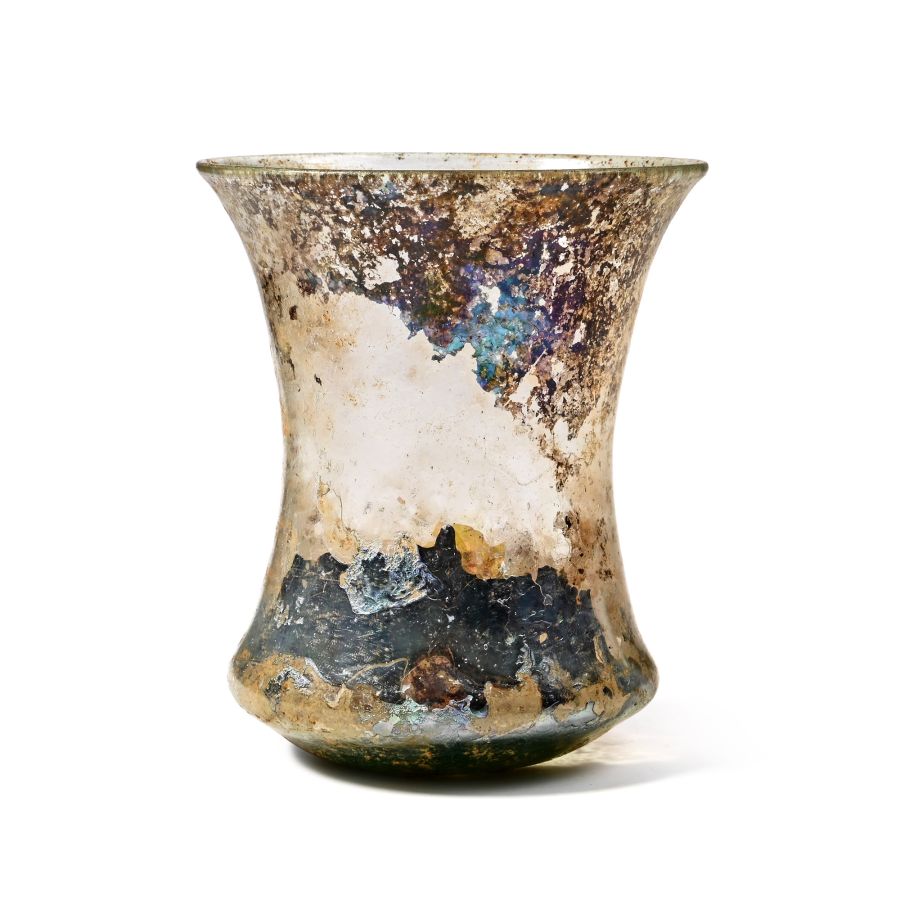
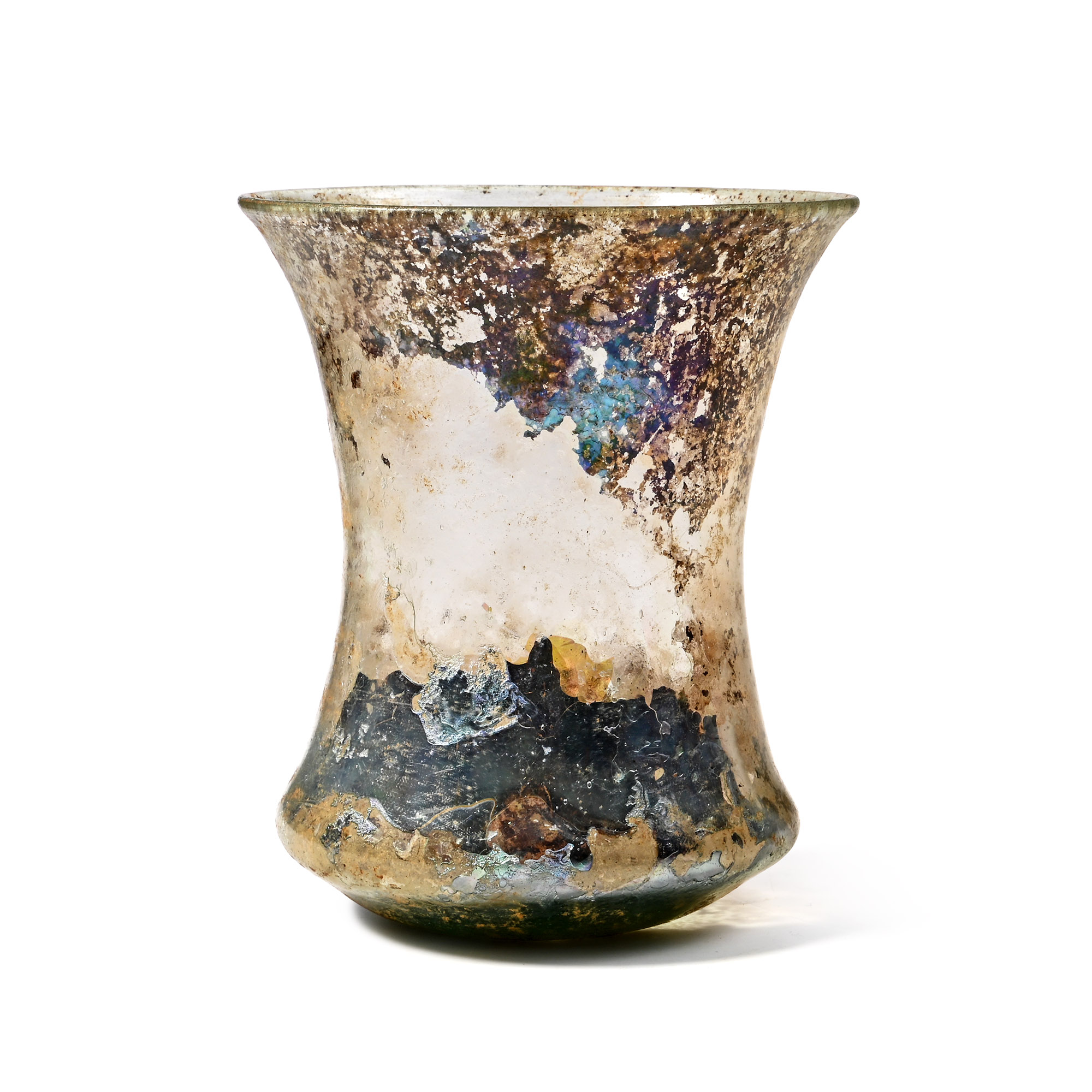
Roman Iridescent Glass Rounded Bottom Beaker
1ST CENTURY A.D.
4 in. (52.7 grams, 10.2 cm).
Cotton-reel-shaped body with a slightly rounded base.
ProvenanceAcquired in the 1990s from London dealerships and auction houses.
From the Lonson collection.
Cf. Whitehouse, D., Roman Glass in the Corning Museum of Glass, vol.1, New York, 2001, item 166, for a similar type of beaker.
CONDITIONTimeLine Auctions follows a vetting process to ensure the authenticity and legality of all items, reinforcing our commitment to integrity and responsible trading. Each antiquity, antique, and coin lot undergoes thorough examination by a vetting committee of at least ten external specialists, professional trade association members, scientists, and archaeologists: Our Vetting Process
AUCTIONS:
TimeLine is a leading auction house specialising in antiquities, ancient art, collectables, natural history, coins, medals, and books. Our auctions offer museums, collectors, historians, and enthusiasts the opportunity to acquire unique and historically significant pieces.
-
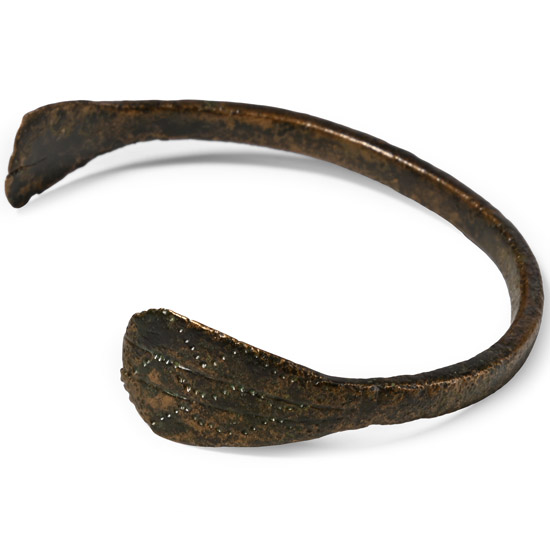
Late Roman Bronze Bracelet
5th-6th century A.D.Sold for (Inc. bp): £72
Penannular bracelet with rectangular-section body and flared terminals with pointillé decoration. 15.1 grams, 64 mm
Ex German art market, 2000s. Acquired from an EU collector living in London. From the collection of a Surrey, UK, gentleman. -
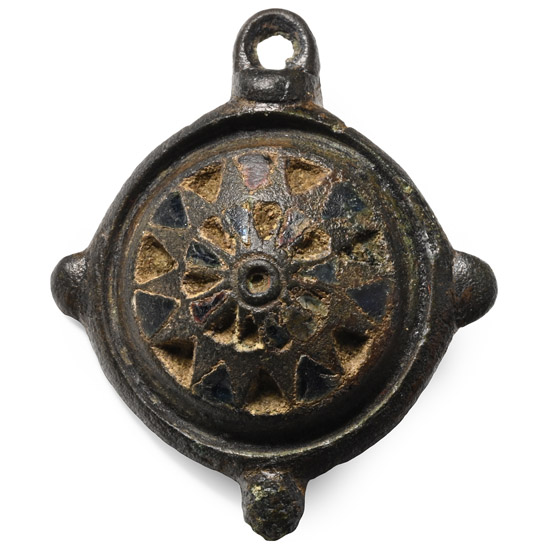
Roman Enamelled Bronze Umbonate Brooch
2nd century A.D.Sold for (Inc. bp): £104
Domed body decorated with two concentric circles of narrow, inward-pointing triangles with traces of blue enamel, small bosses and a loop to the outer rim; pin-lugs and a pin on the reverse, and an inked collector's number 'L1986.3 109'. 7.9 grams, 33 mm
From the private coin collection of a West London, UK, gentleman, formed since the mid 1980s. -
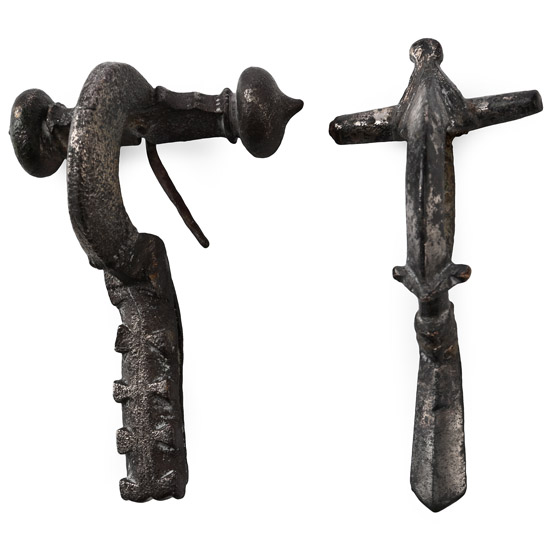
Roman Silvered Bronze Crossbow Brooch Group
4th century A.D.Estimate: £100 - 140 (+bp*)
Current Winning Bid: £60
Comprising two crossbow brooches, each with a keeled bow and flaring foot, both with a partial pin and integral catch beneath the footplate. 64.9 grams total, 62-66 mm
From an Essex collection. Private collection, Suffolk.
