Loading, please wait...

Roman Iridescent Glass Pinched Beaker Roman Iridescent Glass Pinched Beaker Roman Iridescent Glass Pinched Beaker Roman Iridescent Glass Pinched Beaker Roman Iridescent Glass Pinched Beaker Roman Iridescent Glass Pinched Beaker
Use mousewheel to zoom in and out, click to enlarge
Details

LOT 0997

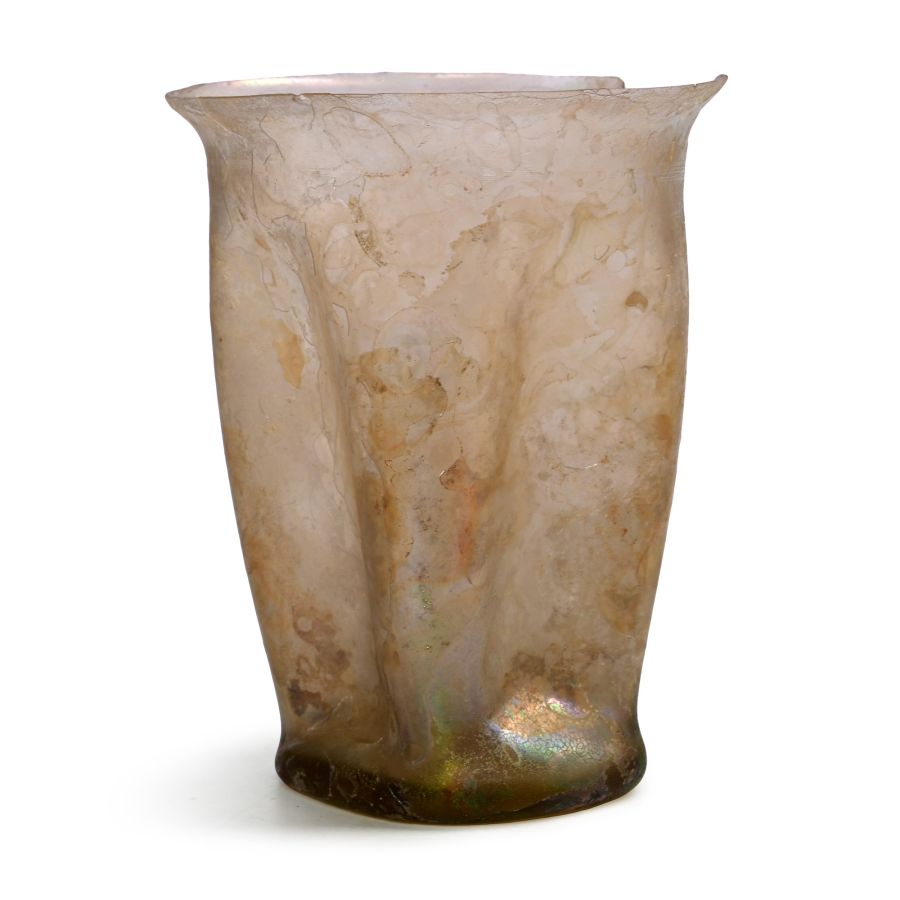
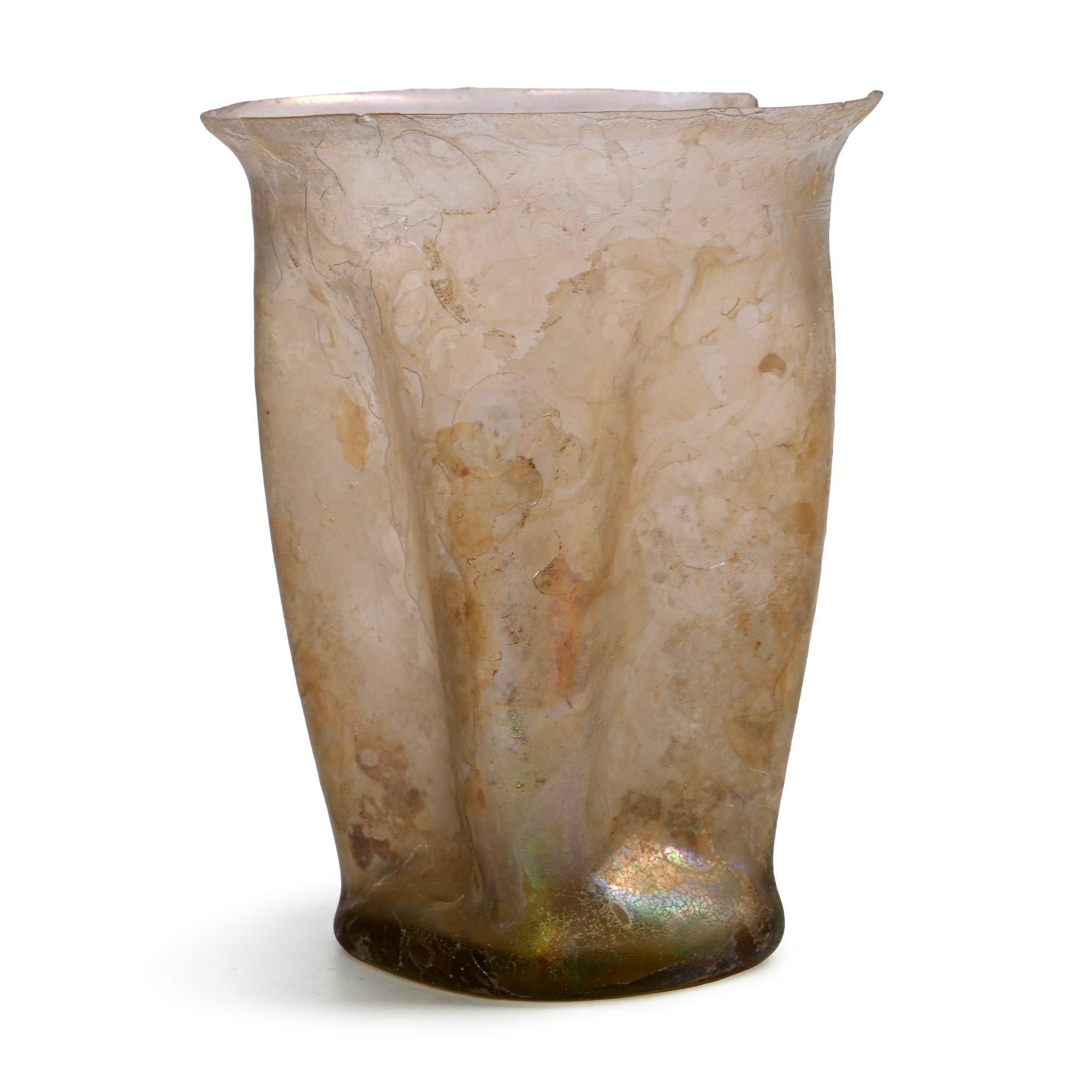
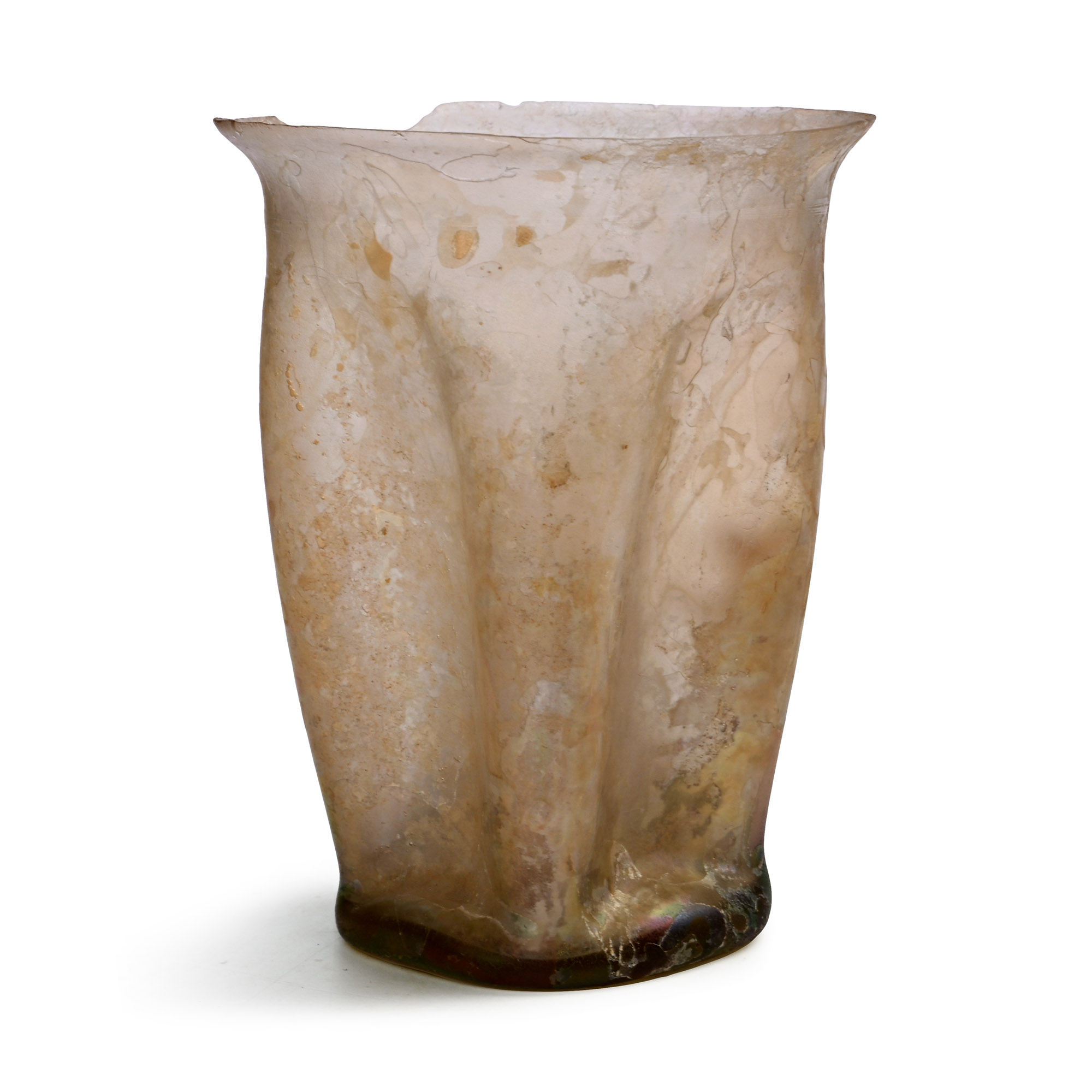
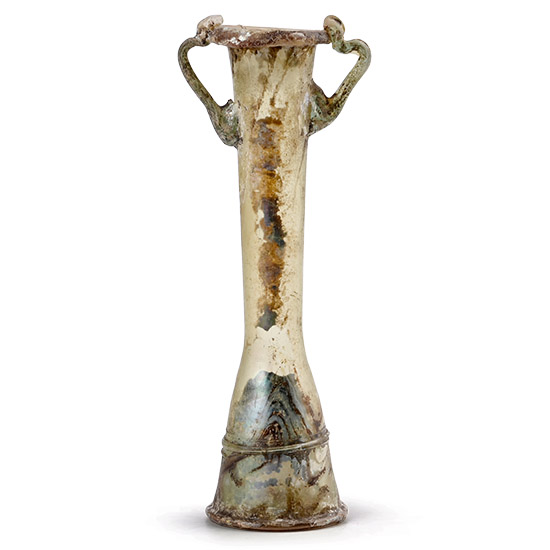
Roman Iridescent Glass Pinched Beaker

CIRCA 2ND-3RD CENTURY A.D.

4 in. (53 grams, 10.3 cm).

Flat base and a conical body with an everted rim; rim chipped. [No Reserve]

Provenance

From the collection of a late Norfolk, UK gentleman's collection, formed from the late 1960s-1970s.

Literature

Cf. Lightfoot, C.S., The Cesnola Collection of Cypriot Art: Ancient Glass, New York, 2017, pp.91-94, nos.75,80, for similar indented cups.

CONDITION
VETTING:

TimeLine Auctions follows a vetting process to ensure the authenticity and legality of all items, reinforcing our commitment to integrity and responsible trading. Each antiquity, antique, and coin lot undergoes thorough examination by a vetting committee of at least ten external specialists, professional trade association members, scientists, and archaeologists: Our Vetting Process


AUCTIONS:

TimeLine is a leading auction house specialising in antiquities, ancient art, collectables, natural history, coins, medals, and books. Our auctions offer museums, collectors, historians, and enthusiasts the opportunity to acquire unique and historically significant pieces.

LOT 0997

Roman Iridescent Glass Pinched Beaker

Estimate £100 - 140€120 - 160 (for guidance only)$140 - 190 (for guidance only)

Opening Bid
£5 (EUR 6; USD 7) +BP*

Sign in to Bid

Please enter a e-mail
Please enter a password
Or Create Account here.
Please confirm to accept TC and Privacy policy

Bids: 0
RELATED LOTS
  • Roman to Medieval Bronze Ring Collection
    Roman to Medieval Bronze Ring Collection
    1st-16th century A.D.

    Estimate: £120 - 170 (+bp*)

    Opening Bid: £60

    Comprising ten rings, including an archer's ring, a ring with a glass cabochon, a ring with a stylised eagle, and others. 53.03 grams total, 15-31 mm


    Ex German art market, 2000s. Acquired from an EU collector living in London. From the collection of a Surrey, UK, gentleman.

    Lot Details

  • Agate Cameo with a Portrait of a Hellenistic Ruler
    Agate Cameo with a Portrait of a Hellenistic Ruler
    1st century B.C.

    Estimate: £2,000 - 3,000 (+bp*)

    Opening Bid: £1,000

    Detailed bust of a man with his curly hair secured by tainia with the ends hanging behind his neck, aquiline nose and prominent chin, tryphe still visible. 0.75 grams, 17 mm


    Formerly in a private collection of an European lady, 1970s-1980s. Private collection, UK. This lot has been checked against the Interpol Database of stolen works of art and is accompanied by search certificate number no.13306-257801

    The cameo represents a member of the Julio-Claudian dynasty. It could represent Agrippa, the son-in-law and victorious admiral of Augustus, who was appointed Augustus’ successor through a symbolic gift of a ring. It may alternatively represent Drusus Maior, Augustus’ stepson and another potential successor.

    Lot Details

  • Roman Sapphire Gemstone with Crescent Moon and Star
    Roman Sapphire Gemstone with Crescent Moon and Star
    Third quarter of 1st century B.C.

    Estimate: £2,500 - 3,500 (+bp*)

    Opening Bid: £1,250

    Cushion-shaped greenish-blue intaglio engraved with a large crescent moon and star. 1.05 grams, 10 mm


    Formerly in a private collection of an European lady, 1970s-1980s. Private collection, UK. This lot has been checked against the Interpol Database of stolen works of art and is accompanied by search certificate number no.13305-257800.

    Basaltic sapphires used by the Romans came from surface deposits in northern Ethiopia, which were already known and productive in ancient times. This hypothesis is supported by comments by Pliny the Elder (23–79 A.D.) and Solinus (early 3rd century A.D.), both of whom referred to gems from Ethiopia named ‘hyacintos’, which is generally accepted in archaeology to be the ancient name of sapphire. The moon and stars have been, since the 4th century BC, symbols of the city of Byzantium and were also linked with Spartan military culture.

    Lot Details