
Loading, please wait...
LOT 0638
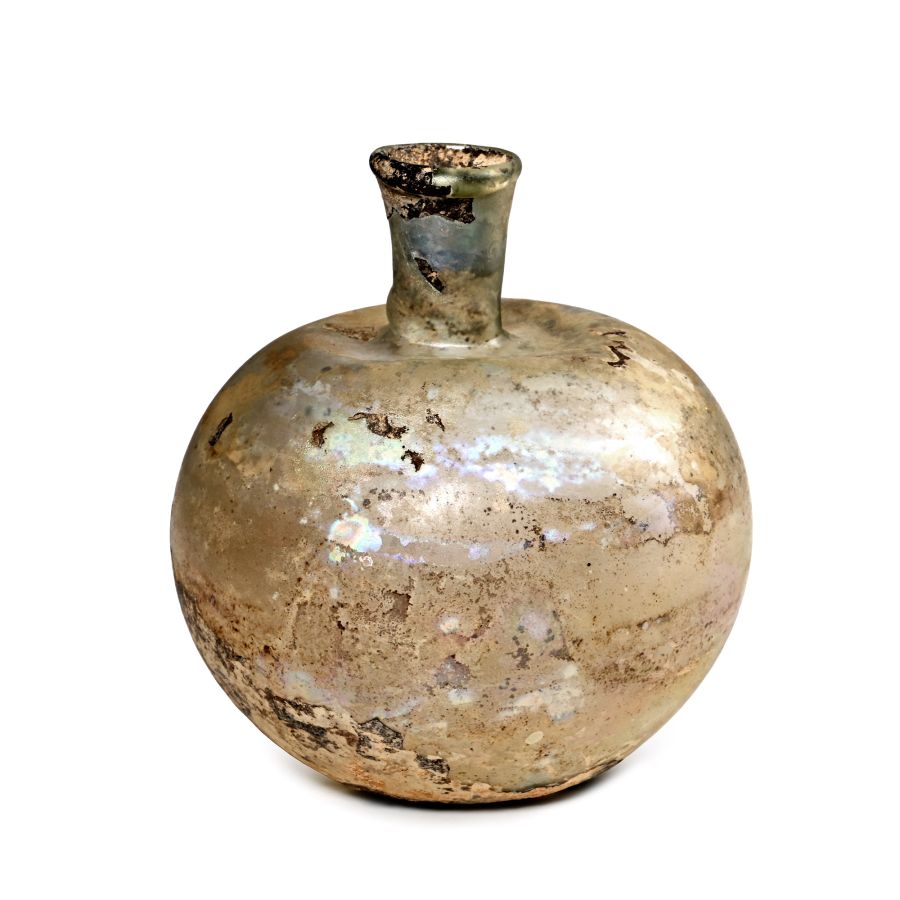
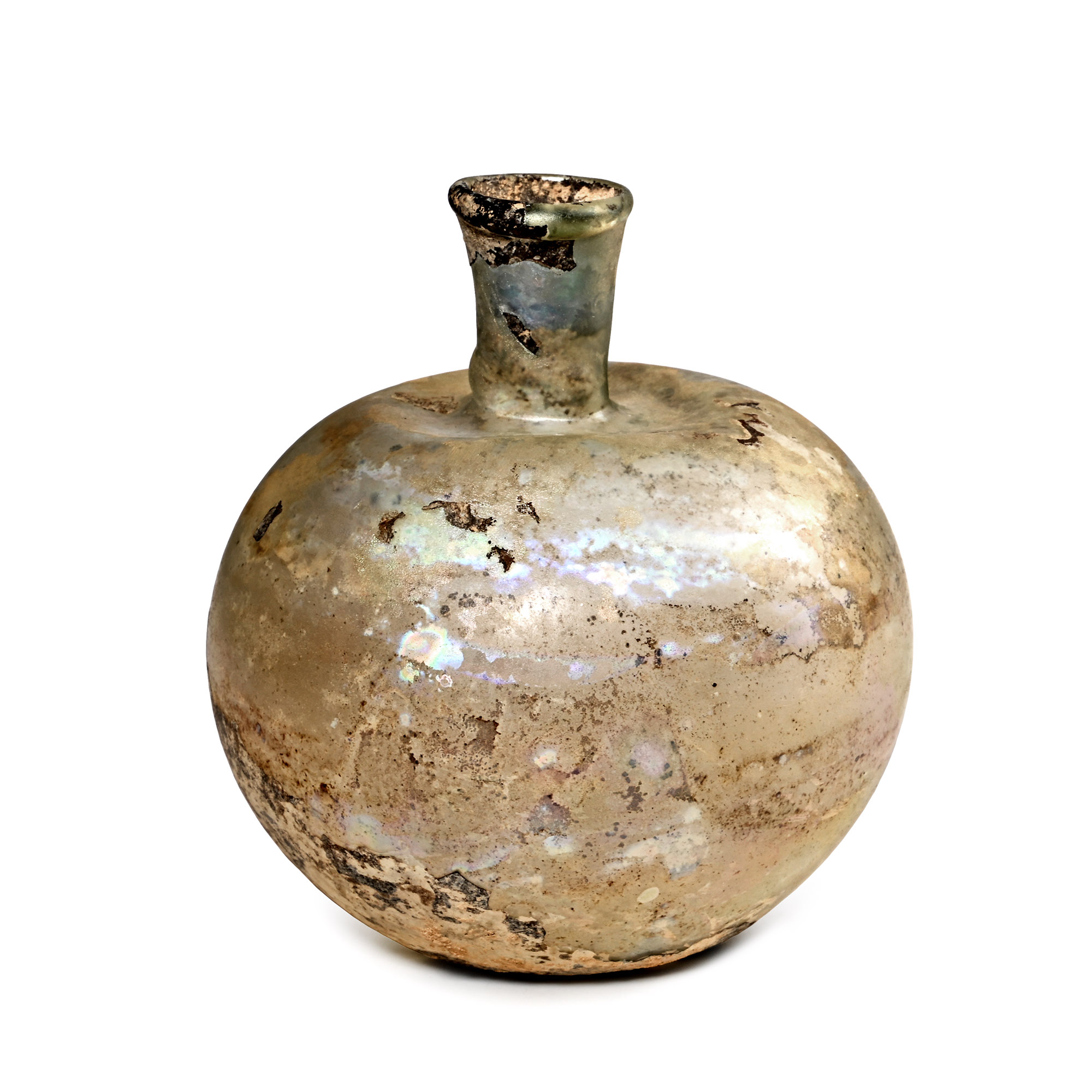
Roman Iridescent Glass Flask
1ST CENTURY A.D.
3 1/2 in. (40.8 grams, 90 mm).
Bulbous body with dimple base, short tubular neck with rolled rim.
ProvenanceAcquired in the 1990s from London dealerships and auction houses.
From the Lonson collection.
Cf. similar flask in Antonaras, A., Ancient Glass in the J.Paul Getty Museum, Malibu, 2025, p.251, no.280.
CONDITIONTimeLine Auctions follows a vetting process to ensure the authenticity and legality of all items, reinforcing our commitment to integrity and responsible trading. Each antiquity, antique, and coin lot undergoes thorough examination by a vetting committee of at least ten external specialists, professional trade association members, scientists, and archaeologists: Our Vetting Process
AUCTIONS:
TimeLine is a leading auction house specialising in antiquities, ancient art, collectables, natural history, coins, medals, and books. Our auctions offer museums, collectors, historians, and enthusiasts the opportunity to acquire unique and historically significant pieces.
-
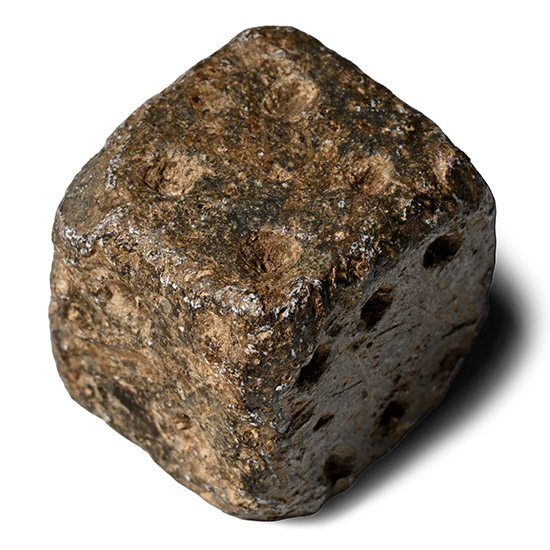
Large Roman Lead Gaming Die
Circa 1st-4th century A.D.Sold for (Inc. bp): £143
Cuboid dice with impressed markings unusually disposed 1:6, 2:3, 4:5. 57.2 grams, 19 mm
Ex gentleman collector of antique and antiquity games from Berkshire, UK, having collected for over 20 years. -
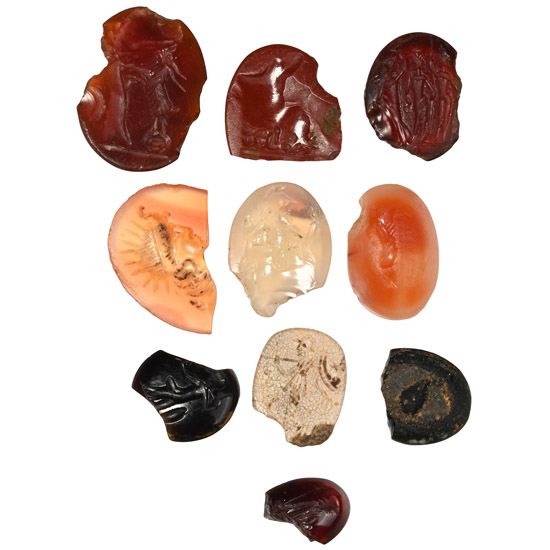
Roman Gemstone Group
2nd-3rd century A.D.Sold for (Inc. bp): £98
Including Venus with mirror, bust of Sol with radiate crown, the Three Graces, profile bust and other types; each supplied with a museum-quality impression. 5.37 grams total, 8-17 mm
From the private collection of a European gentleman (1942-2024), formed since the 1970s. -
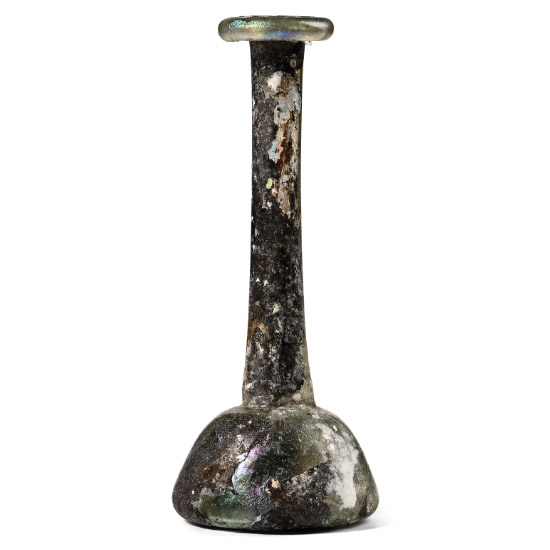
Roman Iridescent Glass Candlestick Unguentarium
1st-2nd century A.D.Sold for (Inc. bp): £117
With a low conical body and a slightly convex wall, a tall cylindrical neck flaring to the mouth with a rolled rim. 32.9 grams, 12.9 cm
Acquired in the 1990s from London dealerships and auction houses. From the Lonson collection.
