
Loading, please wait...


LOT 0771
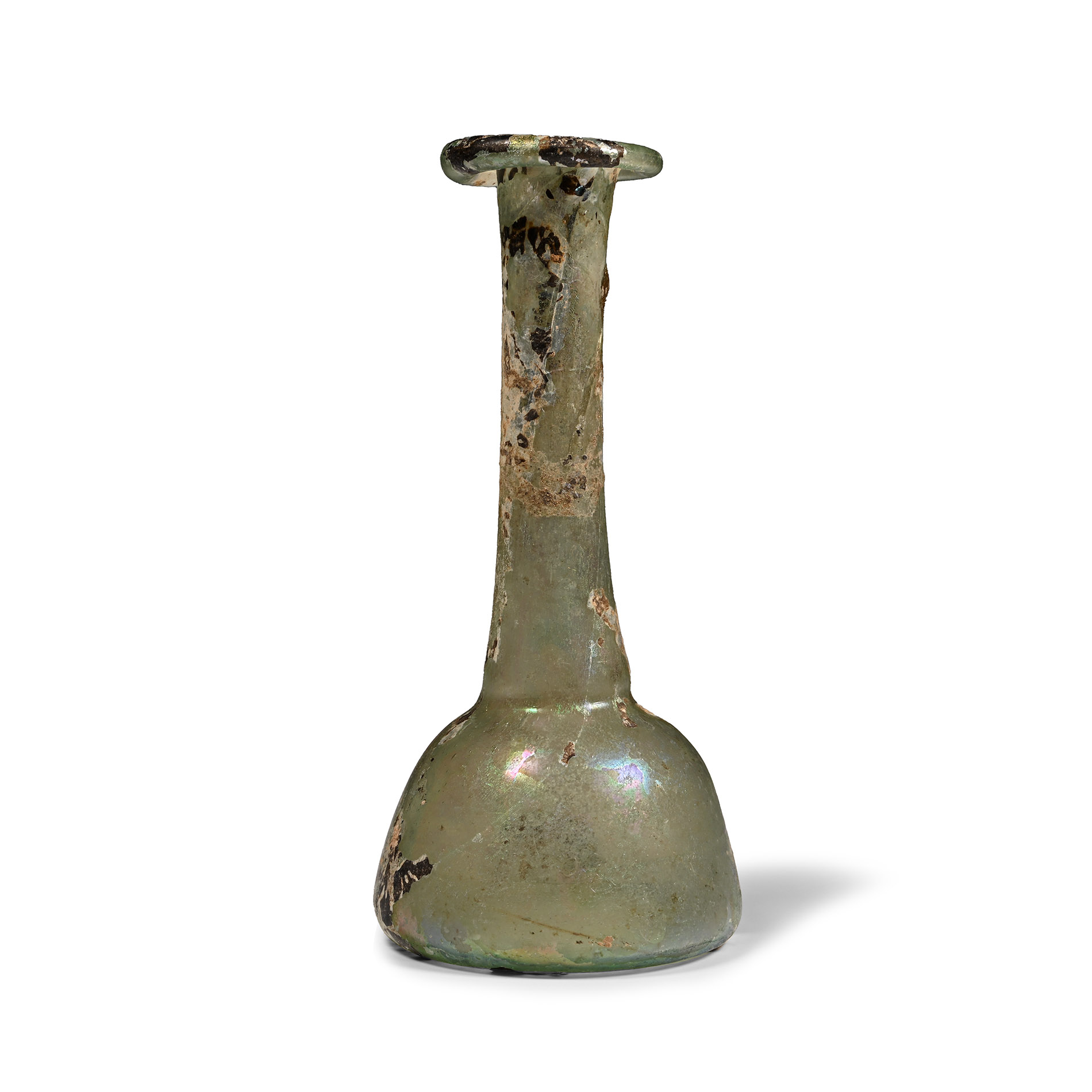
Roman Iridescent Glass Flask
1ST-2ND CENTURY A.D.
6 3/8 in. (80 grams, 16.3 cm).
With domed body and pontil base, tall neck with trumpet-shaped mouth and rolled rim; some iridescence. [No Reserve]
ProvenanceEx London art market 1990s.
From a London, UK, collection.
This lot is accompanied by an illustrated lot declaration signed by the Head of the Antiquities Department, Dr Raffaele D’Amato.
Cf. Whitehouse, D., Roman Glass in the Corning Museum of Glass, vol.1, New York, 1997, item 268, for type.
CONDITIONTimeLine Auctions follows a vetting process to ensure the authenticity and legality of all items, reinforcing our commitment to integrity and responsible trading. Each antiquity, antique, and coin lot undergoes thorough examination by a vetting committee of at least ten external specialists, professional trade association members, scientists, and archaeologists: Our Vetting Process
AUCTIONS:
TimeLine is a leading auction house specialising in antiquities, ancient art, collectables, natural history, coins, medals, and books. Our auctions offer museums, collectors, historians, and enthusiasts the opportunity to acquire unique and historically significant pieces.
-
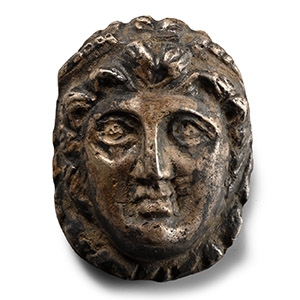
Roman Silver Applique Mask
2nd-4th century A.D.Sold for (Inc. bp): £247
Appliqué with repoussé detailing, mask of Alexander the Great or Dionysus with diadem to his brow. 3.77 grams, 22 mm
Acquired on the London art market in the late 1980s-1990s. From the family collection of an East London, UK, gentleman. This lot is accompanied by an illustrated lot declaration signed by the Head of the Antiquities Department, Dr Raffaele D’Amato.
Similar applications in bronze or silver (sometimes even in gold) decorated the triclinia of rich aristocrats, or the precious furnishings in fine wood of the furniture of the Villas. -
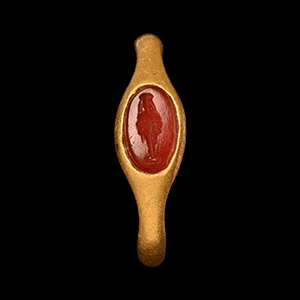
Roman Gold Ring with Artemis of Ephesus Gemstone
2nd-3rd century A.D.Sold for (Inc. bp): £2,470
Slender hoop with sharp shoulders, inset carnelian gemstone with intaglio Artemis motif. 3.18 grams, 21.99 mm overall, 19.22 mm internal diameter (approximate size British N 1/2, USA 6 3/4, Europe 14.35, Japan 13)
Ex German art market, 2000s. Acquired from an EU collector living in London. From the collection of Surrey, UK, gentleman. This lot is accompanied by an illustrated lot declaration signed by the Head of the Antiquities Department, Dr Raffaele D’Amato. -
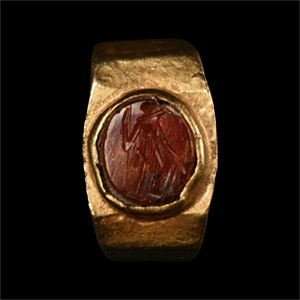
Roman Gold Ring with Minerva Gemstone
Mid 2nd century A.D.Sold for (Inc. bp): £1,560
With tapering facetted hoop, plaque with cell and inset carnelian cloison, intaglio figure of Minerva with shield and spear. 7.39 grams, 19.03 mm overall, 16.16 mm internal diameter (approximate size British G, USA 3 1/4, Europe 4.92, Japan 4)
Acquired from Notaras Coins & Antiquities, Suffolk, UK, before 2000. Property of a Bedfordshire, UK, private collector. Accompanied by an illustrated collector's identification tag. This lot is accompanied by an illustrated lot declaration signed by the Head of the Antiquities Department, Dr Raffaele D’Amato.
