
Loading, please wait...
LOT 0794
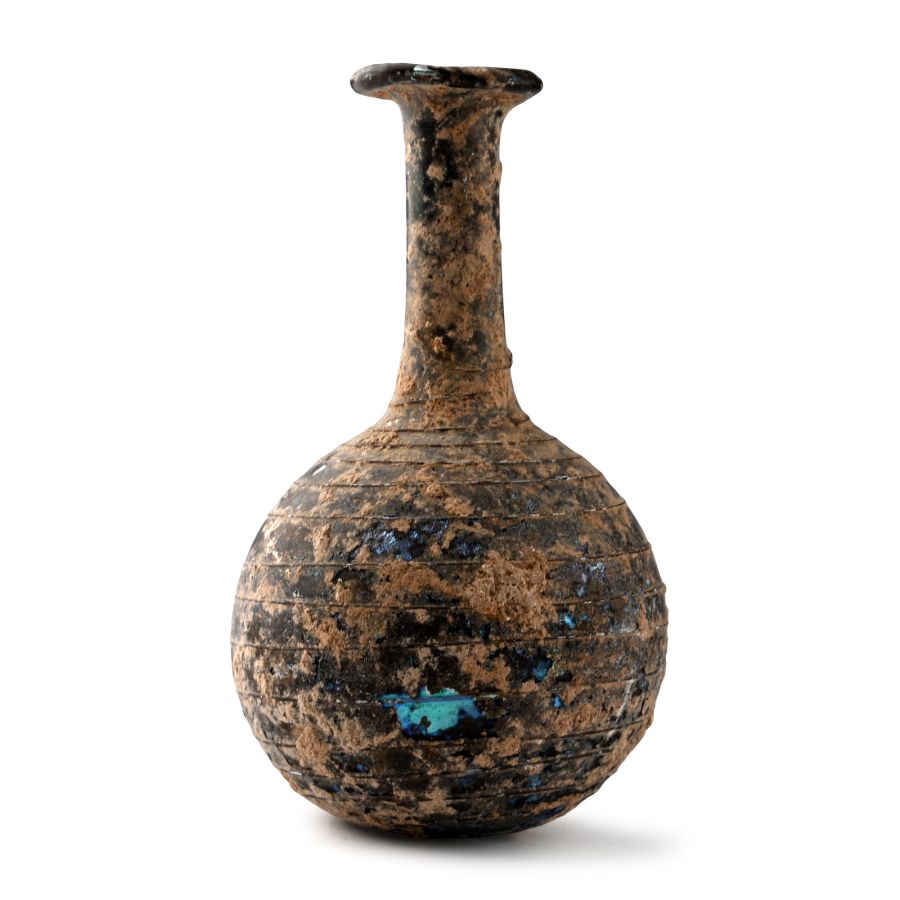
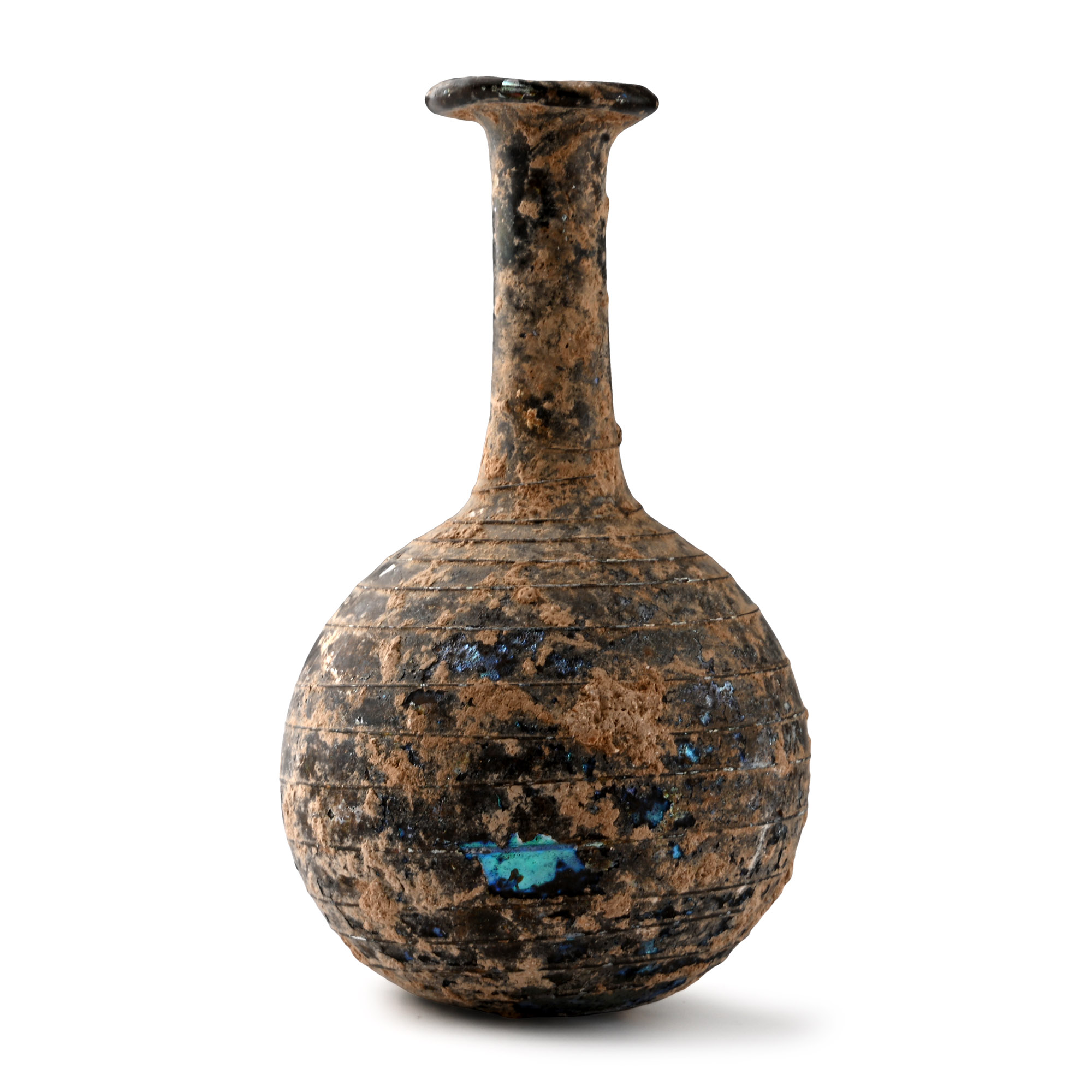
Roman Iridescent Glass Flask with Trailing
1ST CENTURY A.D.
4 in. (19 grams, 10 cm).
An iridescent glass unguentarium with spherical body, tubular neck with everted rolled rim; applied trails across the body.
ProvenanceEx Mayfair, London, UK, gallery, 1990s-2000s.
From an important collection of glass, the property of a London gentleman.
This lot is accompanied by an illustrated lot declaration signed by the Head of the Antiquities Department, Dr Raffaele D'Amato.
Cf. Whitehouse, D., Roman Glass in the Corning Museum of Glass, vol.1, New York, 1997, item 268, for type.
CONDITIONTimeLine Auctions follows a vetting process to ensure the authenticity and legality of all items, reinforcing our commitment to integrity and responsible trading. Each antiquity, antique, and coin lot undergoes thorough examination by a vetting committee of at least ten external specialists, professional trade association members, scientists, and archaeologists: Our Vetting Process
AUCTIONS:
TimeLine is a leading auction house specialising in antiquities, ancient art, collectables, natural history, coins, medals, and books. Our auctions offer museums, collectors, historians, and enthusiasts the opportunity to acquire unique and historically significant pieces.
LOT 0794
Roman Iridescent Glass Flask with Trailing
Estimate £400 - 600€460 - 700 (for guidance only)$540 - 810 (for guidance only)
-
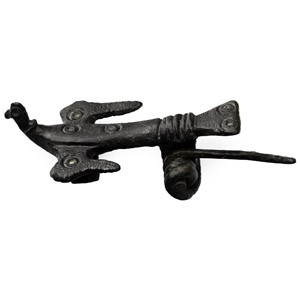
Roman Bronze Flying Bird Plate Brooch
2nd century A.D.Sold for (Inc. bp): £117
Aviform brooch with ring-and-dot motifs to wings, tail and head; pin-lug, chord, pin and catchplate to underside. 7.79 grams, 37 mm
Ex German art market, 2000s. Acquired from an EU collector living in London. From the collection of a Surrey, UK, gentleman. This lot is accompanied by an illustrated lot declaration signed by the Head of the Antiquities Department, Dr Raffaele D'Amato. -
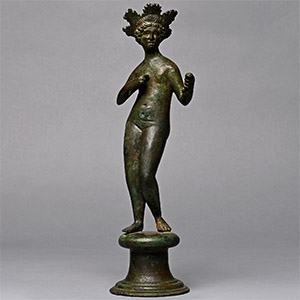
Large Roman Bronze Statue of Venus
1st-2nd century A.D.Sold for (Inc. bp): £7,800
Modelled in the round, the goddess standing nude on a socle base and holding a frond in her extended left hand; right hand with thumb and forefinger extended; crown of oak leaves encompassing her chignon. 996 grams, 27.3 cm
with Sotheby's, New York, 7 December 1973, no.78. Private collection, London. Accompanied by copies of the relevant Sotheby's catalogue pages. Accompanied by an academic report by Dr Raffaele D’Amato. This lot has been checked against the Interpol Database of stolen works of art and is accompanied by search certificate number no.12819-241350. This lot has been cleared against the Art Loss Register database, and is accompanied by an illustrated lot declaration signed by the Head of the Antiquities Department, Dr Raffaele D'Amato.
The Venus Anadyomene shows the birth of the Goddess of Love, conceived in the womb of the sea after the Titan Chronos castrated his father, Uranus, and cast his genitals into the water. Venus was born from the sea, fully grown. In ancient tradition, Aphrodite had her great sanctuary at Paphos, because it was here that she was thought to have risen from the water. Apelles, the great painter, was said to have painted the original, creating the prototype then imitated in paintings, sculptures, and across Graeco-Roman iconography. However, his work is now lost, and from the late 2nd century/early first century B.C. until the late antique period, the Anadyomene appeared in nearly every format imaginable. Like many other naked Aphrodites, the Anadyomene was not posed to conceal the body, but was naked and unashamed, exposing the goddess’ body to the gaze of the viewer. -
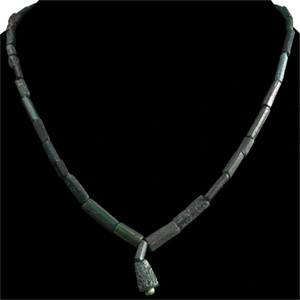
Roman Green Glass Bead Necklace String
1st-4th century A.D. and laterSold for (Inc. bp): £91
Composed of graduated cylindrical beads with a conical pendant bead at the centre; restrung. 19 grams, 39 cm
From the London, UK, art market in the 1990s. This lot is accompanied by an illustrated lot declaration signed by the Head of the Antiquities Department, Dr Raffaele D'Amato.
In the Roman period there was a strong formal and chromatic diversity of glass beads used for necklaces and bracelets. The most common beads in forms were small biconical (lenticular), barrel-shaped, spherical and annular; the most common colours were dark blue, followed by green and yellow. The succession of glass beads often imitates jewellery made of costly materials (gold, silver, semi-precious and precious stones).
