
Loading, please wait...
LOT 0717
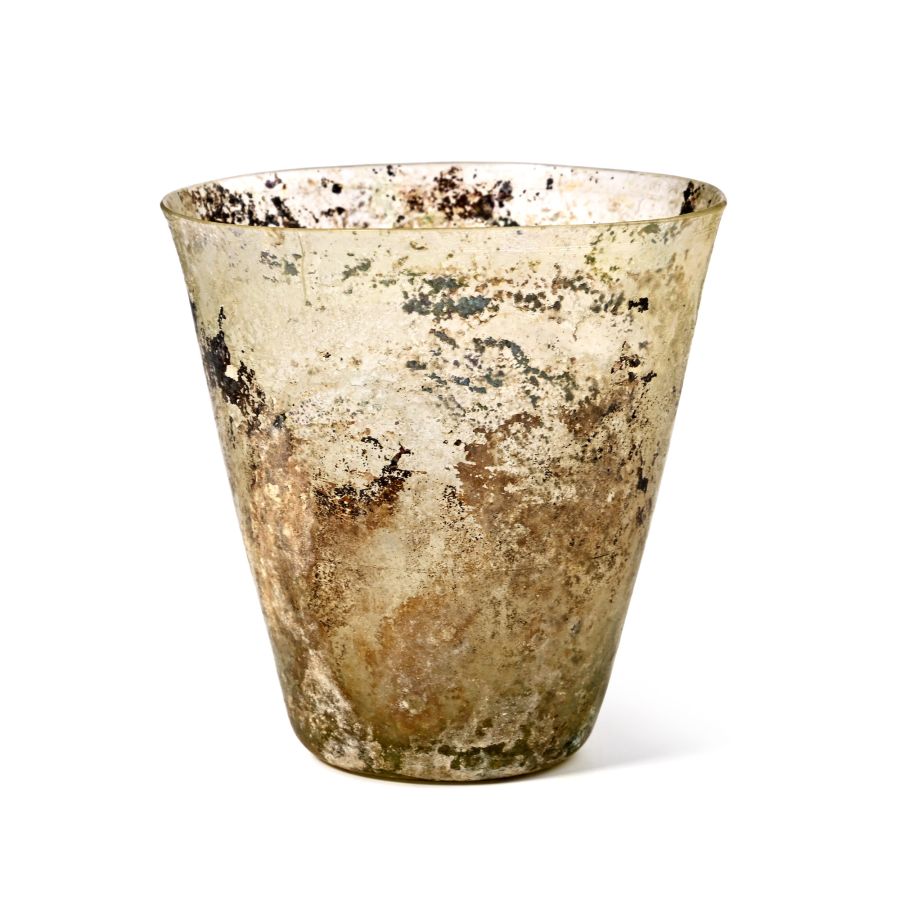
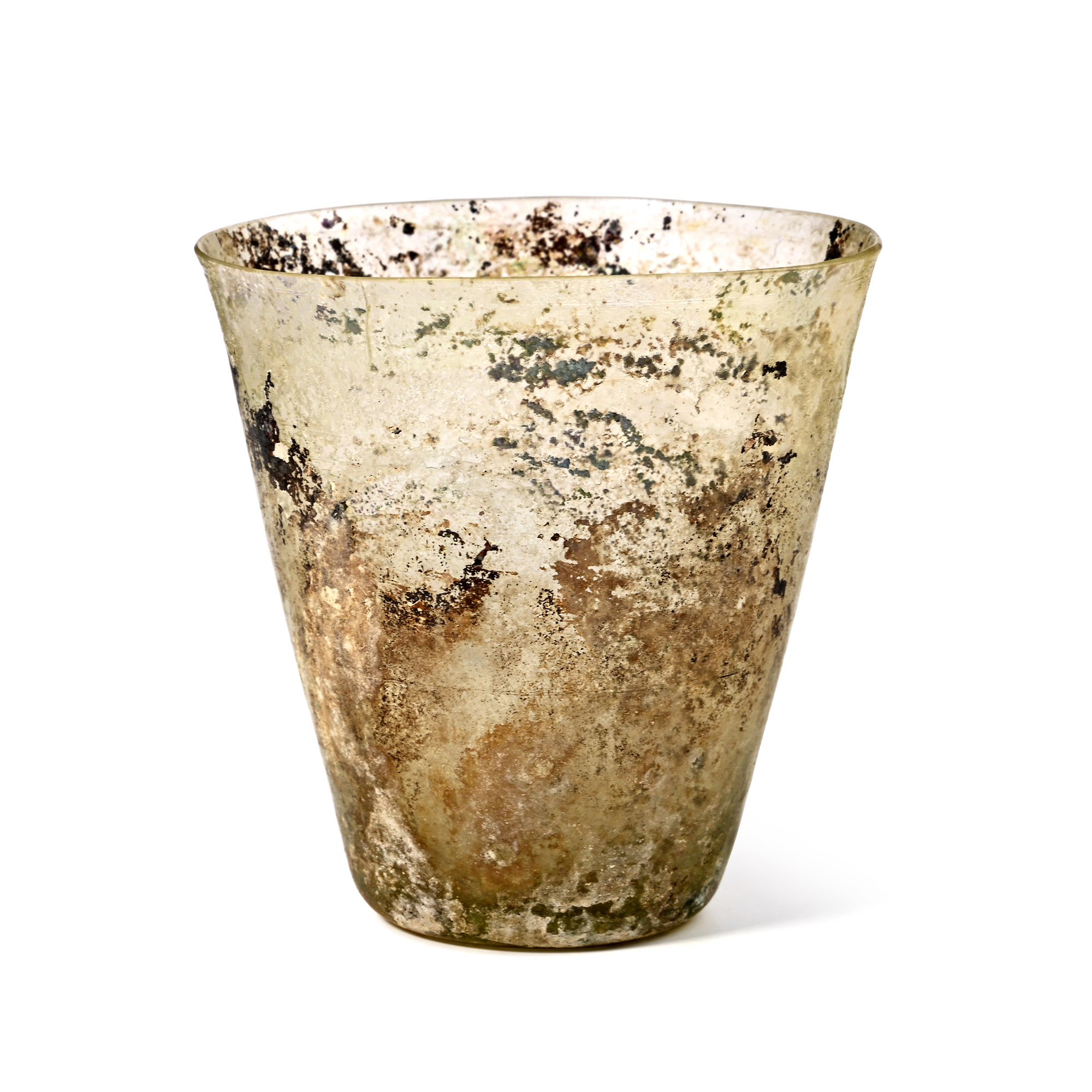
Roman Iridescent Glass Flared Kalathos
3RD-4TH CENTURY A.D.
3 1/8 in. (67 grams, 79 mm).
Conical body with a flat base.
ProvenanceAcquired in the 1990s from London dealerships and auction houses.
From the Lonson collection.
Cf. for a similar example Filarska, B., Szkla Starozytne (Ancient Glass), vol.II, Warszawa, 1972, II, cat.71, pl.XV,3.
CONDITIONTimeLine Auctions follows a vetting process to ensure the authenticity and legality of all items, reinforcing our commitment to integrity and responsible trading. Each antiquity, antique, and coin lot undergoes thorough examination by a vetting committee of at least ten external specialists, professional trade association members, scientists, and archaeologists: Our Vetting Process
AUCTIONS:
TimeLine is a leading auction house specialising in antiquities, ancient art, collectables, natural history, coins, medals, and books. Our auctions offer museums, collectors, historians, and enthusiasts the opportunity to acquire unique and historically significant pieces.
LOT 0717
Roman Iridescent Glass Flared Kalathos
Estimate £300 - 400€350 - 460 (for guidance only)$410 - 540 (for guidance only)
-
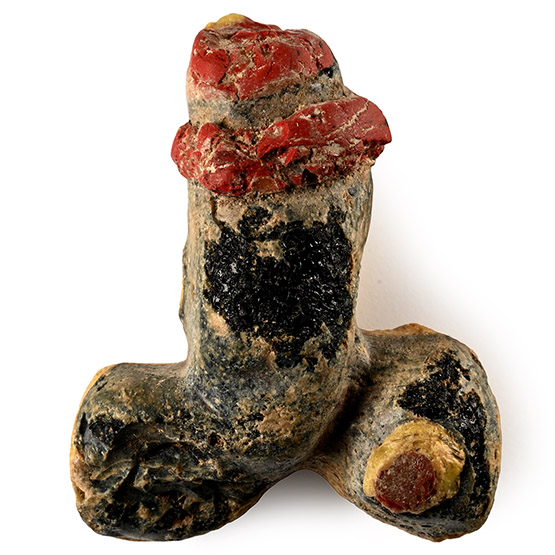
Roman Glass Phallic Amulet
1st century B.C.-1st century A.D.Sold for (Inc. bp): £468
Modelled in the round with applied red-glass collar, pierced through the shaft for suspension. 11.4 grams, 32 mm
Acquired in the mid 1980s-1990s. Private collection, Switzerland, thence by descent. Private collection, since the late 1990s.
In the Roman world, the phallus was a symbol of luck or fertility, and it was believed to have apotropaic functions. Pendants, amulets and small objects were worn by all sorts of people as symbols of protection, especially by young children, according to Varro and Pliny the Elder. The phallus is also commonly found on reliefs, frescoes and lamps from the Graeco-Roman world. -
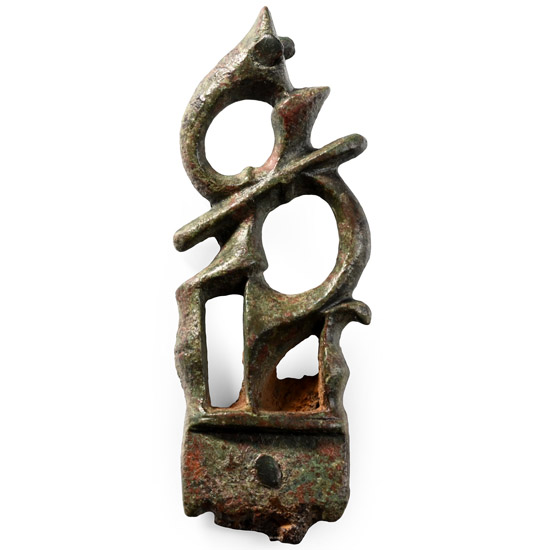
Romano-British Bronze Trumpet-Whorl Knife Handle
1st-2nd century A.D.Sold for (Inc. bp): £52
Openwork handle formed of curving trumpet-whorls, rectangular bar with a single rivet below. 14.8 grams, 58 mm
From the private coin collection of a West London, UK, gentleman, formed since the mid 1980s. -
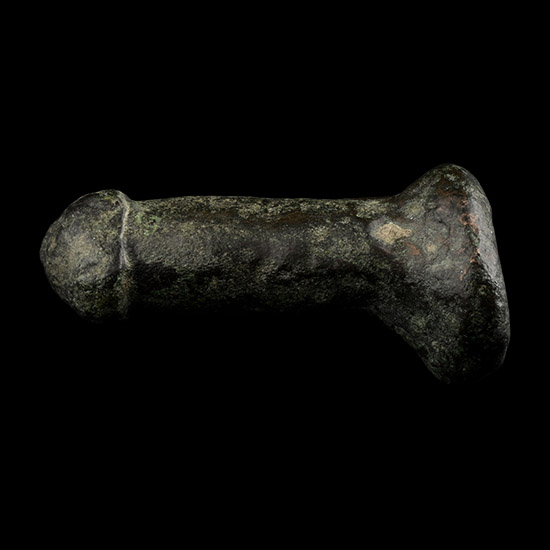
Roman Bronze Mount with Phallus
2nd-3rd century A.D.Sold for (Inc. bp): £182
With discoid base, angled stem and ridged finial. 26.9 grams, 37 mm
Ex German art market, 2000s. Acquired from an EU collector living in London. From the collection of a Surrey, UK, gentleman.
