
Loading, please wait...
LOT 0725
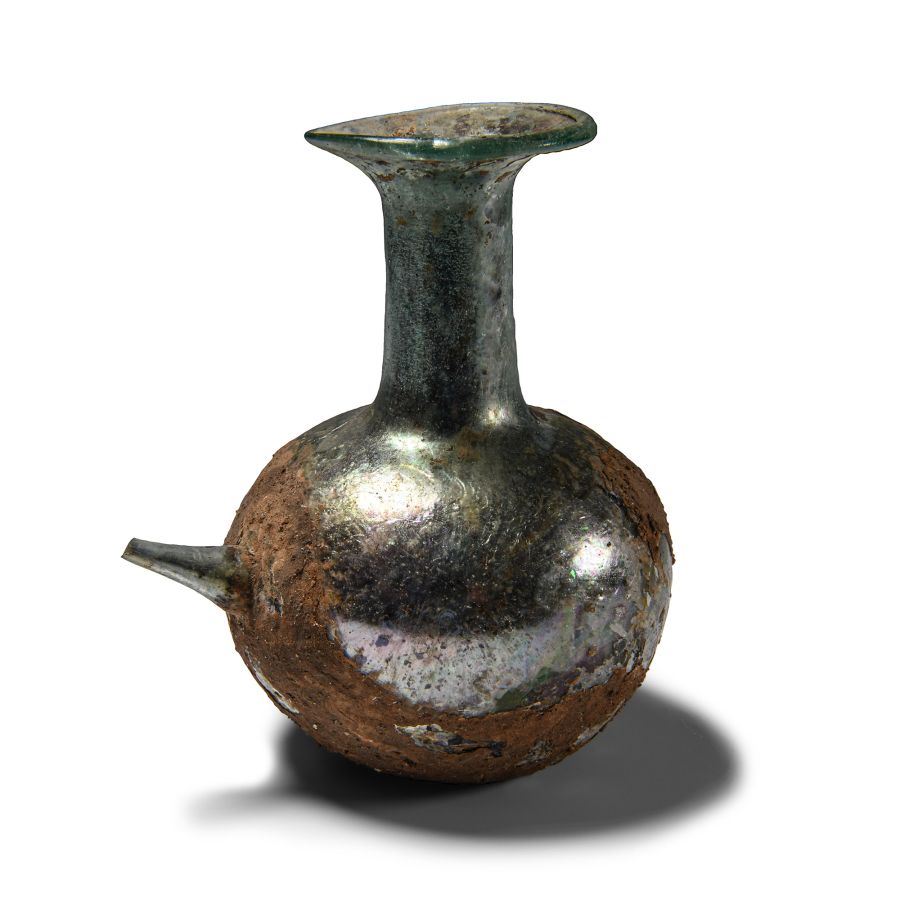
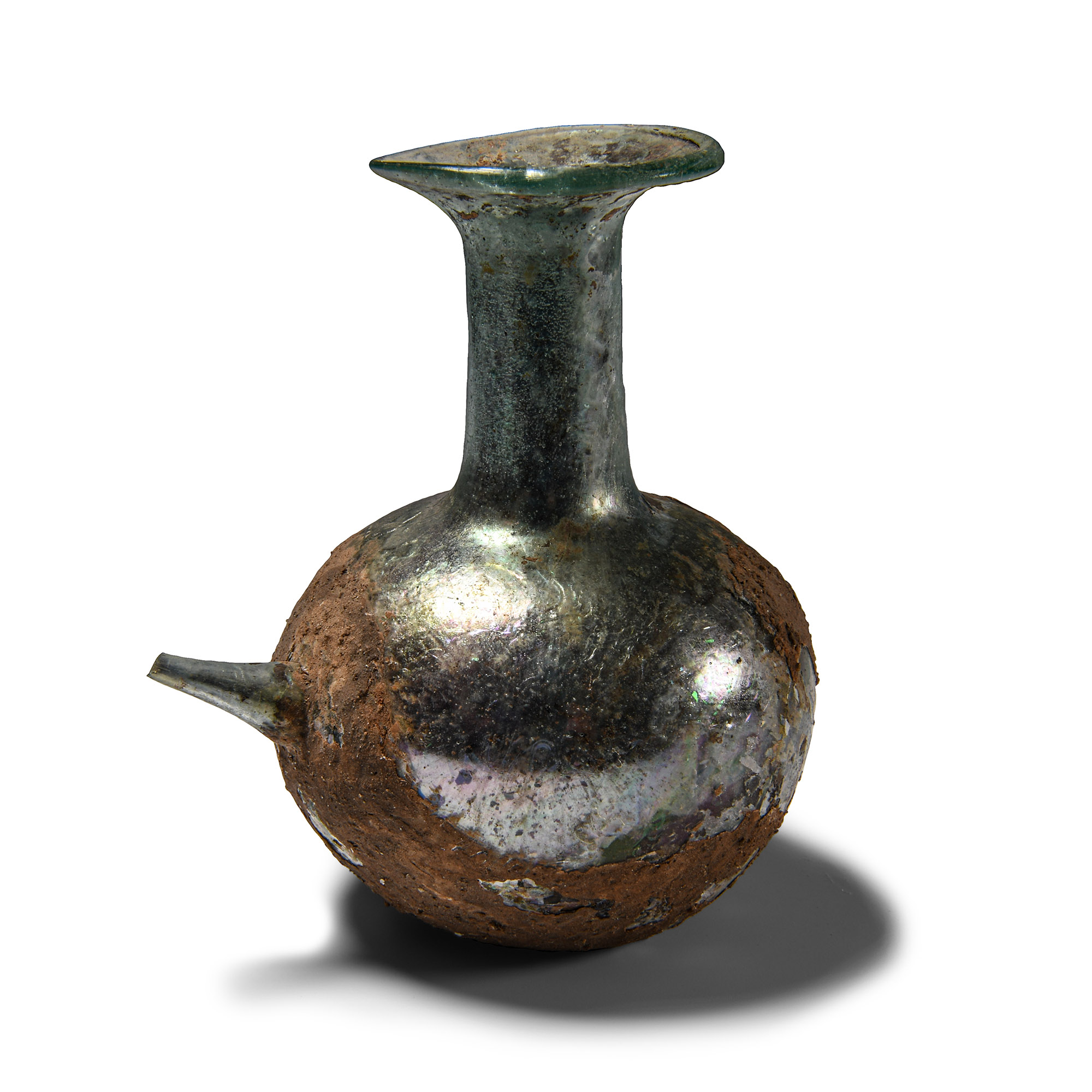
Roman Iridescent Glass Feeder Bottle
2ND-4TH CENTURY A.D.
4 in. (40 grams, 10.2 cm high).
With bulbous bottle, tubular neck, broad everted rim and conical spout; extensive iridescence.
ProvenanceAcquired early 1990s.
Ex private American collection; thence by descent.
Private collection since 1998.
TimeLine Auctions follows a vetting process to ensure the authenticity and legality of all items, reinforcing our commitment to integrity and responsible trading. Each antiquity, antique, and coin lot undergoes thorough examination by a vetting committee of at least ten external specialists, professional trade association members, scientists, and archaeologists: Our Vetting Process
AUCTIONS:
TimeLine is a leading auction house specialising in antiquities, ancient art, collectables, natural history, coins, medals, and books. Our auctions offer museums, collectors, historians, and enthusiasts the opportunity to acquire unique and historically significant pieces.
LOT 0725
Roman Iridescent Glass Feeder Bottle
Estimate £300 - 400€350 - 460 (for guidance only)$410 - 540 (for guidance only)
-
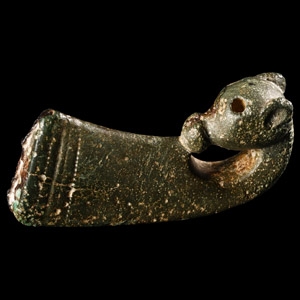
Romano-British 'Essex' Bronze Dragon Knife Handle
Circa 1st century A.D.Sold for (Inc. bp): £208
With a series of pointillé bands at the base, terminal in the form of a stylised beast with neck curling to form a loop and the head facing back towards the blade; ferrous remains to the broad end. 40.7 grams, 46 mm
Found Essex, UK. Property of an East Sussex, UK, private collector. Recorded with the British Museum's Portable Antiquities Scheme (PAS) with record no.ESS-AC745B. -
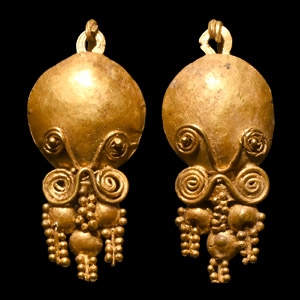
Roman Gold Earrings with Bosses
Circa 1st-2nd century A.D.Estimate: £1,200 - 1,700 (+bp*)
Opening Bid: £625
Matched pair of gold earrings, each adomed shield with substantial hoop to the reverse, hook-and-eye closure, applied filigree ram's head scrolls above a cluster of hollow balls with vertical granule clusters. 6.58 grams total, 34 mm each
From a collection of a London lady, acquired annually during 1990s-2000s. -
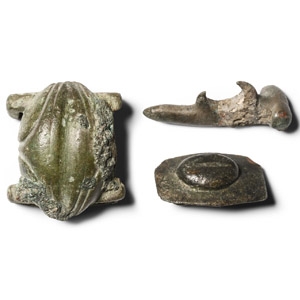
Roman Bronze Phallic Fertility Symbol Group
Circa 1st-4th century A.D.Sold for (Inc. bp): £46
The group comprising: a strap slider with the upper panel formed as a stylised vulva; a phallic pendant with part of the loop absent; a rectangular mount with a raised vulva-shaped boss to the centre, two studs on the reverse. 32.5 grams, 24-33 mm
Acquired on the UK art market before 2000. Property of a Surrey, UK, collector.
