
Loading, please wait...
LOT 0783
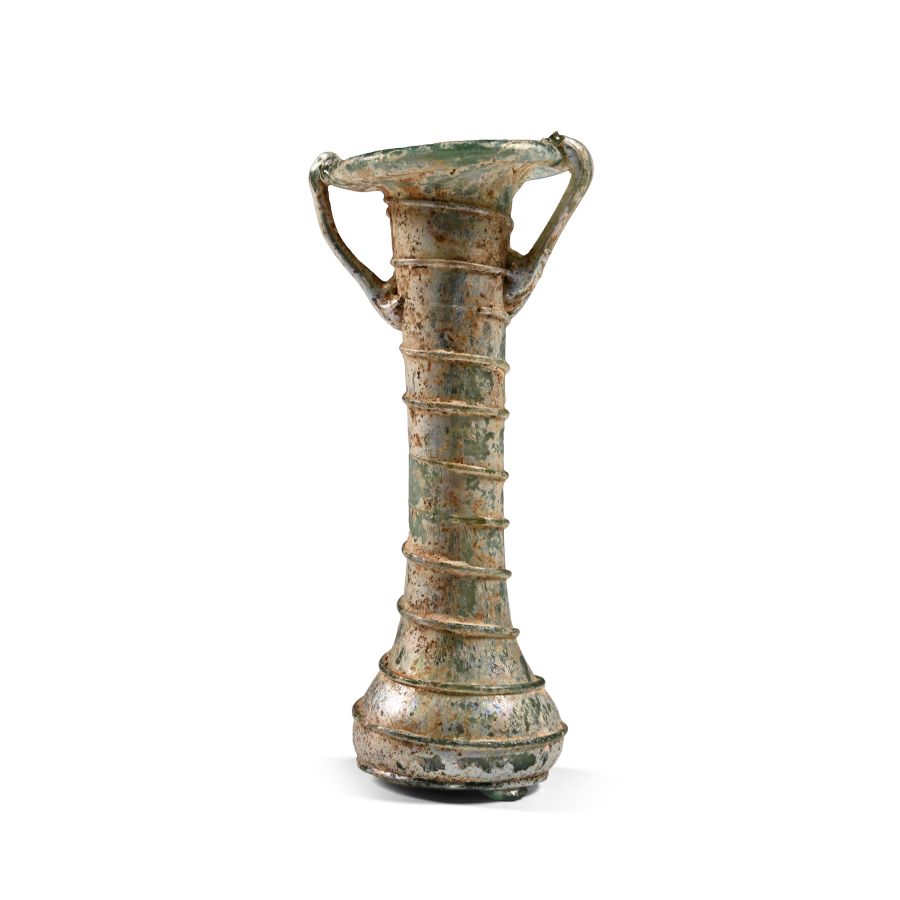
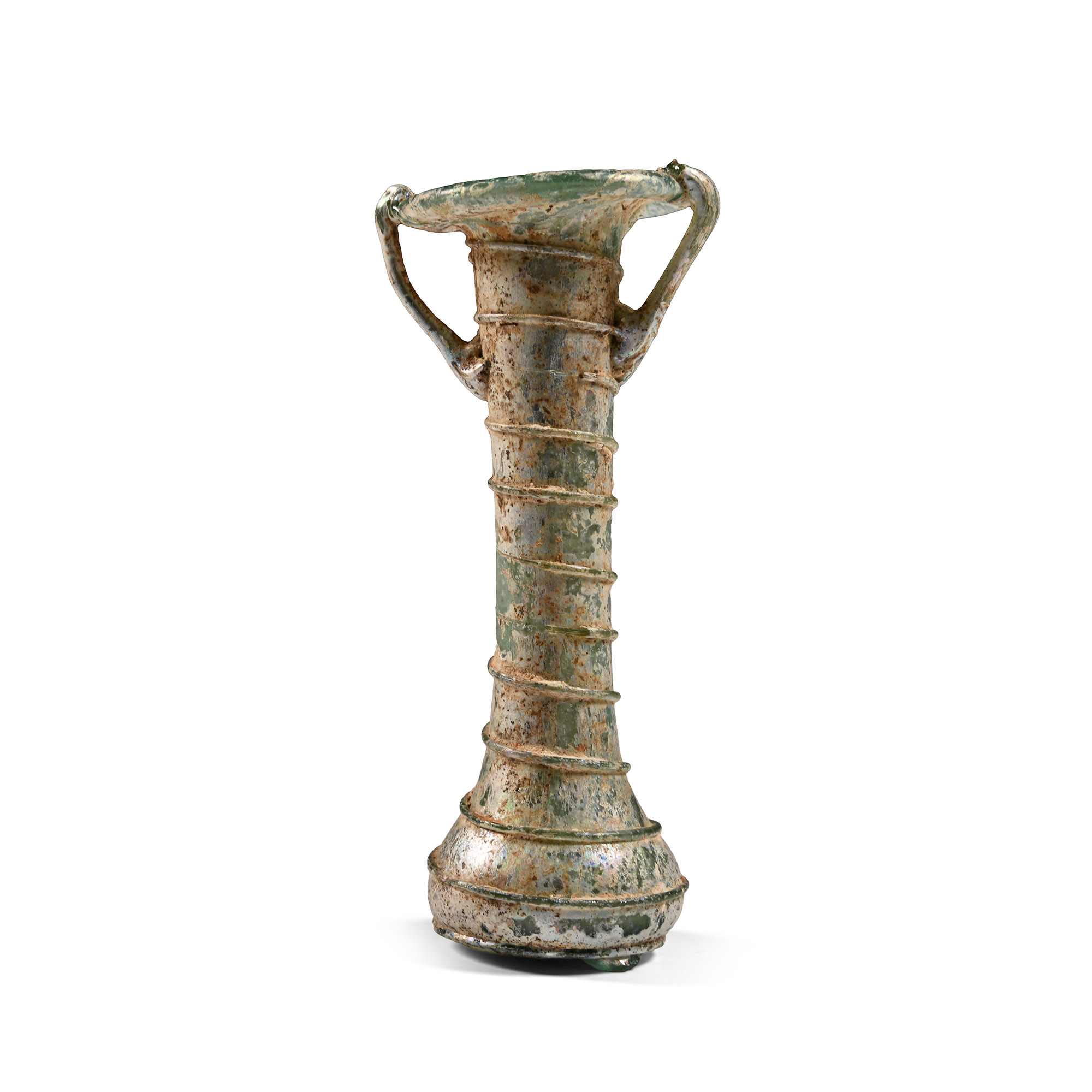
Roman Iridescent Glass Cosmetic Flask with Spiral Trail
3RD-4TH CENTURY A.D.
3 in. (14.6 grams, 76 mm).
Bulbous body with long funicular neck and everted rim, applied strap handles to the top, applied spiral decoration to the body.
ProvenanceEx London gallery, UK, 1986.
Ex private UK collection.
Cf. Whitehouse, D., Roman Glass in the Corning Museum of Glass, vol.1, New York, 1997, item 738, for type.
FootnotesSmall cosmetic flasks with tubular bodies, conical feet and trailed decoration were a common product of the Syro-Palestinian workshops in the Eastern Roman Empire, during the 4th-5th century A.D. Many such vessels had elaborate basket-handles, from which they could be suspended.
CONDITIONTimeLine Auctions follows a vetting process to ensure the authenticity and legality of all items, reinforcing our commitment to integrity and responsible trading. Each antiquity, antique, and coin lot undergoes thorough examination by a vetting committee of at least ten external specialists, professional trade association members, scientists, and archaeologists: Our Vetting Process
AUCTIONS:
TimeLine is a leading auction house specialising in antiquities, ancient art, collectables, natural history, coins, medals, and books. Our auctions offer museums, collectors, historians, and enthusiasts the opportunity to acquire unique and historically significant pieces.
LOT 0783
Roman Iridescent Glass Cosmetic Flask with Spiral Trail
Sold for (Inc. bp): £234
-
.jpg)
Roman Carnelian Gemstone of an Elderly Man
1st century A.D. or laterSold for (Inc. bp): £2,600
Showing a mature man in profile facing left, modelled after the Roman Republican portrait models; supplied with a museum-quality impression. 1.15 grams, 18 mm
Private English collection, formed between the late 1970s and early 1990s. Private collection, London, UK. -
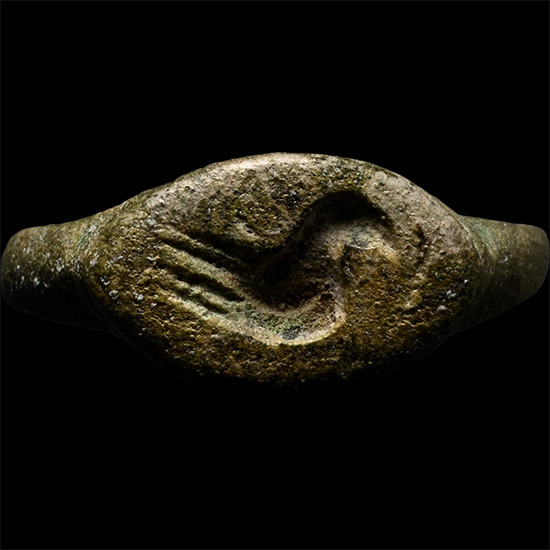
Roman Bronze Ring with Bird
4th century A.D.Sold for (Inc. bp): £91
Comprising a slender hoop and a raised lentoid-shaped bezel with a standing bird, probably a dove. 3.98 grams, 24.21 mm overall, 19.16 mm internal diameter (approximate size British S, USA 9, Europe 20, Japan 19)
Acquired on the UK and EU art market before 2000. From the private collection of a Surrey, UK, gentleman.
A considerable proportion of rings of the Late Roman Christian Empire are signets, with portraits, names or monograms, and emblems such as the cross, the fish, the dove, i.e. early Christian symbols, and most of these have the designs cut in a metal bezel. -
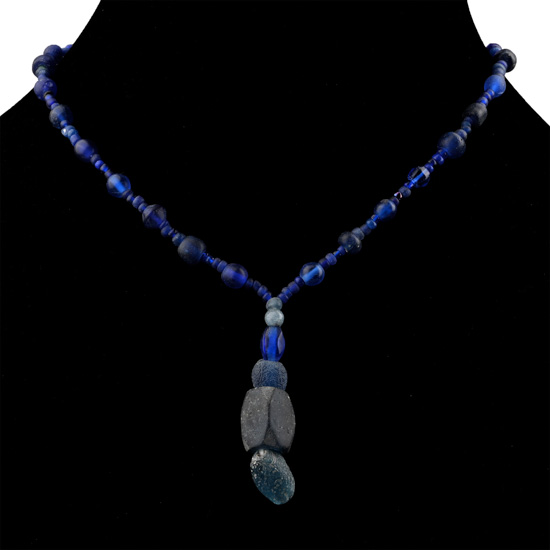
Roman and Other Glass Bead Necklace String
1st-4th century A.D. and laterSold for (Inc. bp): £182
Composed of small mixed blue annular beads interspersed by larger spherical beads, the central feature composed of larger beads, restrung to a Y-shape. 12.48 grams, 32 cm
From London, UK, gallery collection, 1990s.
