
Loading, please wait...
LOT 2045
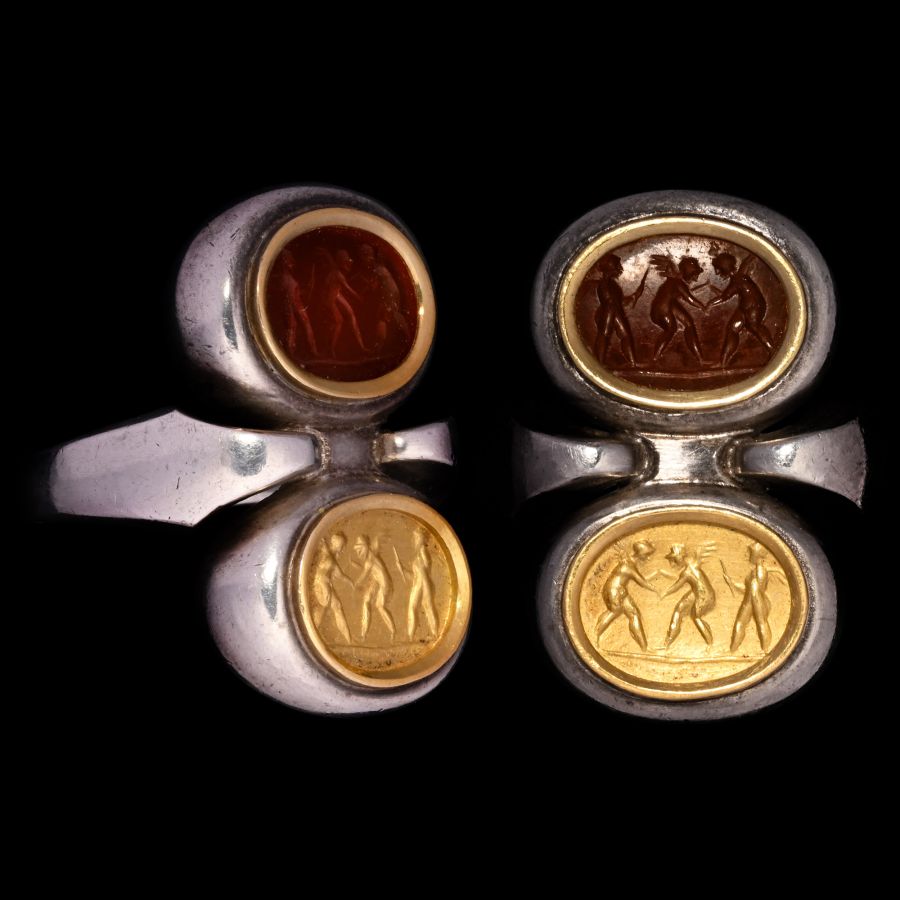
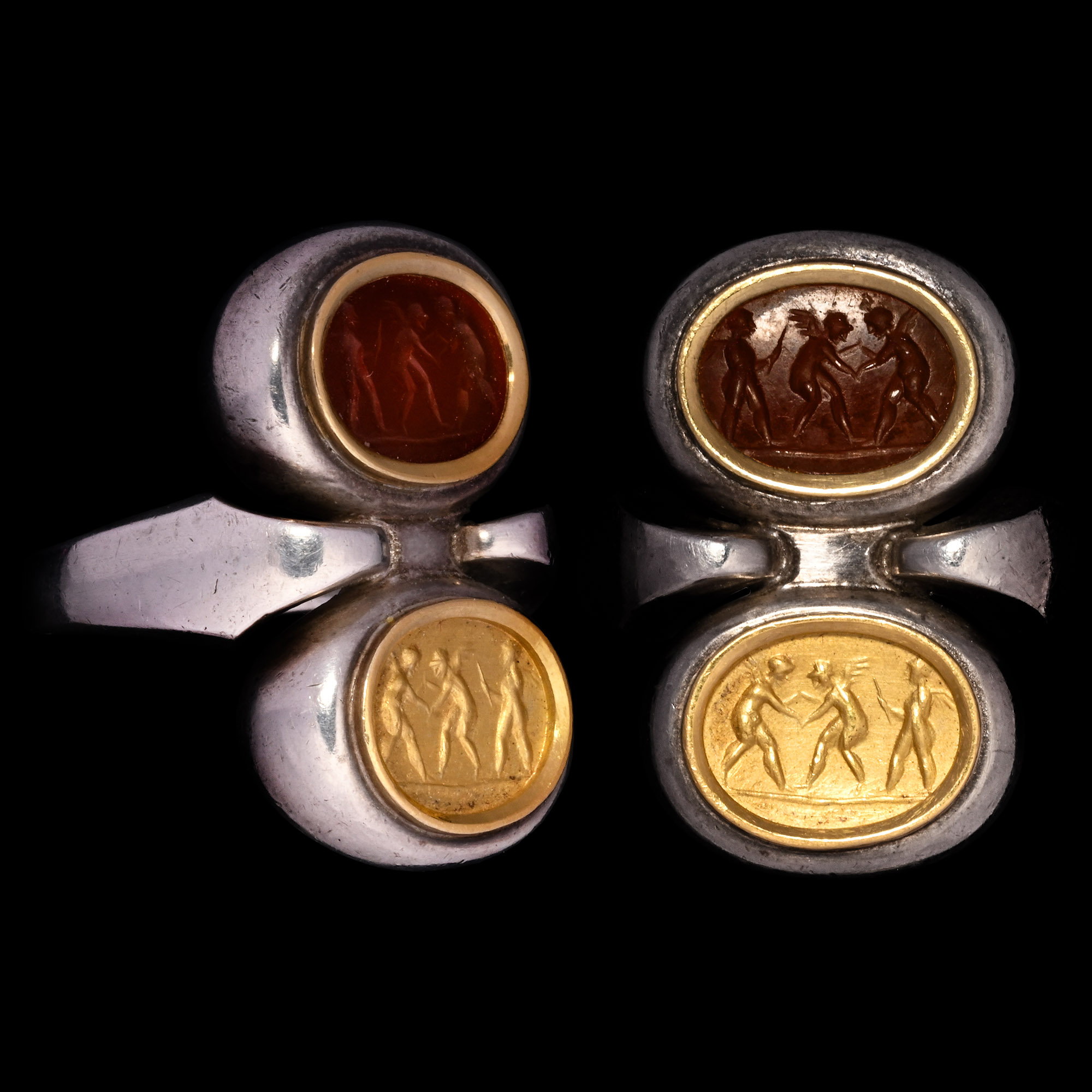
Roman Intaglio of Three Wrestling Erotes in Later Silver Ring
1ST-2ND CENTURY A.D. AND LATER
1 1/8 in. (16.07 grams, 29.75 mm overall, 17.58 mm internal diameter (approximate size British O, USA 7, Europe 14.98, Japan 14)).
D-section hoop with widening lozenge-shaped shoulders supporting two discoid bezels; one with orange stone intaglio of three winged erotes, two engaged in a wrestling competition; a mirror image in gold below.
ProvenancePrivate collection, Europe.
Acquired on the English art market.
TimeLine Auctions follows a vetting process to ensure the authenticity and legality of all items, reinforcing our commitment to integrity and responsible trading. Each antiquity, antique, and coin lot undergoes thorough examination by a vetting committee of at least ten external specialists, professional trade association members, scientists, and archaeologists: Our Vetting Process
AUCTIONS:
TimeLine is a leading auction house specialising in antiquities, ancient art, collectables, natural history, coins, medals, and books. Our auctions offer museums, collectors, historians, and enthusiasts the opportunity to acquire unique and historically significant pieces.
LOT 2045
Roman Intaglio of Three Wrestling Erotes in Later Silver Ring
Estimate £800 - 1,000€930 - 1,160 (for guidance only)$1,080 - 1,350 (for guidance only)
-
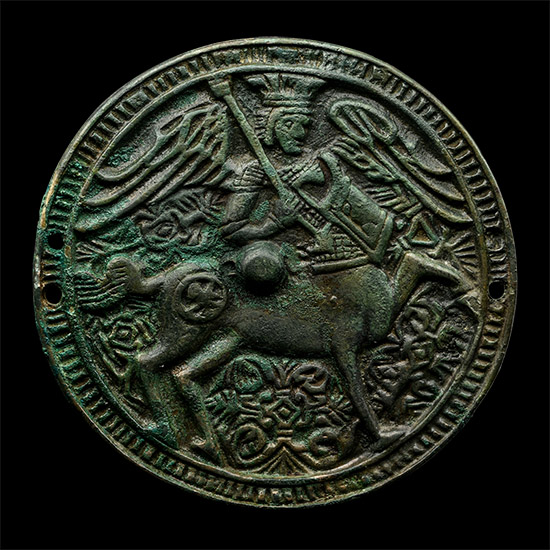
Post Medieval Mirror with Centaur 'Kitovras'
16th-17th century A.D.Sold for (Inc. bp): £910
Discoid with ribbed border and central raised pellet, motif of a winged centaur holding a square shield and a staff(?), foliage motif to the background; pierced three times to the rim. 153 grams, 10.1 cm
From the private collection of a London gentleman, from his grandfather's collection formed before the early 1970s.
This version of a centaur was known as ‘kitovras’, an old Russian version of the word ‘kentauros’. He is typically portrayed with the body of a horse and the torso and head of a man, often featuring prominent wings and wearing armour. Kitovras is best known from a legend, ‘The Tale of Solomon and Kitovras’, in which he is tricked into building the temple for King Solomon. While held in captivity, Kitovras tells Solomon how to obtain the stone needed to build the temple and stays with him through its completion. When Solomon doubts Kitovras’ strength, Kitovras throws him to the edge of the Promised Land, but the king eventually returns and takes back the throne. -
.jpg)
Post Medieval Silver Memento Mori Ring with Skull and Crossed Bones
18th-19th century A.D.Sold for (Inc. bp): £247
Openwork fronds to the shoulders, rectangular plaque with raised border, incuse skull motif over two long bones crossed, script capital 'B'. 7.9 grams, 24.6 mm overall, 21.29 mm internal diameter (approximate size British U 1/2, USA 10 1/4, Europe 23.15, Japan 22)
Ex East Sussex private collection, 1970s-1980s. -
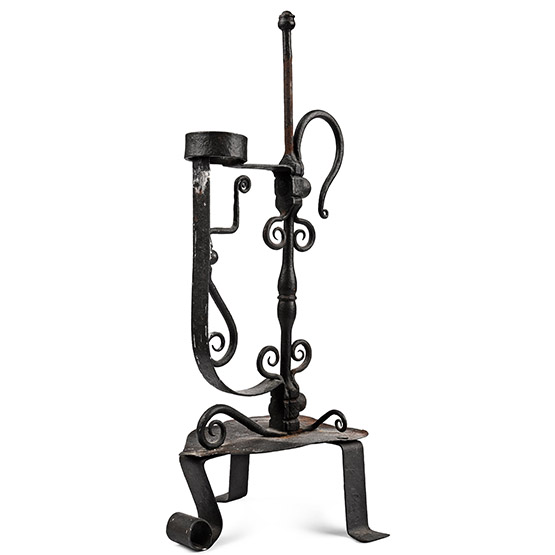
Iron Candle Holder
France, 18th century A.D.Estimate: £300 - 400 (+bp*)
Opening Bid: £150
The central baluster knopped column with scrolling ornament and looped carrying handle above a trefoil-shaped platform and rivetted tripod feet. 1.21 kg, 44 cm
Ex Nic McElhatton, former chairman of Christie's South Kensington. Property of a Berkshire, UK, collector. Accompanied by a copy of McElhatton's cataloguing page.
