
Loading, please wait...
_900x900.jpg "Roman Intaglio Gemstone")
_200x200.jpg "Roman Intaglio Gemstone")
.jpg "Roman Intaglio Gemstone")
LOT 0625
Roman Intaglio Gemstone
CIRCA 2ND-3RD CENTURY A.D.
3/8 in. (0.38 grams, 10 mm).
With intaglio bird perching on a twig; supplied with a museum-quality impression.
ProvenanceFrom the collection of a Swiss gentleman formed in Europe from 1970-1980s; thence by descent from the family in London.
CONDITIONTimeLine Auctions follows a vetting process to ensure the authenticity and legality of all items, reinforcing our commitment to integrity and responsible trading. Each antiquity, antique, and coin lot undergoes thorough examination by a vetting committee of at least ten external specialists, professional trade association members, scientists, and archaeologists: Our Vetting Process
AUCTIONS:
TimeLine is a leading auction house specialising in antiquities, ancient art, collectables, natural history, coins, medals, and books. Our auctions offer museums, collectors, historians, and enthusiasts the opportunity to acquire unique and historically significant pieces.
LOT 0625
Roman Intaglio Gemstone
Estimate £150 - 200€170 - 230 (for guidance only)$200 - 270 (for guidance only)
-
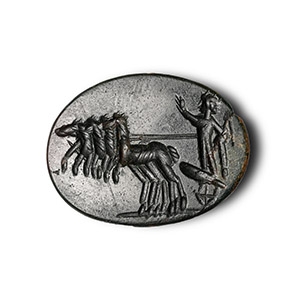
Romano-British Gemstone with Helios Driving Quadriga
2nd-3rd century A.D.Sold for (Inc. bp): £520
Intaglio image of a chariot pulled by four horses and a standing figure. 1.15 grams, 17.77 mm
Found Southern England. Acquired on the UK art market in the 1980s. From an East Anglian private collection. -
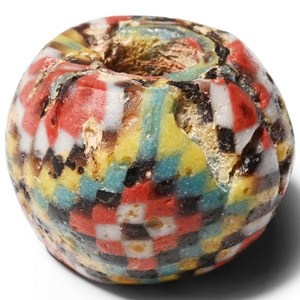
Roman Mosaic Glass Bead
1st-3rd century A.D.Sold for (Inc. bp): £72
Of oblate shape with an intricate chequerboard pattern; the patterns assembled from bundles of compatible coloured canes melted together, pulled out long and the slices then melted as the bead around bead surfaces. 2.66 grams, 14.7 mm
London, UK gallery, 1971-early 2000s. -
.jpg)
Roman Hare Gemstone
Circa 2nd-3rd century A.D.Sold for (Inc. bp): £195
Carnelian with intaglio leaping hare with hindlegs extended; supplied with a museum-quality impression. 0.78 grams, 11 mm
From the collection of a Swiss gentleman formed in Europe from 1970-1980s; thence by descent from the family in London.
