
Loading, please wait...
LOT 0122
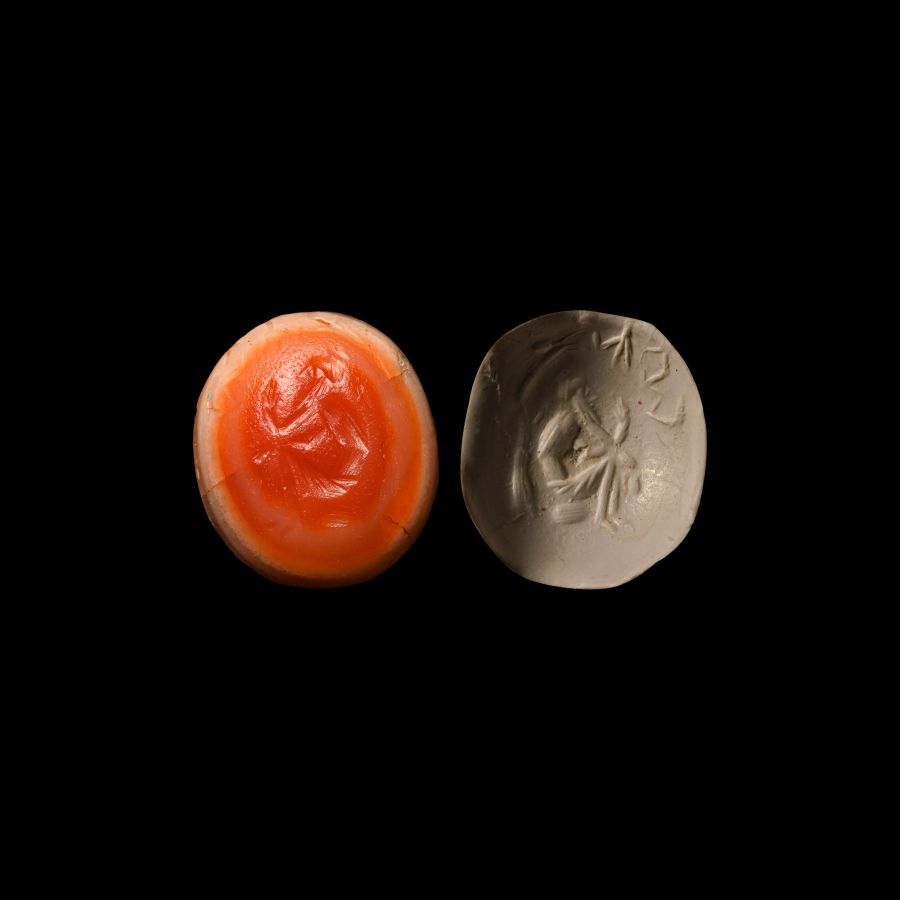
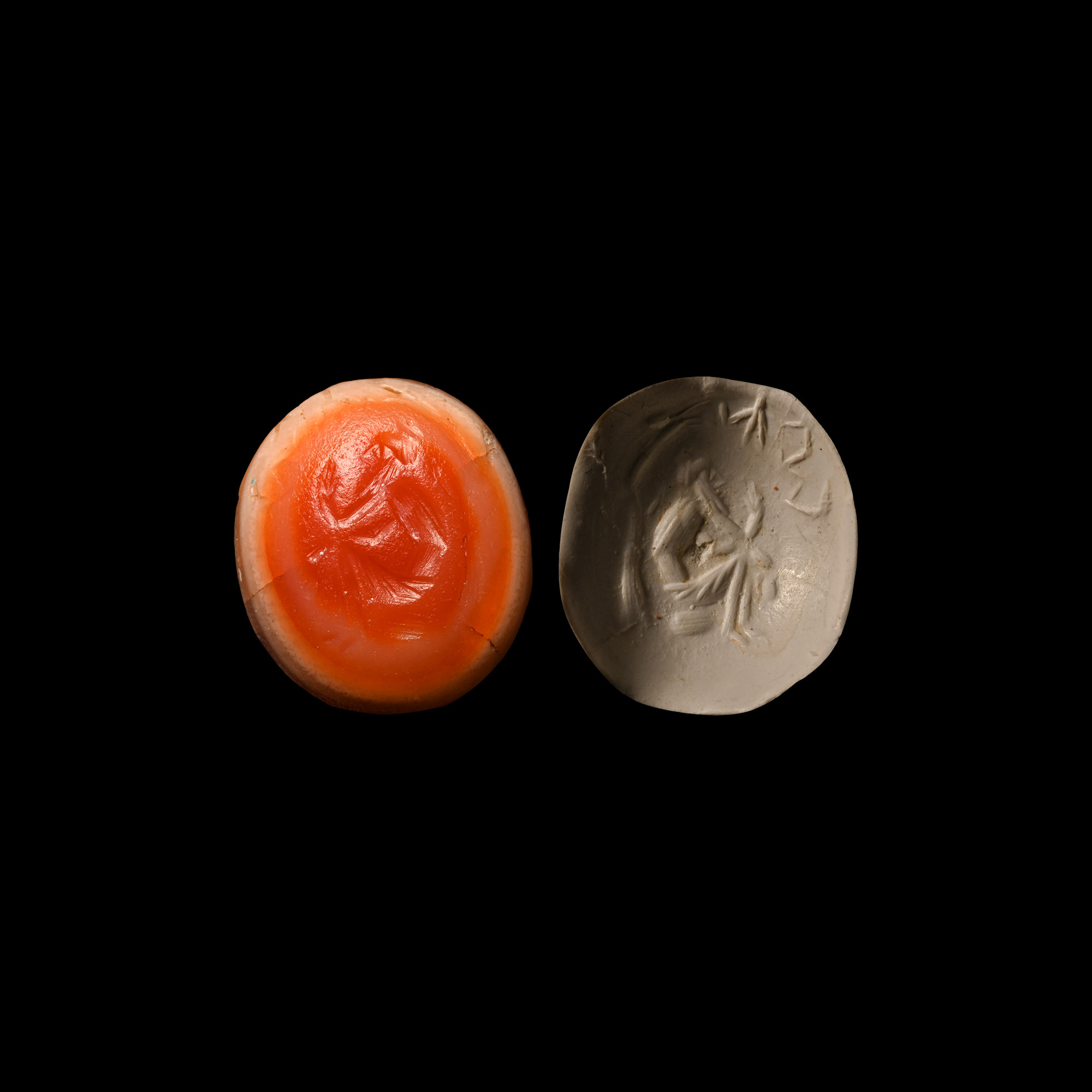
Roman Inscribed Orange Sardonyx Gemstone with Philosopher Seated Under a Tree
1ST CENTURY A.D.
1/2 in. (1.01 grams, 13 mm).
The oval stone engraved with an old man (a philosopher?) seated on a stone, wearing a low cap, half naked and with the cloak covering his leg; his right hand resting beside him, and his left hand raised in the act of speaking; a tree behind, inscription in Greek letters 'ψίω' (= eat).
ProvenanceAcquired in the late 1980s-early 1990s.
Important North West London collection.
See similar image of a seated philosopher in Provincia di Venezia, Piccolo mondo antico, la collezione glittica torcellana (Small Ancient World, the glyptic collection from Torcello, in Italian),, Venezia, 2014, p.39.
FootnotesA particularly recognisable representation in Graeco-Roman art was that of a male character, with a bald head and a slightly pointed beard, seated in profile on a simple seat or on a rock. It represents the philosopher, who often has his hand raised in the gesture of speaking or holds a volume in his hands, characterised according to the rules of cynicism, by the bare torso and the cloak that covers his legs. The inscription refers to the imperative to 'feed' on knowledge.
CONDITIONTimeLine Auctions follows a vetting process to ensure the authenticity and legality of all items, reinforcing our commitment to integrity and responsible trading. Each antiquity, antique, and coin lot undergoes thorough examination by a vetting committee of at least ten external specialists, professional trade association members, scientists, and archaeologists: Our Vetting Process
AUCTIONS:
TimeLine is a leading auction house specialising in antiquities, ancient art, collectables, natural history, coins, medals, and books. Our auctions offer museums, collectors, historians, and enthusiasts the opportunity to acquire unique and historically significant pieces.
LOT 0122
Roman Inscribed Orange Sardonyx Gemstone with Philosopher Seated Under a Tree
Estimate £600 - 800€700 - 930 (for guidance only)$810 - 1,080 (for guidance only)
-
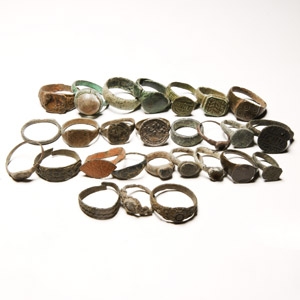
Roman and Later Bronze Ring Collection
1st-19th century A.D.Sold for (Inc. bp): £195
Of various sizes and types, the majority with decorative bezels engraved with text, animals, sunbursts, ropework, geometric motifs, a crown and other designs, including an example with glass inlay. 94 grams total, 16-29 mm
Acquired on the UK art market. Property of a Ruislip, UK, gentleman, by inheritance. -
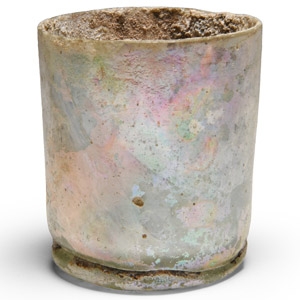
Roman Iridescent Glass Pyxis
1st-2nd century A.D.Estimate: £200 - 300 (+bp*)
Opening Bid: £100
Formed as a cylindrical body with flanged foot to base, straight rim, lid absent. 42.7 grams, 52 mm
Acquired 1980-2015. Ex Abelita family collection. -
.jpg)
Roman Bronze Musical Flute
Circa 2nd-3rd century A.D.Estimate: £4,000 - 6,000 (+bp*)
Opening Bid: £1,750
An extremely rare aulos or tibia with round-section body, six circular holes to one side and a D-shaped hole to the reverse. 87 grams, 23 cm
Fine condition. Extremely rare.
From the late Alison Barker collection, a retired London barrister; from her collection formed early 1960s-1990s. Accompanied by an academic report by Dr Raffaele D'Amato. This lot has been checked against the Interpol Database of stolen works of art and is accompanied by search certificate number no.11055-184396.
The flute was used for religious ceremonies and for entertainment. The pyrrhic, a war dance of Doric origin, was a rapid dance to the double flute, and made to resemble an action in battle.
