
Loading, please wait...
LOT 1019
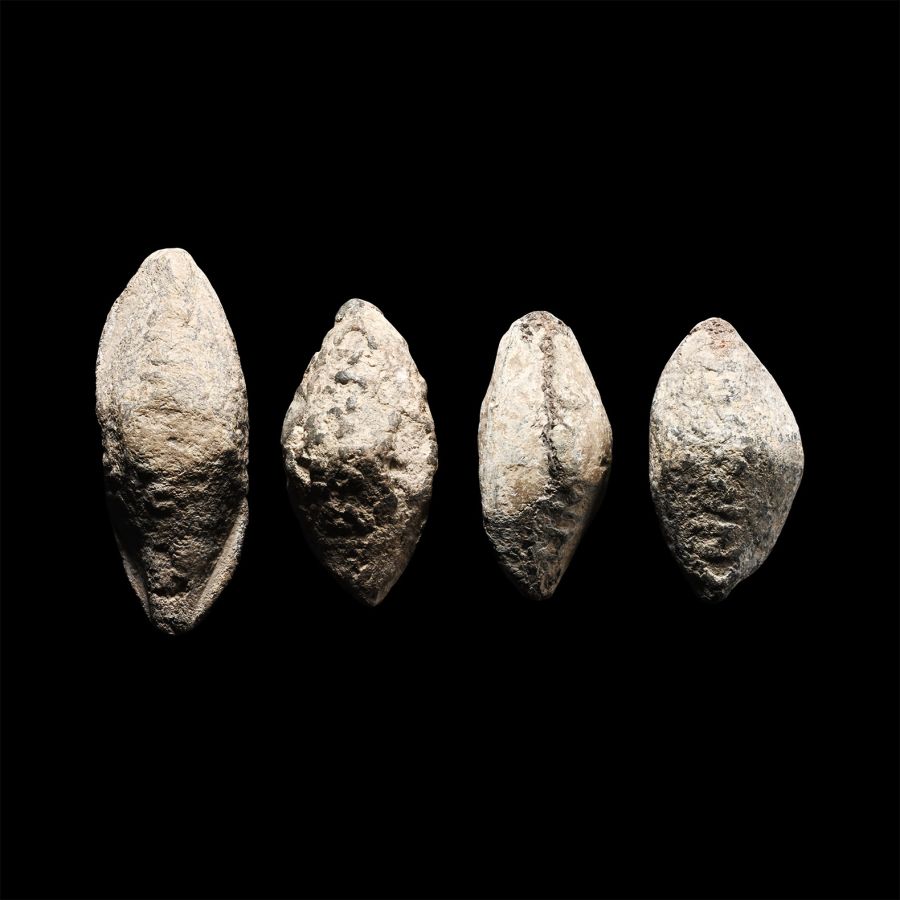
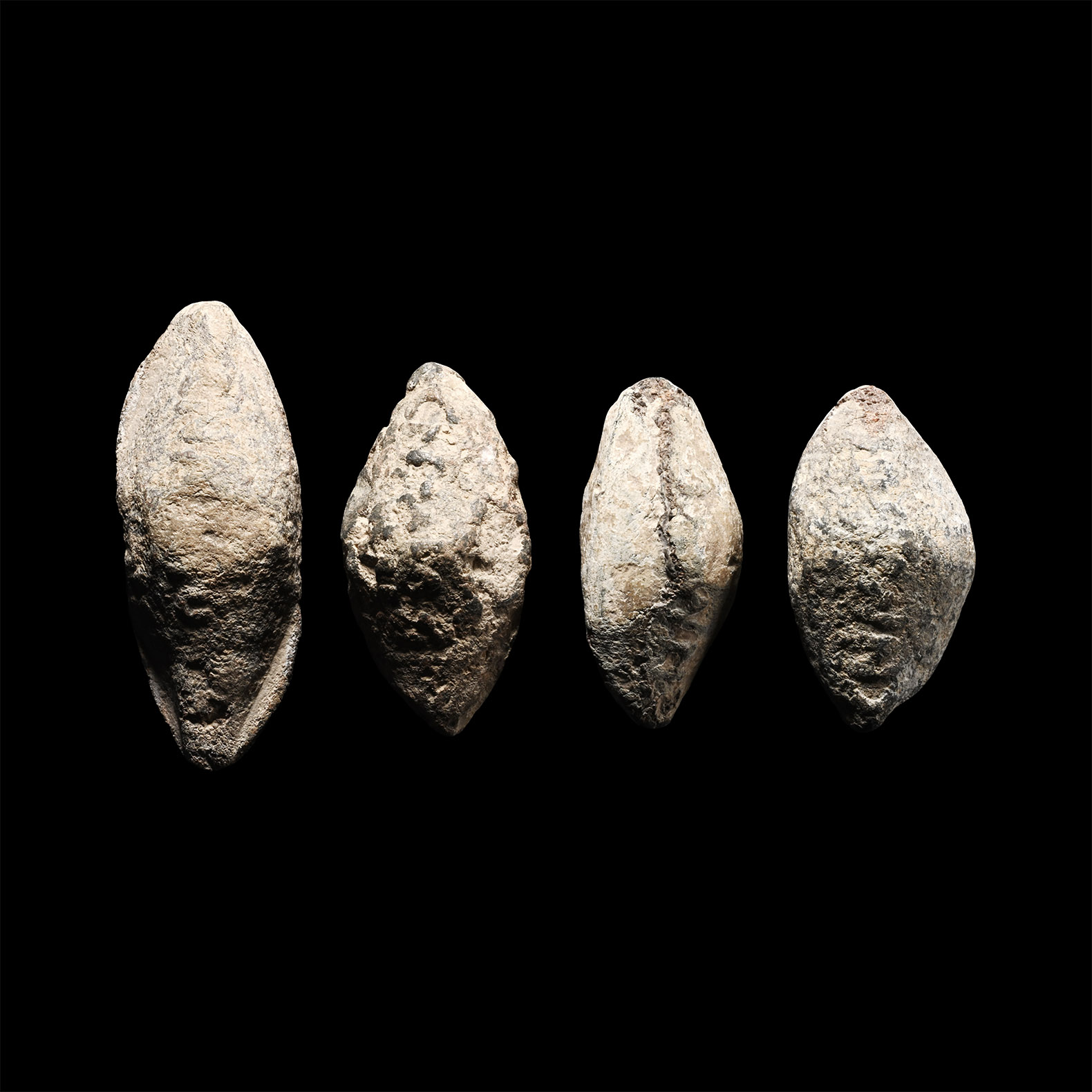
Roman Inscribed Lead Slingshot Group
17 MARCH 45 B.C.
1 1/2 - 2 in. (216 grams total, 37-50 mm).
Comprising four scaphoid lead slingshots (glandes), each with traces of low-relief inscription(s) referring to 'CN P[OMPEIUS]'. [4, No Reserve]
ProvenanceEx M.Cummings, UK, 1990s.
LiteratureCf. D'Amato, R. and Sumner, G., Arms and Armour of the Imperial Roman Soldier: From Marius to Commodus, 112 BC-AD 192, London, 2009, fig.32, p.45, for similar glandes from Zaragoza Museum, the one with the name of Pompey inscribed coming from Munda battlefield.
FootnotesThese shots (mainly of type IIb of the Völling classification) are marked with the abbreviated name of Cn.Pompeius; they were used in quantity at the Battle of Monda (or Munda) against the Caesarian troops, by the followers of Pompey, on 17th March 45 B.C. Similar missiles were used in
the civil war between Pompey and Caesar, and in all Caesar's wars. The projectiles of the slingers could be in lead (glandes) or in pottery or stone (lapides). Sometimes they were signed with the name of the general, or used to report some injuries, for example the sling missile found in Alesia with the name of Labienus.
TimeLine Auctions follows a vetting process to ensure the authenticity and legality of all items, reinforcing our commitment to integrity and responsible trading. Each antiquity, antique, and coin lot undergoes thorough examination by a vetting committee of at least ten external specialists, professional trade association members, scientists, and archaeologists: Our Vetting Process
AUCTIONS:
TimeLine is a leading auction house specialising in antiquities, ancient art, collectables, natural history, coins, medals, and books. Our auctions offer museums, collectors, historians, and enthusiasts the opportunity to acquire unique and historically significant pieces.
-
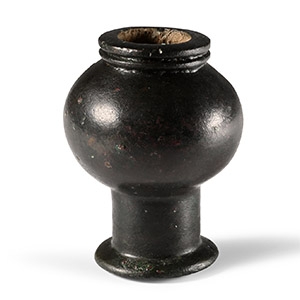
Luristan Sar-e Gorz Luristan Bronze Macehead
14th-13th century B.C.Estimate: £200 - 300 (+bp*)
Opening Bid: £111
With plain globular body, extended to a small raised ring encircling the top of the mace-head, circular short shaft expanding to a circular flat base. 279 grams, 70 mm high
Acquired 1980-2015. Ex Abelita family collection.
Caucasian stone and bronze maces were distinguished by modestly finished, clean processed and predominantly close-to-ball shapes (with a variety of surface finishing, ranging from the smooth, ribbed, lobular forms to the rounded with protrusions and spikes), and the Western Iranian maces, especially the Luristan ones, notable for the variety of different forms. Similar mace-heads, probably realised in Luristan, decorated the head of the sceptres of Assyrian kings like Tukulti-Ninurta I (1243-1207 B.C.). -
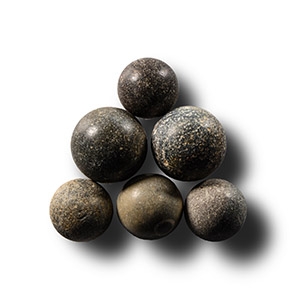
Post Medieval Stone Grapeshot Ammunition Collection
Circa 17th-18th century A.D.Sold for (Inc. bp): £20
Group of spherical grapeshot balls of various sizes. 32 grams total, 14-17 mm
Private collection formed in the 1990s. Acquired from a central London gallery. Property of an Essex gentleman. -
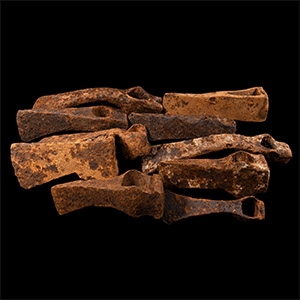
Viking Age and Later Axehead Group
Circa 11th-18th century A.D.Estimate: £100 - 140 (+bp*)
Opening Bid: £50
Comprising socketted axeheads of various types; some possibly stamped with maker's marks. 7 kg total, 16-24.5 cm
Acquired 1990s-early 2000s. East Anglian private collection.
